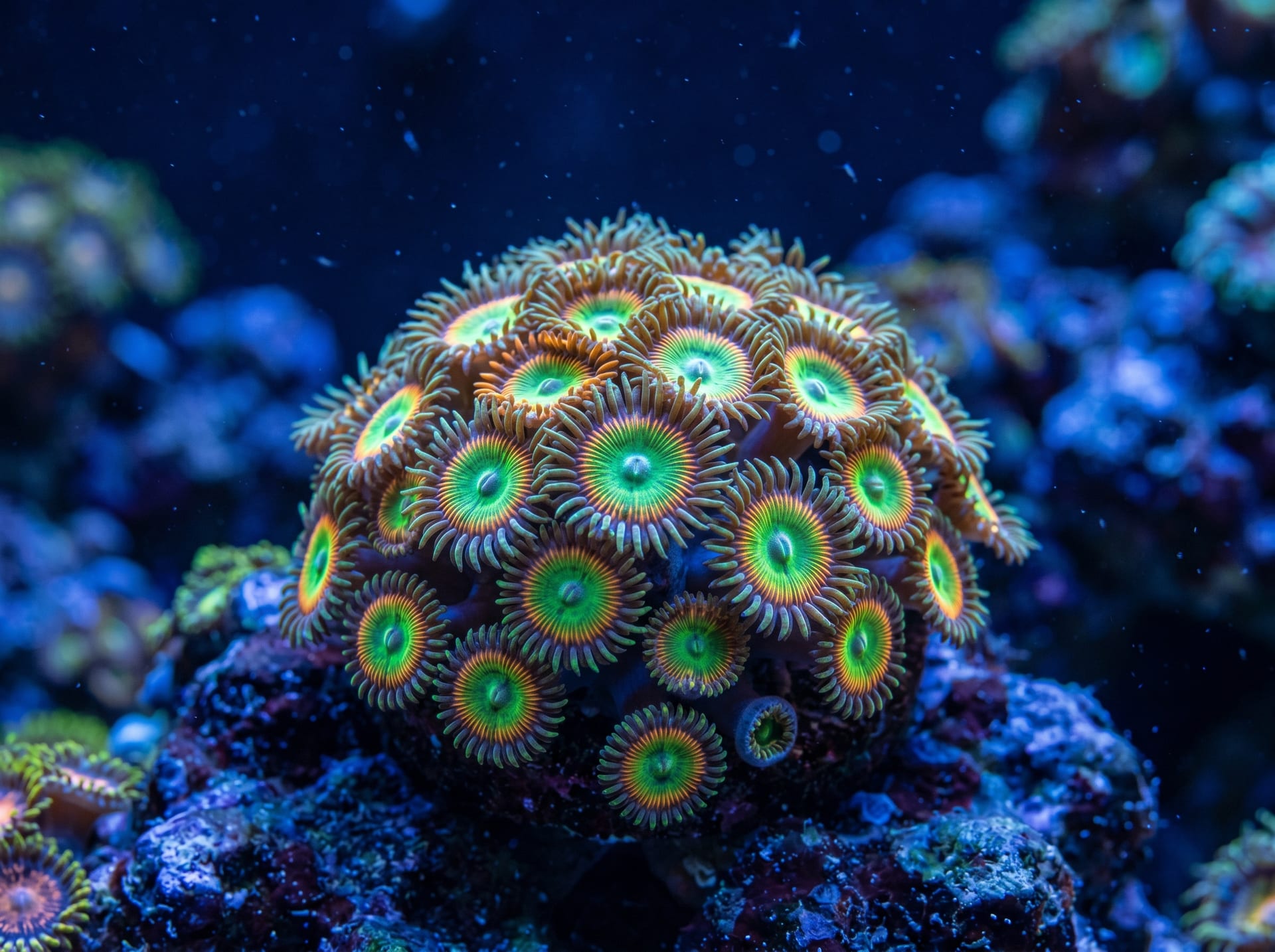
Zoanthid
Zoanthids (Zoanthus sp.) are small soft corals prized for their vivid colors — green, blue, orange, and beyond. They form spreading colonies that bring vibrant life to any reef tank, and their hardiness makes them a popular first coral for beginners. They tolerate moderate light and flow, making them one of the most approachable corals to keep.
0% commission on your first sales!Register by September 30, 2026 and your first 2 sales are commission-free!
Breeder Wanted!
List on BreederDirect and sell directly to customers nationwide!
BreederDirect's 6 Transparency Promises
Every Marine Fish & Coral listing shows Breeder's full disclosure. No wild-caught. Captive-bred priority, tank size guidance, temperament details—transparent aquaculture.
- Captive-bred
- WYSIWYG
- Reef-safe
- Care Info Included
- Origin Disclosed
- Temperament Listed
Browse all 42 breeds
Care Difficulty
Reef-safe
Temperament
Verified breeders wanted for Marine Fish & Coral
Breeders are signing up now ahead of launch. Subscribe to be notified when new listings go live.
Getting alerts is free with a member account. When new listings match your saved search, we'll notify you by email and in-app.
Browse other categories
Verified breeders (preview)
Are you raising marine fish & coral?
Register as a breeder and connect with buyers directly.
Apply as a breederAbout Zoanthid
Zoanthus polyps belong to the order Zoantharia within the phylum Cnidaria and are found on shallow tropical and subtropical reefs across the Indo-Pacific and Atlantic. Like many reef corals, they host symbiotic algae (zooxanthellae) within their tissues, deriving the majority of their energy from photosynthesis, which reduces their reliance on supplemental feeding. Individual polyps typically measure 1–2 cm in diameter and grow in dense colonial mats displaying a remarkable spectrum of colors—vivid greens, electric blues, deep purples, oranges, and reds. Collectors classify distinct color forms as "morphs," and rare morphs with exceptional patterning command significant interest in the hobby. From a husbandry standpoint, Zoanthus are among the most forgiving corals: they tolerate moderate lighting, gentle water flow, and a reasonable range of water parameters, making them an ideal starting point for new reef keepers. Healthy colonies propagate readily, and fragging—cutting small pieces to trade or sell—is a vibrant tradition within the Zoa community. One important consideration: Zoanthus may contain palytoxin, so wearing nitrile gloves during any hands-on work is a straightforward but essential safety habit.
6 things to know before welcoming a Zoanthid
1Stable Water Quality First
Despite being hardy, zoanthids are sensitive to sudden parameter swings. Elevated nitrates or nitrites will cause polyps to stay closed. Aim for a salinity of 1.023–1.026, temperature 24–26°C, and nitrates below 50 ppm. Regular water changes and testing are the foundation of long-term success.
2Moderate Lighting Is Enough
Zoanthids rely on symbiotic zooxanthellae for nutrition via photosynthesis. Overly intense light can cause bleaching, so mid-to-low output LED lighting is generally sufficient. When first introduced to a tank, start them in a lower-light area and gradually move them as they acclimate.
3Palytoxin Risk — Handle Carefully
Some zoanthids contain palytoxin, a potent toxin. Always wear nitrile gloves when handling them or working in the tank where they are kept. Avoid touching your face, and never allow dried mucus or water mist from the tank to be inhaled. This is one of the most important safety rules for zoanthid keepers.
4Manage Colony Spread
In favorable conditions zoanthids can spread aggressively, overgrowing nearby corals or rockwork. Keep adequate spacing from other corals and trim the colony periodically. Excess growth can be fragged onto small plug rocks for trading or selling to other hobbyists.
5Go Easy on Supplements
In the early stages, good water quality and proper lighting are all zoanthids need — excessive dosing is unnecessary. Small amounts of amino acids or phytoplankton can promote growth, but overfeeding quickly degrades water quality. Start with minimal supplementation and adjust based on observed response.
6Expect Moderate Startup Costs
Zoanthid prices range from a few hundred yen for common morphs to tens of thousands for rare color variants. Essential equipment includes a saltwater-compatible tank, filtration, lighting, and a heater — expect a startup investment of several tens of thousands of yen. Ongoing monthly costs for electricity, salt mix, and consumables typically run a few thousand yen.
Frequently asked questions about Zoanthid
- Q.Can beginners keep Zoanthus polyps?
- A.Yes, Zoanthus are among the most beginner-friendly corals available. They are resilient and adaptable, and can be maintained long-term with stable water quality and appropriate lighting and flow.
- Q.Do Zoas need to be fed?
- A.Feeding is not strictly necessary, as Zoas obtain most of their energy through photosynthesis. Occasional supplemental feeding with phytoplankton or amino acid solutions can nonetheless enhance growth rate and coloration.
- Q.Why won't my Zoas open?
- A.Common causes include poor water quality, excessive direct flow, sudden changes in lighting, or harassment by fish and crustaceans. Newly placed colonies often need several days to a week to acclimate before opening fully.
- Q.What should I do if they spread too much?
- A.Excess polyps can be removed by cutting the colony with scissors or a scraper while wearing nitrile gloves. Cut fragments (frags) can be attached to new rock rubble and traded with other hobbyists.
- Q.What is the typical price range for Zoas?
- A.Common varieties typically range from around 500 to 2,000 yen per frag. Rare collector morphs with exceptional coloration can fetch thousands to tens of thousands of yen per polyp, so researching the specific morph and current market prices before purchasing is advisable.
Useful tools for Zoanthid care
Zoanthid related articles
Zoanthid & Palythoa Complete Care Guide — From Beginner to Advanced
Complete zoanthid and palythoa care guide: lighting, flow, water parameters, color enhancement, palytoxin safety, and purchasing from breeders.
Coral Pest Encyclopedia | Identifying and Controlling Flatworms, Nudibranchs, and Red Bugs
Explains the types of pests that parasitize corals, how to identify them, and control methods. We have compiled the characteristics and countermeasures for AEFW, Zoanthid Spider, Montipora Nudibranch, Red Bugs, and more.
More in this category
Can't find the one you're looking for?
Post your wishes for free and breeders with matching animals will contact you with introductions.