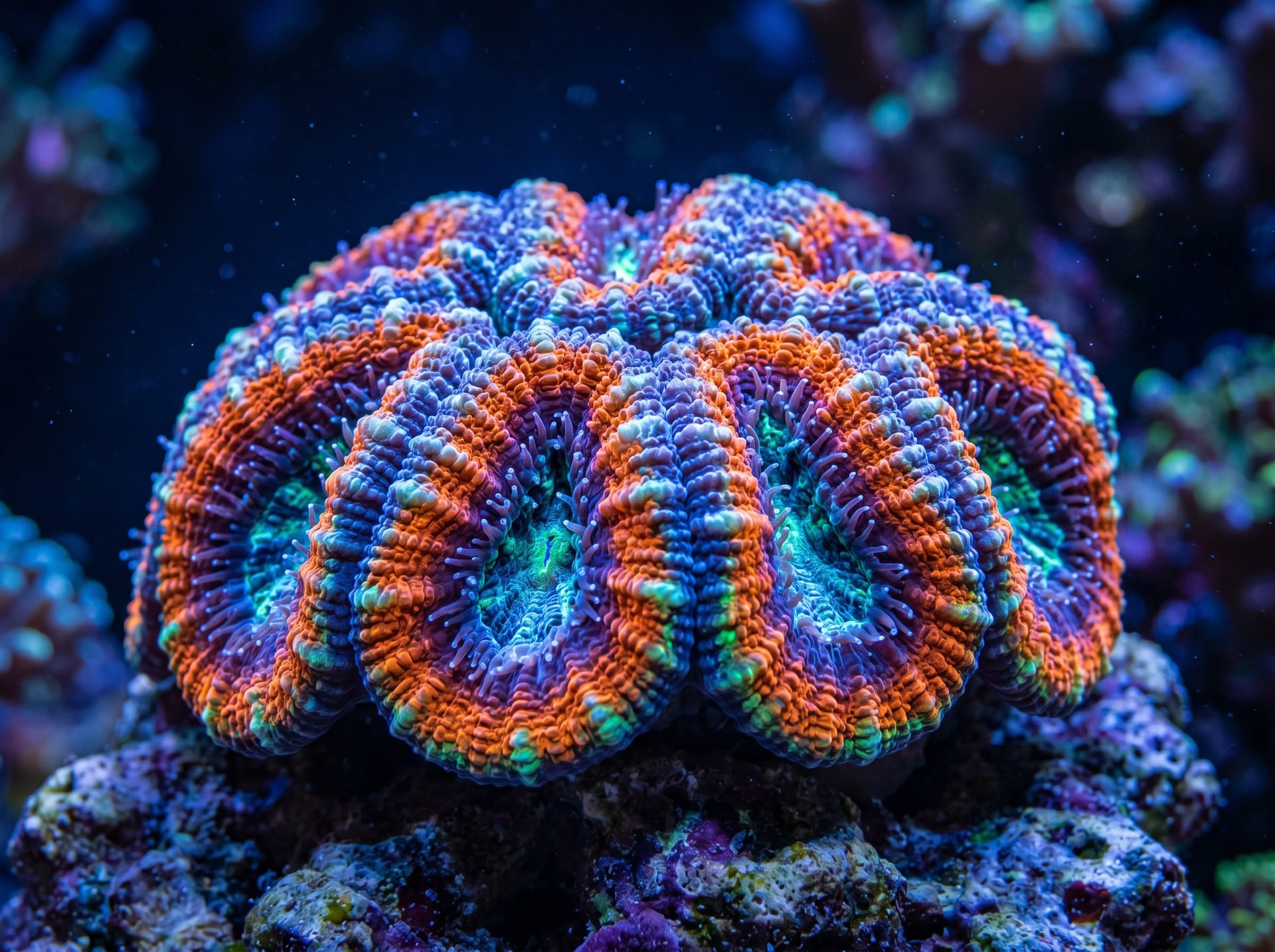
Lobophyllia / Symphyllia
Favites and Lobophyllia corals are large polyp stony (LPS) corals prized for their fleshy, dome-shaped colonies and a wide range of colors including fluorescent green, brown, and orange. They prefer moderate lighting and gentle water flow, making them one of the more forgiving LPS corals for beginners. With patience, hobbyists can enjoy watching their colony slowly expand over time.
0% commission on your first sales!Register by September 30, 2026 and your first 2 sales are commission-free!
Breeder Wanted!
List on BreederDirect and sell directly to customers nationwide!
BreederDirect's 6 Transparency Promises
Every Marine Fish & Coral listing shows Breeder's full disclosure. No wild-caught. Captive-bred priority, tank size guidance, temperament details—transparent aquaculture.
- Captive-bred
- WYSIWYG
- Reef-safe
- Care Info Included
- Origin Disclosed
- Temperament Listed
Browse all 42 breeds
Care Difficulty
Reef-safe
Temperament
Verified breeders wanted for Marine Fish & Coral
Breeders are signing up now ahead of launch. Subscribe to be notified when new listings go live.
Getting alerts is free with a member account. When new listings match your saved search, we'll notify you by email and in-app.
Browse other categories
Verified breeders (preview)
Are you raising marine fish & coral?
Register as a breeder and connect with buyers directly.
Apply as a breederAbout Lobophyllia / Symphyllia
Favites (brain corals) and Lobophyllia (lobed brain corals) are large polyp stony (LPS) corals widely distributed across shallow reef environments in the Indo-Pacific. Long favored in the marine aquarium hobby, their fleshy, soft polyps swaying gently in the water current have an undeniable visual appeal. They come in a striking range of colors including fluorescent green, red, orange, and brown, making them popular among collectors. Their skeletons grow in dome to plate-like formations, and observing a colony slowly expand over months and years is one of the rewarding aspects of keeping them. In terms of care, they are relatively stable when placed correctly, as they dislike intense light and strong flow. However, their tendency to extend sweeper tentacles and sting neighboring corals is often underestimated, so maintaining adequate spacing in the aquascape is essential. They respond well to target feeding, and watching the polyps fully extend to capture food is one of the small but satisfying joys of reef-keeping.
7 things to know before welcoming a Lobophyllia / Symphyllia
1Moderate Light Is Best
Excessive light can cause polyp retraction or bleaching. Moderate lighting with a PAR value of around 100–200 is ideal, and placement in the middle to lower regions of the tank is recommended. When first introducing the coral, acclimate it gradually by starting with lower light levels.
2Keep Water Flow Gentle
Strong direct flow can damage polyps and prevent them from opening. Aim for indirect, gentle circulation and observe whether polyps are fully expanding. If polyps remain consistently retracted, the flow may be too strong.
3Stable Water Quality Is Key
Stable calcium (380–450 ppm), alkalinity (8–11 dKH), and magnesium (1250–1350 ppm) are essential for healthy skeletal growth. Sudden swings in water chemistry stress the coral, so frequent small water changes are preferable to large infrequent ones.
4Space From Neighboring Corals
These corals can extend sweeper tentacles to sting neighboring corals. Maintain a minimum distance of at least 10 cm from other corals and arrange them so direct contact is avoided.
5Target Feeding Boosts Growth
In addition to photosynthesis, target feeding with brine shrimp, mysis, or coral-specific foods directly to the polyps encourages growth. Aim for one to two feedings per week, ideally at night when polyps tend to be most fully open.
6Acclimate Carefully on Arrival
Do not add a newly purchased coral directly to the tank. Use a drip acclimation method over one to two hours to slowly adjust it to your tank's temperature and salinity. Check daily for polyp expansion during the first few days after introduction.
7Expected Keeping Costs
Purchase prices range from roughly 3,000 to over 30,000 yen depending on size and coloration. Ongoing costs include lighting, protein skimmer, calcium reactor or dosing additives, and regular water change supplies. Starting with a smaller tank setup can help manage initial expenses.
Frequently asked questions about Lobophyllia / Symphyllia
- Q.Can beginners keep these corals?
- A.Yes, they are among the more manageable LPS corals. However, a stable, established saltwater tank is a prerequisite, so ensuring your tank is properly cycled and stable before adding them is essential.
- Q.How fast do these corals grow?
- A.Growth rate varies by environment, but is generally slow at a few centimeters per year. Good water quality and regular target feeding can help encourage faster growth.
- Q.Why won't my coral's polyps open?
- A.Common causes include excessive flow, too much light, unstable water parameters, or shipping stress. Start by reviewing placement and flow, then check your water chemistry parameters.
- Q.What corals and fish can be kept with them?
- A.Sufficient spacing from neighboring corals is required due to sweeper tentacles. Coexistence with fish is generally fine, and they do well alongside peaceful small to medium-sized fish.
- Q.Is it a problem if the coral turns brown?
- A.Browning often indicates an overabundance of zooxanthellae due to excess nutrients or insufficient light. Improving water quality and adjusting lighting may help restore original coloration, so review your husbandry conditions first.
Useful tools for Lobophyllia / Symphyllia care
Lobophyllia / Symphyllia related articles
Lobophyllia (Lobophyllum Coral) Care Guide | Low Light, Feeding, Digestive Filament Management and Long-Term Maintenance Tips
Comprehensive guide to caring for Lobophyllia (Lobophyllia spp.). Covers water quality parameters for this meaty LPS coral, low to mid-light illumination settings, gentle water flow environment, weekly target feeding (1–3 times per week) and nighttime polyp feeding, placement strategies to prevent digestive filament attacks on neighboring corals, and procedures for creating frags.
Scleromia (Lobophyllia) Care Guide | Lighting, Water Flow, Target Feeding, and Frag Propagation
A comprehensive guide to Scleromia (Scolymia) care. Covers proper water chemistry parameters (KH, Ca, Mg, nutrients), photoacclimation with low-to-moderate lighting, gentle indirect water flow settings, target feeding techniques (1-2 times per week), frag propagation methods, and troubleshooting for closed polyps, RTN (Rapid Tissue Necrosis), and other common issues. A practical intermediate-level guide.
Brain Coral Care Guide | Open Brain / Lobophyllia / Trachyphyllia
Complete guide to raising brain corals. For each type of open brain coral (Trachyphyllia, Lobophyllia, and Scolymia), we introduce beginner-friendly explanations of characteristics, lighting, water flow, placement, and feeding methods.
How to Choose and Care for LPS Corals | Lobophyllia, Lobophyllia hemprichii, and Euphyllia
A thorough comparison of popular LPS coral species. Explains the characteristics of Lobophyllia, Lobophyllia hemprichii, Euphyllia and others, placement tips, feeding methods, and common beginner mistakes.
More in this category
Can't find the one you're looking for?
Post your wishes for free and breeders with matching animals will contact you with introductions.