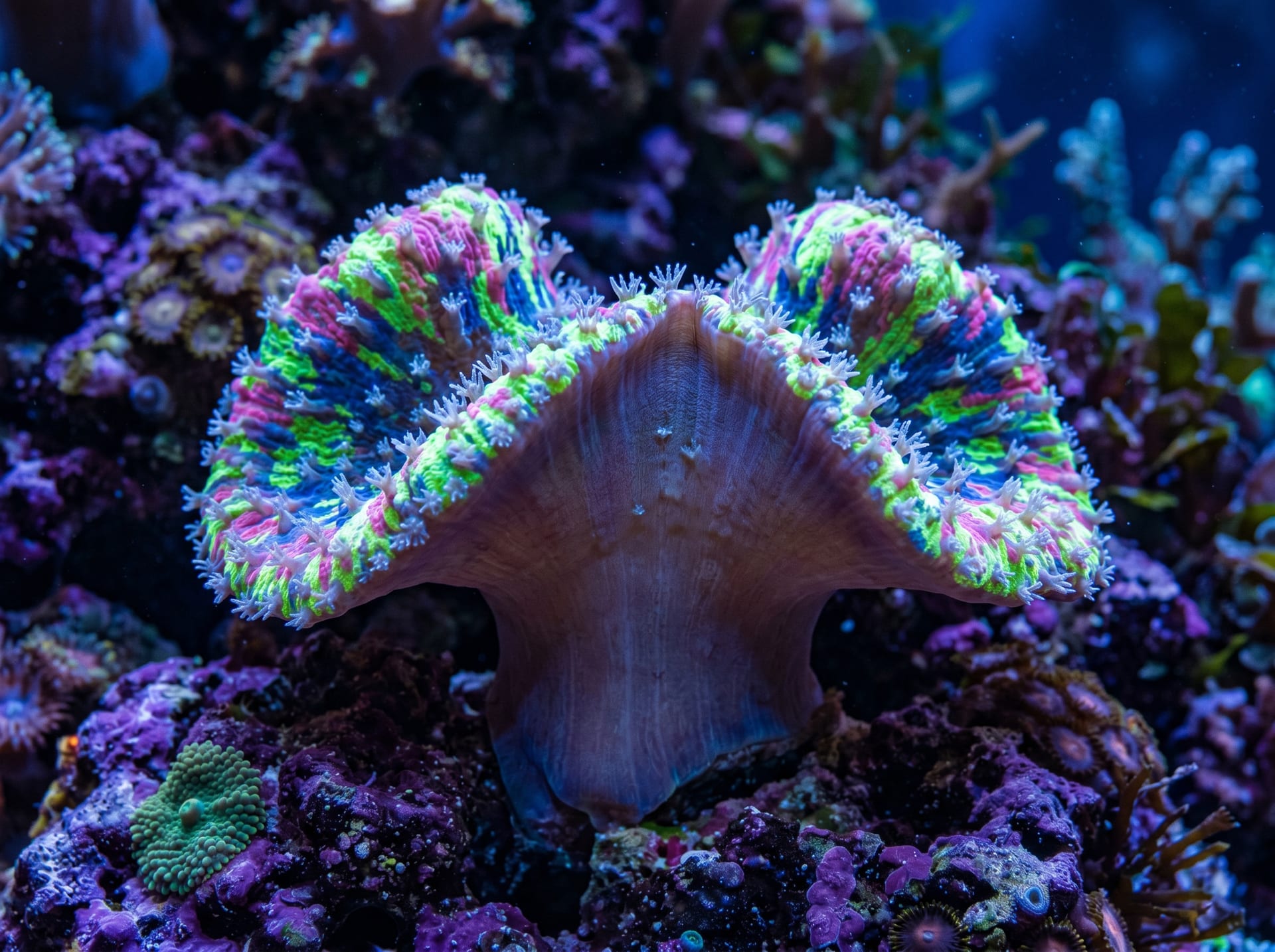
Leather Coral / Sarcophyton
Toadstool and leather corals (Sinularia/Sarcophyton spp.) are soft corals with a distinctive mushroom- or fan-shaped silhouette that brings elegant presence to any reef tank. Tolerant of moderate lighting and flow, they are a popular first soft coral for beginner reefers. When their polyps are fully extended, the delicate texture is truly captivating.
0% commission on your first sales!Register by September 30, 2026 and your first 2 sales are commission-free!
Breeder Wanted!
List on BreederDirect and sell directly to customers nationwide!
BreederDirect's 6 Transparency Promises
Every Marine Fish & Coral listing shows Breeder's full disclosure. No wild-caught. Captive-bred priority, tank size guidance, temperament details—transparent aquaculture.
- Captive-bred
- WYSIWYG
- Reef-safe
- Care Info Included
- Origin Disclosed
- Temperament Listed
Browse all 42 breeds
Care Difficulty
Reef-safe
Temperament
Verified breeders wanted for Marine Fish & Coral
Breeders are signing up now ahead of launch. Subscribe to be notified when new listings go live.
Getting alerts is free with a member account. When new listings match your saved search, we'll notify you by email and in-app.
Browse other categories
Verified breeders (preview)
Are you raising marine fish & coral?
Register as a breeder and connect with buyers directly.
Apply as a breederAbout Leather Coral / Sarcophyton
Toadstool and leather corals — encompassing genera such as Sarcophyton, Sinularia, and Lobophytum — are soft corals widely distributed across the shallow reefs of the Indo-Pacific. Their common names reflect their striking shapes: broad, mushroom-like caps or branching, fan-like lobes that, when polyps are fully extended, become covered in a carpet of delicate tentacles. Lacking a rigid calcium carbonate skeleton, they are resilient to physical disturbance and forgiving of imperfect water conditions, making them a favorite first coral for new reefers. Their biology is equally fascinating: periodic shedding of a waxy mucus layer and the release of allelopathic terpenes keep experienced hobbyists engaged. Frags grow into impressive colonies in a relatively short time, offering the rewarding experience of propagation and sharing within the reefing community.
7 things to know before welcoming a Leather Coral / Sarcophyton
1Moderate Flow Is Best
Toadstool and leather corals prefer gentle to moderate, indirect water flow. Direct, high-velocity flow can stress the tissue, causing the coral to remain retracted. Using multiple pumps to create a randomized, indirect current helps keep them in top condition.
2Moderate Lighting Suffice
One of the appealing traits of leather corals is their tolerance of lower light. A PAR range of roughly 50–150 is a good target, achievable with standard reef LEDs or T5 fluorescents. If you increase lighting, acclimate gradually to avoid bleaching stress.
3Shedding Is Normal
Leather corals periodically shed a waxy, mucus-like film from their surface — a completely normal process. During shedding, polyps retract and the coral may look unhealthy, but it typically opens back up within a few days. Direct flow to help remove the film, or run activated carbon to prevent water quality issues.
4Stable Water Chemistry First
Aim for a specific gravity of 1.025–1.026, temperature 24–26 °C, and nitrates below 50 ppm. Sudden swings in chemistry can cause polyps to retract for extended periods. Weekly partial water changes are one of the most effective ways to maintain the stable conditions leather corals thrive in.
5Chemical Warfare on Neighbors
Leather corals can release terpene-based chemicals to compete with neighboring corals — a form of chemical allelopathy. This is more pronounced during rapid growth phases or after tank disturbances. Maintain adequate spacing from other corals and run activated carbon regularly to mitigate the effect.
6No Skeleton — Safer Handling
As soft corals without a rigid calcium carbonate skeleton, leather corals are less prone to physical damage during aquascaping. However, cutting or fragging releases irritating toxins, so always wear gloves and ensure good ventilation when working with fragmented tissue.
7Expected Costs at a Glance
Small frag specimens can be found for a few thousand yen, making leather corals among the more affordable soft corals. Ongoing costs are mainly electricity for lighting and pumps, plus synthetic salt mix for water changes. Specialized additives are generally not required, keeping running costs relatively low.
Frequently asked questions about Leather Coral / Sarcophyton
- Q.Is it abnormal if polyps stay retracted for days?
- A.Retraction for a few days is normal during shedding or after a water quality change. If polyps remain closed for more than a week, check flow, lighting, and water parameters to identify any underlying issue.
- Q.Can leather corals be kept with other corals?
- A.Co-existence is possible, but leather corals can affect neighboring corals through chemical allelopathy. Running activated carbon regularly and ensuring adequate spacing between corals will minimize problems in a mixed reef.
- Q.Can I frag leather corals to propagate them?
- A.Yes, leather corals are relatively straightforward to frag. Cut with a clean blade, secure the piece to a frag plug, and place it in an area with gentle flow. It typically attaches within a few weeks. Always wear gloves during the process.
- Q.What tank size is recommended for leather corals?
- A.Small frags can be kept in a 60 cm tank, but leather corals grow into sizeable colonies, so a 90 cm or larger tank is ideal for the long term. Greater water volume also makes it easier to maintain stable water chemistry.
- Q.Do leather corals need to be fed?
- A.Leather corals derive most of their energy from their symbiotic zooxanthellae through photosynthesis, so direct feeding is not required. Supplementing the tank with phytoplankton or other fine particulates may enhance their condition, but is not essential.
Useful tools for Leather Coral / Sarcophyton care
Leather Coral / Sarcophyton related articles
Sarcophyton (Toadstool Coral) Color Change and Shedding Management Guide | Long-term Care of Soft Corals
Sarcophyton (toadstool coral) is an ideal soft coral for reef tank beginners, but its periodic "shedding" and color changes are often confused with problems. This comprehensive guide covers how to distinguish normal shedding cycles, causes and solutions for color fading, the impact of allelopathy, and optimal lighting and water flow conditions for long-term Sarcophyton care.
Sinularia (Leather Coral) Care Guide | Water Flow, Lighting, and Allelopathy Management
A comprehensive guide to caring for Sinularia (finger leather coral). From setting up proper water parameters, lighting, and water flow to managing allelopathy with neighboring corals and performing fragging (fragmentation), this practical guide enables even beginners to maintain these soft corals long-term.
Sarcophyton (Toadstool Coral) Care Guide | Water Flow, Lighting, and Propagation Tips
This article explains how to care for Sarcophyton (Toadstool Coral). We cover its characteristics as a beginner-friendly soft coral, proper management of water flow, lighting, and water quality, how to troubleshoot when polyps won't open, and detailed guidance on propagation through fragmentation.
More in this category
Can't find the one you're looking for?
Post your wishes for free and breeders with matching animals will contact you with introductions.