Sarcophyton (Toadstool Coral) Care Guide | Water Flow, Lighting, and Propagation Tips
This article explains how to care for Sarcophyton (Toadstool Coral). We cover its characteristics as a beginner-friendly soft coral, proper management of water flow, lighting, and water quality, how to troubleshoot when polyps won't open, and detailed guidance on propagation through fragmentation.
Key Takeaways
This article explains how to care for Sarcophyton (Toadstool Coral). We cover its characteristics as a beginner-friendly soft coral, proper management of water flow, lighting, and water quality, how to troubleshoot when polyps won't open, and detailed guidance on propagation through fragmentation.
What is Sarcophyton Coral?
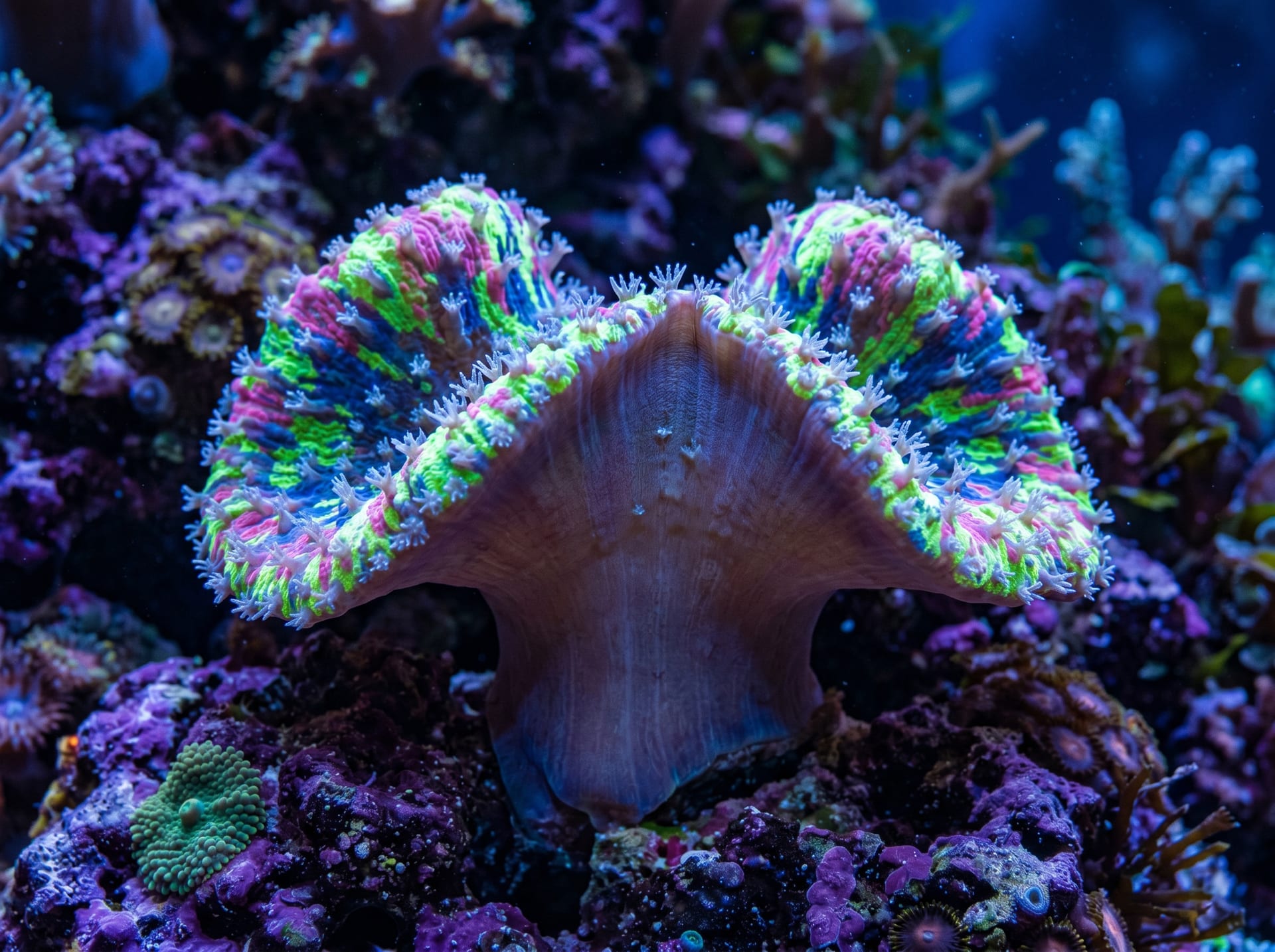
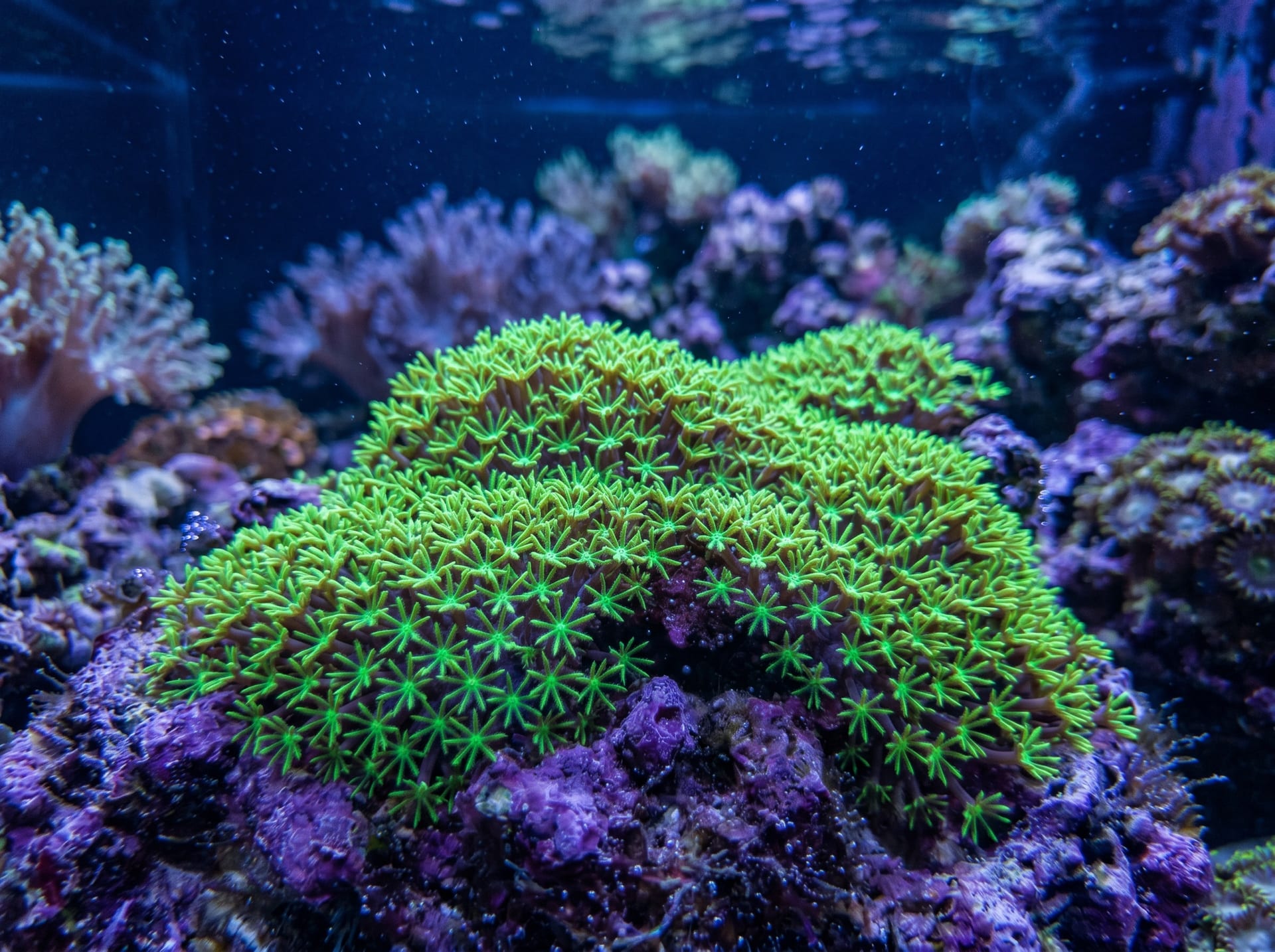
Sarcophyton (genus Sarcophyton) is a soft coral widely distributed in shallow seas of the Indo-Pacific region. Known in English as "Toadstool Coral" or "Leather Coral," it is characterized by its distinctive mushroom-like shape. The surface of the colony is densely covered with countless small polyps, and when the polyps are extended, the colony displays a beautiful, flower-like appearance.
✍️
BreederDirect Editorial
The BreederDirect editorial team specializes in care information for animals, covering veterinary care and breeding to deliver beginner-friendly guides.
Find Coral on BreederDirect
Buy directly from verified breeders
Browse Related Listings
Find Coral listings related to this article on BreederDirect. Buy directly from verified breeders.
Sarcophyton is known as one of the easiest soft corals for beginners to care for. It is relatively tolerant of water quality fluctuations and low lighting conditions and propagates quickly, making it a top beginner choice among popular reef organisms. Representative varieties include "Sarcophyton trocheliophorum" (the common Toadstool Coral), which forms yellowish-green to tan colored colonies, as well as "Golden Toadstool" (with deeper yellow coloring) and "Long Polyp Toadstool" (an especially beautiful variety with elongated polyps).
Proper Husbandry Conditions
While Sarcophyton has good adaptability to different environments, maintaining its beauty long-term requires proper conditions.
Water Parameters
Water temperature: 24–27°C (26°C is optimal)
Specific gravity: 1.023–1.025
pH: 8.1–8.4
Alkalinity (KH): 8–12 dKH
Calcium: 380–450 ppm
Magnesium: 1,250–1,350 ppm
Nitrate: 0–10 ppm (lower is better, but anything under 10 ppm is acceptable)
Phosphate: 0–0.1 ppm
Sarcophyton is not as sensitive to water parameters as hard corals (LPS/SPS), but extreme deficiencies in alkalinity and calcium can lead to poor polyp extension. Make regular water quality testing a habit.
Lighting
Sarcophyton grows well under moderate lighting (PAR around 50–150). Both fluorescent and LED lighting work; for T5HO fluorescent bulbs, use 8–14 hours daily; for LEDs, adjust based on your settings. While it can grow under strong lighting (high PAR for SPS), excessive intensity can cause zooxanthellae stress and bleaching.
Water Flow
Sarcophyton prefers moderate, random (turbulent) water flow. Avoid direct, strong laminar flow; instead, use multiple powerheads to create random water movement throughout the tank. Weak flow allows detritus to accumulate on the colony surface, making it difficult for polyps to extend. As a general rule, set your flow rate to 10–15 times the tank volume per hour, distributed as turbulent flow across the entire tank.
Causes and Solutions for Closed or Shrunken Polyps
A common problem with Sarcophyton is polyps that remain completely closed or a shrunken colony.
Normal "Secretion Cycle": Sarcophyton periodically (roughly once every 1–4 weeks) develops a white to yellowish mucus-like "film" on the colony surface and closes its polyps for several days to a week. This is a normal physiological process in which the coral secretes sarcophtol (a terpenoid compound) to shed surface detritus and compete with neighboring organisms. The polyps opening widely after the film sheds is a healthy sign.
Troubleshooting Checklist
Water Flow: Ensure water reaches the colony surface. If not, reposition your powerheads.
Light: Review your photoperiod and intensity. When first introducing the coral, acclimate it gradually from low to higher light ("light acclimation").
Water Quality: Check for elevated nitrate and phosphate, or declining alkalinity.
Chemical Warfare: Check for allelopathy with neighboring LPS or SPS corals. Be especially cautious when housed near similar leather corals or Fiji Leather Corals.
Handling: Polyps tend to close after direct handling; monitor closely following maintenance.
If polyps remain completely closed for a week or more and the colony begins to deteriorate, suspect bacterial infection or necrosis. Removing the affected tissue and treating with iodine-based disinfectant can be effective, though severe cases may be difficult to recover. Early detection and prompt intervention are critical.
Tank Placement
While Sarcophyton is harmless to other soft corals and fish, its sarcophtol secretions can be toxic to hard corals (LPS and SPS).
Placement Guidelines
Maintain at least 15 cm separation from hard corals.
Use activated carbon filtration regularly to remove these chemical compounds.
Increase water change frequency to dilute secretions.
While compatibility among soft corals is generally good, keep other coral species in separate areas or maintain adequate spacing to prevent contact.
Propagation Through Fragmentation
Sarcophyton propagation is relatively straightforward through fragmentation, allowing you to create clones without sexual reproduction.
Fragmentation Steps
Using clean scissors or a scalpel, cut a fragment at least 5 cm from the edge of the cap.
Place the fragment on a frag plug (porous limestone or ceramic disc) and secure it with a rubber band or nylon line.
Position it in moderate water flow and wait 1–2 weeks for the base to attach.
Remove the securing material and return to normal care.
Immediately after cutting, the polyps will close and secretions will increase, but normal function returns within 1–2 weeks. The parent colony's wound site will heal within 2–4 weeks, with new tissue regenerating.
Sarcophyton Compatibility with Fish
While Sarcophyton's chemical secretions allow it to coexist with most fish, some require special consideration.
Fish Requiring Caution: Butterflyfish (may nip at coral), some Foxface and Angelfish species (may graze on coral)
Conclusion
Sarcophyton (Toadstool Coral) is an excellent soft coral for aquarists of all levels. Understanding its normal secretion cycle and maintaining proper water flow, lighting, and water quality are key to long-term success. With thoughtful placement that accounts for its chemical secretions, Sarcophyton becomes a vibrant centerpiece that fills your reef tank with life. Thanks to its ease of propagation, it's also an ideal starting point for those interested in becoming a "coral breeder," selling surplus fragments through direct-to-consumer platforms.