Sarcophyton (Toadstool Coral) Color Change and Shedding Management Guide | Long-term Care of Soft Corals
Sarcophyton (toadstool coral) is an ideal soft coral for reef tank beginners, but its periodic "shedding" and color changes are often confused with problems. This comprehensive guide covers how to distinguish normal shedding cycles, causes and solutions for color fading, the impact of allelopathy, and optimal lighting and water flow conditions for long-term Sarcophyton care.
Key Takeaways
Sarcophyton (toadstool coral) is an ideal soft coral for reef tank beginners, but its periodic "shedding" and color changes are often confused with problems. This comprehensive guide covers how to distinguish normal shedding cycles, causes and solutions for color fading, the impact of allelopathy, and optimal lighting and water flow conditions for long-term Sarcophyton care.
Related Species
Sarcophyton (Toadstool Coral): Overview
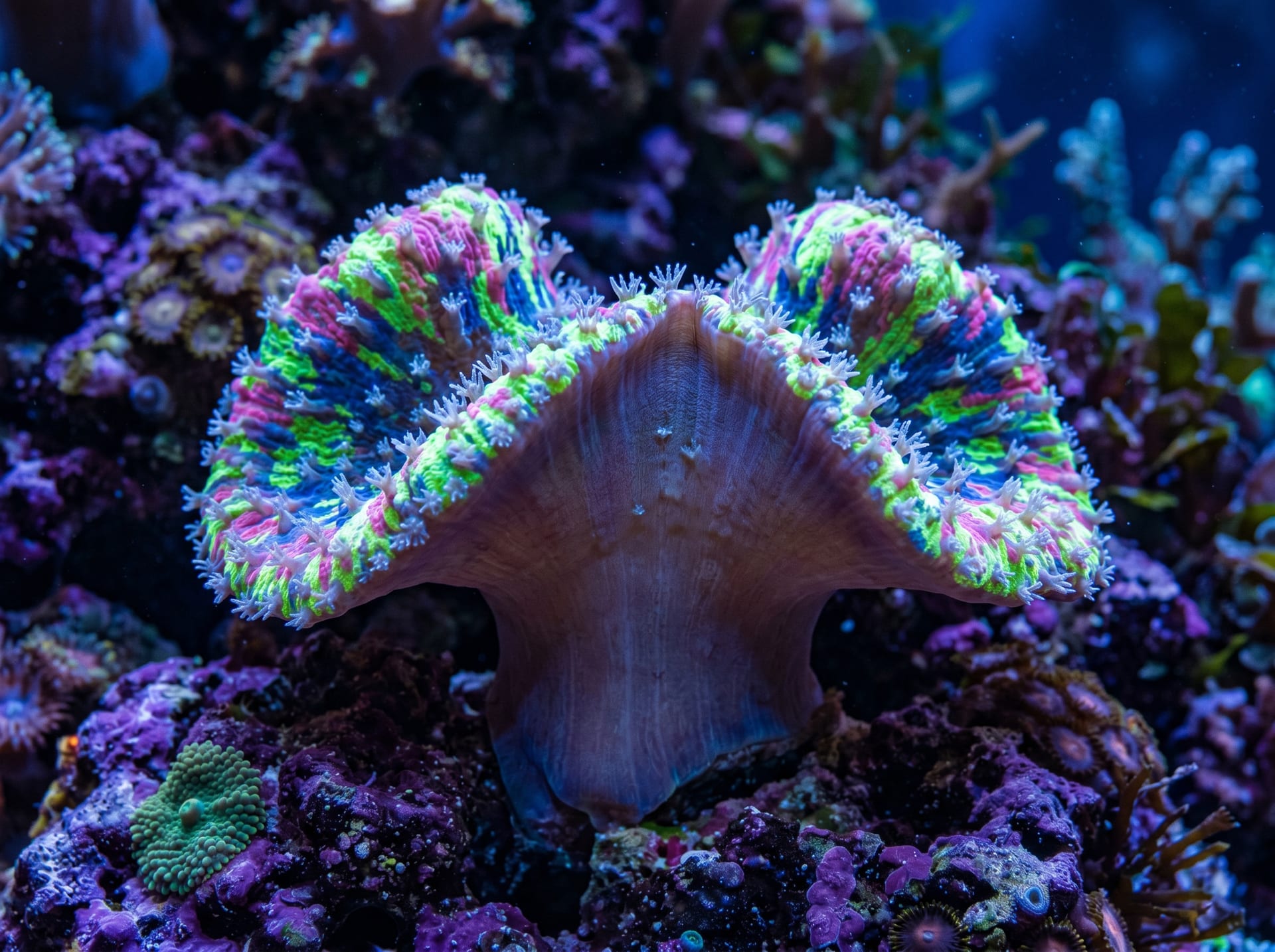
Sarcophyton, also known as toadstool coral or mushroom leather coral, is a popular soft coral species. The scientific names include Sarcophyton trocheliophorum and S. elegans, among others.
The unique mushroom-like shape—with polyps densely clustered on an umbrella-like top portion and a stalk-like base—inspired its common name. Because it is hardy and easy to care for, it is widely recommended as an ideal soft coral starter species for reef tanks. However, without understanding its unique biological characteristics, certain natural phenomena may appear to be problems.
Basic Information
| Category | Details |
|---|---|
| Classification | Octocorallia, Soft Coral Order (Alcyonacea) |
| Common Names | Toadstool Coral, Mushroom Leather Coral |
| Native Range | Indian and Pacific Oceans (tropical reefs) |
| Care Difficulty | Low (beginner-friendly) |
| Lighting Requirements | Moderate (50–150 PAR) |
| Water Flow Requirements | Moderate to strong |
Shedding (Ecdysis): A Normal Physiological Process
The most commonly misunderstood phenomenon in Sarcophyton care is "shedding" (ecdysis).
What is Shedding?
Sarcophyton undergoes a physiological process several weeks to months apart, during which it sheds a thin, membrane-like layer from its surface. During this shedding period, the following conditions occur:
- Polyps retract completely (remaining closed for several days to 2 weeks)
- The surface becomes white or covered with a mucus-like thin membrane
- A thin white membrane drifts inside the tank (the shed tissue)
- The entire coral appears to shrink and look "dying"
This is completely normal, and after shedding, the polyps reopen, often with even more vibrant colors than before.
Shedding Cycle Guidelines
| Healthy Individuals | Details |
|---|---|
| Shedding Frequency | Once every 4–12 weeks (varies by individual) |
| Closure Duration | 3–14 days |
| Reopening | Polyps reopen 1–3 days after the closure period ends |
Water Quality During Shedding: The mucus and organic matter released during shedding can degrade water quality. It is advisable to strengthen protein skimming and increase water change frequency above normal levels. Temporary use of activated carbon is also effective.
Distinguishing Normal Shedding from Problems
| Phenomenon | Normal Shedding | Problem (Abnormal) |
|---|---|---|
| Polyp Closure | Gradual | Sudden |
| Duration | Several days–2 weeks | 3+ weeks |
| Surface Condition | Thin, translucent membrane | Brown slime, discoloration, necrotic odor |
| Skeleton | No bleaching | Skeleton visible, white areas |
| Water Quality | Normal | Rapid deterioration |
If polyps remain closed for 3+ weeks, a necrotic odor is present, or skeletal areas are visible, it should be treated as a problem requiring intervention.
Color Changes: Causes and Solutions
Sarcophyton can change coloration in response to various environmental changes.
Browning
Cause 1: Insufficient Light
While Sarcophyton can survive with low light, symbiotic algae (zooxanthellae) proliferate, causing the entire coral to turn brown.
- Solution: Move the coral closer to lighting and maintain PAR at approximately 50–150.
Cause 2: Excess Nutrients
When NO₃ exceeds 20 ppm or PO₄ exceeds 0.1 ppm, browning intensifies.
- Solution: Increase water change frequency and strengthen skimming.
Color Fading and Bleaching
Cause: Excessive Light and Elevated Temperature
Intense lighting (PAR 200+ locations) or water temperatures above 28°C cause the symbiotic algae to be expelled (bleaching), resulting in white to cream coloration.
- Solution: Move the coral to a lower-light location and reduce water temperature. If bleaching is not severe, recovery is possible.
Cause: Allelopathy from Nearby Corals
Proximity to corals with strong allelopathic effects, such as hammer corals or fire coral (Millepora), can cause color fading.
Yellow/Gold Coloration
With the right combination of light intensity, water quality, and temperature, the coral's natural pale cream to gold coloration emerges. This is a sign of a healthy specimen.
Effects of Allelopathy (Chemical Defense)
Sarcophyton releases potent allelopathic compounds (terpene-based substances) that can adversely affect other corals, particularly SPS (small polyp stony) corals.
Corals Most Susceptible to Allelopathy
| Coral Type | Sensitivity |
|---|---|
| Acropora (Branching Corals) | Very High |
| Porites, Stylophora | High |
| Euphyllia (Hammer Corals, etc.) | Moderate |
| Zoanthus (Button Polyps) | Low |
| Other Soft Corals | Low |
Mitigation Strategies
- Use activated carbon regularly (change weekly or every 2 weeks)
- Increase water change frequency
- Avoid placing Sarcophyton in SPS-dominated reef tanks; this is the best solution
Ideal Lighting and Water Flow
Lighting
| Placement | PAR Range | Condition |
|---|---|---|
| Lower Zone (near substrate) | 20–50 | Survives but prone to browning |
| Mid-zone | 50–150 | Optimal. Gold–cream coloration |
| Upper Zone (strong light) | 150–200+ | Increased bleaching risk |
Sarcophyton has lower light requirements than LPS and SPS corals and can thrive in relatively lower or shaded areas of the tank. It is compatible with LED, T5, or metal halide lighting.
Water Flow
Moderate to strong, multi-directional, and irregular water flow is ideal.
- Weak Flow: Detritus accumulates on the surface, increasing risk of slime-related issues and bacterial infection
- Strong Direct Flow: Polyp expansion worsens. The colony tilts in one direction
- Random Wave Mode from a circulation pump is optimal
Fragging and Propagation
Sarcophyton fragging is one of the simplest coral propagation methods.
Procedure (Wet-Cut Method)
- Without removing the coral from the tank, use a cutting knife or scissors to cut off the umbrella portion underwater
- Secure the frag (umbrella fragment) to a frag plug using a rubber band or fishing line
- Place in a low-light, moderate-flow frag tank or tank corner
- The frag will begin to attach to the plug within 1–3 weeks
The remaining "mother" (stalk portion) will regenerate new polyps. Both frag and mother develop into new individuals.
Summary: Understanding the Shedding Cycle Makes Long-term Care Simple
The key to successful Sarcophyton care is understanding that "shedding is normal." The greatest mistake is panicking when polyps remain closed for several weeks, moving the coral, or administering medication.
With proper light intensity, moderate to strong water flow, regular water changes, and activated carbon use, Sarcophyton will continue to grow for years. While unsuitable for SPS-dominant systems, it is an outstanding addition to soft coral-focused reef tanks.