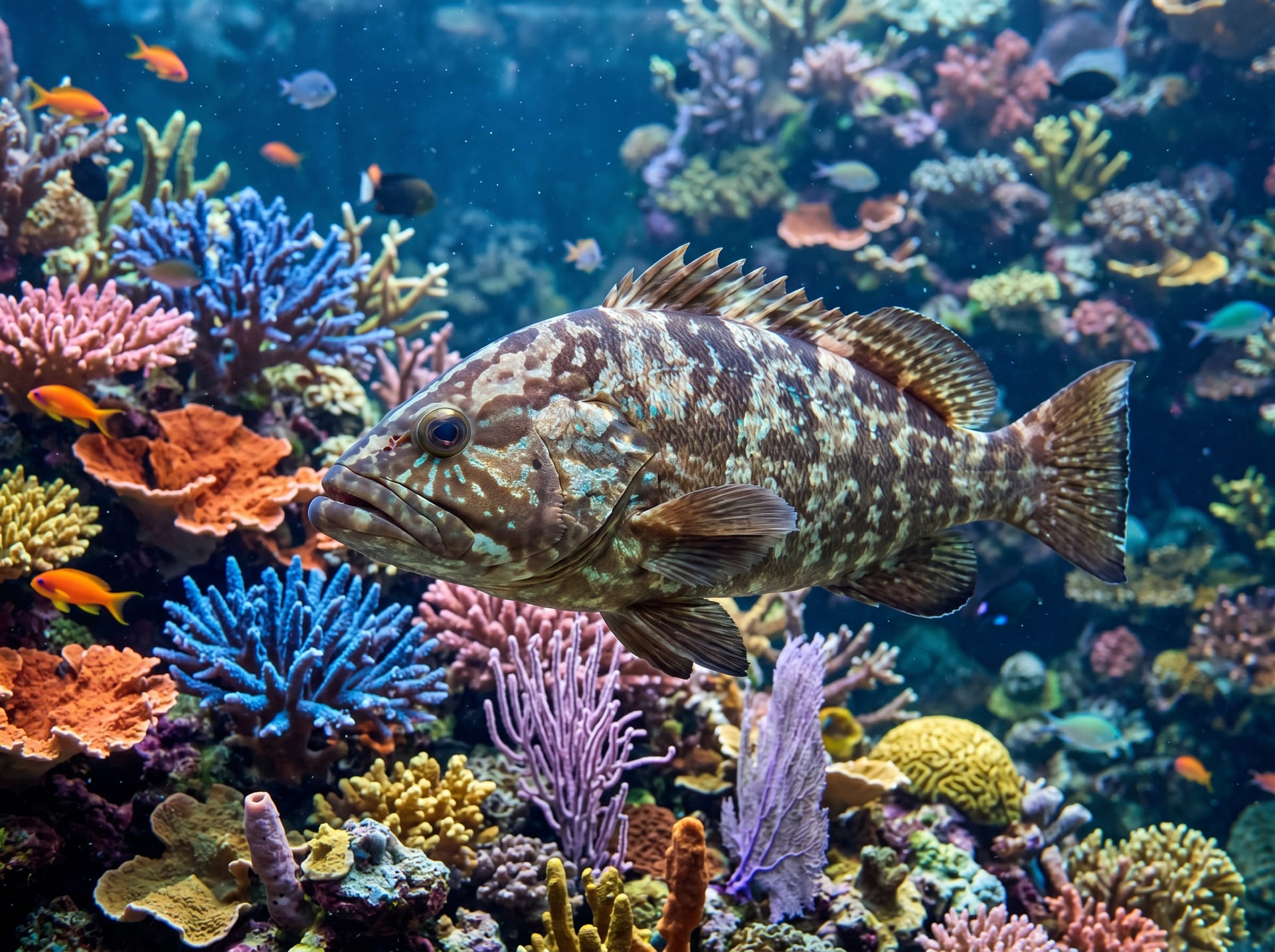
Grouper
Groupers are large predatory fish found in tropical and subtropical reef environments, prized for their bold patterns and commanding presence in the aquarium. Many species are hardy and become accustomed to their keepers over time, making them a long-standing favorite among marine hobbyists. Because many species grow quite large, long-term planning is essential before keeping one.
0% commission on your first sales!Register by September 30, 2026 and your first 2 sales are commission-free!
Breeder Wanted!
List on BreederDirect and sell directly to customers nationwide!
BreederDirect's 6 Transparency Promises
Every Marine Fish & Coral listing shows Breeder's full disclosure. No wild-caught. Captive-bred priority, tank size guidance, temperament details—transparent aquaculture.
- Captive-bred
- WYSIWYG
- Reef-safe
- Care Info Included
- Origin Disclosed
- Temperament Listed
Browse all 42 breeds
Care Difficulty
Reef-safe
Temperament
Verified breeders wanted for Marine Fish & Coral
Breeders are signing up now ahead of launch. Subscribe to be notified when new listings go live.
Getting alerts is free with a member account. When new listings match your saved search, we'll notify you by email and in-app.
Browse other categories
Verified breeders (preview)
Are you raising marine fish & coral?
Register as a breeder and connect with buyers directly.
Apply as a breederAbout Grouper
The family Serranidae encompasses more than 400 species distributed across tropical and subtropical reefs worldwide. Long valued as a food fish, groupers also have a rich history in the marine aquarium hobby, offering striking visual diversity—from the vivid orange-and-white spotted coral grouper to the blue-hued peacock grouper. Adults establish territories among rocky outcroppings and are ambush predators, striking prey with explosive speed. In captivity, however, many individuals become surprisingly personable, recognizing their keeper and actively approaching the front of the tank at feeding time. Large tank volumes and high-capacity filtration are non-negotiable given their size potential, but for hobbyists willing to invest in proper setup, groupers reward patience with decades of captivating behavior and a personality rarely matched by other marine fish.
7 things to know before welcoming a Grouper
1Large Tank Required
Many grouper species reach 30–60 cm or more at adulthood, and tanks of 300 liters or larger are often required for full-grown individuals. Even if a juvenile looks small at purchase, choose a tank based on its expected adult size.
2Strong Predatory Instinct
Groupers will eat fish and crustaceans small enough to fit in their mouths. When keeping them with other species, ensure tank mates are similar in size or larger, as smaller fish will likely be viewed as prey.
3Transitioning to Prepared Foods
Wild-caught or recently collected specimens may initially refuse anything but live food, and transitioning them to frozen or prepared diets can take patience. The difficulty varies by species and individual, so ask the seller about the fish's current feeding status before purchasing.
4Strict Water Quality Control
Large predators consume substantial food and produce significant waste, causing water quality to deteriorate quickly. A powerful protein skimmer and efficient filtration system, combined with regular water changes to keep nitrate levels low, are key to keeping your grouper healthy.
5Higher Ongoing Costs
Initial costs for a large tank, high-capacity filtration, and a protein skimmer are substantial, and ongoing electricity and feeding costs are proportionally higher than for smaller marine species. Estimate the long-term expenses carefully before committing to a grouper.
6Check Adult Size by Species
The grouper family encompasses a wide range of species, from smaller manageable varieties to giants like the giant grouper exceeding 1 meter. Always confirm the scientific name and adult size before purchasing to ensure the species suits your tank setup.
7Best Kept Singly
Groupers are territorial and can become aggressive toward conspecifics or closely related species in the same tank. It is generally best to keep only one per aquarium; if mixing species is attempted, provide ample space and plenty of hiding spots to reduce conflict.
Frequently asked questions about Grouper
- Q.Can groupers be kept in a reef tank?
- A.Groupers do not directly harm corals, so reef tanks are not entirely off-limits. That said, their size and activity level can dislodge rockwork as they grow, making a FOWLR setup the more practical choice for most keepers.
- Q.What fish can safely be housed with groupers?
- A.The fundamental rule is that tank mates must be too large to fit in the grouper's mouth. Large angelfish, surgeonfish, and similar robust species of comparable size are generally considered safe companions. Be aware that pairing multiple aggressive species can lead to territorial conflicts.
- Q.How long do groupers live?
- A.With proper care, many grouper species live 10–20 years in captivity. Some larger species have been recorded living over 30 years in the wild. Their longevity makes thoughtful long-term planning essential before purchase.
- Q.What tank size is needed for a grouper?
- A.Tank size depends on the species. Smaller groupers like the miniatus grouper need at least 150–200 liters, while larger species require 500 liters or more. Always confirm the adult size of your chosen species before setting up a tank.
- Q.Will groupers accept prepared or pellet foods?
- A.Many groupers can be trained to accept pellet or other prepared foods with patience. Start with live or frozen foods to establish a feeding response, then gradually introduce dry pellets over time. Successfully transitioning to prepared diets makes long-term husbandry much more convenient.
Useful tools for Grouper care
Grouper related articles
See more Grouper articles →More in this category
Can't find the one you're looking for?
Post your wishes for free and breeders with matching animals will contact you with introductions.