Care Guide for Grouper (Serranidae) Fish | Tank Management and Precautions for Coral Grouper and Blueline Grouper | ブリちょく
Marine Fish| ✍️ BreederDirect Editorial
Care Guide for Grouper (Serranidae) Fish | Tank Management and Precautions for Coral Grouper and Blueline Grouper
Comprehensive guide to keeping grouper fish species (Coral Grouper, Blueline Grouper, Coral Hind, etc.) in saltwater aquariums. Covers practical information on appropriate tank size for highly predatory carnivores, feeding, tank mates, water quality management, and white spot disease prevention.
Key Takeaways
Comprehensive guide to keeping grouper fish species (Coral Grouper, Blueline Grouper, Coral Hind, etc.) in saltwater aquariums. Covers practical information on appropriate tank size for highly predatory carnivores, feeding, tank mates, water quality management, and white spot disease prevention.
What is Serranidae (Grouper)?
Serranidae is a group of large carnivorous fish belonging to the order Perciformes, with over 500 species distributed worldwide. In Japanese waters, many species are found, including Coral Grouper, Blueline Grouper, Coral Hind, Peacock Hind, and Jewel Grouper.
✍️
BreederDirect Editorial
The BreederDirect editorial team specializes in care information for animals, covering veterinary care and breeding to deliver beginner-friendly guides.
Find Marine Fish on BreederDirect
Buy directly from verified breeders
Browse Related Listings
Find Marine Fish listings related to this article on BreederDirect. Buy directly from verified breeders.
Related Tools
Related Articles
Browse by Category
🪸Coral
🐠Marine Fish
🐟Tropical Fish
🐡Goldfish
🐟Medaka
🦎Reptiles
Share
They are popular as aquarium fish for their vibrant coloration and imposing body structure, but strong carnivorous nature and large adult size are the main concerns in keeping them. While they don't eat coral, they will immediately prey on small fish, shrimp, and small crustaceans.
Grouper Species Commonly Seen in Aquariums
Species
English Name
Adult Size
Characteristics
Coral Grouper
Coral Grouper
30-40cm
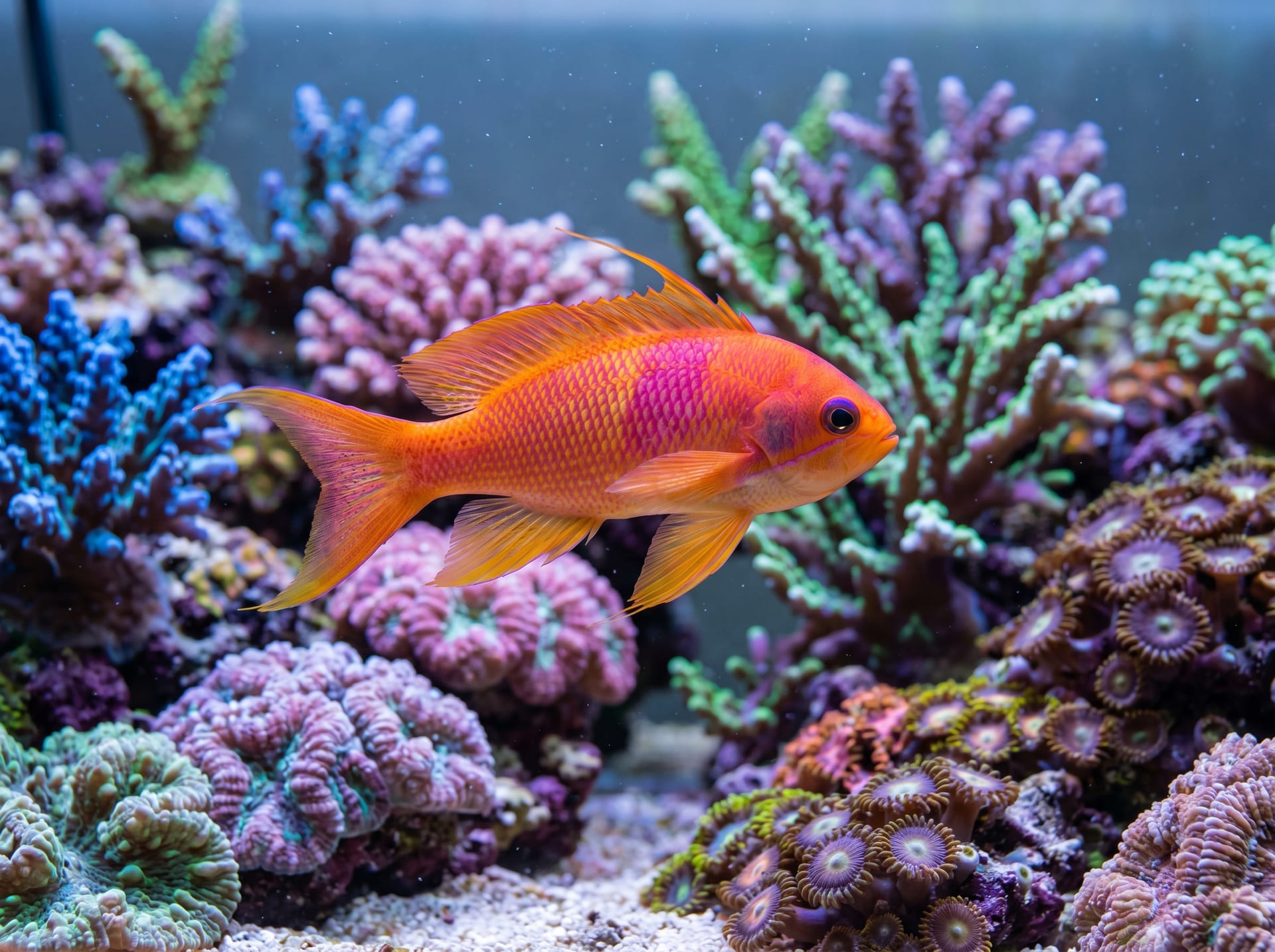
Bright red-orange with blue spots
Blueline Grouper
Blueline Grouper
50-60cm
Blue vertical stripes
Coral Hind
Coral Hind
25-35cm
Red body with blue-green spots
Jewel Grouper
Jewel Grouper
20-30cm
Brown with white jewel-like markings
Red-banded Grouper
Red-banded Grouper
30-40cm
Red-orange and white stripes
Required Tank Size
Since groupers grow large as they mature, a spacious tank appropriate for the adult size of the species is necessary.
Species
Minimum Recommended Tank Volume
Jewel Grouper (small species)
200L or larger
Coral Grouper / Coral Hind
300L or larger
Blueline Grouper / Red-banded Grouper
500L or larger
Juveniles can be kept in smaller tanks, but due to rapid growth, a larger tank will be needed within a few years. Before purchasing, always confirm the adult size of the species.
Water Quality Management
Groupers are best suited to a Fish-Only-With-Live-Rock (FOWLR) system rather than a coral reef tank. While they don't eat coral, they may damage coral by bumping into it while swimming, and their heavy bioload can degrade water quality.
Recommended Water Parameters
Parameter
Target Value
Specific Gravity
1.023-1.025
Temperature
24-27°C
pH
8.1-8.3
Nitrate (NO₃⁻)
20ppm or less
Ammonia / Nitrite
0ppm
Carnivorous fish have high bioloads and easily degrade water quality. Protein skimmer installation and regular water changes (10-20% per week) are essential.
Feeding and Diet
Although groupers prefer live food, training them to accept frozen food and pellets will greatly simplify care.
Feeding Acclimation Steps
First 1-2 weeks: Starve the fish to build appetite, then offer live food (live small fish like horse mackerel or Golden Red Shrimp) right in front of it
Gradually transition to frozen food: Offer frozen silverside (capelin) or frozen shrimp
Pellet food (large grain): Alternate carnivore pellets with live food to acclimate
If successful, the fish can be maintained on pellets alone.
Feeding frequency: Adults 3-4 times per week, juveniles daily in small amounts. Feed only as much as will be consumed in one feeding (uneaten food degrades water quality).
Tank Mate Considerations
Since groupers are strong predators, careful consideration is necessary when selecting tank mates.
Compatible tank mates (fish of equal or larger size)
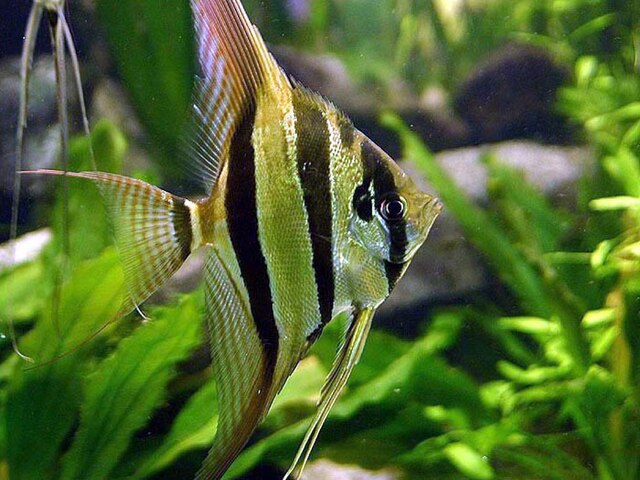
Large angelfish
Large tangs
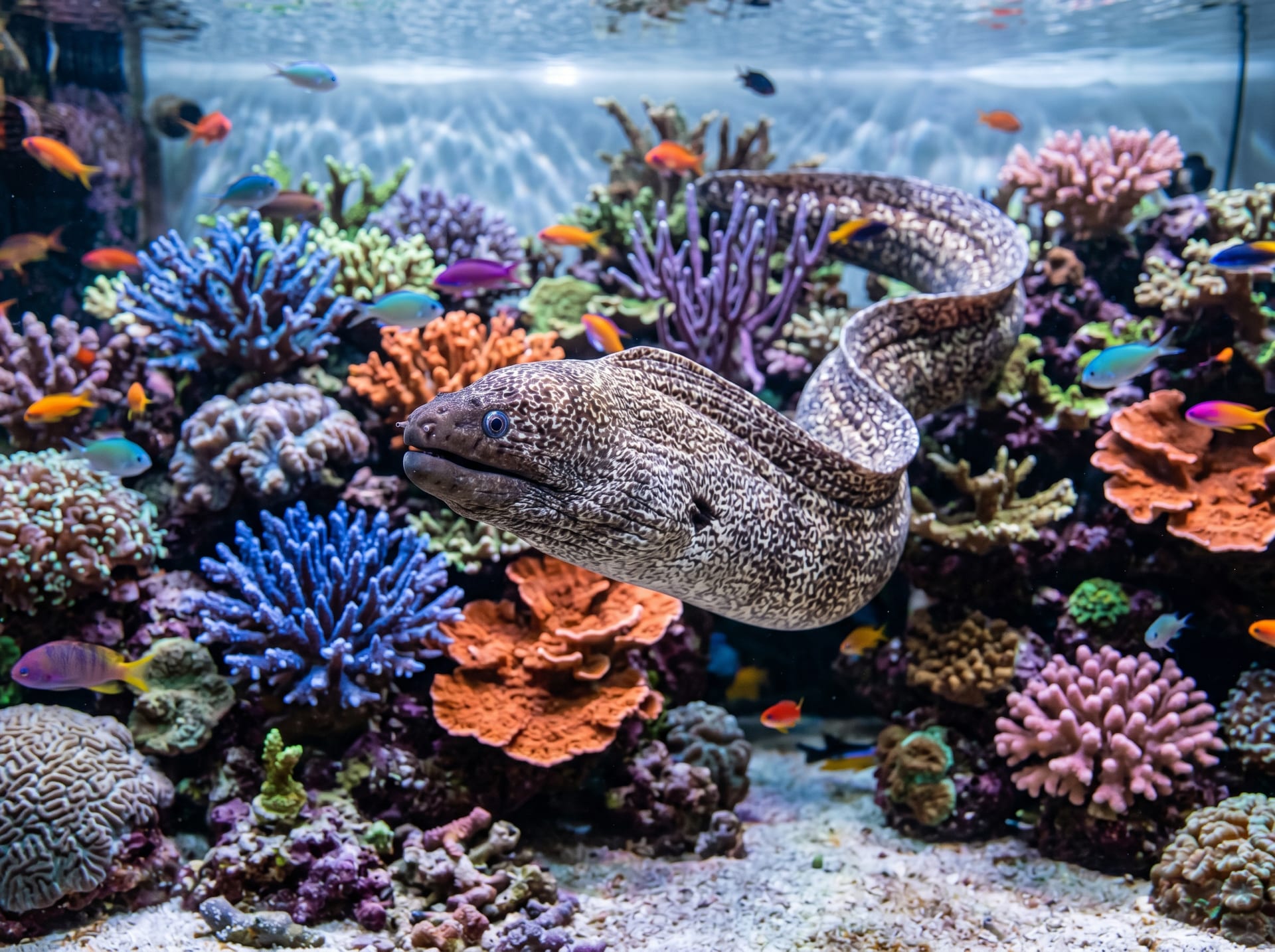
Moray eels (fish with similar temperament)
Incompatible tank mates (predation risk)
Small fish under 15cm in length (almost all)
Shrimp, crabs, and small crustaceans
Small gobies and dottybacks
Same-species grouping (grouper with grouper) results in intense territorial disputes, so keeping one per tank is safest.
Disease and Prevention
Groupers are prone to white spot disease (Cryptocaryon).
Prevention Measures
Upon introduction, quarantine for a minimum of 4 weeks in a treatment tank (low salinity and copper treatment)
Avoid sudden temperature fluctuations (maintain stable 25-26°C)
Prevent stress (harassment, poor water quality)
If early signs of white spot (white grain-like spots on the body) are detected, promptly isolate and treat with CuSO₄ (copper sulfate) medication or lowered specific gravity (1.009-1.012).
Summary: Challenging but Rewarding to Keep
Grouper fish are large, highly predatory, and not fish for casual keepers. However, their majestic swimming and vibrant coloration bring an overwhelming presence to any aquarium.
Before purchasing, fully consider the adult size, tank capacity, and compatibility issues, and determine whether you can commit to long-term care. With proper conditions, they can live over 10 years and are extremely rewarding fish to keep.