Damselfish Care Guide: Popular Species Beyond Sergeant Major Damselfish and Mixed-Tank Considerations
Introducing popular species of the damselfish family (Pomacentridae), which includes numerous types beyond the common sergeant major damselfish. Learn the care methods, territorial management, and reef tank compatibility of colorful species such as blue damselfish, black damselfish, and yellow-tailed blue damselfish.
Key Takeaways
Introducing popular species of the damselfish family (Pomacentridae), which includes numerous types beyond the common sergeant major damselfish. Learn the care methods, territorial management, and reef tank compatibility of colorful species such as blue damselfish, black damselfish, and yellow-tailed blue damselfish.
Related Species
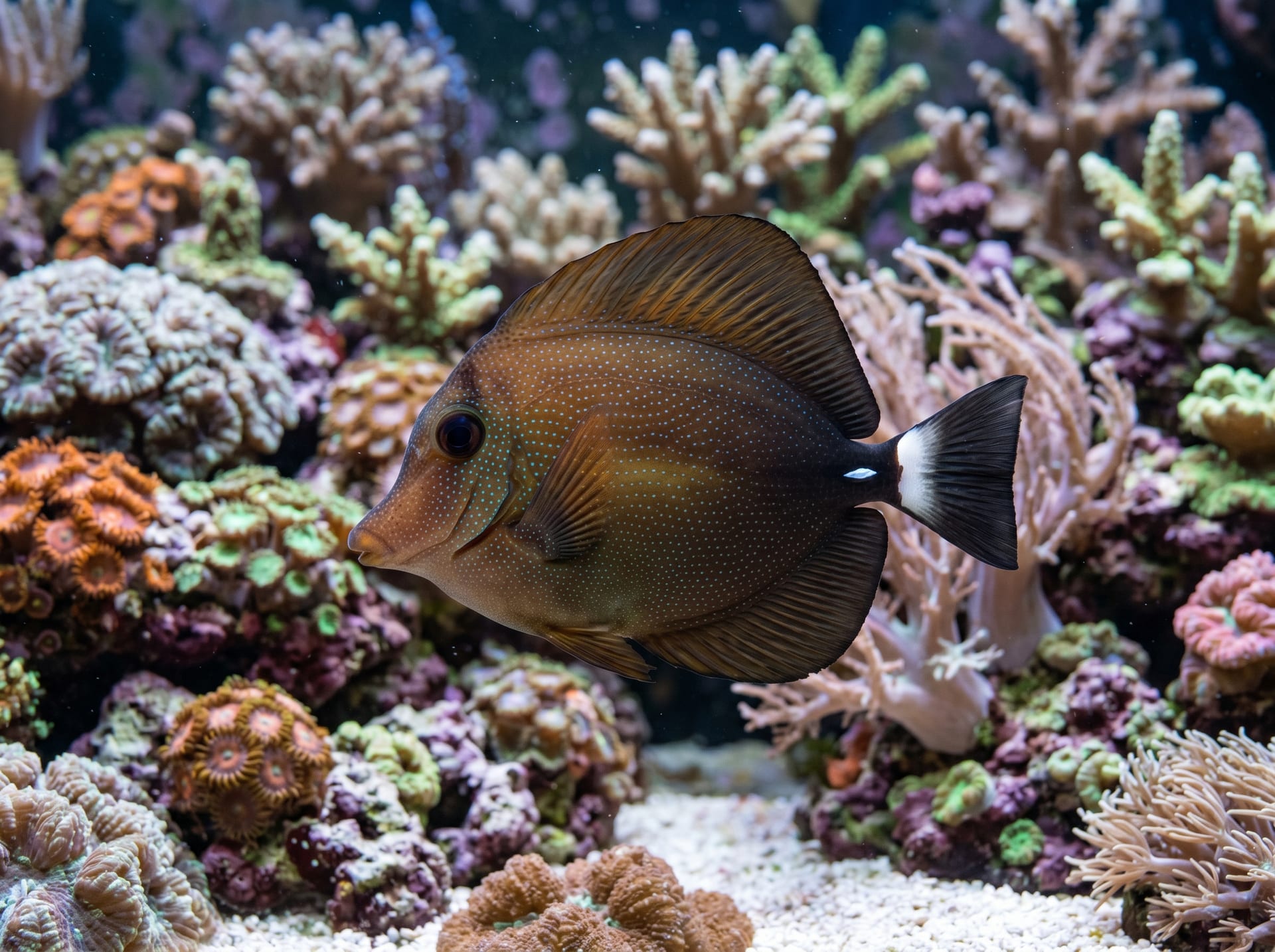
The Appeal and Characteristics of Damselfish
The damselfish family (Pomacentridae) is a group of small saltwater fish widely distributed in tropical and subtropical seas of the Indian Ocean, Pacific Ocean, and Atlantic Ocean, with over 400 species known worldwide. In aquaria, they are broadly divided into clownfish (subfamily Amphiprioninae) and other damselfish (subfamily Pomacentrinae, etc.).
Damselfish are attractive to beginners for their hardiness and vibrant coloration. They have strong tolerance for water quality fluctuations, adapt quickly to prepared foods, and are relatively affordable. However, despite their small size, many species have strong territorial instincts, requiring careful consideration when keeping multiple species together.
Guide to Popular Damselfish Species
Blue Damselfish (Chrysiptera cyanea)
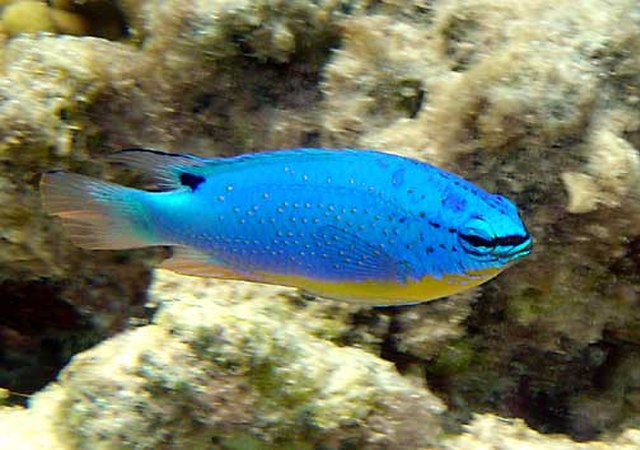
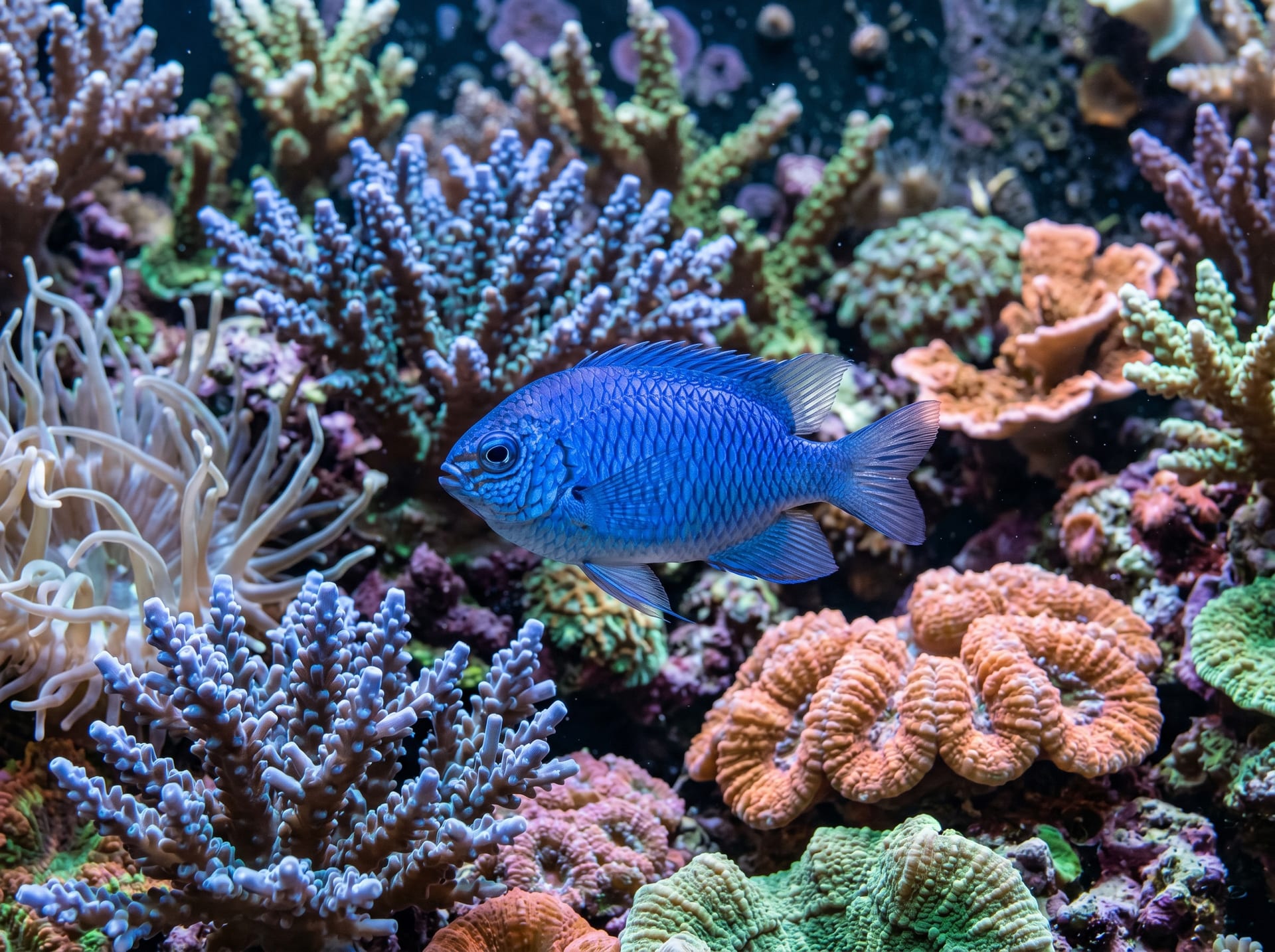
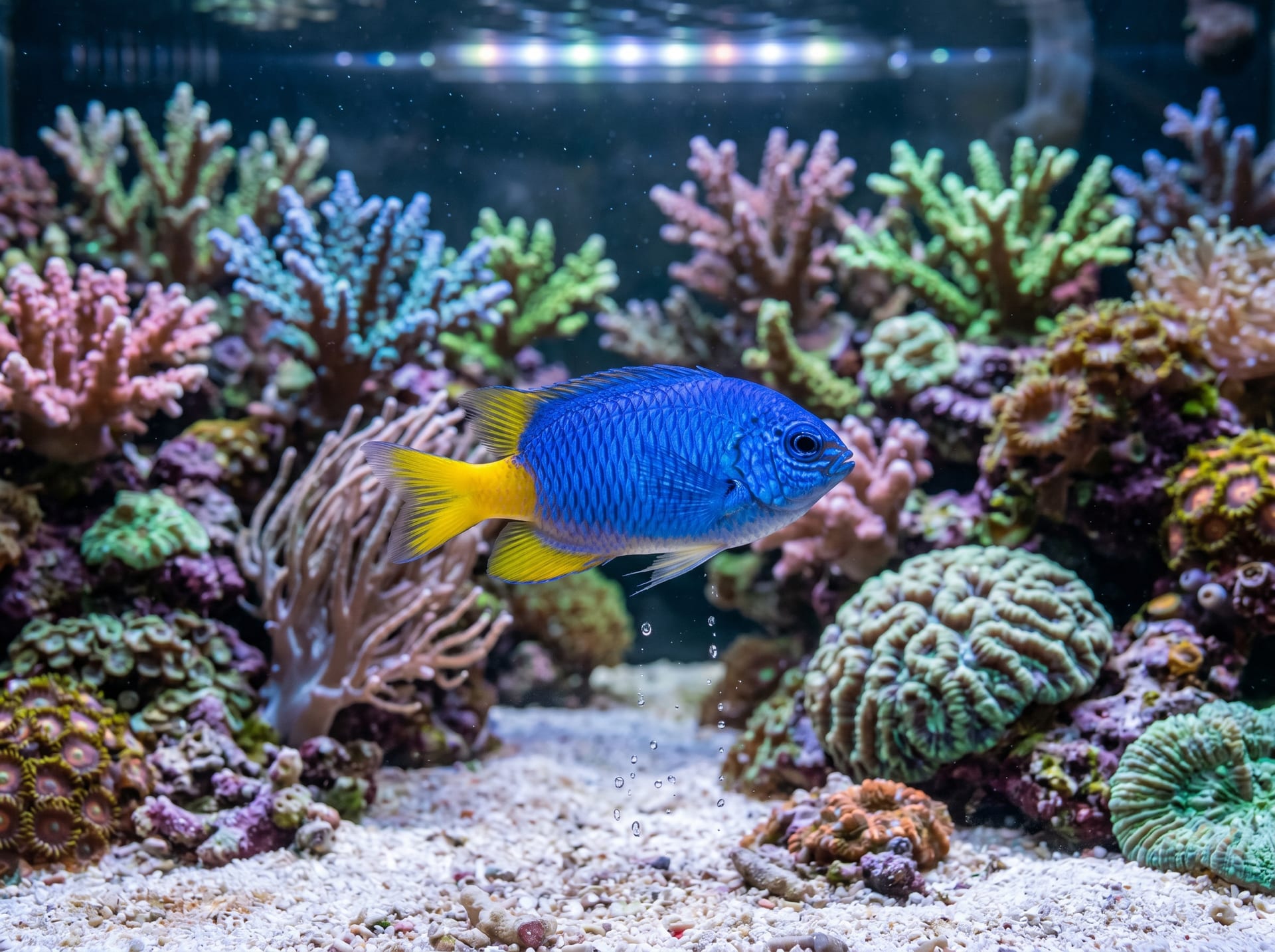
A classic beginner species known for its striking cobalt blue coloration, reaching about 5 cm in length. Sexual dimorphism can be determined by tail fin color, with males displaying a yellow tail. They have stronger territorial instincts than sergeant major damselfish, and disputes readily occur with same or closely related species, making single individuals or small groups in large tanks the recommended approach.
Care Tips
- Can be kept in tanks as small as 30-45 cm
- Always provide hiding spots such as rock overhangs
- Same species are prone to conflict unless kept in spacious tanks
Black Damselfish (Neoglyphidodon melas)
As juveniles, they display beautiful two-tone coloration of sapphire blue and black, but become entirely black as adults. They often become more aggressive as they mature, requiring careful selection of tank mates. If you want to enjoy their juvenile beauty, it's best to choose small individuals under 20-30 cm.
Yellow-tailed Blue Damselfish (Chrysiptera parasema)
Unlike the all-blue blue damselfish, this species has a blue body with only a yellow tail fin. It's relatively peaceful and easier to keep with other species, making it popular for small reef tanks due to its manageable care requirements.
Three-Spot Damselfish (Dascyllus trimaculatus)
A popular species known for its striking three white spots on a black background during the juvenile stage. They may exhibit anemone-dwelling behavior. They can grow to over 15 cm as adults and become more aggressive, so mixed-tank planning should be considered early.
Springer's Damselfish (Chrysiptera springeri)
A species with a compact 4-5 cm body and striking blue coloration. Territorial disputes are relatively mild compared to other blue damselfish species, and it's known as a species that's easier to keep in groups within reef tanks.
Tank Setup and Water Quality Management
Damselfish are adapted to coral reef environments and can be kept by maintaining standard saltwater aquarium water quality standards.
| Parameter | Recommended Range |
|---|---|
| Temperature | 24-27°C |
| Specific Gravity (Salinity) | 1.020-1.025 |
| pH | 8.1-8.4 |
| Ammonia/Nitrite | None detected |
| Nitrate | 30 ppm or less |
Damselfish have higher tolerance for nitrate compared to other saltwater fish and may survive even with slightly degraded water quality. However, neglecting water changes as a result can harm other fish and symbiotic corals. Perform partial water changes (10-20% of total volume) once or twice weekly consistently.
Handling Territorial Behavior
The biggest issue with damselfish is their territorial behavior. They become particularly aggressive toward fish of the same size or coloration.
Basic Principles for Managing Territory
- Don't place many damselfish in small tanks (60 cm or smaller)
- For multi-individual keeping of the same species, maintain a harem ratio (1 male : 2-3 or more females)
- Create size differences between established and new fish (add smaller fish after larger ones)
- Provide ample hiding spots such as rock overhangs and caves to distribute territories
Tank Reset Strategy If a territorial individual persistently chases other fish, temporarily isolating that individual and rearranging the tank layout can sometimes reset territorial behavior.
Compatibility with Reef Tanks
Most damselfish are harmless to corals and compatible with reef tanks. Species such as blue damselfish, yellow-tailed blue damselfish, and springer's damselfish are particularly known as representative "reef-safe" choices.
However, some species (such as certain surgeonfish and close relatives of springer's damselfish) exhibit algae-farming behavior, actively maintaining and protecting algae and cyanobacteria on live rock. In such cases, they may nip at coral surfaces, requiring careful observation when coexisting with corals.
Feeding and Health Management
Damselfish are omnivorous and consume both plant and animal matter.
Recommended Foods
- High-quality small pellet saltwater fish food (staple diet)
- Frozen copepods and brine shrimp (supplementary)
- Saltwater fish flakes (supplementary)
- Spirulina-containing food for algae-preferring species
Feed 2-3 times daily, providing amounts they can consume within 3-5 minutes. Remove uneaten food promptly, as leftovers degrade water quality.
Making Damselfish the Star of Your Tank
Damselfish are often underestimated as beginner saltwater fish because they're "too hardy," but when kept with appropriate tank mates in spacious tanks, their vibrant colors and active behavior bring the aquarium to life. In particular, schooling displays of blue damselfish and yellow-tailed blue damselfish never become tiresome to observe.
Understanding and properly managing territorial behavior makes this a group that can be enjoyed by both beginners and advanced aquarists. Don't stop at sergeant major damselfish—explore the diverse world of damselfish species.