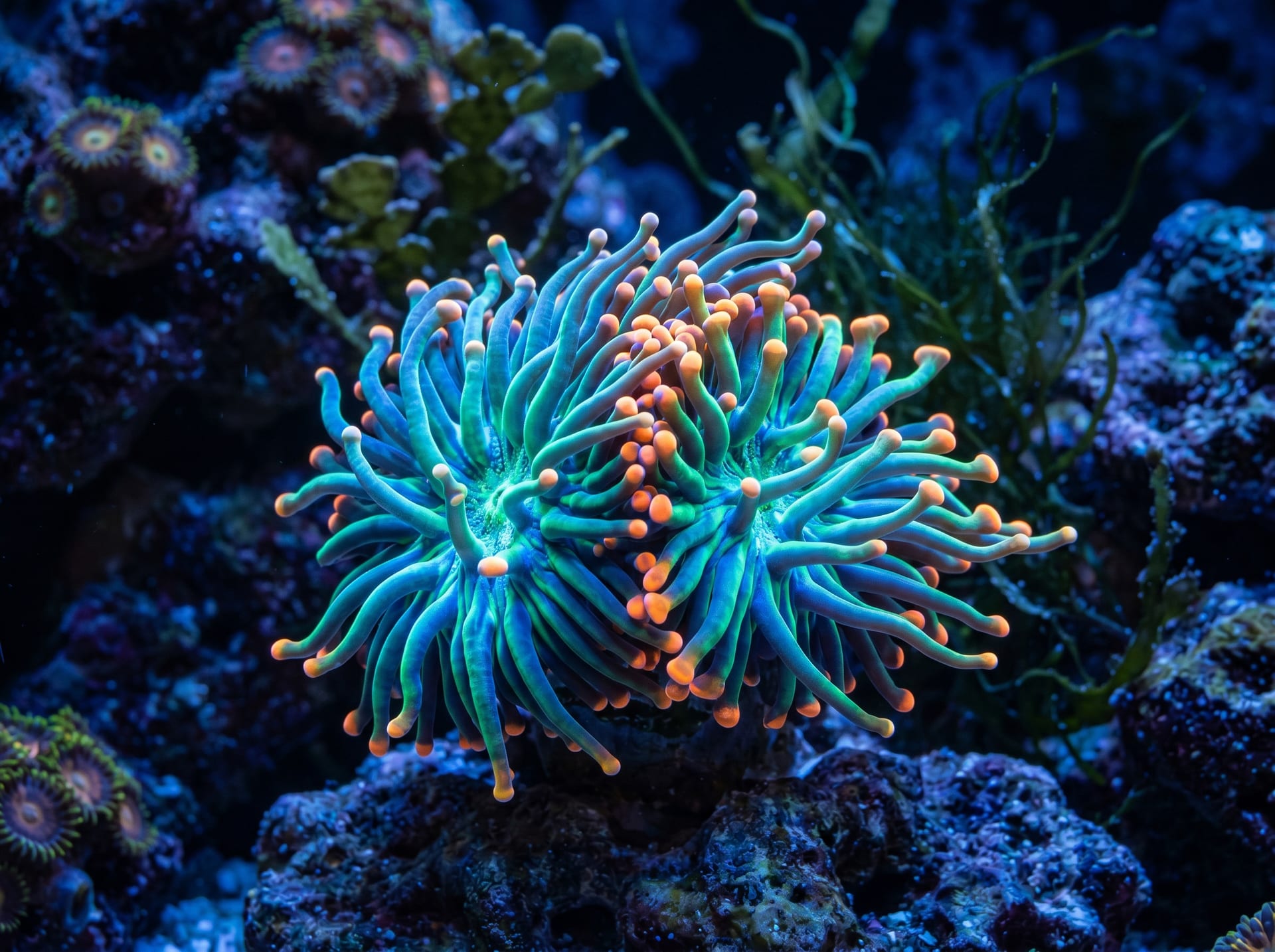
Euphyllia (Hammer / Torch)
Euphyllia corals (Hammer and Torch) are popular LPS corals prized for their distinctive hammer-shaped or tubular polyps that sway gracefully in the current. Known for their vibrant color variety and relatively hardy nature, they are considered beginner-friendly species for reef aquariums. Their slow, rhythmic movement adds a living quality to any aquascape, making them a long-time favorite among hobbyists.
0% commission on your first sales!Register by September 30, 2026 and your first 2 sales are commission-free!
Breeder Wanted!
List on BreederDirect and sell directly to customers nationwide!
BreederDirect's 6 Transparency Promises
Every Marine Fish & Coral listing shows Breeder's full disclosure. No wild-caught. Captive-bred priority, tank size guidance, temperament details—transparent aquaculture.
- Captive-bred
- WYSIWYG
- Reef-safe
- Care Info Included
- Origin Disclosed
- Temperament Listed
Browse all 42 breeds
Care Difficulty
Reef-safe
Temperament
Verified breeders wanted for Marine Fish & Coral
Breeders are signing up now ahead of launch. Subscribe to be notified when new listings go live.
Getting alerts is free with a member account. When new listings match your saved search, we'll notify you by email and in-app.
Browse other categories
Verified breeders (preview)
Are you raising marine fish & coral?
Register as a breeder and connect with buyers directly.
Apply as a breederAbout Euphyllia (Hammer / Torch)
Euphyllia corals (Euphyllia spp.) are among the most iconic LPS (large polyp stony) corals, widely distributed across tropical reefs from the Indian Ocean to the Pacific. Hammer corals (E. ancora) are recognized by their Y-shaped, hammer-like polyp tips, while torch corals (E. glabrescens) feature elongated tubular polyps with rounded ends — both sway elegantly in the current, bringing movement and vitality to any reef display. They come in a rich array of colors including green, gold, and purple-tipped varieties, making them highly collectible. Because they host symbiotic zooxanthellae that photosynthesize, they can thrive without heavy supplemental feeding under appropriate lighting. Growth is slow, but a stable environment can eventually reward keepers with natural propagation. With attention to placement spacing and sweeper tentacle aggression, Euphyllia corals serve as stunning centerpieces in a well-designed reef aquarium.
7 things to know before welcoming a Euphyllia (Hammer / Torch)
1Moderate Flow Is Ideal
Euphyllia corals have large polyps that are highly sensitive to water flow, and excessive direct current can damage their tissue. Aim for gentle, indirect flow using wavemakers or powerheads. If polyps remain retracted, review the direction and intensity of the flow.
2Sweeper Tentacle Aggression
Euphyllia corals extend elongated sweeper tentacles at night that can sting neighboring corals. Allow sufficient spacing between corals (at least 15–20 cm as a guideline) when placing them in the tank. Corals within the same Euphyllia genus coexist relatively well, but care is needed around other genera.
3Medium to Low Light Needs
Prolonged exposure to intense light increases the risk of bleaching. When using LED fixtures, aim for moderate intensity and place the coral at the mid-to-lower level of the tank. Gradually acclimate new corals to your lighting by slowly increasing intensity over time.
4Stable Water Parameters
Although relatively hardy among LPS corals, Euphyllia species are sensitive to sudden swings in calcium (400–450 mg/L), alkalinity (8–10 dKH), and magnesium. Build a habit of testing water quality one to two times per week. Gradual changes are far less stressful than rapid shifts, so perform water changes in small increments.
5Photosynthesis Dependency
Symbiotic zooxanthellae within the tissue provide most of their nutrition through photosynthesis. Maintain a consistent photoperiod of 8–10 hours per day. For supplemental nutrition, target-feeding small planktonic foods or liquid coral foods near the polyps once or twice a week promotes healthier growth.
6Proper Acclimation on Arrival
Do not add newly purchased corals directly to the tank; instead, use the drip acclimation method to slowly match temperature, salinity, and pH. Allow 30–60 minutes for acclimation to minimize stress. Polyps are commonly retracted right after introduction, so observe for a few days before drawing conclusions about their condition.
7Nuisance Algae and Nutrients
Elevated nitrate (above 20 mg/L) and phosphate (above 0.1 mg/L) can cause poor polyp extension and color loss. Controlling nutrients through a protein skimmer, avoiding overfeeding, and performing regular water changes forms the foundation of healthy long-term care.
Frequently asked questions about Euphyllia (Hammer / Torch)
- Q.Can hammer and torch corals be kept together in the same tank?
- A.Corals within the Euphyllia genus are generally more compatible with each other than with corals from other genera, and mixed displays are commonly reported. However, maintain adequate spacing (15–20 cm or more) and regularly check for contact from sweeper tentacles.
- Q.Why are my Euphyllia polyps not opening?
- A.Common causes include excessive water flow, sudden shifts in water parameters, overly intense lighting, or stress from a recent move. Allow a few days after introduction before drawing conclusions, and systematically check flow, water chemistry, and lighting one factor at a time.
- Q.Is target feeding necessary, and how often should I feed?
- A.They can be sustained by photosynthesis alone under adequate lighting, but supplemental target feeding once or twice a week with small planktonic or liquid foods tends to improve growth and coloration. Run the protein skimmer after feeding to prevent water quality decline.
- Q.What should I do if my coral starts bleaching?
- A.Bleaching signals the loss of zooxanthellae, often caused by issues with light, temperature, or water chemistry. First check water temperature (26–27°C) and key parameters, and consider temporarily reducing light intensity to ease stress. Recovery is possible if a stable environment is restored promptly.
- Q.How can I propagate Euphyllia corals through fragging?
- A.Healthy colonies can be fragged by cutting the skeleton with a bandsaw or bone cutters. Secure the fragment to a frag plug with coral-safe adhesive and keep it in a low-flow area while the cut heals. Avoid fragging corals that are already stressed or showing signs of bleaching.
Useful tools for Euphyllia (Hammer / Torch) care
Euphyllia (Hammer / Torch) related articles
Complete Guide to Euphyllia Coral Fragging and Propagation | Breeding and Sales Preparation for Hammer and Torch Corals
Complete breakdown of fragging (propagation) techniques for hammer corals, torch corals, and frogspawn corals (Euphyllia genus). From tool preparation to cutting, wound care, recovery in a frag tank, and species-specific considerations—a practical guide for breeders to reliably produce high-quality frag specimens.
Hammer Coral (Euphyllia) Tank Layout Guide | Positioning, Isolation, and Color Enhancement in Practice
Euphyllia corals including hammer corals, frogspawn corals, and torch corals are known for their striking appearance and potent toxicity. This practical layout guide covers proper spacing between corals, allelopathy countermeasures, color enhancement based on placement, and frag propagation—everything you need to maintain Euphyllia species long-term.
Hammer Coral & Torch Coral Care Guide | Water Flow, Lighting & Placement for Euphyllia LPS
Complete guide to caring for hammer corals and torch corals (Euphyllia genus). Detailed coverage of proper water flow, lighting, water quality, and spacing—essential tips for LPS beginners to avoid common mistakes.
Coral Husbandry Difficulty Classification: Complete Guide to LPS, SPS, and Euphyllia paraancora
A detailed breakdown of coral husbandry difficulty by classification—soft corals, LPS, and SPS. Covers husbandry conditions for representative LPS species like disk coral, brain coral, and frogspawn coral, explains why SPS like Acropora are challenging, and discusses the unique position of Euphyllia paraancora.
Complete Care Guide for Euphyllia Corals (Hammer Coral, Torch Coral, Frogspawn): Characteristics and Management
A species-by-species guide to caring for the most popular LPS corals: Euphyllia species (Hammer Coral, Torch Coral, Frogspawn). Practical tips on water flow, lighting, feeding, and propagation, plus management of common diseases like Brown Jelly.
How to Choose and Care for LPS Corals | Lobophyllia, Lobophyllia hemprichii, and Euphyllia
A thorough comparison of popular LPS coral species. Explains the characteristics of Lobophyllia, Lobophyllia hemprichii, Euphyllia and others, placement tips, feeding methods, and common beginner mistakes.
More in this category
Can't find the one you're looking for?
Post your wishes for free and breeders with matching animals will contact you with introductions.