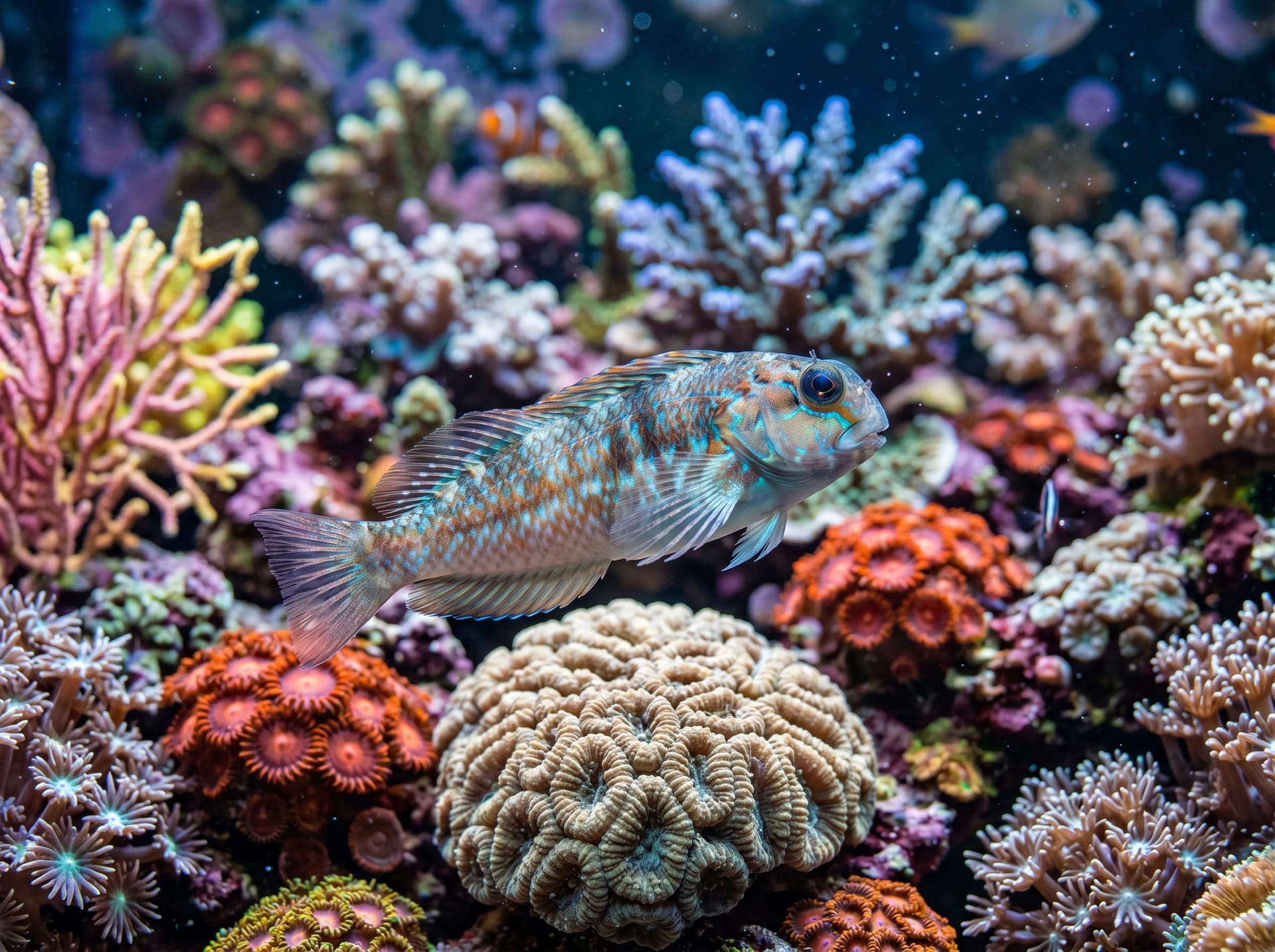
Bicolor with brown front and orange rear. Humorous algae-grazing behavior on rocks. Expressive face makes it popular.
View Blenny encyclopedia →First 3 sales - 0% commission!Register as a breeder by July 31, 2026 and your first 3 sales are commission-free!
Breeder Wanted!
List on BreederDirect and sell directly to customers nationwide!
Every Marine Fish & Coral listing shows Breeder's full disclosure. No wild-caught. Captive-bred priority, tank size guidance, temperament details—transparent aquaculture.
Breeders are signing up now ahead of launch. Subscribe to be notified when new listings go live.
Getting alerts is free with a member account. When new listings match your saved search, we'll notify you by email and in-app.
Are you raising marine fish & coral?
Register as a breeder and connect with buyers directly.
Price
Region
Attributes
The Bicolor Blenny (Ecsenius bicolor) is a small reef fish widely distributed across the Indo-Pacific, from the Indian Ocean to the western Pacific. Adults reach 8–10 cm and are instantly recognizable by their split coloration: a muted brown front half and a vivid orange rear half that makes them look almost like two different fish. Small skin flaps above the eyes, combined with large expressive eyes, give them an endearingly comical face that aquarists find irresistible. Temperamentally, they are peaceful and undemanding, claiming a rock crevice as home base while generally ignoring other species. Their herbivorous diet of microalgae and filamentous growth makes them natural algae controllers, and they thrive in reef aquascapes rich with live rock. Watching them flit from perch to perch, grazing diligently and staring back at the viewer, never gets old. With proper care they can live 3–6 years, making them a rewarding long-term companion for beginners and experienced reef-keepers alike.
1Excellent Algae Grazer
Bicolor Blennies primarily feed on algae and actively graze on live rock and aquarium glass. They help naturally control excess algae growth, making them useful tank cleaners. However, algae alone does not provide complete nutrition, so supplement their diet with quality pellet or flake foods.
2Love of Rocky Hiding Spots
Bicolor Blennies have a natural habit of tucking into crevices and small holes in rockwork. Providing ample live rock or artificial hiding spots helps them feel secure and reduces stress. Fish that initially hide often become more active and visible once they settle into their environment.
3Territorial Tendencies
Bicolor Blennies can display territorial behavior toward their own species or similarly shaped bottom-dwelling fish. In smaller tanks, keeping multiple individuals is generally not recommended. They tend to coexist peacefully with calm reef fish and gobies, so choose tankmates accordingly.
4Tank Size Requirements
Given that adults reach 8–10 cm, a tank of at least around 100 liters is generally recommended. Rather than open swimming space, prioritizing ample rock structure and substrate area is more important for this species. A well-aquascaped tank helps reduce stress and encourages natural behavior.
5Water Quality Guidelines
A water temperature of 24–26°C and specific gravity of 1.023–1.025 are appropriate targets. This species is sensitive to ammonia and nitrite, so introducing it to a fully cycled and established tank is strongly advised. Regular partial water changes, approximately once a week, help maintain stable water quality.
View Blenny encyclopedia entry →
Care difficulty, lifespan, size and diet — all basics covered.
Blenny Care Guide — Rockwork Layouts & Managing Territorial Behavior
Blenny care guide: rockwork design, territorial behavior management, tankmate compatibility, algae grazing benefits, and tips for mixed blenny tanks.
Goby & Blenny Care Guide — Charming Bottom-Dwelling Marine Fish
Keeping gobies and blennies: symbiotic gobies with pistol shrimp, species profiles, substrate selection, and tankmate compatibility.
6Feeding Tips
Wild-caught individuals may be slow to accept prepared foods due to their strong algae-feeding instincts. Starting with dried seaweed, plant-based flakes, or nori sheets and gradually introducing sinking pellets is an effective transition strategy. If appetite is poor, check water quality and hiding spot availability first.
7Acclimation Considerations
Bicolor Blennies may take several days to acclimate to a new tank, and it is common for them to hide and refuse food initially. Use a slow drip acclimation method and consider dimming the lights slightly to help them settle. If refusal to eat persists beyond about one week, test the water parameters to rule out environmental issues.