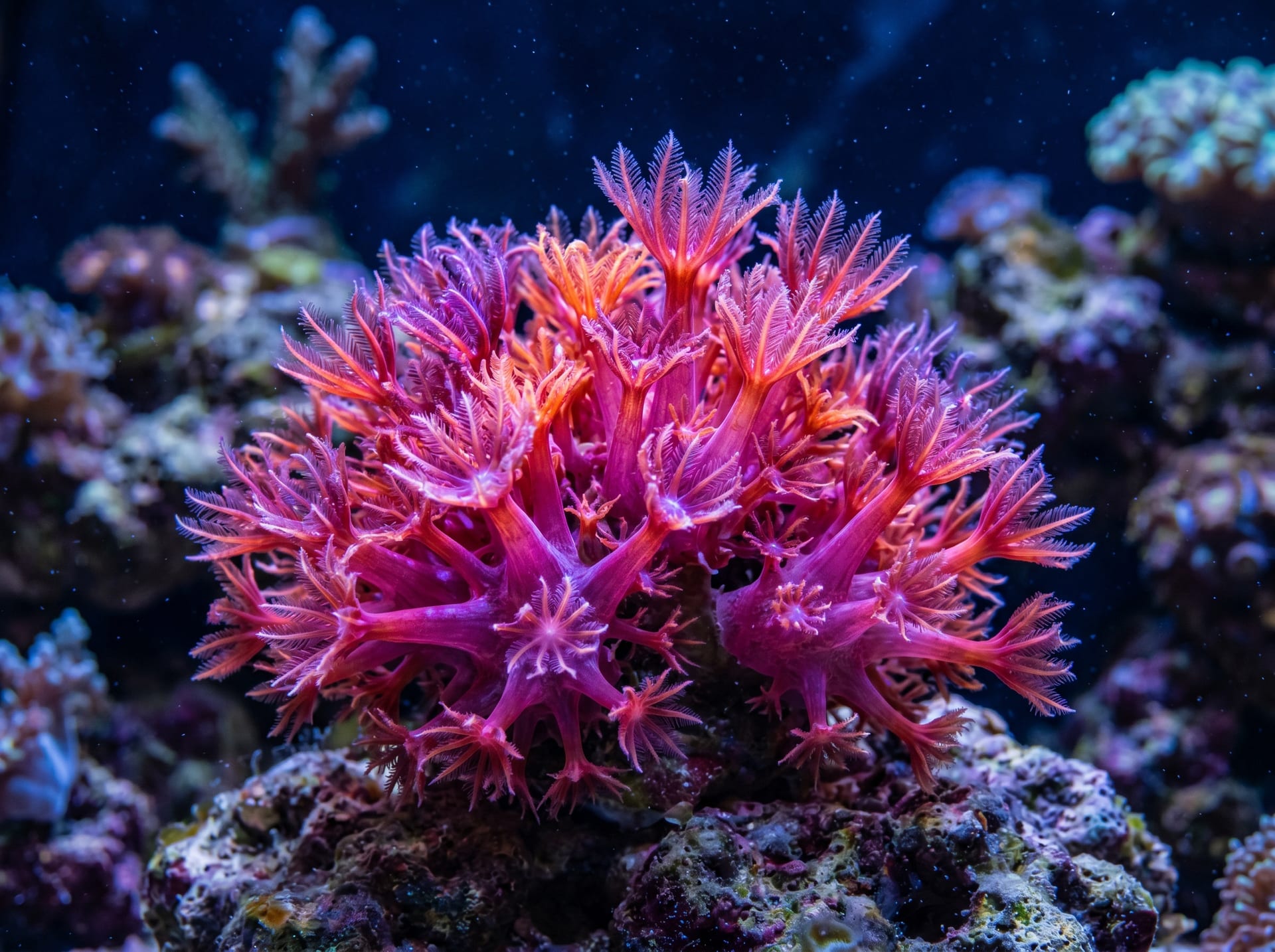
NPS (Non-Photosynthetic)
NPS (Non-Photosynthetic Corals) are a diverse group of corals that rely not on light but on direct feeding of plankton and organic matter to thrive. They include species such as sun corals and carnation corals, and can be kept without intense lighting. Their striking forms and vivid colors add dramatic depth to reef aquariums, making them a favorite among experienced marine hobbyists.
0% commission on your first sales!Register by September 30, 2026 and your first 2 sales are commission-free!
Breeder Wanted!
List on BreederDirect and sell directly to customers nationwide!
BreederDirect's 6 Transparency Promises
Every Marine Fish & Coral listing shows Breeder's full disclosure. No wild-caught. Captive-bred priority, tank size guidance, temperament details—transparent aquaculture.
- Captive-bred
- WYSIWYG
- Reef-safe
- Care Info Included
- Origin Disclosed
- Temperament Listed
Browse all 42 breeds
Care Difficulty
Reef-safe
Temperament
Verified breeders wanted for Marine Fish & Coral
Breeders are signing up now ahead of launch. Subscribe to be notified when new listings go live.
Getting alerts is free with a member account. When new listings match your saved search, we'll notify you by email and in-app.
Browse other categories
Verified breeders (preview)
Are you raising marine fish & coral?
Register as a breeder and connect with buyers directly.
Apply as a breederAbout NPS (Non-Photosynthetic)
Non-Photosynthetic Corals (NPS) are a broad group of corals that lack symbiotic zooxanthellae and obtain nutrition by capturing zooplankton and organic particles with their polyps. In nature, they thrive in deep-water habitats, cave systems, and shaded vertical reef walls where sunlight rarely penetrates, often forming dense colonies on overhangs. The group spans diverse families—including sun corals, sea fans, and carnation corals—and is celebrated for its vivid hues of red, orange, yellow, and white. In the aquarium, their low light requirements make them appealing for systems where energy efficiency is a priority, and their sculptural forms add remarkable depth to rockwork layouts. However, successful NPS keeping demands daily targeted feeding and diligent water quality management, placing them firmly in the intermediate-to-advanced category of reef husbandry.
7 things to know before welcoming a NPS (Non-Photosynthetic)
1No Intense Lighting Needed
NPS corals do not photosynthesize, so high-intensity metal halide or LED lighting is not required. However, they do not thrive in complete darkness either; low, ambient lighting similar to natural shade suits them best. While lighting costs are lower, plan for the increased cost of regular feeding instead.
2Daily Feeding Is Essential
The defining characteristic of NPS corals is their need for frequent, consistent feeding to survive. Frozen copepods, rotifers, and liquid plankton foods should be offered one to several times daily. Neglecting feedings leads to rapid decline, so this group is not well-suited for hobbyists who travel frequently or have irregular schedules.
3Strong, Varied Flow Required
NPS corals extend their polyps to capture plankton, requiring moderately strong and varied water flow. A single unidirectional strong current can cause polyps to retract, so using multiple pumps to create turbulence is more effective. Replicating natural, wave-like flow significantly improves feeding efficiency.
4Sensitive to Water Quality
Frequent feeding easily degrades water quality, making nitrate and phosphate management especially critical. Enhancing protein skimming and performing regular water changes (approximately 10–20% weekly) are key to long-term success. Maintaining a stable temperature of 24–26°C and a specific gravity around 1.025 is also fundamental.
5Placement Matters Greatly
Placing NPS corals under overhangs or in shaded, cave-like spots within the aquascape best replicates their natural habitat. Direct intense light can damage their tissue. Within the tank, keep them away from other corals to avoid contact and potential stinging from sweeper tentacles.
6Higher Initial and Running Costs
NPS corals are less commonly available in the hobby, and quality specimens can cost several thousand to tens of thousands of yen per polyp. Equipment such as specialized feeding foods, protein skimmers, and flow pumps also add to the investment. Running costs tend to be higher than for photosynthetic corals, so budget planning is important before you begin.
7Best Suited for Experienced Keepers
NPS corals are considered an advanced category, and beginners to marine aquariums may find them challenging to keep successfully. It is recommended to first gain experience with live rock and hardier soft corals, building solid water management and feeding routines before attempting NPS. Once a stable environment is established, they can be enjoyed for many years with their unique and striking beauty.
Frequently asked questions about NPS (Non-Photosynthetic)
- Q.Can NPS corals be kept without aquarium lighting?
- A.Since NPS corals do not photosynthesize, intense lighting is not required. However, some ambient light is still useful for algae control and for managing other tank inhabitants. Keeping them in complete darkness makes overall tank management difficult and is generally not recommended.
- Q.How often and how much should I feed NPS corals?
- A.Frequency varies by species, but daily to 3–4 times per week is a common guideline. Use target feeding with a pipette when polyps are open, offering small amounts at a time. Overfeeding degrades water quality, so adjust quantities to ensure no significant leftovers remain.
- Q.Can NPS corals be kept with other corals and fish?
- A.NPS corals are generally non-aggressive and compatible with most tank mates. However, fish that nip at polyps—such as butterflyfish—should be avoided. During feeding, take care that other inhabitants do not steal food before the coral can consume it.
- Q.Why are my NPS coral polyps not opening?
- A.Common causes include deteriorating water quality (elevated nitrates or phosphates), inappropriate flow, transport stress, or insufficient feeding. Start by testing your water parameters, then reassess flow direction and placement. Allow 1–2 weeks of acclimation after transport before expecting polyps to open consistently.
- Q.Are NPS corals suitable for beginner reef keepers?
- A.NPS corals generally require daily feeding routines and stable water chemistry, making prior experience with saltwater fish or photosynthetic corals advisable before attempting them. That said, difficulty varies significantly across species, and some are more forgiving than others. Starting with well-documented, hardier species is the recommended approach for those new to NPS keeping.
Useful tools for NPS (Non-Photosynthetic) care
NPS (Non-Photosynthetic) related articles
Coral Tank PAR·PPFD Measurement and Light Spectrum Optimization Guide | Species-Specific LED Adjustment and Breeding Promotion
Practical protocol for PAR·PPFD measurement using quantum sensors, spectrum optimization for SPS·LPS·NPS categories, LED multi-channel adjustment procedures, photoperiod scheduling for breeding induction, and detailed explanation of continuous measurement data monitoring methods.
Tube Coral (Tubastrea) Care Guide | Long-term Maintenance of Light-Free NPS Corals through Proper Feeding and Environmental Setup
A comprehensive guide to caring for Tube Corals (Tubastrea genus, Sun Corals). Learn the characteristics of non-photosynthetic NPS corals, and master proper feeding frequency, target feeding, water flow, and lighting setup, plus practical solutions to common beginner mistakes.
Complete Feeding Guide for Non-Photosynthetic Corals (NPS) | Husbandry Techniques for Low-Light Cultivation
A comprehensive guide to feeding methods and husbandry environments for non-photosynthetic corals (NPS) that lack zooxanthellae. Introduces nutritional management, flow design, and water quality maintenance tips for popular NPS species such as Trumpet Coral, Sunkaiya, and Duncan Coral.
NPS (Non-Photosynthetic Corals) Beginner's Guide | Species, Tank Environment & Basic Feeding
Learn how to care for rare non-photosynthetic NPS corals such as cup corals, tube corals, and sea squirts. We explain why low light is necessary, types and frequency of feeding, water flow settings, and common beginner mistakes in detailed beginner-friendly guidance.
More in this category
Can't find the one you're looking for?
Post your wishes for free and breeders with matching animals will contact you with introductions.