Complete Feeding Guide for Non-Photosynthetic Corals (NPS) | Husbandry Techniques for Low-Light Cultivation
A comprehensive guide to feeding methods and husbandry environments for non-photosynthetic corals (NPS) that lack zooxanthellae. Introduces nutritional management, flow design, and water quality maintenance tips for popular NPS species such as Trumpet Coral, Sunkaiya, and Duncan Coral.
Key Takeaways
A comprehensive guide to feeding methods and husbandry environments for non-photosynthetic corals (NPS) that lack zooxanthellae. Introduces nutritional management, flow design, and water quality maintenance tips for popular NPS species such as Trumpet Coral, Sunkaiya, and Duncan Coral.
Related Species
Non-Photosynthetic Corals (NPS)
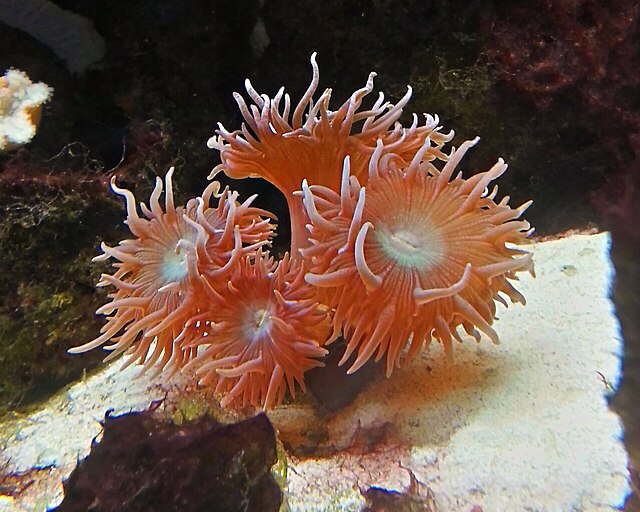
Most corals obtain energy through photosynthesis via symbiosis with zooxanthellae (brown algae). However, non-photosynthetic corals (NPS: Non-Photosynthetic Coral) lack zooxanthellae and sustain life by preying on organic matter, plankton, and detritus floating in the water.
Representative species include Trumpet Coral (Dendrophyllia genus), [source verification needed for this species name], Sunshine Coral (Tubastraea genus), and Duncan Coral (Duncanopsammia axifuga; note: this species possesses zooxanthellae and is photosynthetic, not NPS). They are growing in popularity due to their vibrant appearance and unique forms, but they are more difficult to keep than photosynthetic corals, with feeding management being critical to survival.
The greatest appeal of NPS corals is that they "do not require high light intensity." They can be placed under rock faces, in shaded areas, or in low-light spots, and they thrive even in reef tanks or frag tanks with reduced lighting costs. Conversely, they are ideal for utilizing "dead zones" where strong lighting does not reach. However, feeding management becomes a lifeline, and without regular nutritional supplementation, they will weaken and die within weeks.
Feeding Options and Selection
There are multiple approaches to feeding NPS corals, and the effectiveness and water quality impact vary depending on the food type. The ideal approach is to use a combination of multiple feeding methods.
Microplankton (highest priority): Representative examples include copepods, rotifers, and Artemia nauplii. Their small size (approximately 50–200 μm) is advantageous as they are readily ingested by the polyps. When offered live, their movement in the water stimulates the NPS's predatory instincts, resulting in significantly improved feeding response. Copepod cultivation is somewhat costly, but it is highly effective for long-term husbandry.
Phytoplankton (supplementary): Liquid cultures of microalgae such as Chaetoceros and Nannochloropsis remain suspended in the water as DOC (dissolved organic carbon) and indirectly supply nutrients through bacterial communities. While their feeding effect alone is limited, combining them with microplankton enriches the food chain within the tank.
Artificial foods (convenient supplement): Liquid-type products such as Reef Roids, BRS products, and AlgaeBran are convenient but easily disperse in the water and can degrade water quality. When using them, apply directly near the polyps with a pipette and promptly remove excess with a protein skimmer.
Frozen copepods and small shrimp (growth promotion): Thaw and offer in small portions. While protein-rich and effective for growth promotion, their large size makes them unsuitable for species with smaller polyp openings. They are particularly effective for species with large polyps, such as Dendrophyllia.
Feeding Frequency, Timing, and Technique
Feeding NPS corals once to twice daily is the standard. However, excessive feeding rapidly degrades water quality, so "small amounts and frequent feedings" is the basic principle.
The most critical point during feeding is temporarily stopping the pump. Before feeding, stop the circulation pump and return pump for 10–15 minutes, or reduce flow to a minimum. If the water flow remains strong, the food will be swept away instantly and not reach the polyps. Using a pipette (such as a turkey baster or fine-tipped pipette) to inject food directly near the polyp opening significantly increases intake efficiency.
Feeding in the evening is recommended. Most NPS species are nocturnal and their polyps open at night. Polyps are most expanded 1–2 hours after lights turn off. For individuals that tend to stay closed during the day, try changing the feeding time to after the lights turn off. Polyp expansion directly indicates feeding success.
After feeding, restart the skimmer 1–2 hours later to remove excess organic matter. Neglecting this causes a sharp rise in nitrate and phosphate levels, adversely affecting other corals and fish.
Flow Design and Water Quality Optimization
While NPS corals are adapted to low light, moderate water flow is essential. They prefer gentle, multidirectional turbulent flow (random flow) and avoid strong, unidirectional linear flow. When placing them in the shade of a frag rack or under a rock face, fine-tune the circulation pump's angle to ensure indirect turbulent flow reaches them.
Regarding water quality parameters, ultra-low nutrient salt (ULNS) environments are unsuitable for NPS. In ULNS tanks aiming for zero nitrate and zero phosphate, organic matter is too scarce and NPS corals starve. The ideal parameters are a "moderate nutrient" environment with nitrate at 5–15 ppm and phosphate at 0.02–0.05 ppm.
The following specific management techniques are effective.
- Clean the protein skimmer's collection cup only about once per week (to avoid over-skimming)
- Increase live rock quantity to establish a robust bacterial community
- Maintain the sand bed at a moderate depth (5–7 cm) to preserve the detritus layer
- Use caution with bio-pellet reactors (they may over-remove organic matter)
Maintain stable temperature at 24–26°C, specific gravity at 1.025–1.026, and pH at 8.1–8.3. Abrupt water quality changes damage NPS corals more severely than photosynthetic corals, so water changes should be limited to once per week at 10–15%.
Common Problems, Diagnosis, and Solutions
Polyps remain closed and won't expand: Water flow may be too strong, or light may be hitting them directly. Use a shade board or relocate to the shade of live rock. Similar symptoms appear after abrupt changes in temperature or salinity, so observe for 3–5 days after environmental changes.
Bleaching, shrinkage, or melting: The most common cause is insufficient feeding. Change food type or increase feeding frequency. The second most common cause is abrupt water quality changes (especially rapid reduction in nutrients). If nitrate and phosphate drop sharply, temporarily stop carbon source supplementation to restore organic matter levels.
Brown or white mucus secretion: This is a stress signal. Avoid abrupt environmental changes (large water changes, sudden temperature shifts, lighting schedule changes) and prioritize environmental stability. If heavy mucus secretion occurs, isolate the coral and allow recovery in a low-flow environment.
Competition with other corals: NPS corals have low chemical defense capabilities and are weakened when placed near species with sweeper tentacles, such as Elegance corals or Frogspawn corals. It is essential to keep NPS corals at least 10–15 cm away from other corals.
Environment Building and Species Selection for Long-Term Care
For long-term maintenance of NPS corals, establishing a "feeding routine" and "environmental stability" are everything. Feeding at the same time daily and habituating the cycle of pump shutdown → feeding → skimmer restart greatly reduces the risk of failure.
For beginner-friendly starter species, Dendrophyllia (Trumpet Coral) is ideal. It has large polyps that are easy to feed, is relatively hardy, and changes in condition are easily visible. As you gain experience, progressing to Sunkaiya or Frabellina is a natural next step.
Establishing a dedicated NPS tank (low light, moderate nutrients, feeding-specialized) allows you to avoid parameter conflicts with photosynthetic corals. The approach of setting up a 60 cm or similar sub-tank dedicated exclusively to NPS is a practical choice that balances cost and management burden.
With proper feeding and water quality management established, NPS corals can be maintained long-term for years. We encourage you to experience the unique satisfaction of transforming the "dark zones" of your tank where light doesn't reach into a vibrant ecosystem.