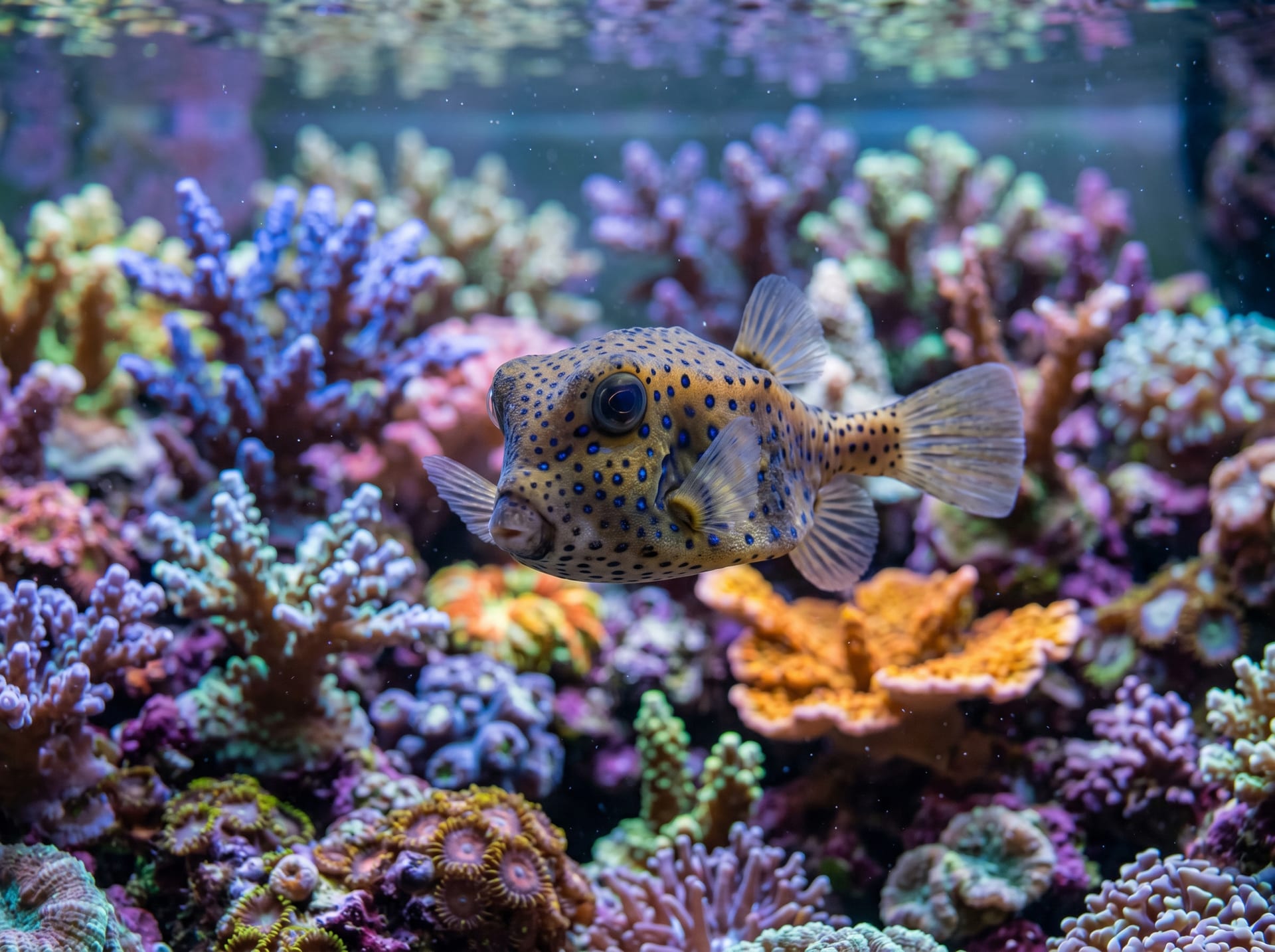
Pufferfish / Boxfish
Pufferfish and boxfish are beloved saltwater fish known for their round, charming bodies and comical swimming style. Some species carry toxins, so care is needed when choosing tankmates and handling them. While certain species are suitable for beginners, stable water quality and a well-prepared environment are essential for long-term success.
0% commission on your first sales!Register by September 30, 2026 and your first 2 sales are commission-free!
Breeder Wanted!
List on BreederDirect and sell directly to customers nationwide!
BreederDirect's 6 Transparency Promises
Every Marine Fish & Coral listing shows Breeder's full disclosure. No wild-caught. Captive-bred priority, tank size guidance, temperament details—transparent aquaculture.
- Captive-bred
- WYSIWYG
- Reef-safe
- Care Info Included
- Origin Disclosed
- Temperament Listed
Browse all 42 breeds
Care Difficulty
Reef-safe
Temperament
Verified breeders wanted for Marine Fish & Coral
Breeders are signing up now ahead of launch. Subscribe to be notified when new listings go live.
Getting alerts is free with a member account. When new listings match your saved search, we'll notify you by email and in-app.
Browse other categories
Verified breeders (preview)
Are you raising marine fish & coral?
Register as a breeder and connect with buyers directly.
Apply as a breederAbout Pufferfish / Boxfish
Pufferfish and boxfish belong to the order Tetraodontiformes and are found across tropical and subtropical oceans worldwide. Their distinctive forms are protected either by rigid bony skin (boxfish) or flexible, expandable skin (pufferfish), and they defend themselves by inflating their bodies or through stored toxins. Their wide, expressive eyes and the gentle flutter of their pectoral fins give them an almost cartoonish charm that makes them endlessly engaging to watch. Many species grow accustomed to their keepers and will approach the surface at feeding time, displaying recognizable individual personalities. The true appeal of keeping these fish lies in observing each individual's daily behavior and quirks. That said, they require dedicated care — they produce considerable waste, can be challenging to house with other species, and need a diet that naturally wears down their ever-growing teeth. A solid foundation in marine fishkeeping is recommended before bringing one home.
7 things to know before welcoming a Pufferfish / Boxfish
1Be Aware of Toxins
Many pufferfish carry toxins such as tetrodotoxin in their skin and organs. These toxins can be released into the water when the fish is stressed or dies, potentially harming tankmates. Boxfish can also secrete a toxin called pahutoxin when threatened or distressed.
2Choose Tankmates Carefully
Pufferfish have strong beak-like teeth and a tendency to nip at corals, shellfish, crustaceans, and long-finned fish. Their predatory and omnivorous nature limits compatible tankmates. Some species are best kept alone due to territorial behavior even among their own kind.
3Feed Hard Foods for Dental Health
Pufferfish teeth grow continuously throughout their lives, and without proper wear they can become overgrown, making it difficult for the fish to eat. Regularly offering hard foods like shellfish, shrimp, and crustaceans helps keep teeth worn down naturally. Severely overgrown teeth may require trimming by a specialist.
4Water Quality Is Critical
Pufferfish and boxfish are sensitive to water quality deterioration, and elevated ammonia or nitrite levels can quickly cause health issues. Larger individuals produce significant waste, making a high-capacity filter and regular water changes essential. Maintaining a stable specific gravity of 1.020–1.025 is recommended.
5Provide Adequate Tank Size
Many species grow to 20–50 cm or more, making long-term care in small tanks impractical. Tanks of at least 120–180 liters or more may be recommended depending on the species, to allow free swimming and provide hiding spots. Always check the adult size of the species before purchasing and plan accordingly.
6Personable and Quick to Bond
Pufferfish and boxfish are intelligent fish that can recognize their owners and often swim up eagerly at feeding time. Their distinctive round eyes and comical movements make them highly entertaining to observe. However, stress and boredom can affect their health, so providing environmental enrichment is worthwhile.
7Allow Proper Acclimation Time
Moving to a new tank is highly stressful, so careful acclimation using methods such as the drip method is important. Newly introduced fish may refuse food at first, but appetite typically returns once they settle in. Providing hiding spots helps them feel secure and speeds up the acclimation process.
Frequently asked questions about Pufferfish / Boxfish
- Q.Can pufferfish be kept in a reef tank?
- A.Most pufferfish are not well-suited to reef tanks because they tend to nip at corals and pick at invertebrates. A few smaller species are considered more reef-compatible, but individual behavior varies and there are no guarantees. A fish-only setup is generally the safest choice.
- Q.What should I do if my puffer inflates?
- A.First, identify and remove the source of stress — an aggressive tank mate, sudden water change, or disturbance. If the fish inflated underwater, allow it to deflate naturally in a calm environment. If air was ingested during inflation, consult an aquatics specialist as soon as possible.
- Q.What should I do if my puffer's teeth are overgrown?
- A.Regular feeding of hard foods like shellfish and snails helps prevent overgrowth. If the teeth are already too long and the fish is struggling to eat, consult an experienced aquatics veterinarian or specialist retailer — trimming may be necessary and should be performed by someone with hands-on experience.
- Q.Is there a difference in difficulty between pufferfish and boxfish?
- A.Both groups are considered intermediate-level fish, but boxfish carry an additional risk: when severely stressed, they can release large amounts of ostracitoxin (pahutoxin) into the water, which can be lethal to all inhabitants. Pufferfish also require careful management, but the risk of toxic release is generally lower than with boxfish.
- Q.Is it better to keep pufferfish alone?
- A.While it depends on the individual and species, pufferfish are often territorial and prone to fin-nipping, so solo keeping tends to minimize problems. If mixing species, choose large, peaceful fish that occupy different areas of the tank, and ensure there is ample space and plenty of hiding spots for all inhabitants.
Useful tools for Pufferfish / Boxfish care
Pufferfish / Boxfish related articles
See more Pufferfish / Boxfish articles →More in this category
Can't find the one you're looking for?
Post your wishes for free and breeders with matching animals will contact you with introductions.