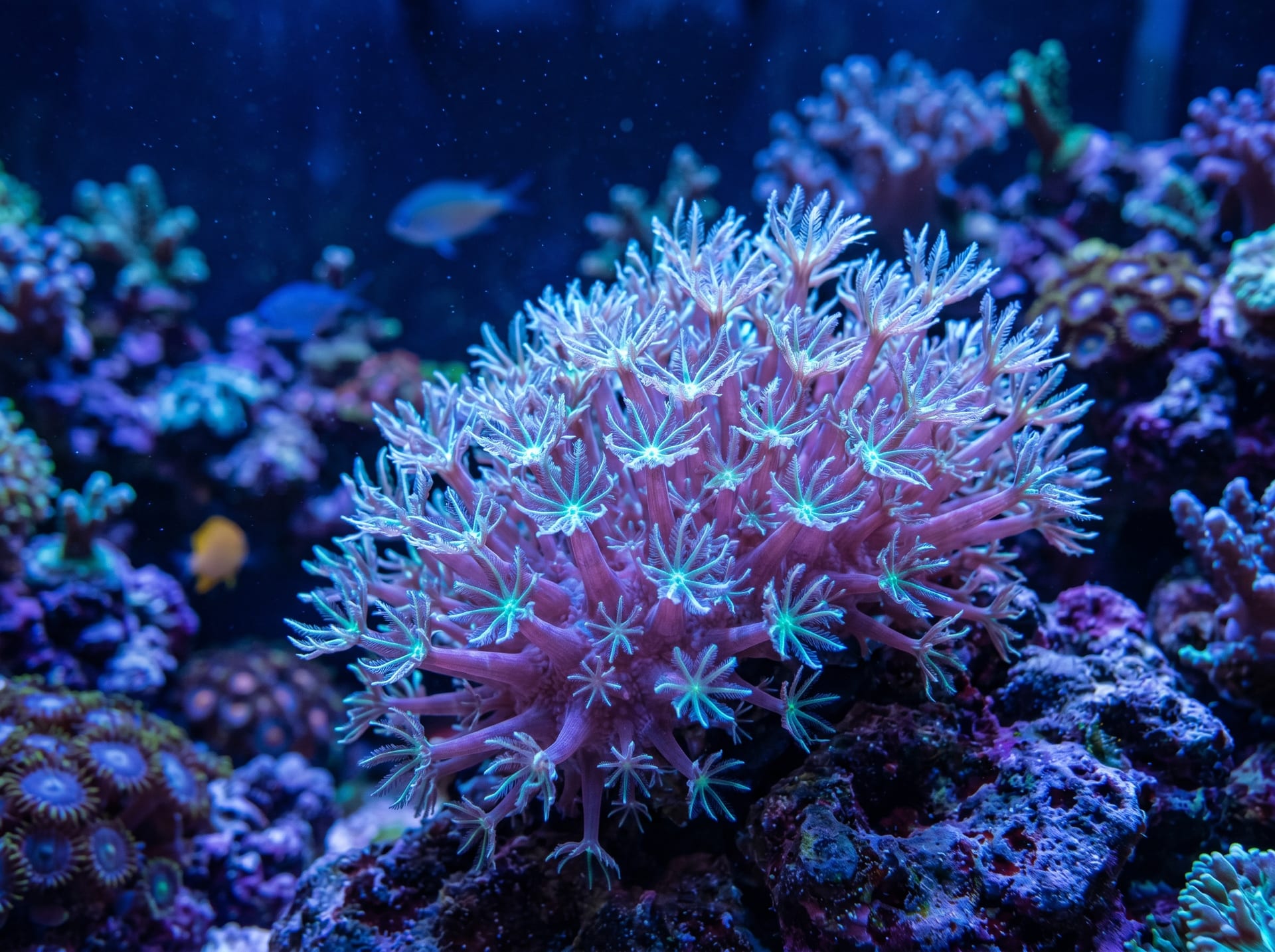
Soft Coral
Soft corals are a diverse group of corals that lack a rigid calcium carbonate skeleton, encompassing species such as leather corals, sea fans, and mushroom corals. They generally tolerate lower light and gentler flow compared to hard corals, making them a popular first choice for hobbyists adding corals to a saltwater aquarium. Their gently swaying polyps bring a lively, natural feel to any reef display.
0% commission on your first sales!Register by September 30, 2026 and your first 2 sales are commission-free!
Breeder Wanted!
List on BreederDirect and sell directly to customers nationwide!
BreederDirect's 6 Transparency Promises
Every Marine Fish & Coral listing shows Breeder's full disclosure. No wild-caught. Captive-bred priority, tank size guidance, temperament details—transparent aquaculture.
- Captive-bred
- WYSIWYG
- Reef-safe
- Care Info Included
- Origin Disclosed
- Temperament Listed
Browse all 42 breeds
Care Difficulty
Reef-safe
Temperament
Verified breeders wanted for Marine Fish & Coral
Breeders are signing up now ahead of launch. Subscribe to be notified when new listings go live.
Getting alerts is free with a member account. When new listings match your saved search, we'll notify you by email and in-app.
Browse other categories
Verified breeders (preview)
Are you raising marine fish & coral?
Register as a breeder and connect with buyers directly.
Apply as a breederAbout Soft Coral
Soft corals belong to the phylum Cnidaria and are found across tropical and subtropical reef systems worldwide. Unlike stony corals, they lack a rigid calcium carbonate skeleton and instead rely on microscopic calcite structures called spicules embedded in thick, fleshy tissue. The group encompasses a remarkable variety of forms — from the fan-like plumes of Sinularia to the mushroom-shaped caps of Sarcophyton and the flowing tentacles of Euphyllia. Through symbiotic zooxanthellae living within their tissues, soft corals harvest energy from light, allowing them to thrive under moderate illumination that would leave many hard corals underperforming. Gentle, indirect water movement is all they need to extend their polyps and feed. This combination of adaptability and visual appeal — swaying rhythmically in the current like a living garden — makes soft corals an enduringly popular choice for both beginner reef keepers and seasoned aquarists looking to add natural movement and color to their displays.
7 things to know before welcoming a Soft Coral
1Water Stability First
Soft corals do not demand the strict calcium and alkalinity regimens required by hard corals, but they are sensitive to nitrate and phosphate buildup. Aim to keep nitrate below 25 ppm through regular water changes and adequate filtration. Sudden swings in temperature or salinity can cause polyps to close or tissue to recede.
2Moderate Light Suffices
Most soft corals thrive under moderate light in the 50–150 PAR range. Excessively intense light can trigger bleaching by expelling zooxanthellae, so it is safer to acclimate new arrivals at a lower position in the tank before gradually moving them higher. If using an LED fixture, increase intensity incrementally and monitor the coral's response.
3Gentle, Multidirectional Flow
Soft corals prefer gentle, random flow rather than a direct, powerful stream, which can damage tissue. Using a wavemaker or multiple pumps to simulate natural surge is ideal. Adequate circulation also helps prevent detritus from settling on the coral and ensures polyps receive sufficient nutrients and oxygenation.
4Chemical Warfare Between Species
Many soft corals, especially leather corals and toadstool species, release terpenoid toxins into the water to deter competing organisms. Placing different species too close together can cause mutual recession or tissue necrosis. Maintain adequate spacing between colonies and consider running activated carbon to help remove waterborne toxins.
5Target Feeding Not Essential
Most soft corals obtain the majority of their nutrition through photosynthesis by their symbiotic zooxanthellae, so target feeding is not strictly necessary. However, species with visible feeding tentacles—such as xenia or hammer corals—may show improved growth and coloration with small amounts of microplankton or liquid coral food offered once or twice a week. Overfeeding can quickly degrade water quality.
6Fragging and Containment
Soft corals are relatively easy to propagate by fragging—cutting a piece and allowing it to attach to live rock or a frag plug. On the other hand, fast-spreading species such as zoanthids can overgrow neighboring corals, so regular trimming and colony management are important to keep them from becoming invasive within the display.
7Cost Overview
Individual soft coral prices vary by species and origin, but common leather corals and zoanthids are often available for a few hundred to a few thousand yen. However, initial equipment costs—including an adequate LED light, protein skimmer, and wavemaker—can amount to tens of thousands of yen. Ongoing monthly expenses such as synthetic sea salt, test kits, and electricity should also be factored into your budget.
Frequently asked questions about Soft Coral
- Q.Can soft corals be kept with saltwater fish?
- A.Most soft corals coexist well with common reef fish. However, species known to nip at corals — such as butterflyfish or some tangs — should be avoided. Clownfish, dartfish, and gobies are generally considered reef-safe companions.
- Q.Is it a problem if polyps stay closed?
- A.Closed polyps immediately after introduction or following a water change are a normal stress response. Allow several days to a week and verify your water parameters. If polyps remain closed for over a week accompanied by discoloration or tissue recession, investigate for infection or significant water quality issues.
- Q.How many hours of light do soft corals need per day?
- A.Eight to ten hours per day is the commonly recommended duration. Prolonged intense lighting can promote algae growth and stress corals, so using a timer to maintain a consistent cycle is advisable. Mimicking a natural dawn-to-dusk pattern helps corals thrive.
- Q.Can soft corals be propagated at home?
- A.Many soft corals propagate readily through fragging — simply cutting a portion and securing it to live rock or a frag plug. Within a few weeks the fragment will attach and begin growing. Sinularia and Sarcophyton are among the easiest to frag and are popular choices for beginners exploring coral propagation.
- Q.Is a protein skimmer necessary for soft corals?
- A.A protein skimmer is not strictly mandatory, but it is strongly recommended for coral tanks as it efficiently removes dissolved organics and excess nutrients. Some hobbyists maintain soft corals successfully without one in small or natural systems, but this requires very frequent water changes and diligent monitoring.
Useful tools for Soft Coral care
Soft Coral related articles
Introduction to Mushroom Corals and LPS | Stepping Up from Soft Corals
An explanation of the characteristics, difficulty level, and management methods of mushroom corals and LPS as the ideal next step after soft corals. Selection criteria for species to choose as an intermediate step before beginners progress to SPS, and equipment requirements.
Star Polyps (Pachyclavularia) Care Guide | Beginner-Friendly Soft Coral Growth Management and Placement Techniques
A detailed guide to caring for Star Polyps (Pachyclavularia violacea). Learn the fundamental water parameters, lighting, and flow settings for this beginner-friendly soft coral, troubleshoot why polyps won't open, and master frag propagation and growth control to successfully manage this popular reef tank species.
Sarcophyton (Toadstool Coral) Color Change and Shedding Management Guide | Long-term Care of Soft Corals
Sarcophyton (toadstool coral) is an ideal soft coral for reef tank beginners, but its periodic "shedding" and color changes are often confused with problems. This comprehensive guide covers how to distinguish normal shedding cycles, causes and solutions for color fading, the impact of allelopathy, and optimal lighting and water flow conditions for long-term Sarcophyton care.
Xenia Coral Care Guide | The Allure of Pulsing Soft Corals and Tank Management Tips
A comprehensive guide to caring for Xenia, the pulsing soft coral popular in reef tanks. Covers rapid propagation control, proper water flow and light intensity settings, water quality parameters, trimming and fragging procedures, and precautions for coexisting with other corals.
Clove Polyps (Clavularia) Care Guide | Basic Care for a Soft Coral Beginner Species
A comprehensive guide to caring for Clove Polyps (Clavularia), the ideal species for beginners in coral keeping. We'll cover proper lighting (PAR 50-150), water flow settings, water parameters, attachment methods to live rock, fragging procedures, and troubleshooting tips for when polyps won't open—all tailored for beginners.
Care Guide for Toadstool Corals | Water Flow, Lighting, and Propagation Tips for Soft Corals
Complete guide to caring for Toadstool Corals (Kenya Tree Corals). Covers necessary water flow, lighting, water quality parameters, propagation (fragging) procedures, and common mistakes and how to avoid them—explained for beginners to intermediate hobbyists.
More in this category
Can't find the one you're looking for?
Post your wishes for free and breeders with matching animals will contact you with introductions.