Care Guide for Toadstool Corals | Water Flow, Lighting, and Propagation Tips for Soft Corals
Complete guide to caring for Toadstool Corals (Kenya Tree Corals). Covers necessary water flow, lighting, water quality parameters, propagation (fragging) procedures, and common mistakes and how to avoid them—explained for beginners to intermediate hobbyists.
Key Takeaways
Complete guide to caring for Toadstool Corals (Kenya Tree Corals). Covers necessary water flow, lighting, water quality parameters, propagation (fragging) procedures, and common mistakes and how to avoid them—explained for beginners to intermediate hobbyists.
Related Species
What Is Toadstool Coral (Kenya Tree Coral)?
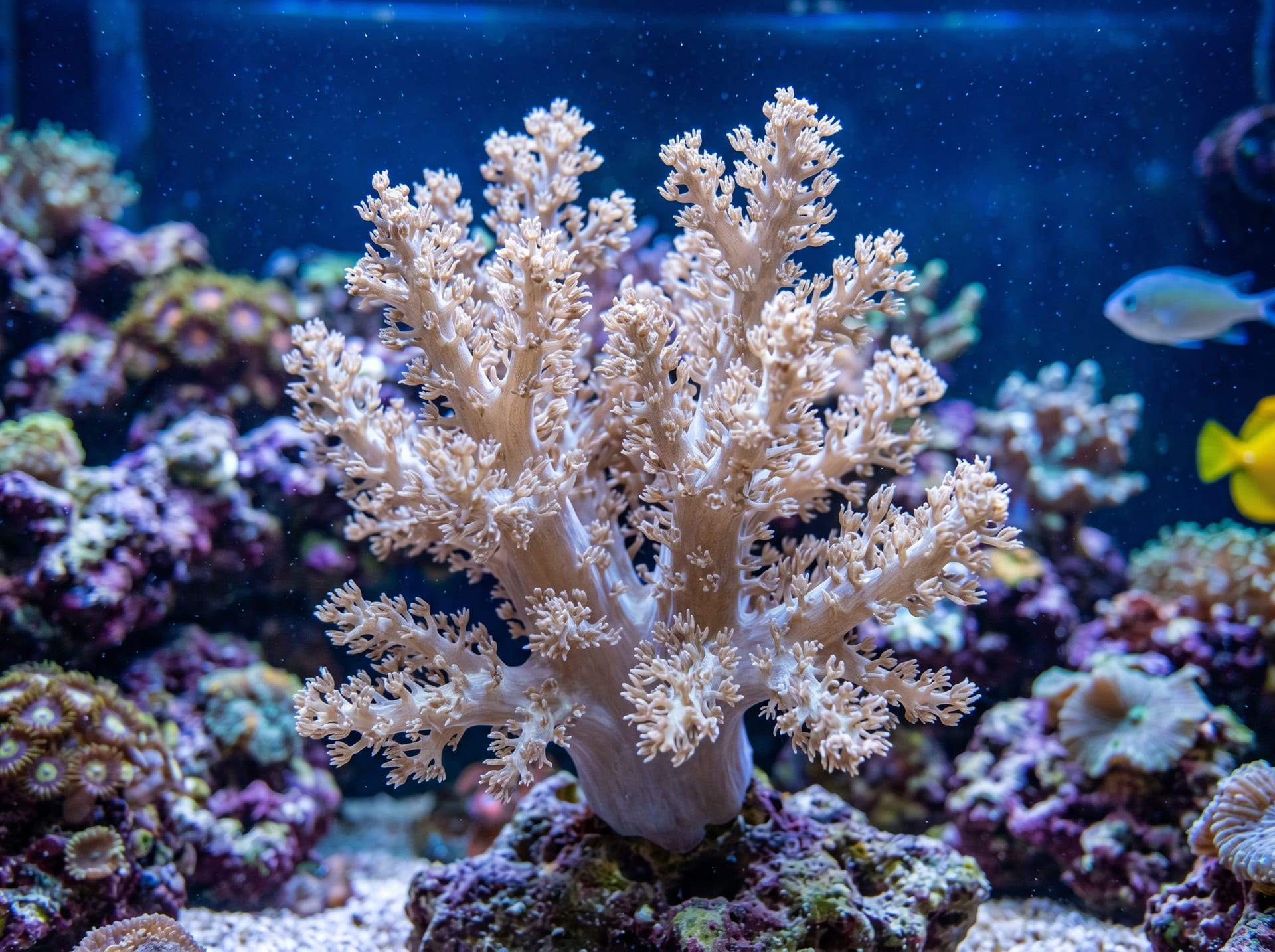
Toadstool Coral (scientific name: Capnella imbricata) is known for being particularly hardy and easy to care for among soft corals. Its tree-like branching structure and the graceful swaying of polyps when they extend make it beloved by hobbyists from beginners to advanced aquarists.
Characteristics and Key Points
- Classification: Soft Coral (Octocorallia)
- Native Habitat: Indian Ocean and Western Pacific (Kenya coast is a primary source)
- Growth Rate: Fast (can grow several centimeters per month)
- Toxicity: Low (avoid contact with other corals)
- Reproduction: Easily propagated via dropping and fragging (cutting)
Required Husbandry Environment
While Toadstool Corals are relatively tolerant of pollution, they require the same basic water quality maintenance as a saltwater fish tank.
Water Quality Parameters
| Parameter | Recommended Value | Notes |
|---|---|---|
| Specific Gravity | 1.025–1.026 | Stability is critical |
| pH | 8.1–8.3 | Avoid sudden fluctuations |
| Ammonia | 0 ppm | Must remain at zero |
| Nitrite | 0 ppm | Must remain at zero |
| Nitrate | 5–20 ppm | Keep on lower end |
| Calcium | 380–430 mg/L | Lower requirement than stony corals |
| Alkalinity (KH) | 8–11 dKH | Stable maintenance is important |
| Water Temperature | 24–27°C | Avoid sudden changes |
Water Flow
Toadstool Corals thrive with moderate, intermittent water flow. Reproducing natural swaying helps polyps expand more readily.
- Strong constant flow: May cause shriveling or the coral to lean over
- Insufficient flow: Detritus accumulation can damage tissue
- Recommended: Use a wavemaker or controller-equipped pump to create varied flow patterns
Lighting
Among soft corals, this species has relatively low lighting requirements. Since it may struggle under intense light, adjust placement gradually.
| Light Intensity | PAR Value | Suitability |
|---|---|---|
| Low | 30–80 PAR | ◎ Optimal |
| Medium | 80–150 PAR | ○ Acceptable |
| High | 150+ PAR | △ Risk of bleaching/shriveling |
Both T5 fluorescent and LED lighting work. When first introducing a new light source, start with the coral positioned low (near the bottom) and gradually move it higher.
Choosing Placement
Layout Considerations
- Do not allow contact with other corals: Toadstool Corals release terpene-based chemicals; avoid contact with hard corals (LPS or SPS)
- Attach to live rock: Direct placement on substrate promotes sand fouling from mucus
- Provide space for natural polyp drape: Reserve room for branch expansion (approximately 30 cm diameter)
Attaching to the Aquarium
When first placing the coral, use adhesive (coral-safe cyanoacrylate epoxy) to fix it in a depression in the live rock, or wedge it with rubble. Within 1–2 weeks, polyps will acclimate and the coral will begin naturally attaching to the rock.
Daily Care and Troubleshooting
Healthy Signs vs. Warning Signs
| Condition | Healthy | Concerning |
|---|---|---|
| Polyp Extension | Mostly expanded throughout day | Closed for several days |
| Color | Bright green to beige | Brown discoloration or bleaching |
| Form | Branches extended and plump | Shriveled, thin branches |
| Mucus Secretion | Minimal is normal | Excessive mucus discharge (molting behavior) |
Common Problems and Solutions
Polyps Won't Open
- Check if water flow is too strong or too weak
- Check for sudden spikes in nitrate or phosphate
- Perform water changes to reset water quality
Excessive Mucus Production
- Molting (casting off) is natural behavior
- Still, dilute with water changes and clean the protein skimmer
- Watch for negative effects on other corals and fish
Bleaching
- Light may be too intense: lower the coral's position
- Check for elevated water temperature or degraded water quality
Propagation (Fragging) Method
Toadstool Coral is one of the easiest soft corals to propagate via fragging (cutting).
Steps
- Cut branches with clean scissors or a cutting tool (3–5 cm in length)
- Rinse the cut surface with saltwater to remove mucus
- Attach to live rock or frag rack using coral adhesive
- Place in an area with gentle water flow (3–7 days)
- Verify attachment after 1–2 weeks
"Dropping" Propagation
Toadstool Corals naturally shed branch tips in a phenomenon called "dropping"—part of their reproductive strategy. Dropped fragments may attach elsewhere in the tank. Collecting and securing dropped frags to live rock increases attachment success.
Checklist When Purchasing from Breeders
When purchasing Toadstool Coral from breeder direct-sales services like BreederDirect, check the following:
- Shipping condition: Contracted polyps (not expanded) indicate normal transport stress response
- Acclimation after arrival: Use drip acclimation over 1–2 hours to match temperature and specific gravity
- Quarantine period: Observe in a separate tank for at least 2 weeks before adding to the main display
- Questions for the seller: Confirm the breeder's water specific gravity, lighting type, and fragging history beforehand
Summary
Toadstool Coral is a hardy species suitable for those keeping soft corals for the first time. With moderate water flow, low-to-medium lighting, and basic saltwater fish tank water quality, long-term care is achievable and propagation is rewarding. Purchasing frags directly from breeders offers the added benefit of obtaining high-quality specimens at reasonable prices.