Bubble Coral (Plerogyra) Care Guide | Expanding Grape Bubbles and Tips on Water Flow, Feeding, and Placement
A detailed guide to caring for bubble corals (Plerogyra sinuosa). Covers the conditions that cause the unique grape bubbles (bubble-like polyps) to expand and reasons for contraction, proper lighting and water flow settings, tentacle and feeding methods, placement considerations, the impact of sweeper tentacles on adjacent corals, and solutions to common problems.
Key Takeaways
A detailed guide to caring for bubble corals (Plerogyra sinuosa). Covers the conditions that cause the unique grape bubbles (bubble-like polyps) to expand and reasons for contraction, proper lighting and water flow settings, tentacle and feeding methods, placement considerations, the impact of sweeper tentacles on adjacent corals, and solutions to common problems.
Related Species
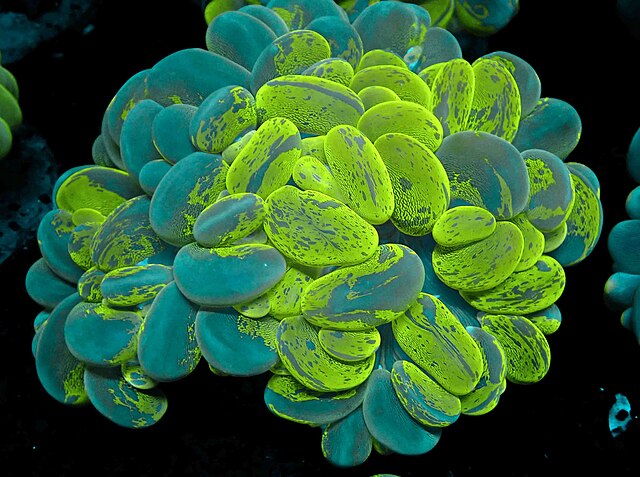
Bubble coral (Plerogyra sinuosa) is a type of LPS coral (large polyp stony coral) characterized by grape-like bubble-shaped tissues with a transparent appearance that expand during the day. These bubble structures form when specially developed coenosarc (connecting tissue) absorbs water and expands, earning them the names "grape bubbles" or "pearl bubbles."
Basic Information About Bubble Coral
Bubble corals are commonly found on coral reef ledges and under overhangs in the Indian and Pacific Oceans, as well as on rocky walls in deeper areas where light penetration is limited. In Japan, they can also be seen on the reef slopes around Okinawa.
In captivity, the skeleton ranges from cream to yellowish-brown in color, and the polyps appear semi-transparent to whitish and grape-like when expanded. Skeleton size ranges from 5–10 cm in small specimens to over 20 cm in large individuals. Since they are photosynthetic (possessing symbiotic zooxanthellae), long-term care is possible with adequate lighting.
Required Water Parameters
| Parameter | Target |
|---|---|
| Temperature | 24–26°C |
| Salinity (Specific Gravity) | 1.025–1.026 (sg) |
| pH | 8.1–8.3 |
| Alkalinity (KH) | 8–11 dKH |
| Calcium (Ca) | 380–430 ppm |
| Magnesium (Mg) | 1280–1350 ppm |
| Nitrate (NO₃) | Below 5 ppm (lower is better) |
| Phosphate (PO₄) | 0.03–0.08 ppm |
Water stability is the top priority. Sudden fluctuations in alkalinity in particular can cause bubble contraction and browning. Make water parameter checks at least once a week a habit.
Lighting (PAR) Settings
Bubble coral has low to moderate light requirements. Excessive light can cause bleaching and color fading.
| PAR Range | Placement |
|---|---|
| 50–100 PAR (low) | Ideal location |
| 100–150 PAR | Acceptable if acclimated |
| Over 150 PAR | Keep in shaded areas away from direct light |
In most reef tanks, it's common practice to place bubble corals near the substrate, under rock overhangs, or in shaded areas. The idea is to protect them from intense light while providing diffused indirect lighting.
If using high-intensity LEDs (such as ReefBreeder or Radion) in your tank, be sure to either adjust the light intensity or position the coral thoughtfully.
Water Flow Settings
Proper water flow is extremely important for maintaining bubble expansion.
Recommended: Weak to moderate indirect flow Gentle flow that allows the bubbles to sway gently is ideal. Overly strong direct flow will collapse the bubbles and damage the polyps.
Avoid: Areas with strong or turbulent direct flow Avoid placing the coral directly in front of wave pump or return pump outlets. Bubble corals are sensitive to water flow changes, and if strong direct flow hits them at night, the bubbles may be collapsed by morning.
Feeding
While bubble corals can be kept long-term on photosynthesis alone, regular target feeding will accelerate growth and improve their condition.
At night, long sweeper tentacles extend from the skeleton's grooves. These tentacles immobilize small organisms with their nematocysts for feeding, so feeding is most effective during nighttime.
Recommended Foods
- Frozen copepods or Artemia (brine shrimp)
- Frozen mysis shrimp
- Commercial liquid LPS foods (examples: Reef Roids, Coral Frenzy, etc.)
Feeding Steps
- Turn off the lights and wait 30–60 minutes for the sweeper tentacles to extend
- Slowly direct food near the tentacles using a pipette or target feeder
- After introducing food, stop the water flow for 5–10 minutes to allow the coral to feed
- Resume water flow after feeding
Feeding once or twice weekly is sufficient. Excess organic matter can raise nitrate and phosphate levels, so remove any uneaten food with a pipette.
Placement and Sweeper Tentacle Considerations
Bubble coral sweeper tentacles can extend 20–30 cm or more at night. Because their nematocysts are potent, they often damage adjacent corals, so careful placement in reef tanks is essential.
Basic Placement Rules
- Distance from adjacent corals: Maintain at least 15–20 cm spacing
- Avoid placing near other LPS corals (trumpet corals, Porites species, etc.)
- Ideal locations are isolated on rock edges or tops with minimal adjacent corals
Common Problems and Solutions
Bubbles Won't Expand or Are Collapsed Causes: Excessive water flow, excessive lighting, water parameter shifts (especially sudden alkalinity changes), stress from transport Solution: Review water flow and lighting; check water parameters. After introduction, acclimate slowly over 1–2 weeks.
Browning Usually caused by excessive light leading to zooxanthellae overgrowth. Gradually reduce light intensity or move the coral to a darker location.
Bleaching Often triggered by elevated temperature (over 28°C), excessive light, or poor water quality. Since zooxanthellae have been expelled, resolve the underlying cause and allow recovery in proper conditions.
Mucus or Tissue Fragments from the Mouth (RTN/STN Warning Signs) Can result from sudden water parameter changes, damage from sweeper tentacles, or transport injuries. If mucus is present, gently rinse with clean tank water. If the condition doesn't improve, observe in a quarantine tank.
Summary
Bubble coral (Plerogyra sinuosa) is an attractive and manageable LPS coral with its distinctive grape bubble form that thrives even under low to moderate lighting. By avoiding strong direct water flow, maintaining proper water parameters, and making nighttime target feeding a habit, you can enjoy long-term healthy care. Because their sweeper tentacles are long, provide adequate spacing and prevent damage to neighboring corals—these are key to maintaining a healthy reef tank.