Mushroom Corals and LPS Introduction | Stepping Up from Soft Corals
An explanation of the characteristics, care difficulty, and management methods of mushroom corals and LPS as the optimal next step after soft corals. Selection criteria for species to choose as an intermediate step before beginners progress to SPS, along with equipment requirements.
Key Takeaways
An explanation of the characteristics, care difficulty, and management methods of mushroom corals and LPS as the optimal next step after soft corals. Selection criteria for species to choose as an intermediate step before beginners progress to SPS, along with equipment requirements.
Related Species
From Soft Corals to LPS: How to Step Up
Mushroom corals (genus Discosoma) are among the most suitable species for beginning coral keeping. For those who started with mushroom corals or Xenia, the world of mushroom corals and LPS (Large Polyp Stony) corals serves as a bridge to the next stage.
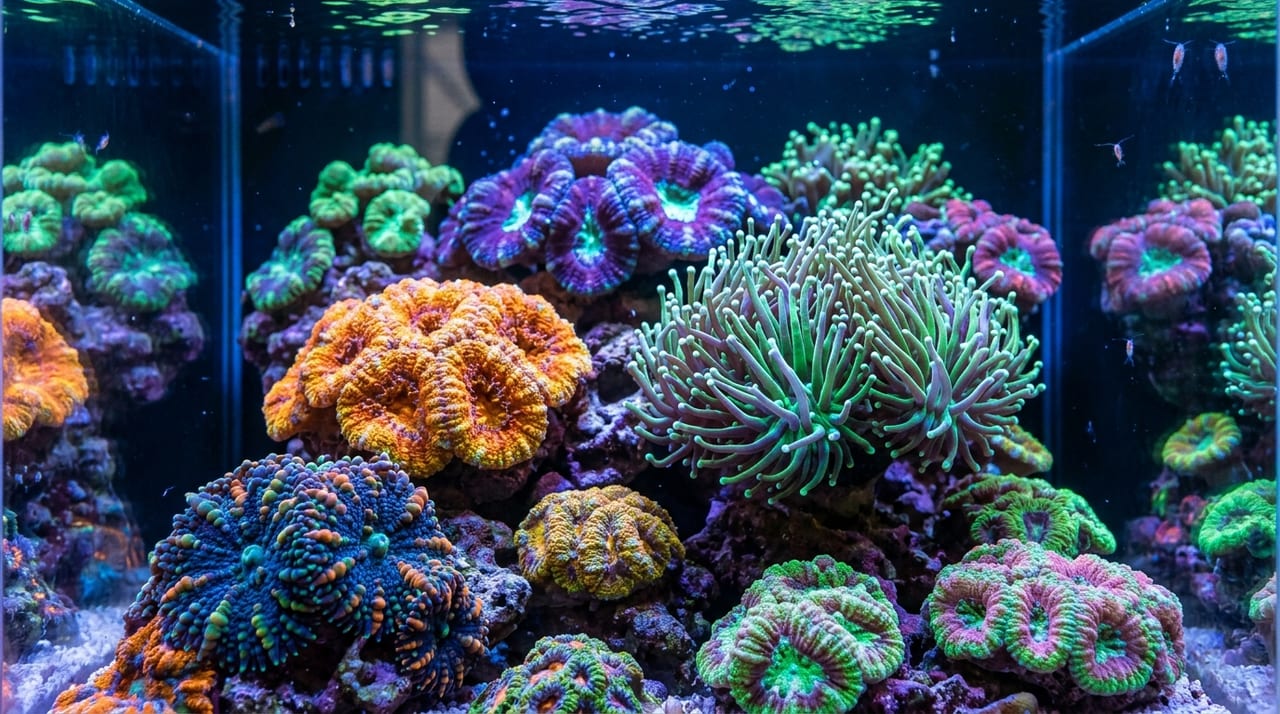
LPS is an abbreviation for "Large Polyp Stony," a general term for hard corals with large polyps. Representative species include hammer corals (Euphyllia), brain corals (Faviidae), and trumpet corals (Caulastrea). They have higher water quality requirements than soft corals but are not as sensitive as SPS. LPS is also the category that the most coral keepers enjoy long-term as a "middle stage" in coral keeping, and its appeal lies in the diversity of species and colors.
The biggest difference between soft corals and LPS is the presence or absence of a calcified skeleton. Soft corals do not have a skeleton (though they do have small bone fragments called spicules), while LPS form calcium carbonate skeletons. Because the growth of this skeleton consumes calcium, KH (alkalinity), and magnesium, more precise water quality management is required compared to soft corals.
Characteristics and Management of Mushroom Corals
Mushroom corals (Discosoma) are technically classified as soft corals, but they have excellent qualities as a bridge to LPS. They are characterized by flat, umbrella-shaped polyps and come in a rich variety of colors including red, blue, green, orange, and multicolor. Species rich in fluorescent pigments glow very vibrantly under blue light, instantly enhancing the appearance of a reef tank.
The recommended water parameters for care are as follows.
| Item | Target |
|---|---|
| KH | 8–9 dKH |
| Calcium | 380–420 ppm |