Zoa & Disc Coral Care Guide | Ideal Soft Corals for Beginners
A guide to caring for Zoanthus and Disc Corals. Covers color varieties, lighting and flow requirements, propagation tips, and placement strategies.
Key Takeaways
A guide to caring for Zoanthus and Disc Corals. Covers color varieties, lighting and flow requirements, propagation tips, and placement strategies.
Related Species
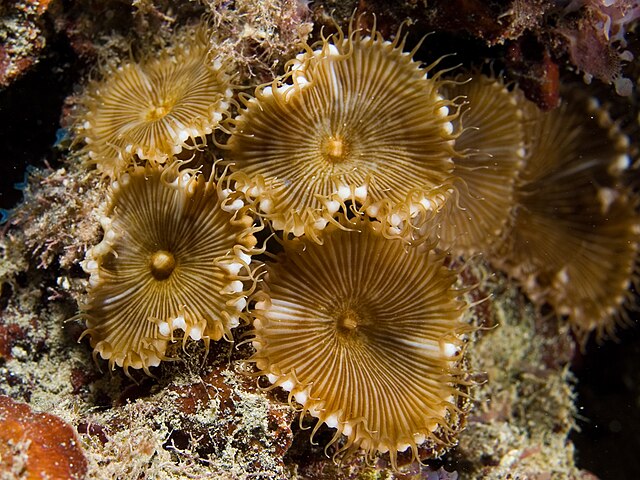
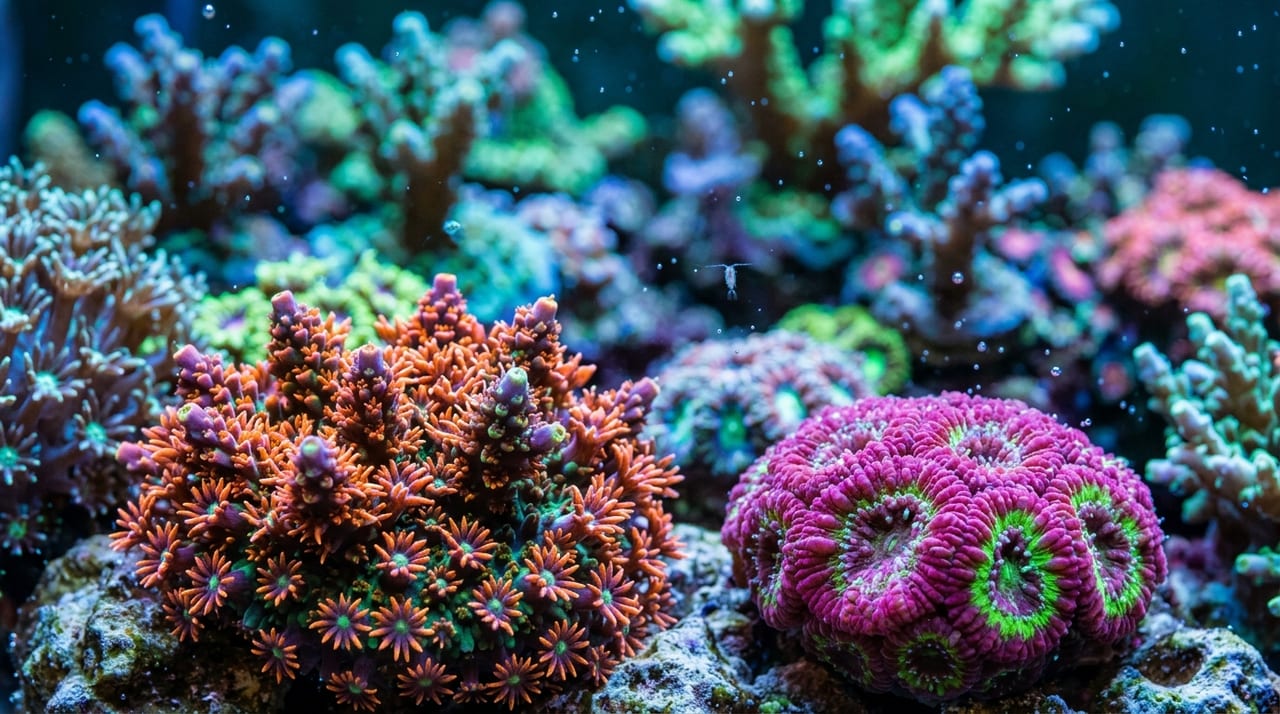
Zoanthus (Zoa) and Disc Corals (Mushroom Corals) are the most recommended soft corals for beginners in coral keeping. They thrive under low lighting and gentle water flow, offer abundant color variations, and provide the pleasure of collecting. This article explains the key points for cultivating these soft corals beautifully.
Zoanthus: Basic Information
Zoanthus (Zoanthus, Palythoa) are soft corals where polyps form colonies, with each polyp measuring approximately 5–15mm in diameter. Color varieties are extremely diverse, ranging from solid colors like green, orange, red, blue, purple, and pink to specimens with multiple color combinations. Particularly rare color combinations are sometimes traded as "Zoa Collections" at premium prices. A closely related species often confused with Zoanthus is Palythoa, which has larger polyps (15–25mm in diameter) and tends toward more subdued colors. Importantly, some Palythoa species contain palytoxin, a potent neurotoxin. Bare-handed handling or contact with body fluids during fragging (especially in eyes or open wounds) can cause serious health issues. Always wear rubber gloves and safety goggles when handling them.
Disc Coral: Basic Information
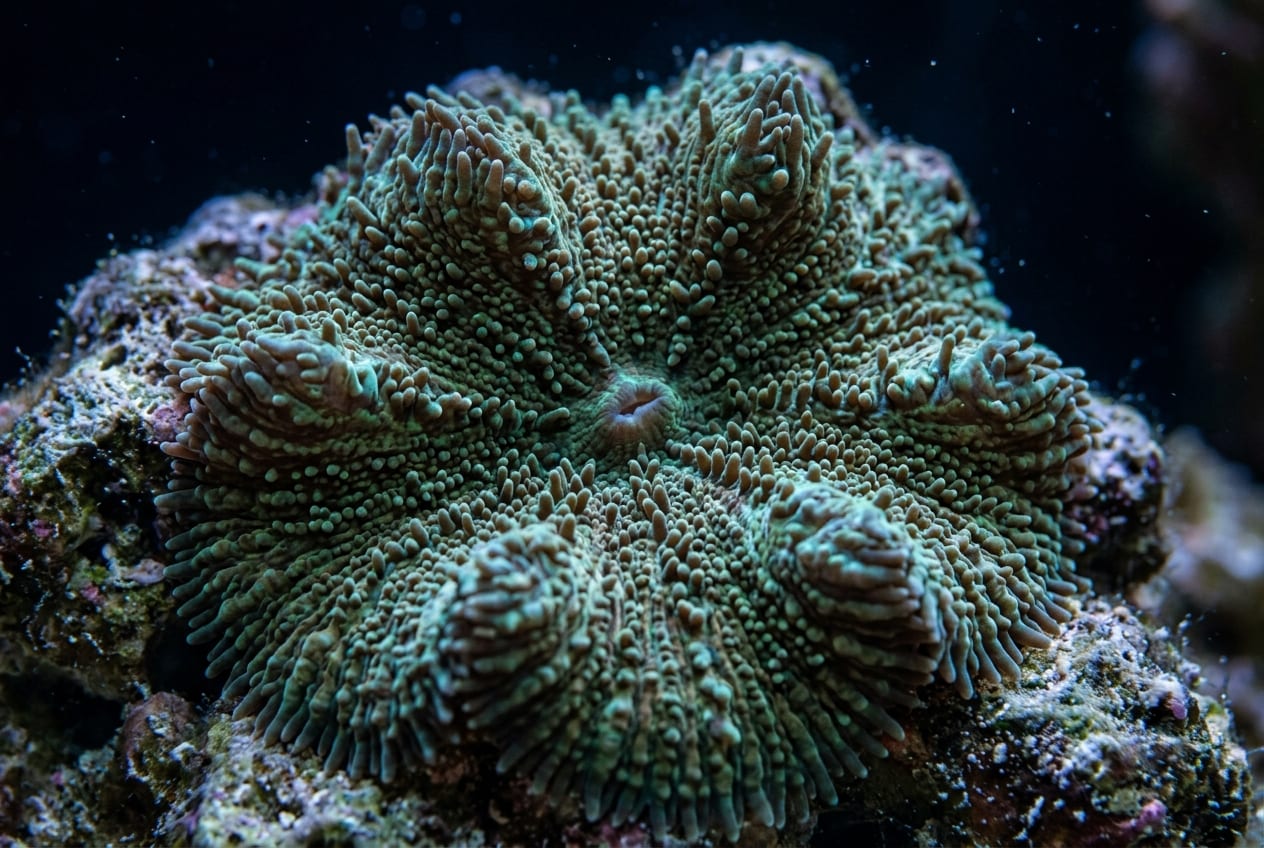
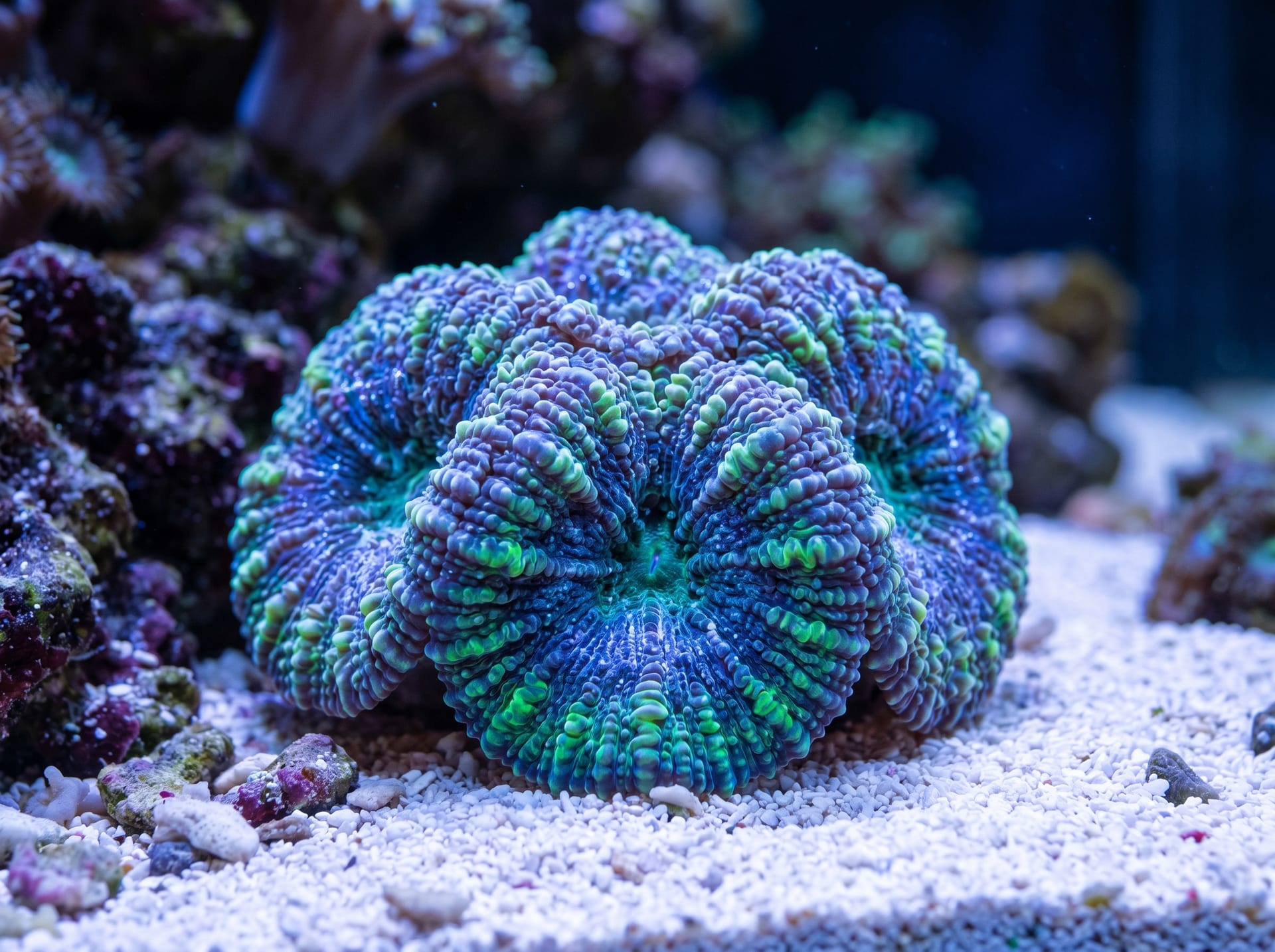
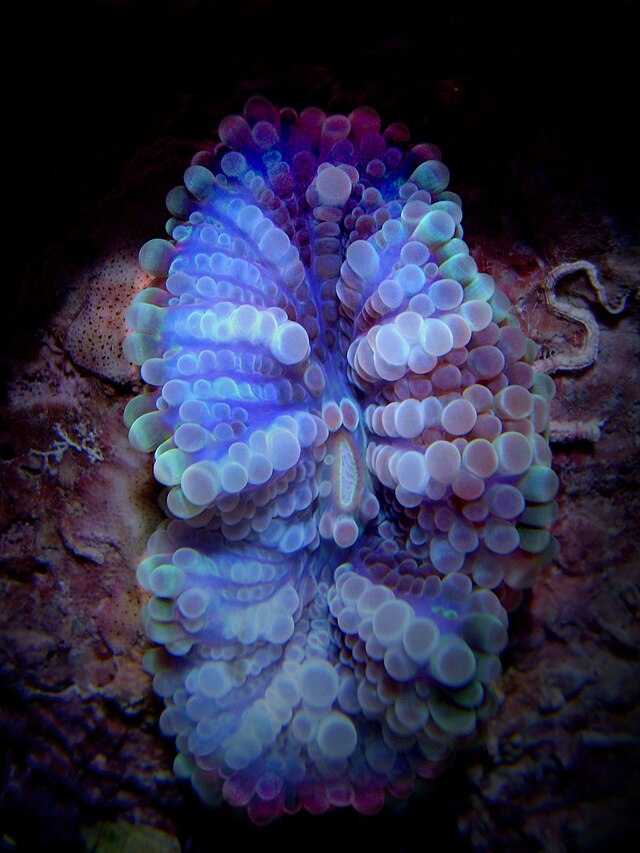
Disc Corals (Discosoma, Rhodactis, Ricordea) are soft corals with a flattened disc-shaped body that cling to rocks. They're also called Mushroom Corals because their appearance resembles mushrooms. Discosoma is the most commonly available genus, with diverse variations ranging from smooth surfaces to densely tentacled specimens. Rhodactis is somewhat larger, including larger varieties such as Elephant Ear Mushrooms. Ricordea comprises two main types: Florida Ricordea (Ricordea florida) and Pacific Ricordea (Ricordea yuma), both featuring beautiful grape-like tentacles. Green and orange Ricordea florida are especially popular and highly sought by collectors. Disc Corals can detach if exposed to excessive water flow, so they should be placed in calm areas.
Lighting and Water Flow Requirements
Both Zoanthus and Disc Corals can be kept under low to moderate lighting. A PAR value of approximately 50–150 μmol is appropriate. With LED lighting, proper intensity can be achieved by placing them on the sides or lower levels of the tank. Excessive lighting causes polyps to remain retracted and fail to open, and colors may fade. Conversely, insufficient light severely slows growth. When introducing them to a new environment, practice "light acclimation" by initially placing them in a dimly lit area and gradually moving them to brighter locations over 1–2 weeks. Water flow should be gentle and indirect. Direct water flow prevents polyps from opening and causes stress-induced contraction. Effective strategies include directing water pumps toward wall surfaces to create indirect flow, or placing them in the shade of live rocks.
Feeding and Growth Promotion
Both Zoanthus and Disc Corals obtain basic nutrition from zooxanthellae (symbiotic algae) through photosynthesis, so feeding is not essential. However, moderate feeding promotes growth and enhances color vibrancy. Feed finely crushed freeze-dried krill or coral food such as Reef Roids once or twice per week. Disc Corals also consume small Mysis shrimp and chopped live shrimp. When you place food near the center of a polyp, you can observe it engulfing the food with its tentacles. During feeding, temporarily stop water pumps to keep food in contact with the polyps. However, overfeeding can degrade water quality, so adjust the amount based on water quality test results. Zoanthus often proliferate well without feeding, so supplemental feeding is not necessary.
Propagation and Fragging
Both Zoanthus and Disc Corals naturally propagate when conditions are stable. Zoanthus expands by budding new polyps from the base to form larger colonies. With proper water quality and lighting, they add several polyps per month, covering live rock surfaces within months. Disc Corals propagate through fission, where the body splits into two individuals. To create frags (small coral fragments mounted on plugs), cut the edge of a Zoanthus colony with a scalpel or scissors and attach it to a frag plug with coral adhesive. For Disc Corals, cut the individual in half or remove it from the rock and attach it to a frag plug. After cutting, allow them to heal for 1–2 weeks in a calm flow area. As mentioned earlier, take precautions against toxins when fragging Palythoa.
Common Issues and Solutions
Although Zoanthus and Disc Corals are hardy, issues can arise. If polyps won't open, lighting may be too intense or water flow too direct. Move them to a darker, calmer location and observe their response. If colors fade, nutrient levels may be too low or lighting may be improper. Maintain nitrate levels around 5–10 ppm and adjust lighting spectrum. Many aquarists report that Zoanthus multiply too rapidly. In this case, you can cut excess Zoanthus into frags and sell them on BreederDirect. Sharing corals you've propagated with fellow enthusiasts is one of the unique pleasures of coral keeping. Both Zoanthus and Palythoa contain potent palytoxin; bare-handed handling and trimming are strictly prohibited for both. Always wear rubber gloves and safety goggles. Do not remove unwanted colonies with hot water—palytoxin is heat-stable, and inhalation of vaporized toxin can cause severe respiratory problems and has been fatal.
For placement, position Zoanthus in mid-to-lower tank levels with indirect lighting, and Disc Corals in low-light areas such as the bottom or sides of live rocks. Keep both types at least 5cm away from other corals to prevent allelopathic interactions. If they become too dense, lower polyps won't receive adequate light and will decline. Regular thinning is key to long-term success.
Under blue LED lighting, the fluorescent colors of Zoanthus and Disc Corals shine especially beautifully. When viewing, set actinic (blue) lights to a higher intensity to enjoy a fantastical underwater-like experience.
Beautiful Soft Corals on BreederDirect
Zoanthus and Disc Corals offer endless color variations and collecting pleasures. On BreederDirect, you can purchase healthy frags and colonies directly from coral breeders, and you may find rare color variants. By sharing your tank's lighting and flow parameters, breeders can recommend the best specimens for your setup.
Dividing and Selling Excess Disc Corals
When conditions are right, Disc Corals and Zoanthus divide and multiply. Left unchecked, they can cover rocks and crowd other corals. Dividing excess growth is essential to tank maintenance.
To divide, cut along the base rock with a scalpel or scissors, then secure the fragment to a frag plug with gel-type cyanoacrylate. Cut surfaces heal within days. Do not handle with bare hands. If you contact slime, rinse immediately with running water.
Outlets for divided fragments:
- Place in a different layout in your own tank
- Give away or trade with hobbyists: Corals vary greatly between individuals, and trading demand is high
- Sell as frags: Fast-growing varieties move best when sold as frags
The Zoanthus and Disc Corals covered in this article are not listed under the Washington Convention (CITES). CITES primarily lists reef-building hard corals (Scleractinia), which appear on Appendix II and are regulated during import and export only. The Species Conservation Law regulates domestic transfers only for Appendix I–equivalent "International Rare and Endangered Species." Appendix II corals are not directly subject to this restriction for domestic transfer or sale. However, regulations vary by species, so confirm individual details if unsure.