Beginner's Guide to Choosing a Coral Tank: Tank Size, Equipment, and How to Select Your First Corals
A guide to choosing the right tank size for starting coral cultivation, the fundamentals of necessary equipment (lighting, protein skimmers, and circulation pumps), and how to select soft corals and LPS corals that are easy for beginners to maintain.
Key Takeaways
A guide to choosing the right tank size for starting coral cultivation, the fundamentals of necessary equipment (lighting, protein skimmers, and circulation pumps), and how to select soft corals and LPS corals that are easy for beginners to maintain.
Related Species
Before You Start a Coral Tank: What You Need to Know
Coral keeping is often perceived as "difficult," but with the right knowledge and appropriate equipment, beginners can absolutely enjoy it. The biggest difference from keeping tropical fish is that corals are photosynthetic organisms. They harbor zooxanthellae (symbiotic algae) within their bodies and convert light energy into nutrition. In other words, maintaining the three elements of water quality, water flow, and lighting is fundamental to successful coral keeping.
First, you should confirm what type of coral you want to keep. Corals are broadly divided into three categories: "LPS (Large Polyp Stony Corals)," "SPS (Small Polyp Stony Corals)," and "Soft Corals." For beginners, the conventional wisdom is to start with soft corals or LPS, which have relatively lenient requirements for light intensity and water quality.
How to Choose Tank Size
What beginners struggle with most is selecting the right tank size. It's easy to think "a smaller tank seems easier to manage," but coral keeping presents a counterintuitive truth: larger water volumes maintain stable water conditions more easily, making them better for beginners.
30–45 cm tanks (approximately 20–50 L) are an option when space is limited, but the small water volume means temperature and water quality can fluctuate rapidly. Frequent water quality checks and water changes become essential. These tanks work for small layouts with one to two soft coral species, but the risk of failure is higher.
60 cm tanks (approximately 60–80 L) are the most recommended size for a beginner's first tank. Commercial equipment is abundantly available, and the water volume is sufficient for stable water conditions. Multiple soft coral species plus small LPS can coexist, and layout options are flexible.
90 cm and larger involve significantly higher maintenance costs, space requirements, and equipment expenses. If you plan to seriously keep SPS or large LPS corals in the future, these sizes are appealing—but as a first tank, they often represent overinvestment.
Conclusion: Starting with a 60 cm standard tank offers the best value.
Essential Equipment and Selection Tips
A coral tank requires more equipment than a tropical fish tank. Understanding each piece of equipment's role is key to making the right choices.
Filtration System
Corals are extremely sensitive to water quality changes, particularly ammonia, nitrite, and nitrate. For a 60 cm tank, overflow or sump systems are ideal, but to keep initial costs down, an external filter combined with a protein skimmer can work. A protein skimmer is a device that removes organic matter via bubbles and is essentially mandatory for coral tanks.
Lighting
The most critical equipment that determines coral survival. Choose LED lighting that can emit the blue light (420–450 nm) and white light necessary for the zooxanthellae's photosynthesis at appropriate intensity. For beginners, products like "Kessil A80," "AI Prime 16HD," and "ReefLED 50" are reliable and easy to use. Set the photoperiod to 8–10 hours daily and automate it with a timer.
Circulation Pump
Corals feed and expel waste by waving their tentacles in response to water flow. Dead zones where water stagnates make corals susceptible to death. Install one to two wave pumps like "Corallia" or "Jebao" to create natural random currents throughout the tank.
Heater and Chiller
The ideal water temperature for corals is 24–26°C. In summer, if water temperature exceeds 30°C, bleaching and coral death occur. In high-temperature environments, consider installing a tank chiller. Choose a reliable heater with an integrated thermostat and keep a backup on hand.
How Beginners Should Choose Their First Corals
When choosing your first corals, prioritize "hardiness" above all else. Selecting based solely on appearance often results in losses in the unstable environment of a newly established tank.
Recommended Soft Corals
- Mushroom Coral (Discosoma): Low light and water quality requirements; easy to propagate. A gateway coral for beginners.
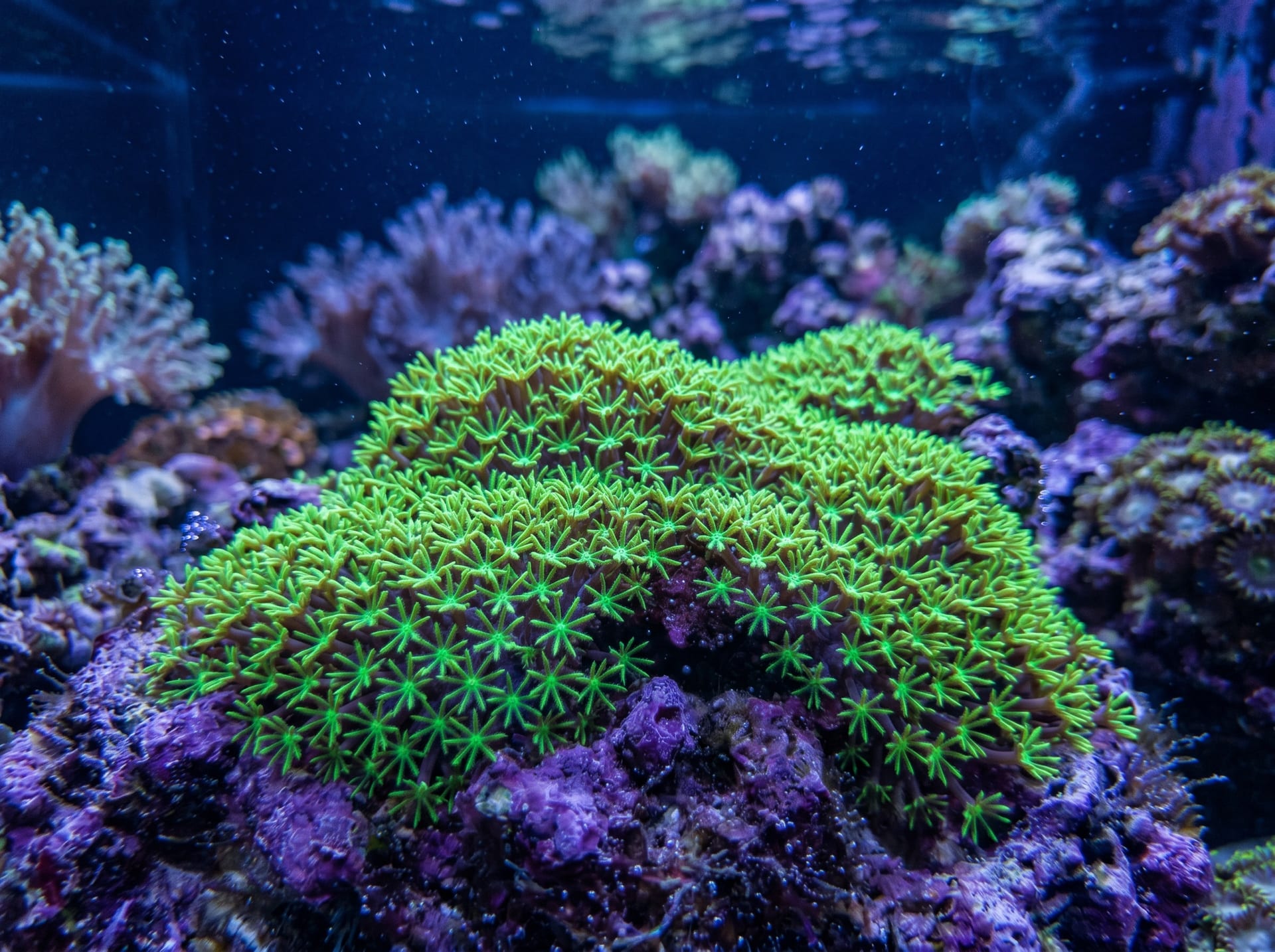
- Star Polyps: Fast-growing and spread explosively once acclimated. Beautiful green coloration.
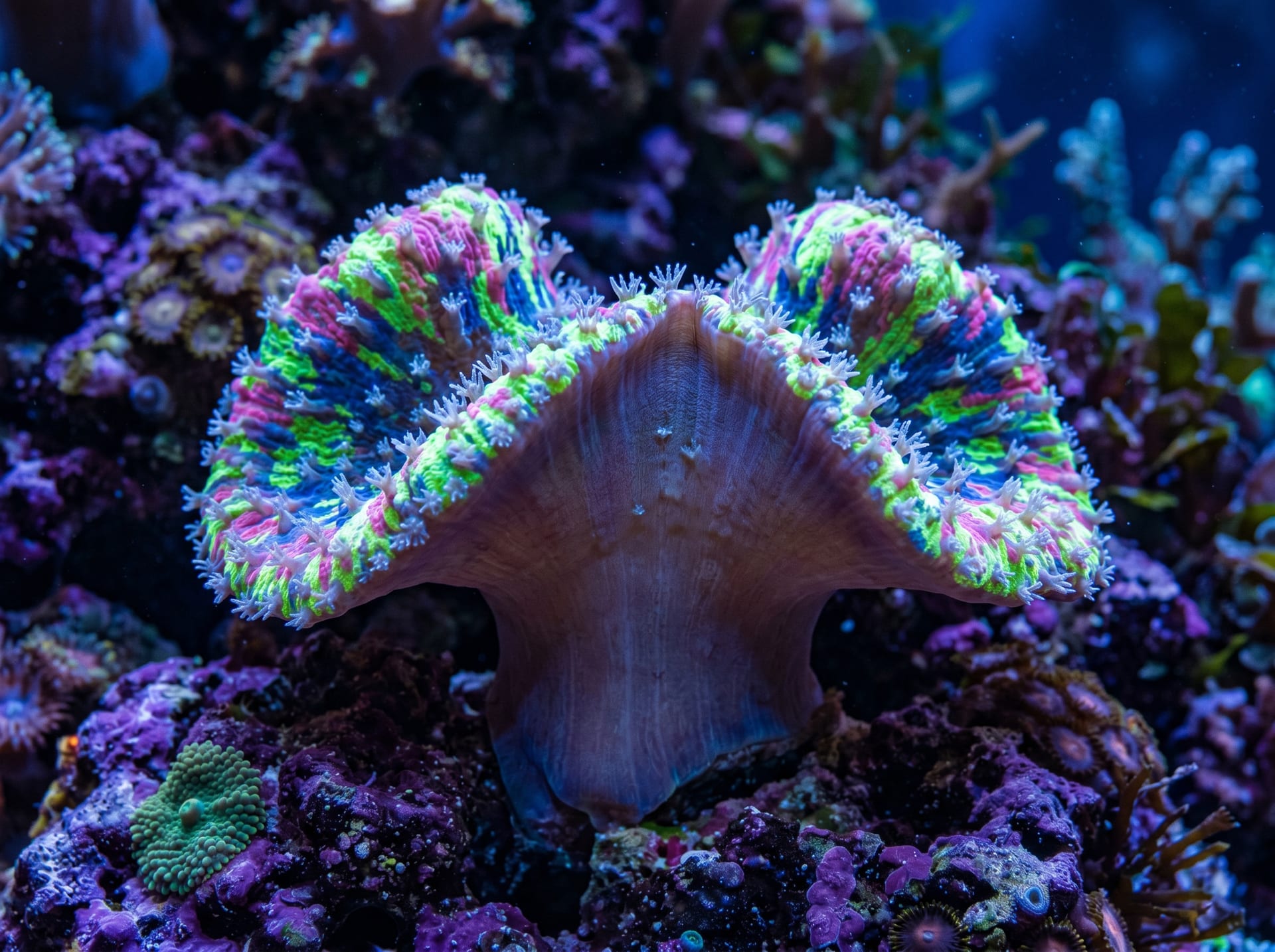
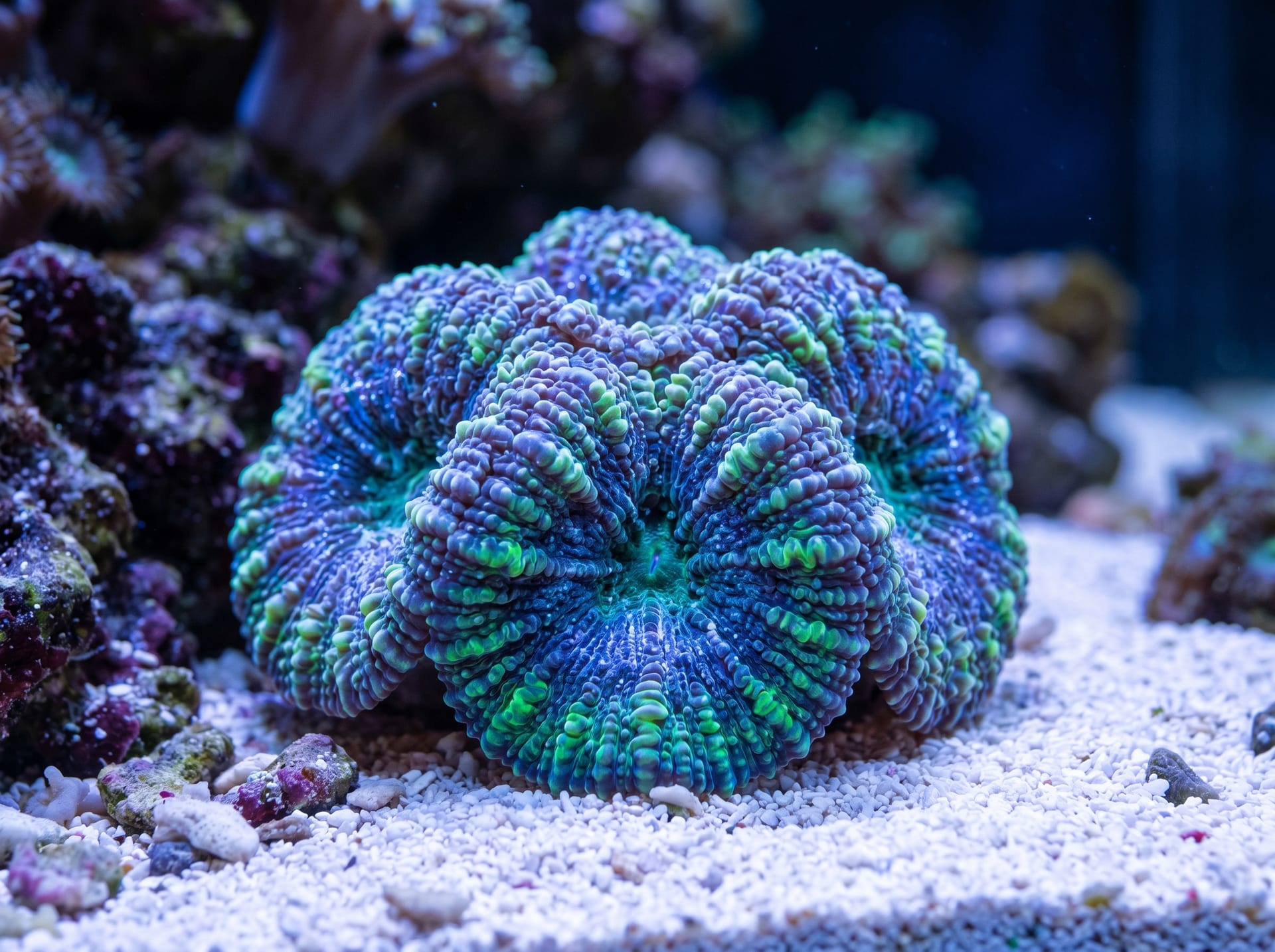
- Disc Coral (Discosoma): Thick-bodied and hardy. Rich color variations add vibrancy to the tank.
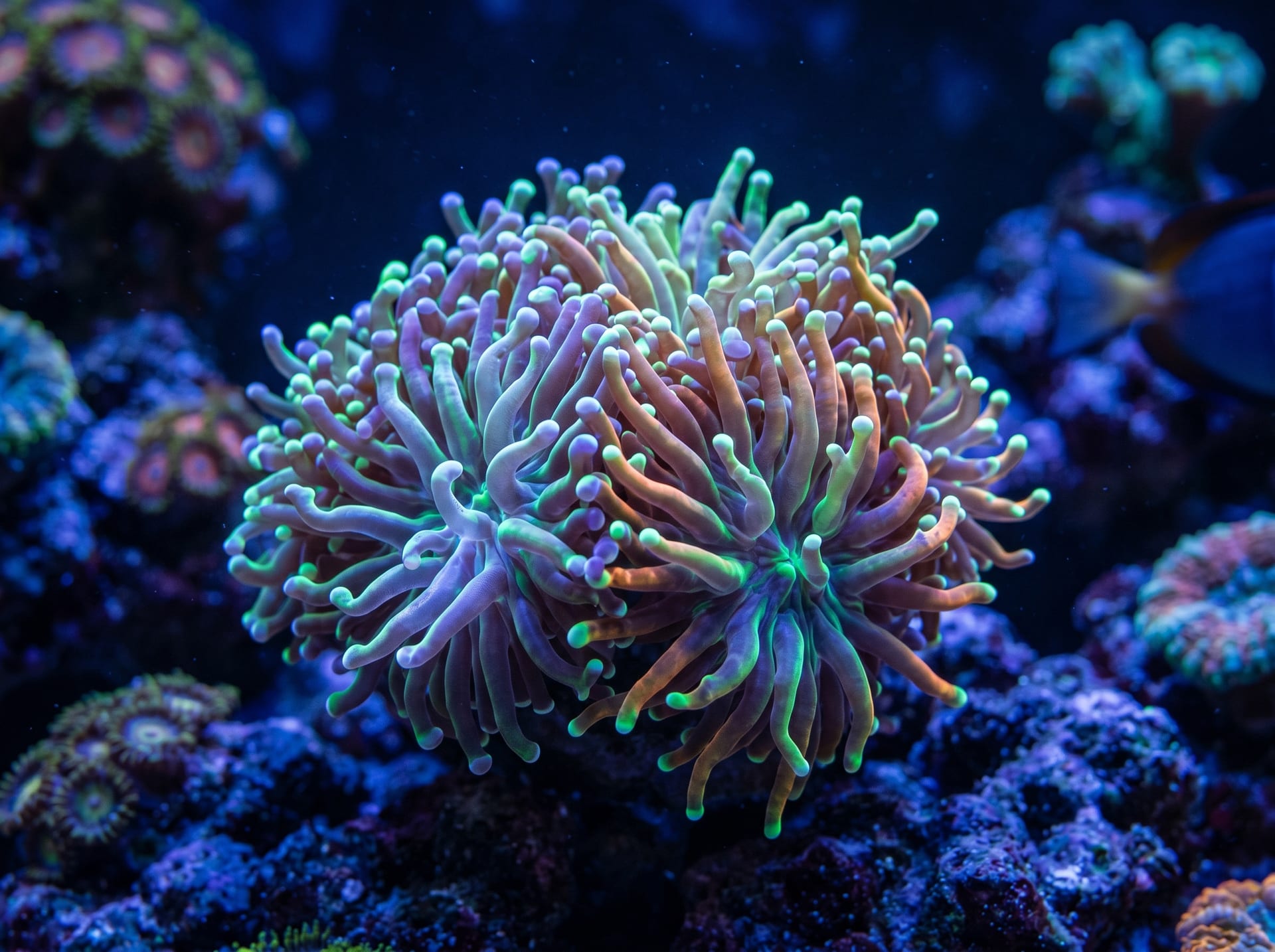
- Hammer Coral (LPS): Distinctive long waving tentacles create striking displays. Relatively hardy among LPS species.
Corals to Avoid (Not Suitable for Beginners)
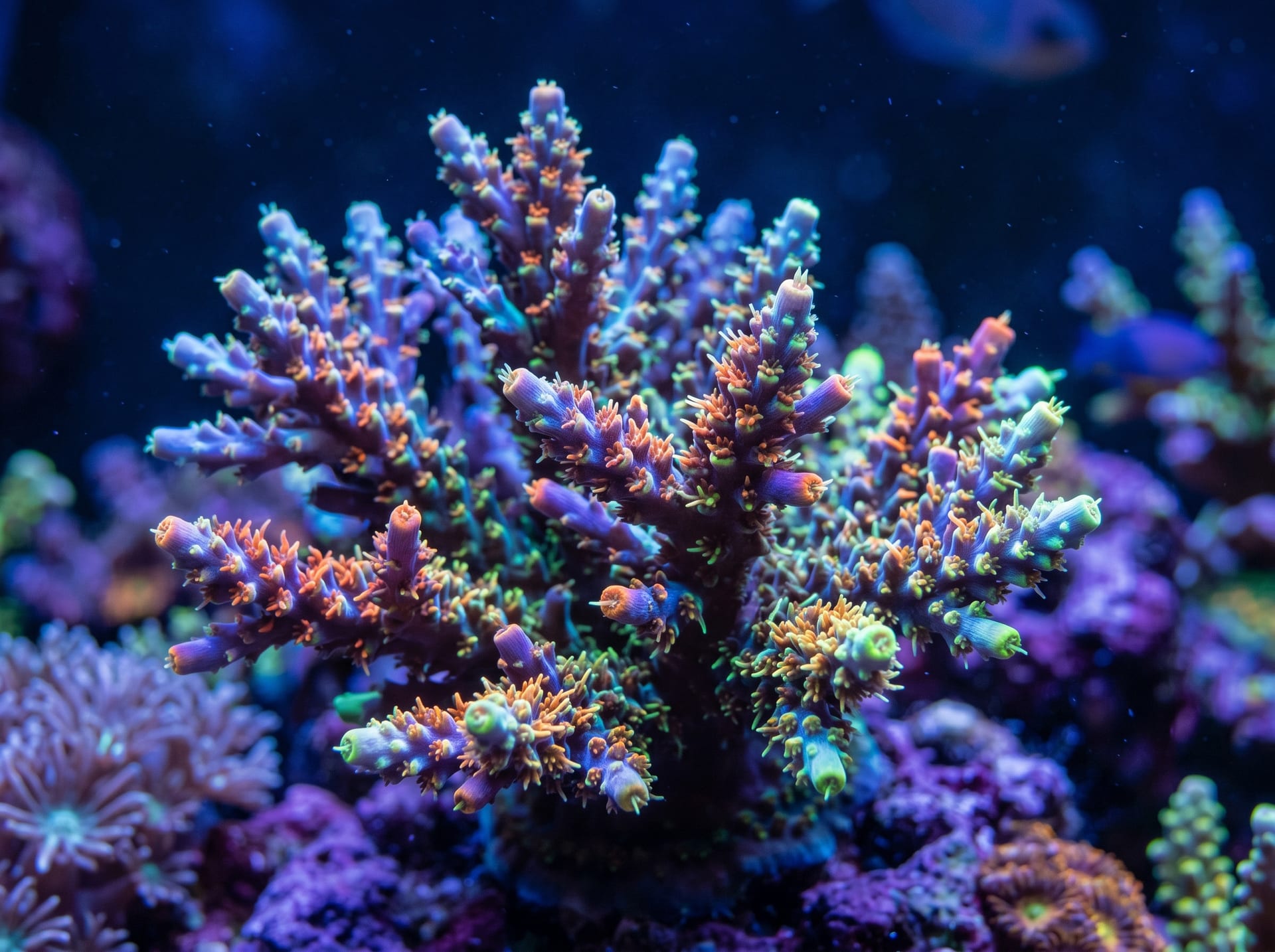
- Acropora: A representative SPS species. Requires high light intensity and ultra-low nitrate environments. Nearly impossible to maintain until the tank has matured for over a year.
- Trumpet Coral: Beautiful but difficult to adapt to water flow and quality changes; an advanced-level coral.
When purchasing, check these points: Are the polyps open? Is the color vibrant (showing no signs of bleaching)? Is it firmly attached to the rock or base? Specimens that have been in the shop long-term tend to be more resilient to environmental changes and suffer fewer initial losses.
Tank Setup and Water Quality Management
Before introducing corals, always complete cycling (establishing your tank). This process creates an environment where bacteria colonize and neutralize ammonia, typically taking 4–6 weeks.
The water quality parameters you should monitor are as follows.
| Parameter | Target Value |
|---|---|
| Specific Gravity (Salinity) | 1.024–1.026 |
| Water Temperature | 24–26°C |
| pH | 8.1–8.3 |
| Ammonia / Nitrite | 0 |
| Nitrate | 10 ppm or less (ideally 5 ppm or less) |
| Calcium | 380–450 ppm |
| Alkalinity (KH) | 8–12 dKH |
| Magnesium | 1250–1350 ppm |
Calcium, KH, and magnesium are essential for coral skeleton formation and require weekly to biweekly testing and supplementation as needed. For beginners, I recommend using user-friendly supplementation systems such as two-part "Bionic" or three-part "Triton." Perform water changes weekly at about 10–15% of the total water volume to maintain stable conditions.
Mindset for Long-Term Success
The most important thing in coral keeping is "patience." If polyps don't open immediately after adding new corals, observe them for one to two weeks. Transport shock from environmental change is usually the cause, and corals typically recover naturally if water conditions are stable.
Also develop the habit of investigating any signs of problems. By checking basic parameters like photoperiod, water temperature, specific gravity, and nitrate levels one by one, most issues can be caught early and resolved. Corals obtained directly from breeders often have less shipping stress and better condition than those sourced through shops. Acquiring healthy specimens from trustworthy sellers is a major factor in the success of long-term coral keeping.