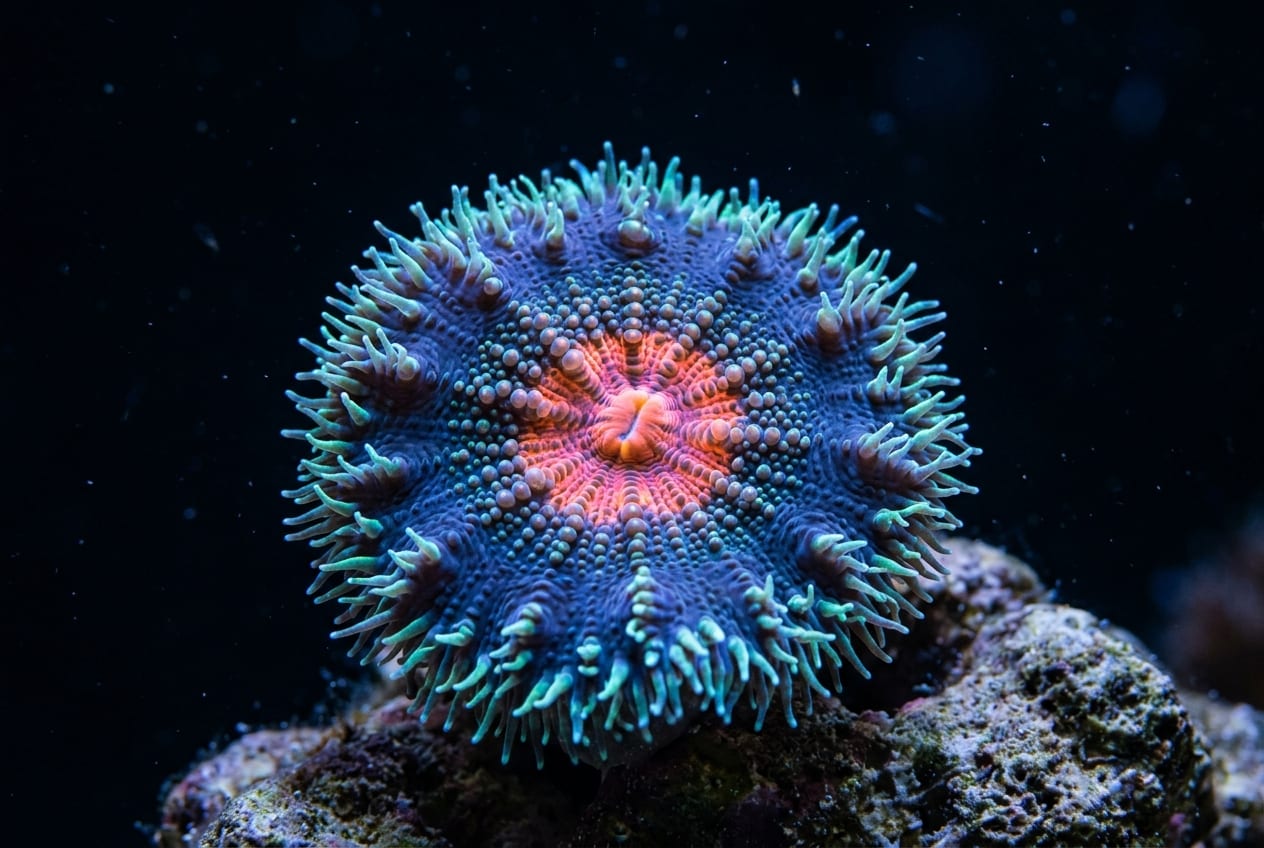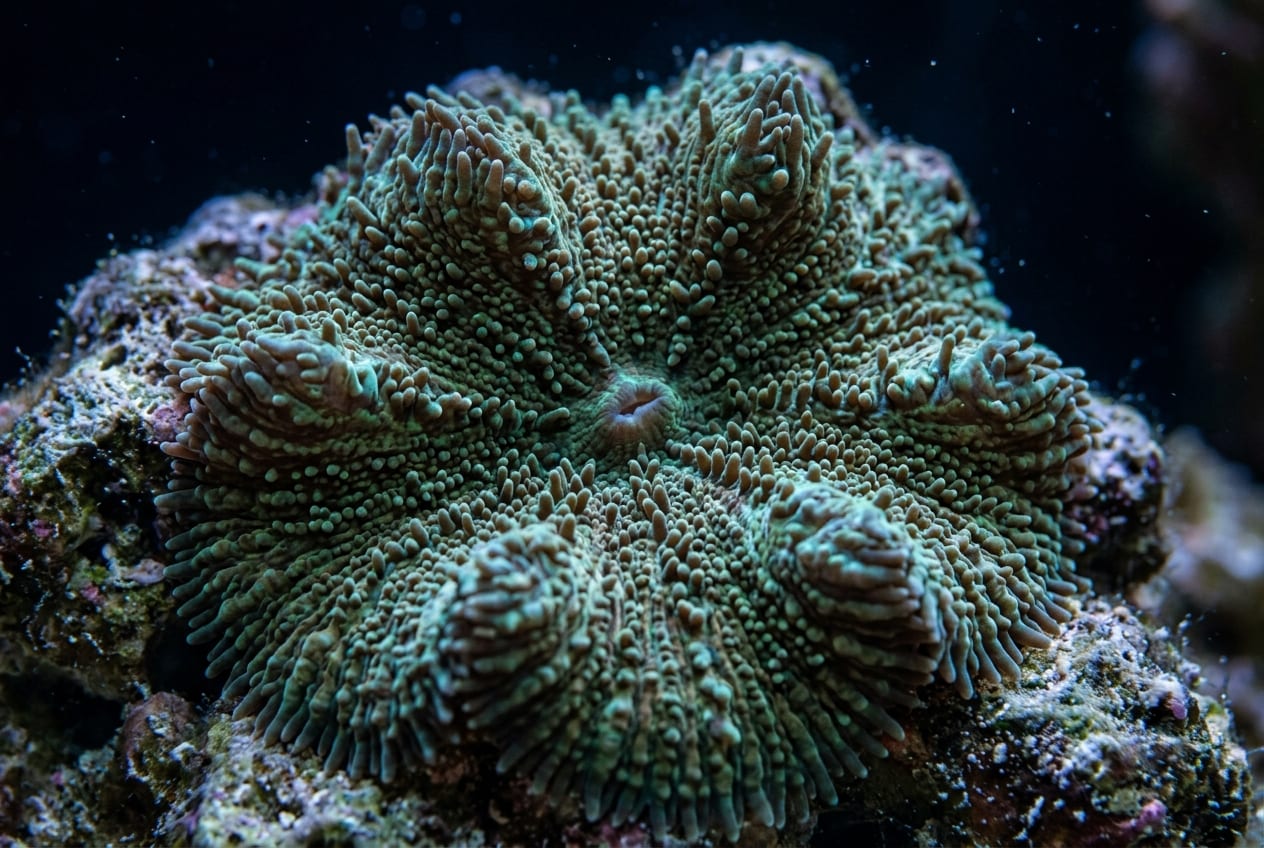
AI-generated image
Elephant Ear Mushroom (Rhodactis Howesii)
BeginnerRhodactis howesii
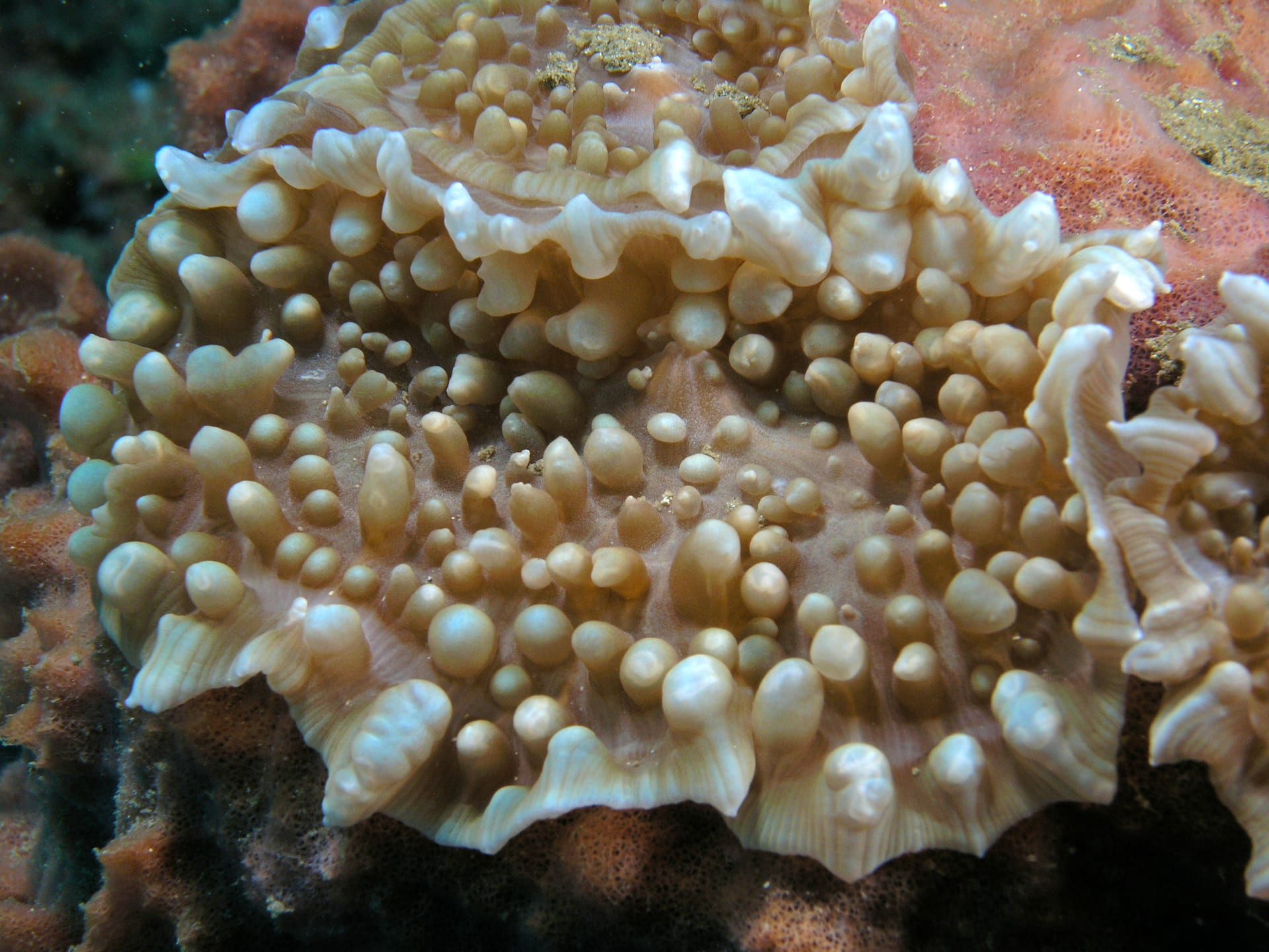
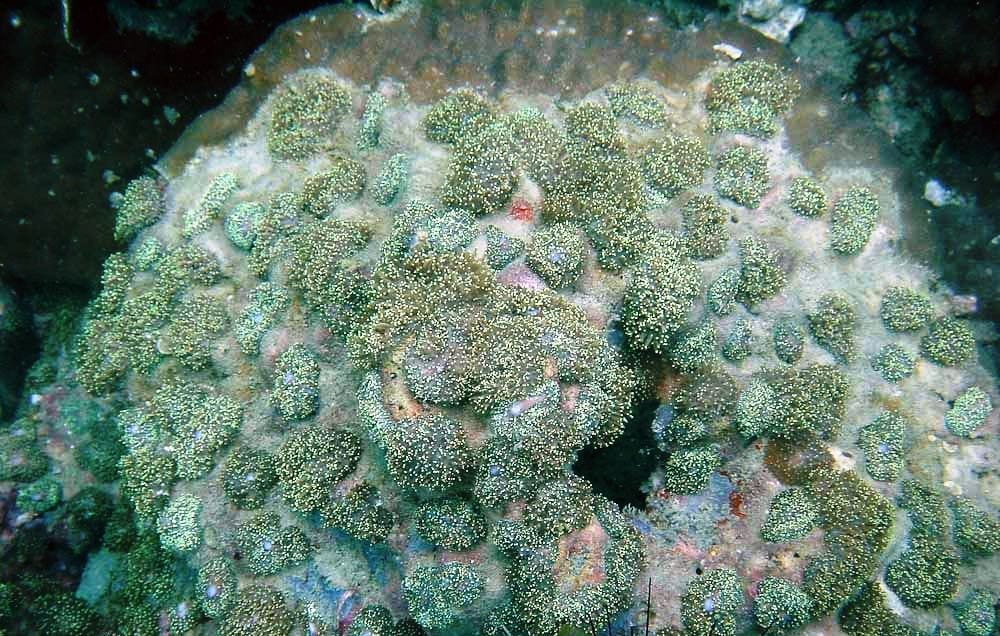
A large corallimorph described by Saville-Kent in 1893. Its disc is covered in short branched tentacles and is brown to green. Like all corallimorphs it builds no skeleton.
Difficulty
Beginner
Temperature
24〜26℃
Diet
Nutrition from its zooxanthellae, plus plankton and larger food items it captures.
About
Rhodactis howesii is a corallimorph of Indo-Pacific reefs, described by William Saville-Kent in 1893. Related to the stony corals but building no calcareous skeleton, it consists only of an oral disc and column. The disc grows large for the genus and its surface is densely covered in short branched tentacles, brown to green in colour. It reproduces asexually by fission and by laceration of the disc, and will spread across rockwork in the aquarium when conditions suit. Symbiotic zooxanthellae supply part of its nutrition through photosynthesis, and it makes up the rest by capturing plankton and larger food items. The trade name elephant ear is applied to large-disced corallimorphs generally, so the scientific name should be confirmed at purchase. Having no skeleton, it is not covered by the CITES coral listings.
Source: Wikipedia (CC BY-SA 4.0)
Temperature & humidity for the Elephant Ear Mushroom (Rhodactis Howesii)
The ideal temperature for the Elephant Ear Mushroom (Rhodactis Howesii) is 24〜26℃.
Basic Info
Origin
Shallow reefs of the Indo-Pacific
Temperature
24〜26℃
Diet
Nutrition from its zooxanthellae, plus plankton and larger food items it captures.
Care Guide
Lighting
LiveAquaria lists Rhodactis mushrooms as low to moderate light corals. Strong light makes them shrink and lose colour, so raise light levels gradually.
Care Specifications
- Carbonate (KH)
- 8–12 dKH
- Water Temp.
- 24–26℃
- Specific Gravity
- 1.023–1.025
- Salinity
- 33–35 ppt
Soft coralLight: Low (PAR 30-50)Flow: LowPlacement: Bottom
Sources: LiveAquaria (Green Rhodactis Mushroom Coral) / LiveAquaria (Hairy Mushroom Coral) / WoRMS (World Register of Marine Species)
References & Sources
Edited & verified by: BreederDirect editorial team
The taxonomic, regulatory, and husbandry data on this page are compiled and verified against the authoritative primary sources below.
Taxonomy & Authority
Accepted name: Rhodactis howesii Saville-Kent, 1893
Authority databases: WoRMS
Nomenclature follows global taxonomic authority databases.
Regulations & Conservation Status
Not CITES-listed
Sources: CITES Appendices (taxon not listed)
Regulations may change. Always verify the latest information with the relevant authorities.
Elephant Ear Mushroom (Rhodactis Howesii) Listings
Loading latest listingsFind listings for this species