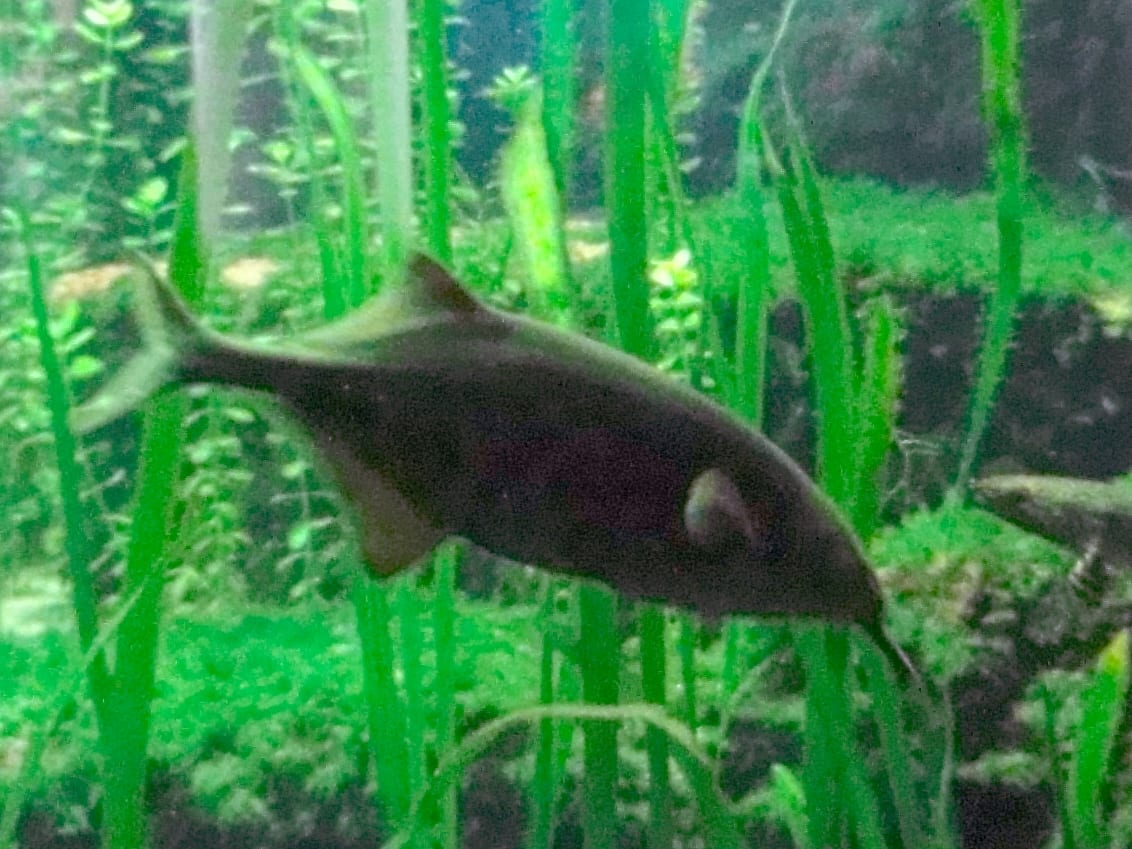
What is the Elephant Nose Fish—A Mysterious Fish That "Sees" Using Electricity
The Elephant Nose Fish (Gnathonemus petersii) is a freshwater fish native to the murky rivers and lakes of West Africa (Nigeria, Congo Basin, etc.). Its most distinctive feature is the protrusion projecting from the lower jaw that resembles an "elephant's trunk" (actually an electrical sensory organ) and a sensory system that uses weak electric fields (Electric Organ Discharge, EOD).
The brain is proportionally large relative to body weight, comparable to that of mammals, and it uses this to sense electrical fields in water to identify obstacles, food, companions, and predators. As one of the few freshwater fish where this "electric sense (electroreception)" can be observed, it enjoys high popularity among researchers and aquarium enthusiasts.
Basic Specifications
| Item | Value |
|---|
| Adult Size | ~25 cm |
| Tank Size | 90-120 cm (120 cm recommended for adults) |
| Water Temperature | 23-28°C |
| pH | 6.5-7.5 (slightly acidic to neutral) |
| Hardness | Soft to moderately hard water (GH 3-12 dGH) |
| Temperament | Basically peaceful, territorial toward same species |
| Activity Period | Nocturnal (hides during the day) |
| Difficulty | ★★★☆☆ (intermediate to advanced) |
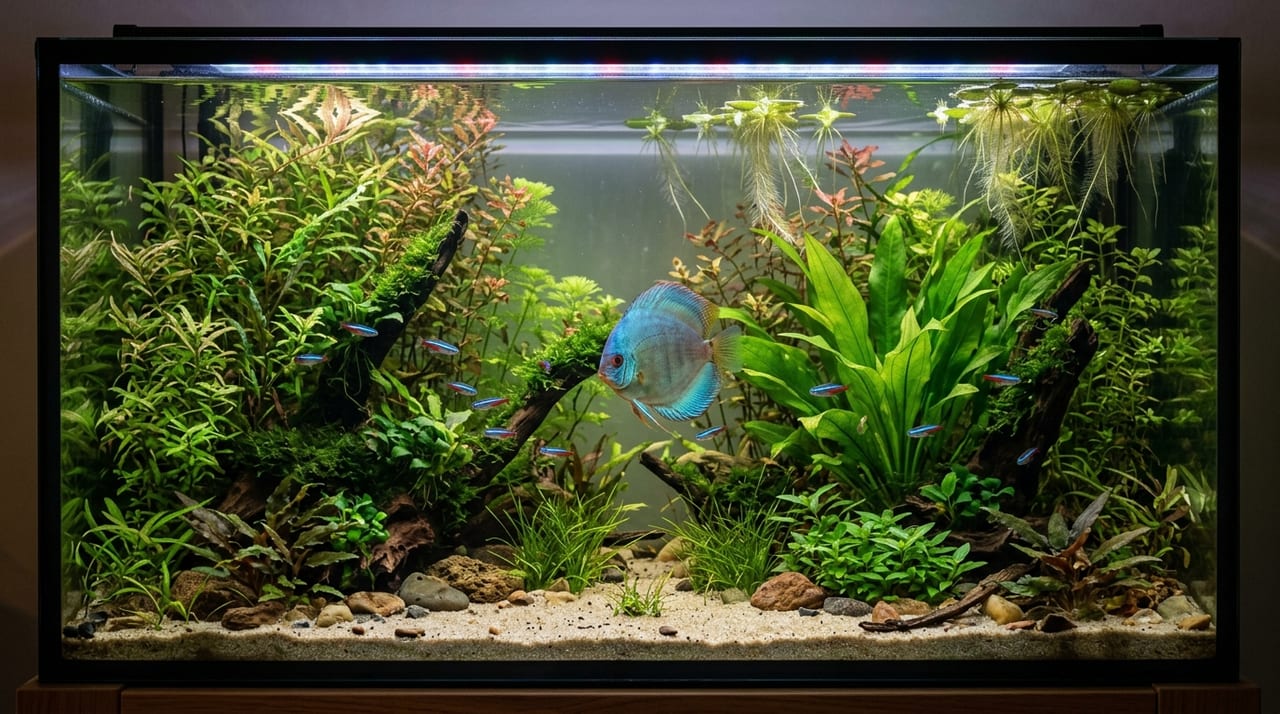
A Dimly Lit Tank is the Key to Success
The Elephant Nose Fish is adapted to murky river environments and is a nocturnal fish with poor vision that dislikes light. In a bright tank, it experiences extreme stress and will hide, refusing to come out or eat.
Lighting Adjustments
- Low-power blue-spectrum LED: Instead of standard white lighting, use blue or red-spectrum LEDs around 10-20W
- Keep lighting duration short: Around 6-8 hours (adjust to nocturnal behavior by turning on in the evening/night)
- Use of floating plants: Float Amazon frogbit or water sprite on the surface for shade
- Ensure shaded areas: Install multiple hiding spots such as live rock, driftwood, and caves
During lighting hours, the fish will rarely be visible, but after the lights are off, you can enjoy watching it actively swim around when observed in darkness. Night observation using an infrared camera or IR light is particularly fascinating.
The Importance of Substrate
The Elephant Nose Fish uses its "nose" to probe the substrate and dig up and eat marine worms, tubifex worms, and small crustaceans. Without appropriate substrate, their natural foraging behavior will be inhibited.
Recommended Substrate:
- Fine sand (fine sand or river sand) with a grain size of 1mm or less
- Sand depth of 5-8cm or more (deep enough for foraging behavior)
- Avoid coarse gravel or large grain sand as it can injure the "nose"
If the substrate contains some nutrients, microorganisms like water mites will naturally develop and become supplementary food for the Elephant Nose Fish.
Feeding: Care for a Benthic Carnivorous Fish
The Elephant Nose Fish is a benthic carnivore and prefers food that sinks to the bottom or middle layer rather than floating food near the surface.
Recommended Foods
| Food | Suitability | Notes |
|---|
| Frozen bloodworms | ◎ Excellent | Perfect as a staple food |
| Frozen tubifex worms | ◎ Excellent | Ideal for burying in substrate while feeding |
| Live tubifex worms | ◎ Excellent | Effective for initial feeding and low appetite |
| Frozen mysid shrimp | ○ Good | Use supplementarily |
| Frozen copepods | △ Acceptable | Most individuals don't prefer these |
| Dried pellet food | △-× | Many individuals won't accept it |
Feeding Tips
- Feed after lights out (at night): Since they hide during the day, feed within 30 minutes after turning off the lights
- Drop directly into the substrate: Feeding in a way that sinks to the bottom encourages more natural foraging behavior than surface feeding
- Feed small amounts frequently: 1-2 times per day, feeding only as much as will be completely consumed
- Remove uneaten food: Remove any leftover frozen food the next morning as it causes water quality deterioration
Tank Mates: Important Considerations
There are specific rules for keeping Elephant Nose Fish with other fish.
Same Species:
When kept with other Elephant Nose Fish, electrical signal interference (jamming) causes significant stress. If keeping 2 or more, you need a tank of 120cm or larger with plenty of space and separate hiding spots for each individual. Ideally, keep only one per tank.
Tank Mates with Other Fish:
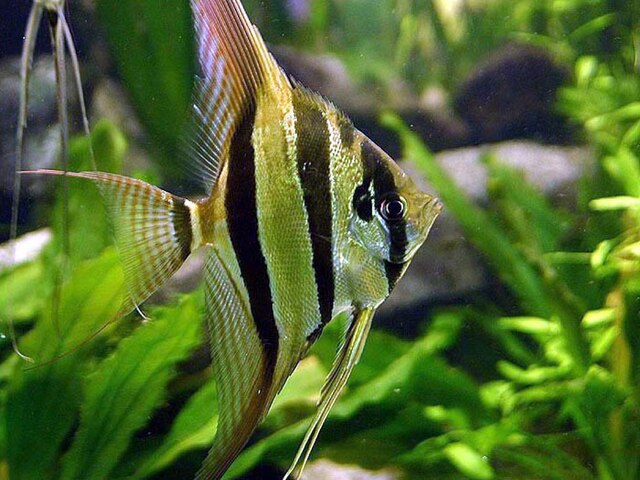
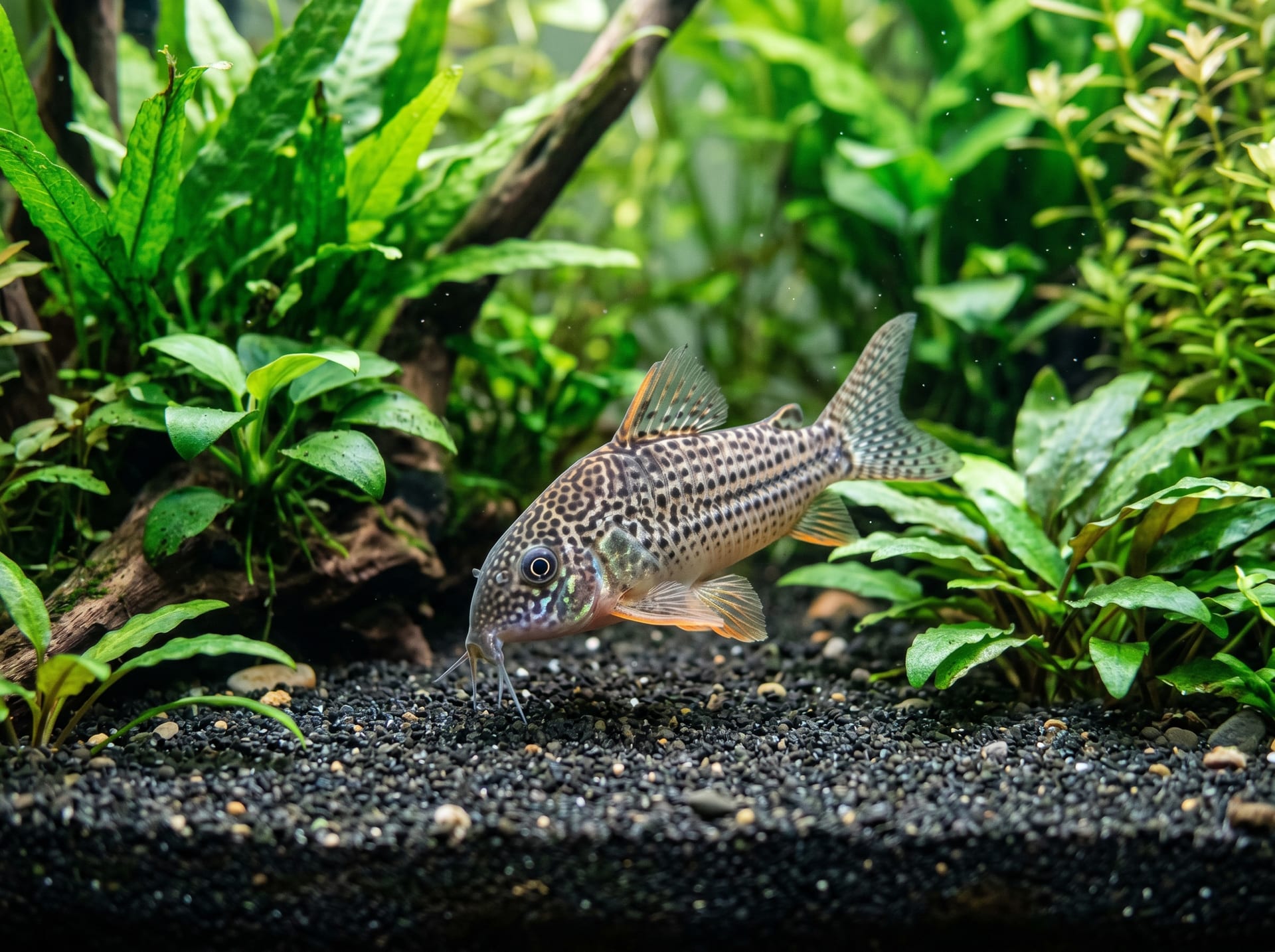
- Compatible fish: Angelfish, gouramis, large dwarf cichlids, and corydoras (those that don't compete for the bottom layer)
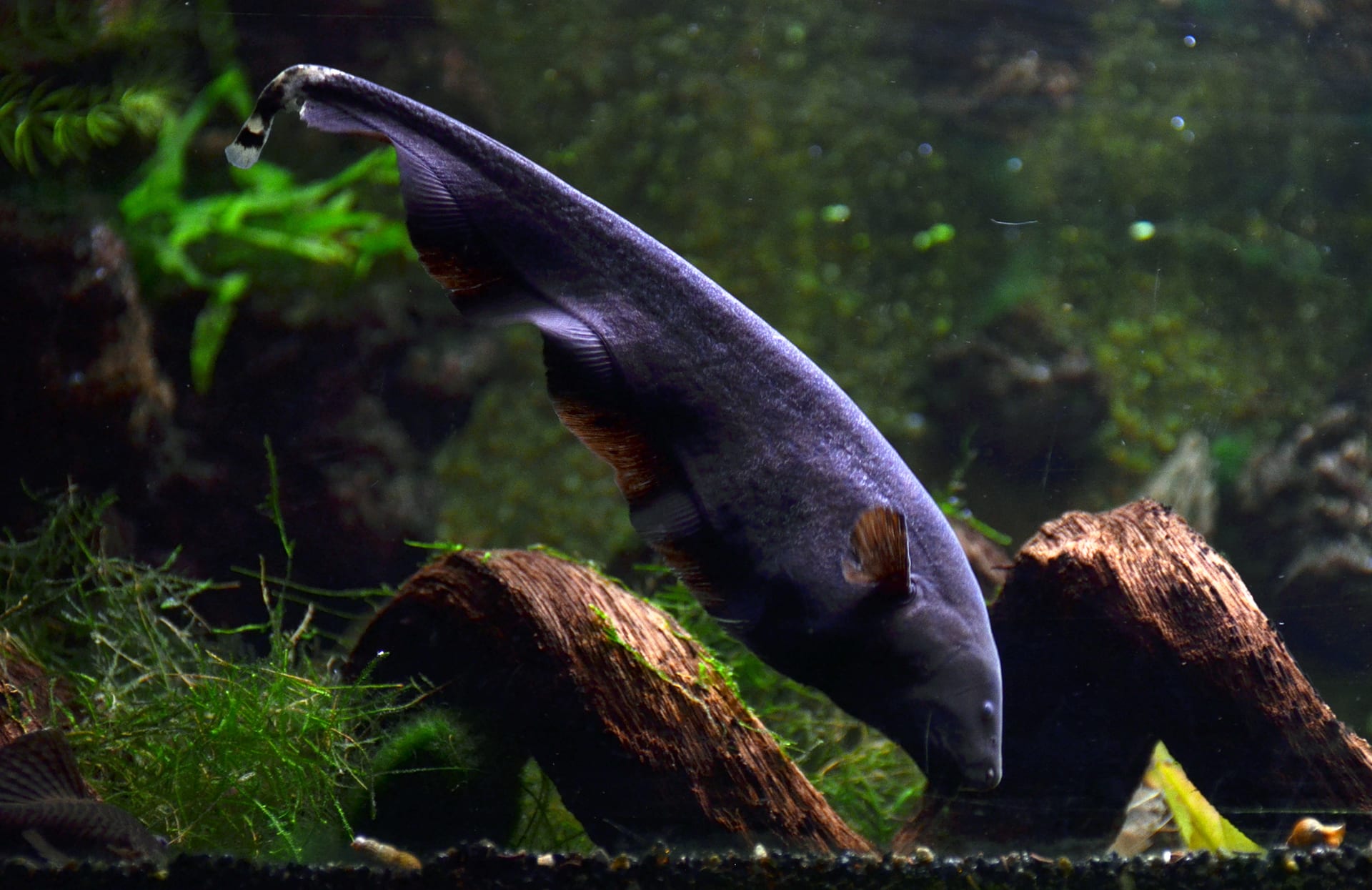
- Fish to avoid: Red-finned sharks, small tetras (small fish that fit in the mouth will be predated), aggressive fish, and other electric fish (electric eels, black ghost knife fish, etc.)
Electrical signal interference occurs not only with the same species but also with other weakly electric fish (Apteronotus genus, etc.).
Water Quality Management
As they originate from soft water rivers in Africa, soft water and slightly acidic conditions are ideal, but they can be kept without problems at around neutral pH 7.
- Filtration: External filter recommended (canister filter acceptable). Combining with a bottom filter is ideal to remove organic matter from the substrate
- Water changes: 10-20% water change once per week (using soft water approximates their natural conditions)
- Chlorine removal: Dechlorinator is essential
- Temperature: 23-28°C (sudden temperature changes can lead to ich and other diseases)
Enjoying Observation of Electric Sense
One of the greatest joys of keeping Elephant Nose Fish is observing behaviors that utilize their electric sense.
- Obstacle avoidance: Navigates precisely between driftwood and rocks even in darkness
- Foraging: Diligently probes the sandy bottom with its snout to find food
- Companion recognition: When approaching others of the same species, changes in electrical pulses (chirps) can sometimes be observed
Among enthusiasts, DIY projects that attach electrical sensors to the tank to visualize EOD pulses are also done, and this fish offers a unique "joy of observation."
Summary
The Elephant Nose Fish is a unique fish with special biological characteristics including electric sense, unlike ordinary tropical fish. Long-term maintenance becomes possible by following the basics: creating a dimly lit tank suited to their nocturnal behavior, using fine sand substrate, feeding primarily with frozen bloodworms, and keeping them singly or in small groups. When purchasing an individual through BreederDirect, please confirm the feeder's feeding condition and tank environment, and prepare appropriately before bringing it home.