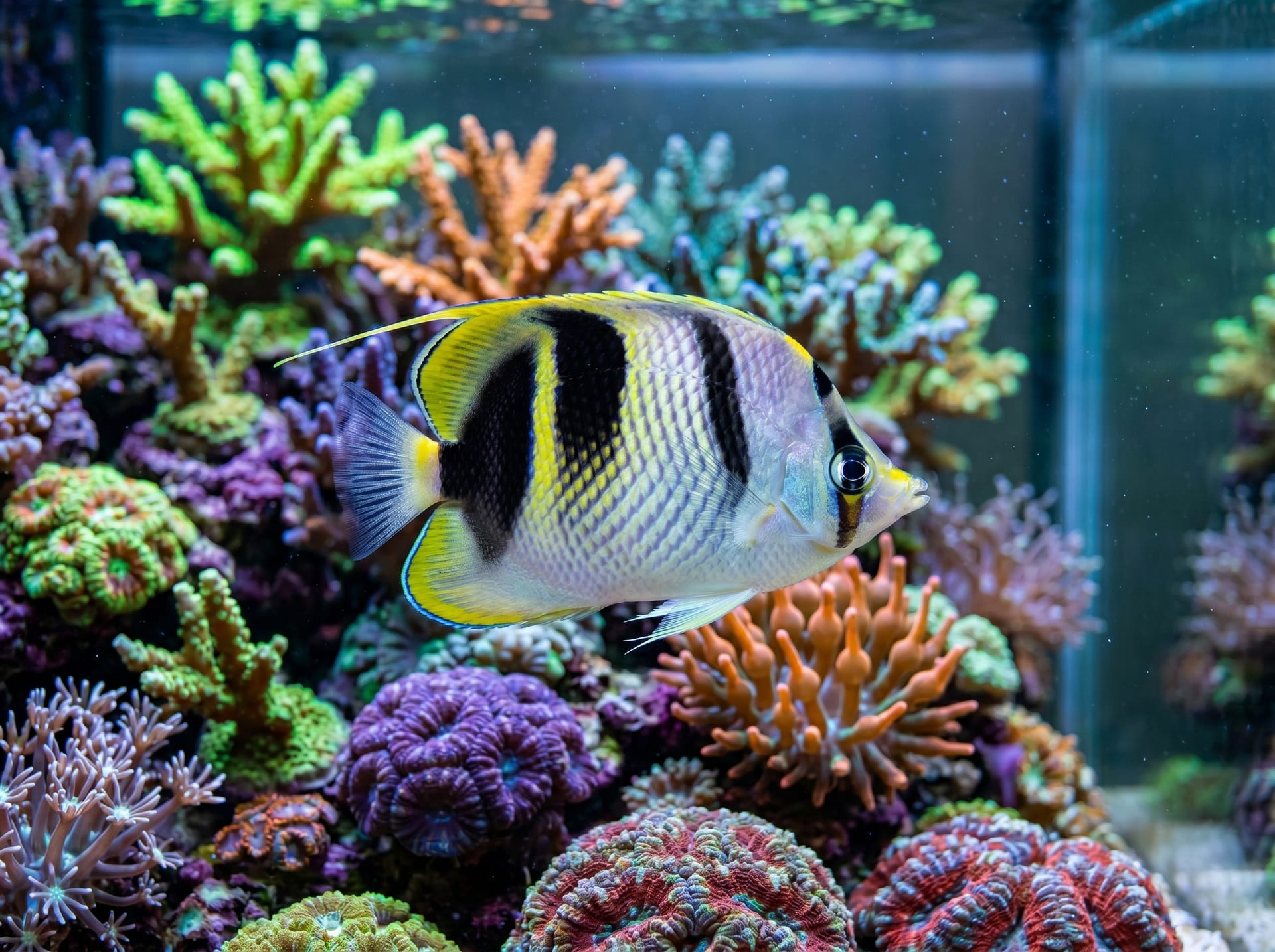
Butterflyfish
Butterflyfish are vibrant, patterned marine fish often called "butterflies of the sea" for their graceful swimming. Their care difficulty and diet vary significantly by species, so beginners should choose hardier varieties. They are a popular choice for adding color and elegance to a marine aquarium.
0% commission on your first sales!Register by September 30, 2026 and your first 2 sales are commission-free!
Breeder Wanted!
List on BreederDirect and sell directly to customers nationwide!
BreederDirect's 6 Transparency Promises
Every Marine Fish & Coral listing shows Breeder's full disclosure. No wild-caught. Captive-bred priority, tank size guidance, temperament details—transparent aquaculture.
- Captive-bred
- WYSIWYG
- Reef-safe
- Care Info Included
- Origin Disclosed
- Temperament Listed
Browse all 42 breeds
Care Difficulty
Reef-safe
Temperament
Verified breeders wanted for Marine Fish & Coral
Breeders are signing up now ahead of launch. Subscribe to be notified when new listings go live.
Getting alerts is free with a member account. When new listings match your saved search, we'll notify you by email and in-app.
Browse other categories
Verified breeders (preview)
Are you raising marine fish & coral?
Register as a breeder and connect with buyers directly.
Apply as a breederAbout Butterflyfish
Butterflyfish belong to the family Chaetodontidae, which encompasses more than 120 species across approximately 12 genera, distributed throughout tropical and subtropical coral reefs worldwide. Their name — both in Japanese and English — derives from their fluttering, butterfly-like swimming motion. Their laterally compressed, oval bodies are adorned with symmetrical, vivid patterns combining yellow, white, and black, making them among the most visually striking fish in the ocean. Many species feature a dark band across the eye, thought to serve dual purposes: camouflaging the eye from predators and functioning as a visual signal to conspecifics. While temperament varies between species, butterflyfish are generally peaceful and engaging to observe, with some individuals becoming comfortable enough to approach their keeper over time. In the marine aquarium hobby, they are highly prized for instantly evoking the atmosphere of a tropical reef, captivating aquarists around the world with their unique combination of beauty and personality.
7 things to know before welcoming a Butterflyfish
1Species Selection Matters
Butterflyfish vary widely in hardiness. Species like the raccoon butterflyfish are considered more beginner-friendly. Always research the specific species' care requirements before purchasing.
2Coral Compatibility Risk
Many butterflyfish naturally feed on coral polyps, making them risky additions to reef tanks. Some species are less destructive than others, but caution is advised before introducing them to a coral aquarium.
3Requires a Large Tank
Butterflyfish are active swimmers and generally require tanks of at least 120–150 liters. Cramped conditions cause stress and health problems. Providing ample swimming space is essential for long-term care.
4Feeding Can Be Challenging
Many butterflyfish are accustomed to specific wild foods and may refuse prepared feeds at first. Frozen brine shrimp, mysis, or live foods are often used to encourage feeding. Selecting an already-weaned specimen at purchase is highly recommended.
5Strict Water Quality Needed
Butterflyfish are sensitive to water quality changes and do poorly in high-nitrate or ammonia-laden water. Maintain a specific gravity of 1.020–1.025 and temperature of 24–26°C, with regular water changes and strong filtration.
6Choose Tankmates Carefully
Some butterflyfish are territorial, especially toward their own or similar species. They generally coexist with peaceful marine fish, but aggressive tankmates can cause chronic stress and health decline.
7Watch for Disease Early
Butterflyfish are prone to marine ich (Cryptocaryon). White spots on the body or fins are a warning sign requiring prompt isolation and treatment. Always quarantine new fish in a separate tank for 2–4 weeks before adding them to the main display.
Frequently asked questions about Butterflyfish
- Q.Can butterflyfish be kept in a reef tank?
- A.It depends on the species. A few species, such as the Longnose Butterflyfish, pose minimal risk to corals and can be kept in reef tanks. However, the majority of butterflyfish have coral-eating tendencies that make them incompatible with reef aquariums. Always research the specific species' feeding behavior before purchase.
- Q.Which species are recommended for beginners?
- A.The Raccoon Butterflyfish and Threadfin Butterflyfish are often recommended for beginners, as they tend to adapt to prepared foods more readily than other species. Selecting an individual from the shop that is already confirmed to be eating prepared foods further reduces the risk of difficulties.
- Q.Can multiple butterflyfish be kept together in the same tank?
- A.A bonded pair of the same species can be kept together in a sufficiently large tank (150 cm or more). Mixed-species combinations can lead to territorial conflicts, so it is best to introduce multiple fish simultaneously, or add new individuals gradually while closely monitoring behavior when existing fish are already established.
- Q.What should I do if my butterflyfish refuses to eat?
- A.Start by offering highly palatable options such as frozen brine shrimp or mysis shrimp. Refusal to eat can also stem from poor water quality or stress, so check water parameters and ensure adequate hiding spots are available. If the fish continues to refuse food for more than a week, consult a specialized aquarium shop or a veterinarian with marine fish experience.
- Q.What is the lifespan of a butterflyfish?
- A.When kept in appropriate conditions, butterflyfish typically live for around 5 to 10 years in captivity, with some species living beyond 10 years in the wild. Stable water quality, a proper diet, and a low-stress environment are the key factors that support a long, healthy lifespan.
Useful tools for Butterflyfish care
Butterflyfish related articles
Vagabond Butterflyfish Care Guide | Feeding, Tank Setup, Compatibility, and Long-term Care Tips
A guide to caring for the Vagabond Butterflyfish (Chaetodon vagabundus). Covers the step-by-step feeding process—the biggest challenge in butterflyfish care—tank setup of 90cm or larger, quarantine in treatment tanks to prevent ich, and practical guidance on compatible and incompatible tank mates.
Copperband Butterflyfish Care Guide | Steps to Successfully Achieve Difficult Feeding
One of the most challenging fish to feed in saltwater aquariums, the Copperband Butterflyfish (also called Longnose Butterflyfish) is explained in detail. Covers stepwise transition from live food to frozen food to pellets, glass panel feeding techniques using copepods, precautions for pair breeding, and the use of aiptasia (aiptasia anemones) as a biological control agent.
Large Saltwater Fish Care Guide | Characteristics and Management of Napoleon Wrasse, Naso Tang, and Corallia Butterflyfish
A comprehensive guide to caring for large saltwater fish species (60cm and larger), including Napoleon wrasse, Naso tangs, and garden eels. Covers large aquarium tank design, powerful filtration systems, feeding methods, and essential considerations for transport and quarantine. This guide encompasses all the information you need to know before bringing a large fish into your home.
More in this category
Can't find the one you're looking for?
Post your wishes for free and breeders with matching animals will contact you with introductions.