Copperband Butterflyfish Care Guide | Steps to Successfully Achieve Difficult Feeding
One of the most challenging fish to feed in saltwater aquariums, the Copperband Butterflyfish (also called Longnose Butterflyfish) is explained in detail. Covers stepwise transition from live food to frozen food to pellets, glass panel feeding techniques using copepods, precautions when keeping pairs, and the use of aiptasia (aiptasia anemones) as a biological control agent.
Key Takeaways
One of the most challenging fish to feed in saltwater aquariums, the Copperband Butterflyfish (also called Longnose Butterflyfish) is explained in detail. Covers stepwise transition from live food to frozen food to pellets, glass panel feeding techniques using copepods, precautions when keeping pairs, and the use of aiptasia (aiptasia anemones) as a biological control agent.
Related Species
Copperband Butterflyfish — Advanced Species Combining Beauty and Difficulty
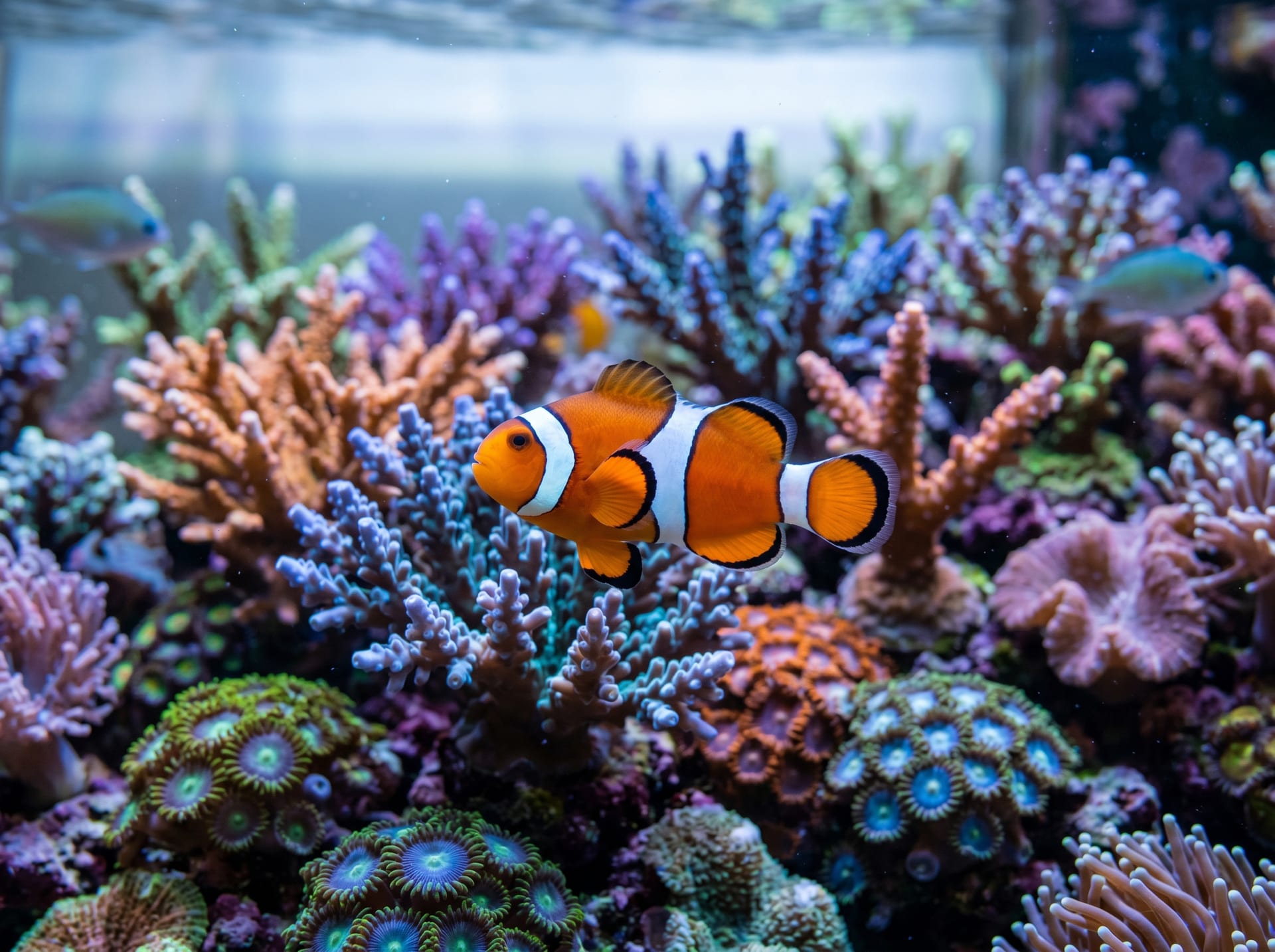
Copperband Butterflyfish (Chelmon rostratus) is a saltwater fish of the family Chaetodontidae widely distributed throughout the Indian Ocean and Western Pacific. In Japan, it is also called "Longnose Butterflyfish," and is characterized by its elongated, beak-like snout and striking copper and orange-colored stripes along its body.
It is known among saltwater fish as "one of the most difficult species to feed" and is not recommended for beginners. However, the sense of accomplishment and ornamental value upon success are very high. Additionally, as one of the few saltwater fish capable of eating aiptasia anemones—a persistent pest—it has demand as a biological control agent for reef tanks.
Basic Specifications
| Item | Value |
|---|---|
| Adult Size | Approximately 20cm |
| Minimum Tank Size | 180L or larger (150cm tank recommended) |
| Water Temperature | 24–27°C |
| Salinity | 1.023–1.026 sg |
| pH | 8.1–8.3 |
| Temperament | Peaceful (caution with conspecifics and related species) |
| Coral Compatibility | Requires caution as some individuals eat coral polyps |
| Difficulty | ★★★★☆ (High) |
The Greatest Challenge: Stepwise Feeding Transition
The primary cause of death in Copperband Butterflyfish is "malnutrition due to failed feeding." In nature, they use their beaks to probe rocky crevices for polychaete worms, small crustaceans, and copepods. Transitioning to artificial feeds in the aquarium requires persistent, patient effort.
Step 1: Securing Live Copepods (Arrival–1 Week)
Newly acquired specimens are under maximum stress, so confirming that they are "eating" is the top priority.
- Observe whether the fish independently hunts and eats copepods (small crustaceans) from live rock or sand substrate
- Add commercially available "copepod culture packs" to the tank to increase copepod density
- If the fish is not eating, move it to a quarantine tank (QT) to reduce stress
Step 2: Glass Panel Feeding Method (Weeks 1–2)
Effective "glass panel feeding method" for conditioning Copperband Butterflyfish:
- Place copepods, krill, or mysid shrimp in an external clear container (small food box) and attach it to the glass with a suction cup
- When the fish begins to strike at the food through the glass with its snout, this is a sign of imminent success
- After a few days, allow direct feeding through a divider with holes in the glass
- Eventually encourage independent feeding from an open container
Step 3: Transition to Frozen Brine and Mysid (Weeks 2–4)
Once live food is being consumed, gradually introduce frozen feeds.
- Live copepods: frozen mysid = 9:1 → 7:3 → 5:5 → 3:7 → 0:10, gradually shifting the ratio
- Transition period should be at least 2 weeks (sudden changes risk returning to refusal)
- Feed with the pump off, twice daily, in small portions divided into multiple feedings
Step 4: Transition to Pellets and Prepared Foods (Weeks 4–8)
The final goal is transition to dry prepared feeds, but this is the most difficult step for Copperband.
- Mix high-quality pellets (0.5–1 mm diameter) in small amounts with frozen mysid
- Feeding after a period of fasting (6–12 hours without food) has higher success rates
- There is significant individual variation; some specimens may never accept pellets
- Long-term maintenance with a mixed frozen mysid and pellet diet is a practical alternative
Use as an Aiptasia Control Agent
A remarkable ability of Copperband is its capacity to eat aiptasia anemones. While aiptasia becomes a serious problem in reef tanks, proliferating and injuring corals and fish with their stings, introducing Copperband provides biological control.
Cautions:
- There is no guarantee that the fish will eat aiptasia, and behavior varies widely by individual
- To condition the fish to eat aiptasia, first expose it to aiptasia in an isolation container, confirm that it consumes them, and only then introduce it to the main tank
- If obtained specifically for aiptasia control and feeding is neglected, there is risk of starvation once the aiptasia population is depleted
Mixing with Conspecifics and Related Species
Copperband exhibits strong territorial behavior toward conspecifics and related species (Chaetodontidae), resulting in intense aggression especially in smaller tanks.
- Conspecific mixing: In large tanks (300L or larger), simultaneous introduction of multiple specimens may result in distributed territoriality in some cases
- Pair maintenance: Sexing is difficult, and since nearly all commercially available Copperband are wild-caught, there is no guarantee that specimens sold as "pairs" are true pairs
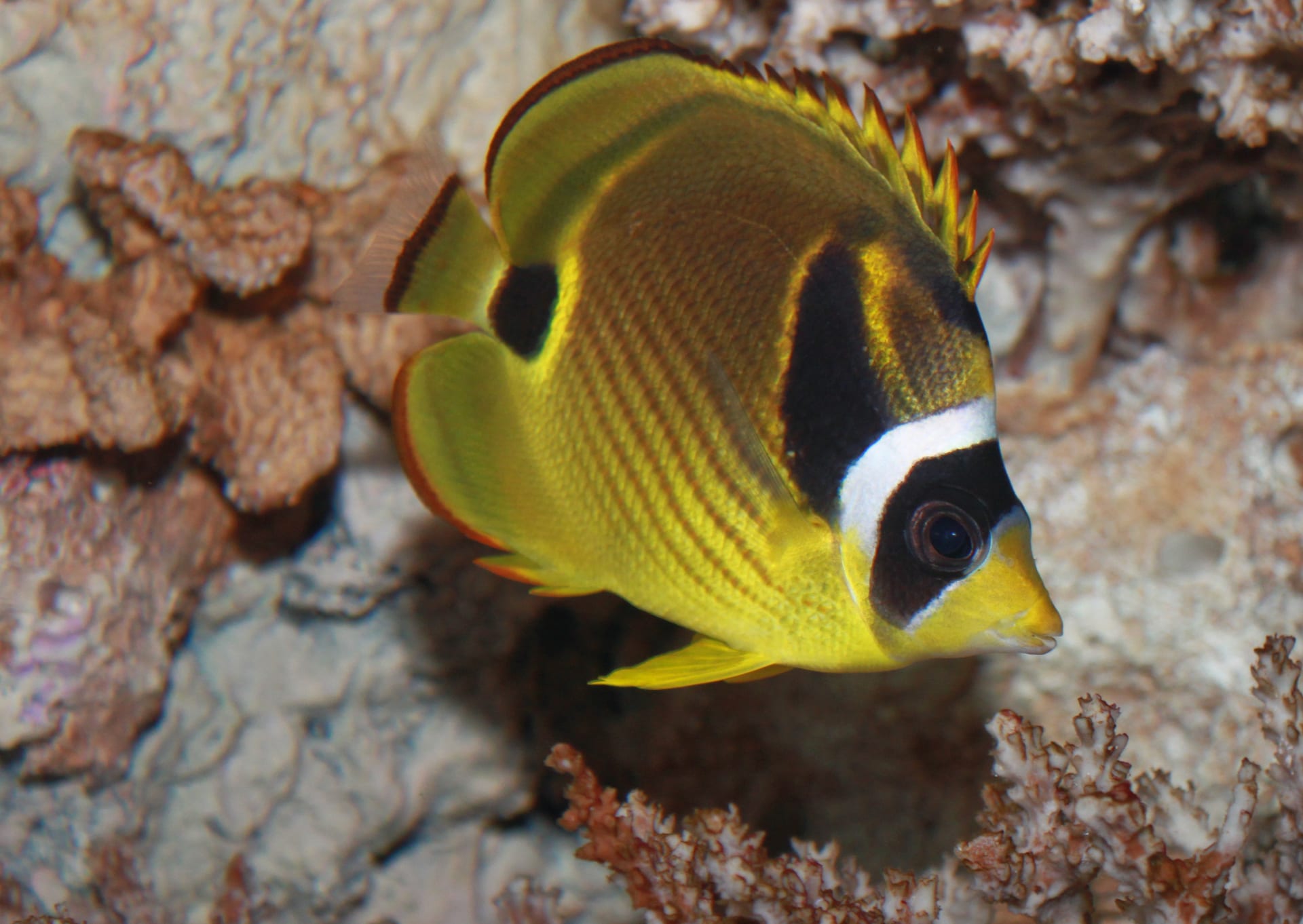
- Mixed community: Cohabitation with peaceful fish (gobies, clownfish, grammas) is relatively unproblematic
Coral Compatibility
Copperband may consume coral tissue:
- Easily consumed corals: Zoanthids, polyp corals, some LPS (e.g., trumpet corals)
- Relatively safe corals: SPS corals (those with structures preventing contact)
- Individual variation: Some specimens may not consume corals at all
Introduction to fully stocked reef tanks carries inherent risk; it is recommended to test in an isolation tank before committing.
Keys to Long-Term Success
- Solitary or small group housing: Avoid conspecific grouping to minimize stress
- Adequate water volume: Maintain water stability in tanks 150cm or larger
- Protein skimmer use: Keep water clean by removing organic compounds
- Regular monitoring: If the fish loses weight, immediately increase feeding quantity and frequency
- Refuge availability: Provide rock structures where the fish can hide when startled
Summary
Copperband Butterflyfish is an advanced species for those who have mastered saltwater aquarium husbandry. With patient commitment to the stepwise feeding process beginning with live copepods and proper tank setup, this incomparably beautiful fish will serve as the centerpiece of your aquarium for many years. At BreederDirect, we encourage detailed listings of specimen condition, feeding status, and size to help purchasers maximize their chances of success.