Hammer Coral (Euphyllia) Tank Layout Guide | Positioning, Isolation, and Color Enhancement in Practice
Euphyllia corals including hammer corals, frogspawn corals, and torch corals are known for their striking appearance and potent toxicity. This practical layout guide covers proper spacing between corals, allelopathy countermeasures, color enhancement based on placement, and frag propagation—everything you need to maintain Euphyllia species long-term.
Key Takeaways
Euphyllia corals including hammer corals, frogspawn corals, and torch corals are known for their striking appearance and potent toxicity. This practical layout guide covers proper spacing between corals, allelopathy countermeasures, color enhancement based on placement, and frag propagation—everything you need to maintain Euphyllia species long-term.
Related Species
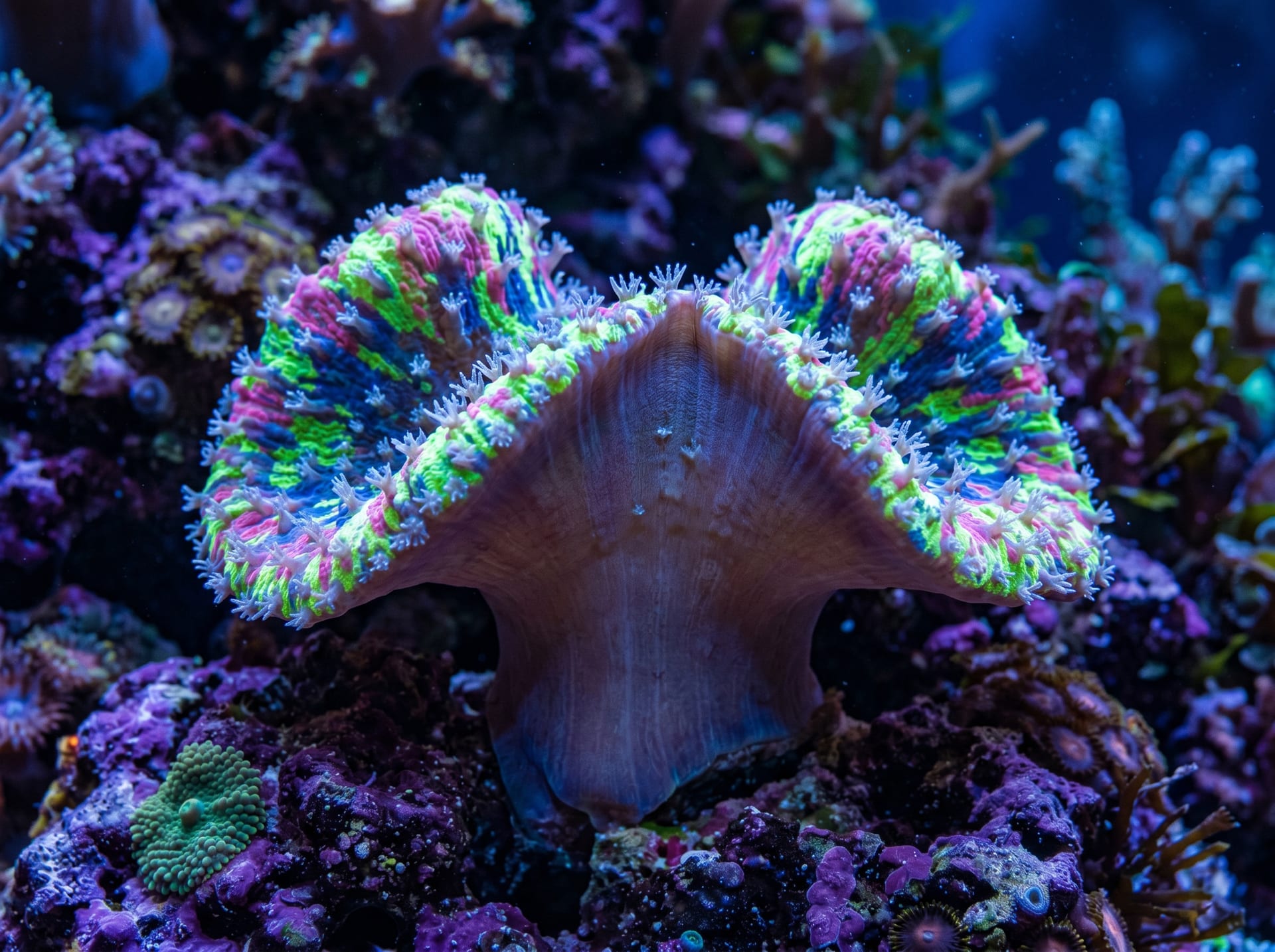
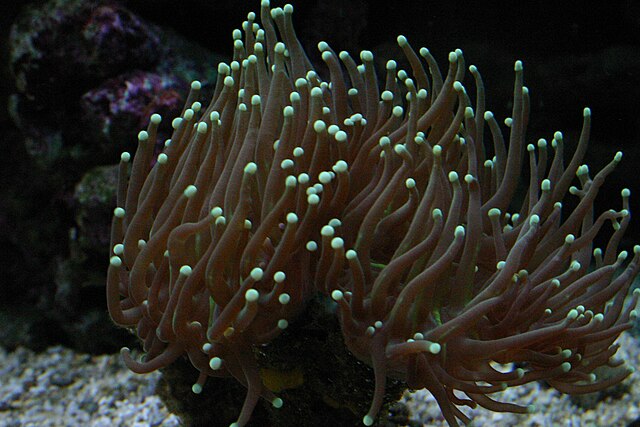
Euphyllia Corals: An Overview
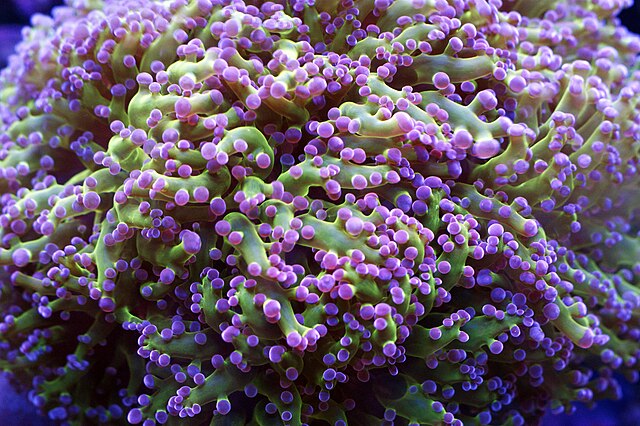
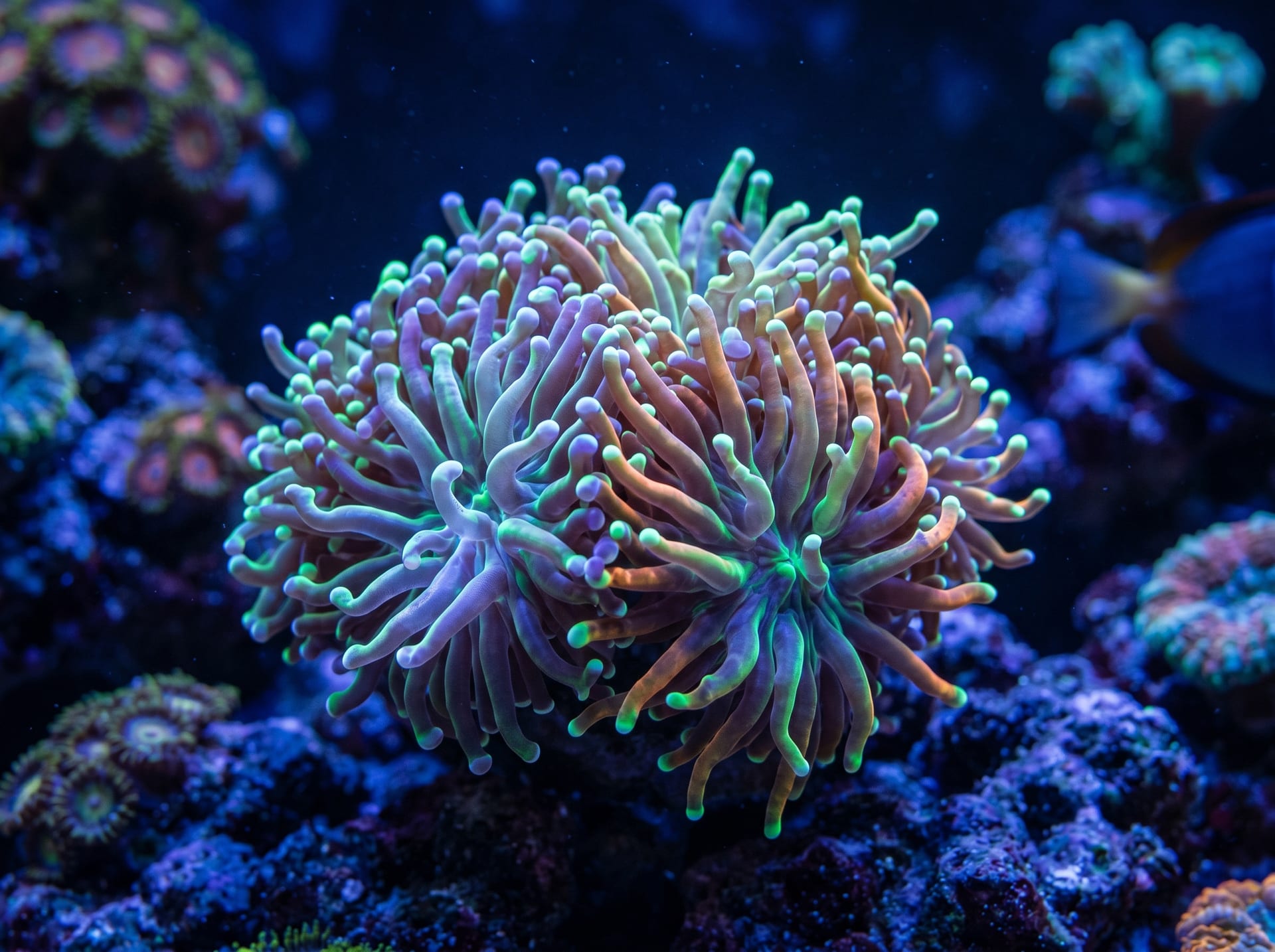
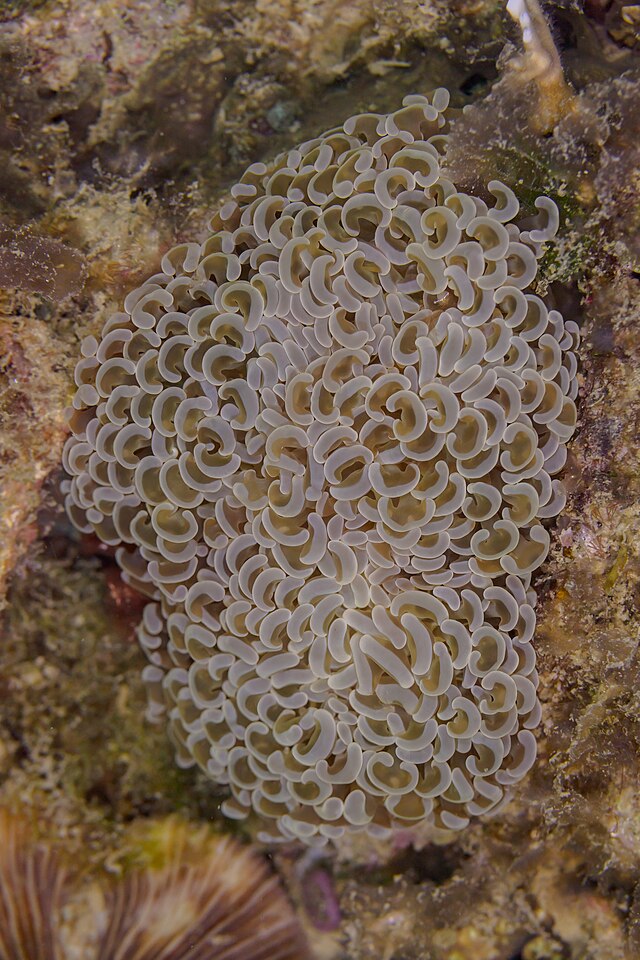
Euphyllia (Euphyllia genus) are LPS corals in the Caryophylliidae family, popular for their striking presence and beautiful tentacles in the aquarium. The three main species are listed below.
| Species | Common Name | Tentacle Shape | Characteristics |
|---|---|---|---|
| E. ancora | Hammer Coral | T-shaped or anchor-like | Most common. Available in green, gold, purple, and other colors |
| E. divisa | Frogspawn Coral | Grape-like spherical bulbs | Multiple "bubbles" densely clustered together |
| E. glabrescens | Torch Coral | Long slender tentacles | Elongated tentacles that sway gracefully |
All possess powerful nematocysts (sweeper tentacles) that can attack and kill nearby corals. In layout design, "distance from neighbors" is the most critical factor.
Understanding Allelopathy and Sweeper Tentacles
The defining feature of Euphyllia is the sweeper tentacle. These specialized elongated tentacles extend several times longer than normal tentacles at night and cause necrosis in other corals upon contact through nematocyst toxins.
Sweeper Tentacle Reach
| Species | Normal Tentacle Extension | Sweeper Tentacles (Night) |
|---|---|---|
| Hammer Coral | 5–8cm | 15–25cm |
| Frogspawn Coral | 5–10cm | 15–30cm |
| Torch Coral | 8–15cm | 25–40cm |
Corals touched by sweeper tentacles suffer "chemical burn," with tissue melting away from the contact point and dying. Adjacent corals can be half-destroyed in a single night.
Allelopathy (Chemical Defense)
Beyond physical attacks with tentacles, Euphyllia also release chemical compounds (terpenes) into the water, exhibiting allelopathy. These chemical stressors are particularly harmful to delicate SPS corals like acropora.
Proper Placement and Spacing
The golden rule when incorporating Euphyllia into a layout is "securing sufficient isolation space."
Minimum Spacing Guidelines
| Adjacent Coral Type | Recommended Clearance |
|---|---|
| Soft Corals (Xenia, Mushroom Corals, etc.) | 30–40cm |
| LPS (Brain Corals, Trumpet Corals, etc.) | 20–30cm |
| Other Euphyllia Species | 15–20cm (relatively safe between same species) |
| SPS (Acropora, Pocillopora, etc.) | 40cm or more recommended |
Important: Set spacing based not on "polyp extension during the day," but on "maximum sweeper tentacle extension at night." Even if there are no problems during the day, attacks commonly occur at night.
Placement Strategy
In an ideal layout seen from the front of a 90cm tank, maintain 40cm or more clearance between upper-level SPS and mid-level Euphyllia, and 15cm or more between mid-level and lower-level floor-dwelling LPS. Space Euphyllia of the same species at least 20cm apart.
- Arrange Euphyllia at the same height and in the same row for easier management
- Be mindful of positioning to prevent Euphyllia from easily attacking corals beneath live rock overhangs
Lighting and Water Flow Setup
Lighting
Euphyllia are photosynthetic corals with zooxanthellae, but prefer moderate light intensity over high intensity.
| Placement | PAR Range | Characteristics |
|---|---|---|
| Upper Level | 150–250 μmol/m²/s | Good color expression but risk of bleaching |
| Mid Level | 80–150 μmol/m²/s | Most stable and recommended |
| Lower Level | 50–80 μmol/m²/s | Good polyp extension but slower growth |
Color Enhancement Tips
- Increase blue LED ratio: Blue-to-purple wavelengths (420–470nm) activate fluorescent proteins, enhancing green, yellow, and gold coloration
- Maintain day-night cycle: 10 hours on, 14 hours off is ideal. Turning off lights at night also allows observation of sweeper tentacles
- Overly intense white light (10,000K or higher) can cause excessive illumination and lead to browning
Water Flow
Euphyllia prefer gentle to moderate intermittent water flow.
- Avoid direct current (strong unidirectional flow): Constantly flowing tentacles in one direction cause stress and polyp retraction
- Set circulation pumps to random or wave mode to create irregular flow patterns
- Water flow that is too weak allows detritus accumulation and can trigger STN (tissue necrosis)
Frag Propagation Method
Hammer corals are relatively easy to frag, allowing healthy colony propagation.
Materials Needed
- Diamond bandsaw (for SPS/LPS) or handsaw
- Frag plugs (ceramic)
- Two-part epoxy or cyanoacrylate adhesive
- Small frag tank or isolation box
Steps
- Cut the skeleton at a branching point with a bandsaw (in water or quickly)
- Rinse the cut surface briefly with RO water to remove debris
- Secure the skeleton base to the frag plug with epoxy
- Place in a frag tank (or low-light, low-flow area of the main tank)
- The skeleton attaches and solidifies over 2–4 weeks
Note: Shortly after cutting, the frag may turn "stress blue" (pale blue-white). This is normal and will return to its original color within 1–2 weeks.
Common Problems and Solutions
Polyps Won't Open (Remain Retracted)
- Water quality issues: Unstable KH or nitrates too high. Maintain KH between 7–11 dKH
- Water flow too strong: Check for direct current
- Under attack from sweeper tentacles: Observe at night to confirm contact with neighboring corals
- Shipping stress: Monitor for 2–4 weeks after introduction (normal)
Browning
Caused by insufficient lighting or excess nutrients (NO₃ over 20ppm). Raise the coral's position to increase light, and strengthen protein skimming.
STN (Tissue Necrosis) Progression
Characterized by skeleton turning white while tissue melts away. Caused by infection or sudden water quality changes. If progression doesn't stop, isolate and take frags to preserve remaining polyps.
Summary: Maintain Euphyllia Long-Term Through "Spacing Management"
The most important factor when incorporating hammer corals, frogspawn, and torch corals into your layout is "layout design that accounts for sweeper tentacle reach." With proper clearance and optimized lighting, water flow, and water quality, Euphyllia will become the centerpiece of your tank, thriving for years.
Observing the long sweeper tentacles extending at night is one of the great joys of keeping these corals. Be sure to watch the quiet "battle" that unfolds after turning off the tank lights.