Coral Husbandry Difficulty Classification: Complete Guide to LPS, SPS, and Euphyllia paraancora
A detailed breakdown of coral husbandry difficulty by classification—soft corals, LPS, and SPS. Covers husbandry conditions for representative LPS species like disk coral, brain coral, and frogspawn coral, explains why SPS like Acropora are challenging, and discusses the unique position of Euphyllia paraancora.
Key Takeaways
A detailed breakdown of coral husbandry difficulty by classification—soft corals, LPS, and SPS. Covers husbandry conditions for representative LPS species like disk coral, brain coral, and frogspawn coral, explains why SPS like Acropora are challenging, and discusses the unique position of Euphyllia paraancora.
Related Species
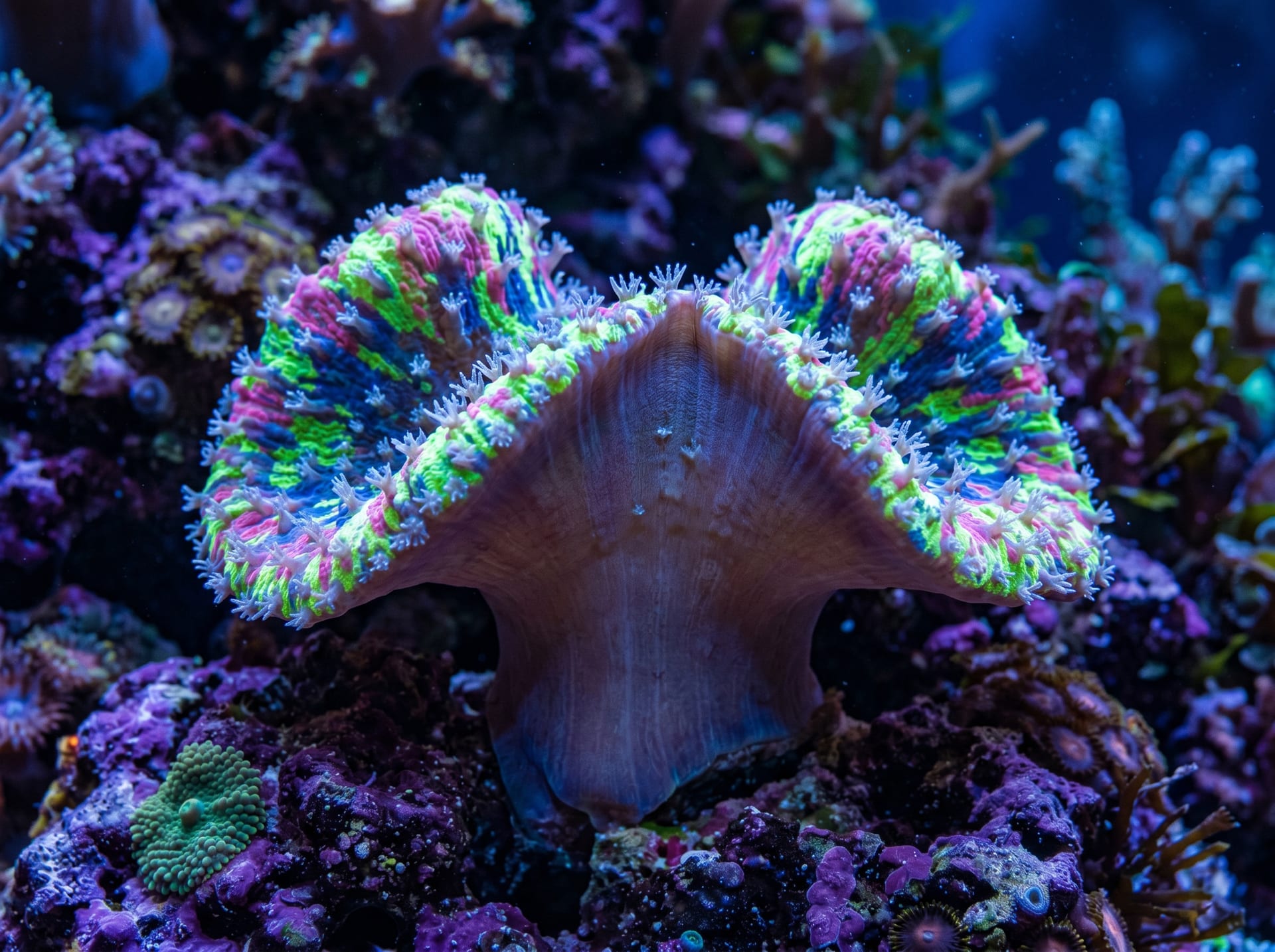
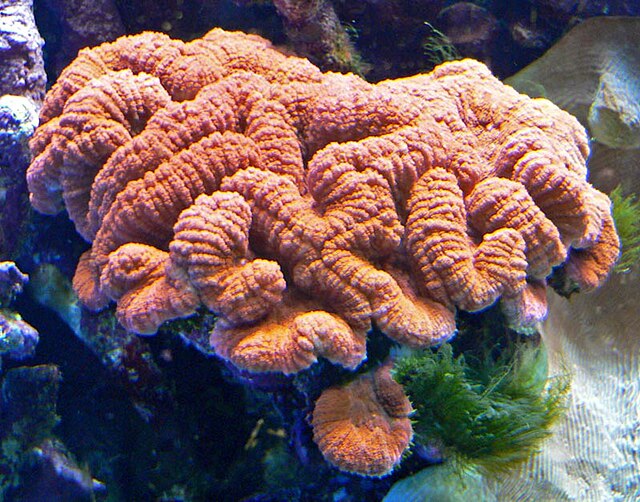
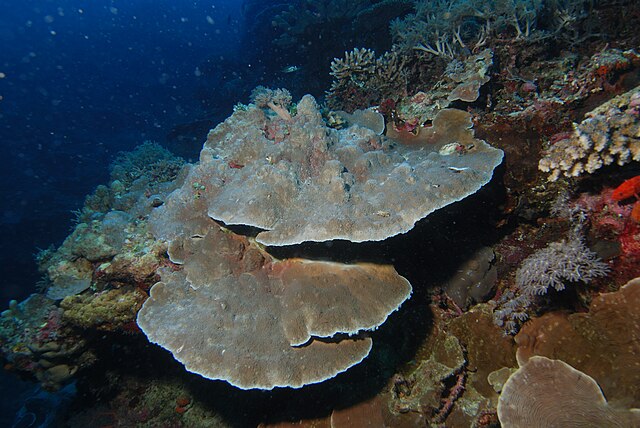
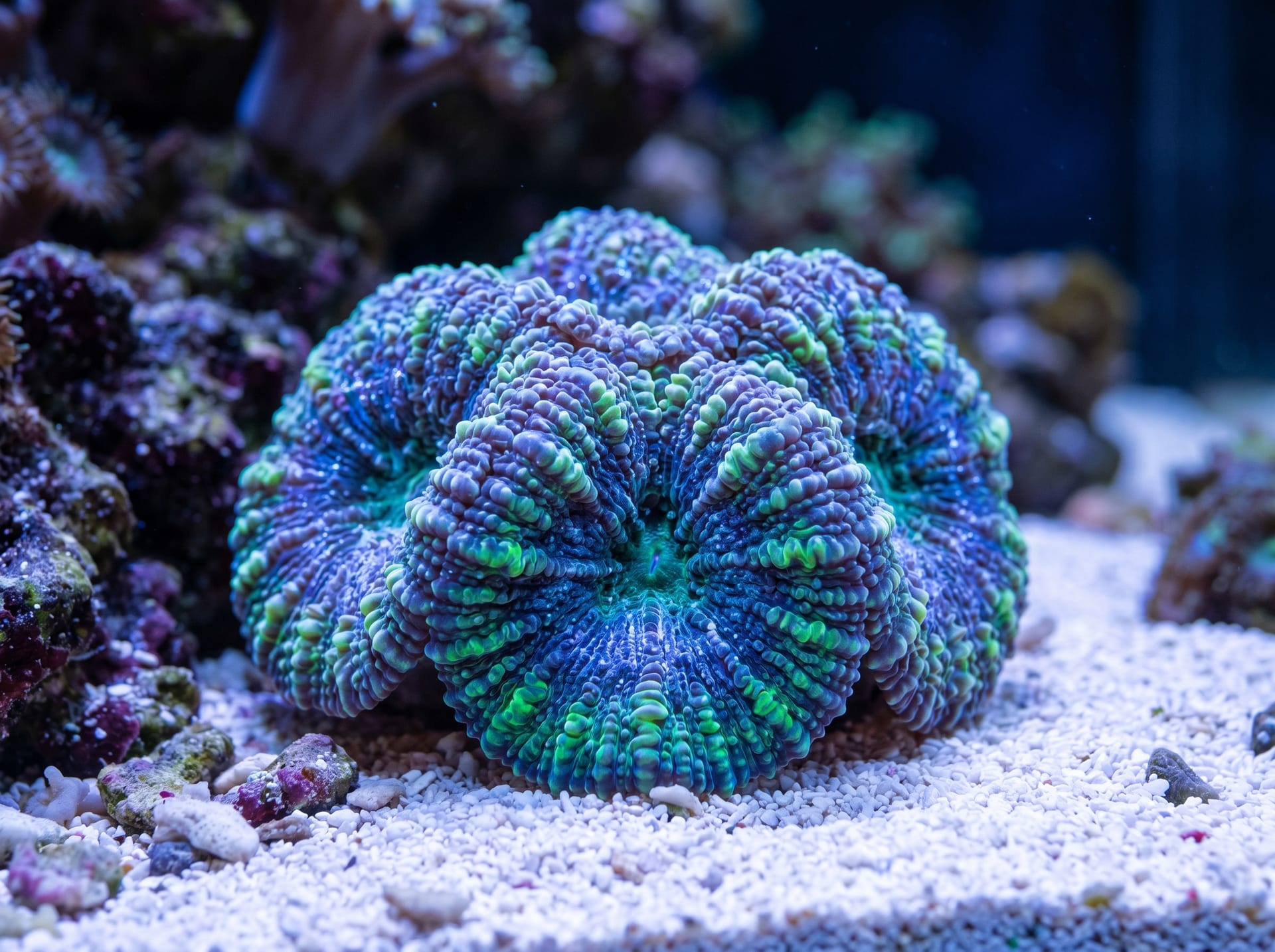
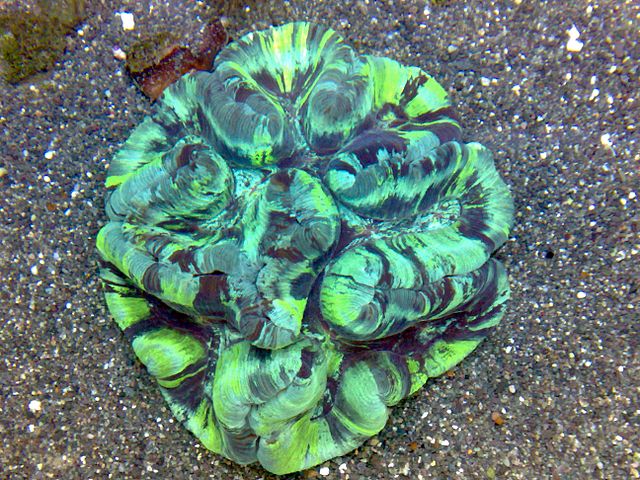
When you first start keeping corals, you've probably encountered the terms "LPS," "SPS," and "soft coral"—and felt confused. These classifications broadly indicate coral skeletal structure and husbandry difficulty, and understanding them properly forms the foundation for successful coral keeping. This article brings together the characteristics of each classification, required husbandry conditions, reasons for their difficulty level, and practical recommendations for beginner-friendly species.
The Basics of Coral Classification: Soft, LPS, and SPS
Corals (primarily from the order Scleractinia and related polyp organisms) fall into three major categories.
Soft Corals (Alcyonaceans) Lack a hard calcareous skeleton and have a soft body structure. Typical examples include disk corals, star polyps, mushroom corals, and pipe organ corals. Relatively hardy with wide tolerance for light, water flow, and water quality—the best choice for beginners.
LPS (Large Polyp Stony Corals) Short for Large Polyp Stony. Possess a calcareous skeleton with individual polyps larger than 1cm. Examples include Trachyphyllia (disk coral), Lobophyllia (brain coral), Euphyllia glabrescens (frogspawn coral), and Goniopora (flowerpot coral). Moderate difficulty; suitable for beginner to intermediate keepers.
SPS (Small Polyp Stony Corals) Short for Small Polyp Stony. Polyps are microscopic (under 1mm), belonging to stony corals. Representative examples include Acropora (staghorn coral), Montipora (common coral), and branching euphyllias. Require precise water quality and intense lighting—for advanced keepers.
LPS Coral Husbandry Difficulty and Representative Species
LPS corals are popular with many aquarists as a step up from soft corals because their "large, beautiful polyps" and "ease of growth with moderate light and water flow" make them accessible yet rewarding.
Beginner-Friendly LPS (Difficulty: Low to Moderate)
Trachyphyllia (Disk Coral)
- Light: Moderate (PAR 50–150 μmol/m²/s)
- Water flow: Weak (avoid strong currents)
- Characteristics: Place on substrate. Polyps extend long at night. Grows from fragments
- Note: Must be placed on substrate (direct attachment to live rock not recommended)
Lobophyllia (Brain Coral)
- Light: Moderate (PAR 75–150)
- Water flow: Weak to moderate
- Characteristics: Thick polyps with vibrant color variations. Hardy and easy to grow
- Note: Maintain at least 5cm distance from neighboring corals (sweeper tentacle aggression)
Goniopora (Flowerpot Coral)
- Light: Moderate (PAR 100–200)
- Water flow: Weak to moderate
- Characteristics: Distinctive tulip-shaped polyps. Beautiful extended polyps but requires careful management
- Note: If polyps remain retracted for several days, check water quality
Intermediate LPS (Difficulty: Moderate)
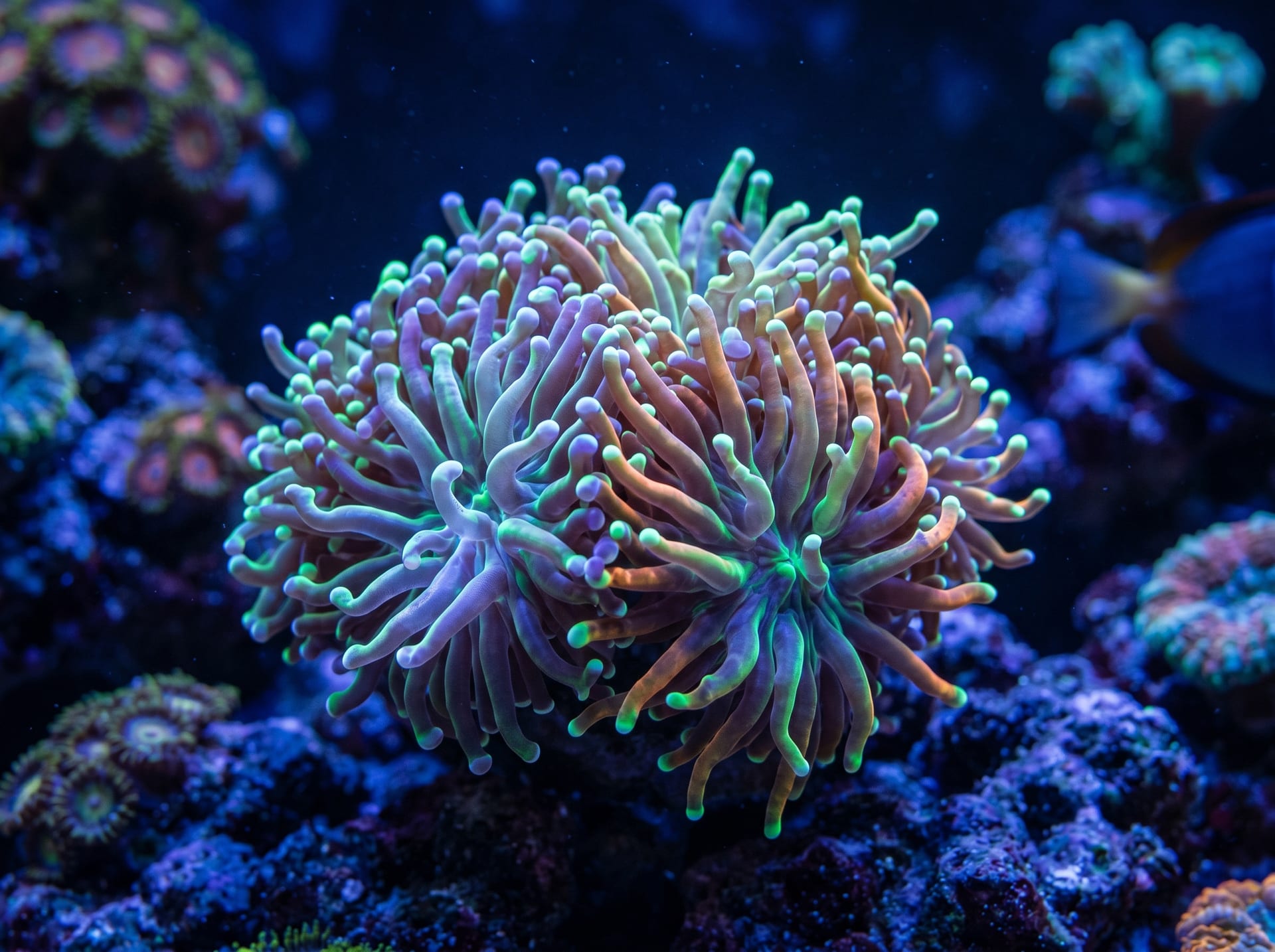
Euphyllia glabrescens (Frogspawn Coral)
- Light: Moderate to strong (PAR 100–250)
- Water flow: Moderate (swaying motion but not violent surge)
- Characteristics: Fluorescent green and blue hues are stunning in this popular species. The "swaying motion" is captivating
- Note: Long sweeper tentacles with high aggression. Maintain 10cm+ distance from surrounding corals
Plerogyra sinuosa (Bubble Coral)
- Light: Weak to moderate (PAR 50–100)
- Water flow: Weak
- Characteristics: Distinctive bubble-shaped polyps. Polyps retract if water flow is too strong
- Note: Excessive light causes zooxanthellae bleaching and discoloration
SPS Coral Husbandry Difficulty and Representative Species
SPS corals are known as the pinnacle of saltwater aquarium husbandry—"successfully growing Acropora in your tank" is considered the ultimate achievement. This demands reef-level water quality precision.
Why SPS Is Challenging
Extremely High Water Quality Precision Required SPS corals cannot thrive without long-term stability in the following parameters:
- Specific gravity: 1.025–1.026
- Temperature: 25–27°C (variation within ±0.5°C ideal)
- pH: 8.1–8.3
- Alkalinity (KH): 8–10 dKH
- Calcium: 420–450 ppm
- Magnesium: 1,250–1,350 ppm
- Nitrate: 5 ppm or below
- Phosphate: 0.05 ppm or below
Alkalinity, calcium, and magnesium directly support skeleton formation, requiring weekly measurement and supplementation.
Intense Lighting Required Acropora species naturally inhabit shallow waters (within 5m depth), requiring PAR values of 200–400 μmol/m²/s or higher. Standard freshwater aquarium LEDs are insufficient; specialized high-output saltwater coral LEDs (Radion, Hydra, etc.) are necessary.
Balanced, Not Excessive Water Flow SPS prefers strong flow, but direct linear currents damage tissue. Dedicated wave pumps creating random surge patterns (Koralia Nano, Vortech, etc.) are ideal.
Representative SPS Species (Beginner to Intermediate SPS)
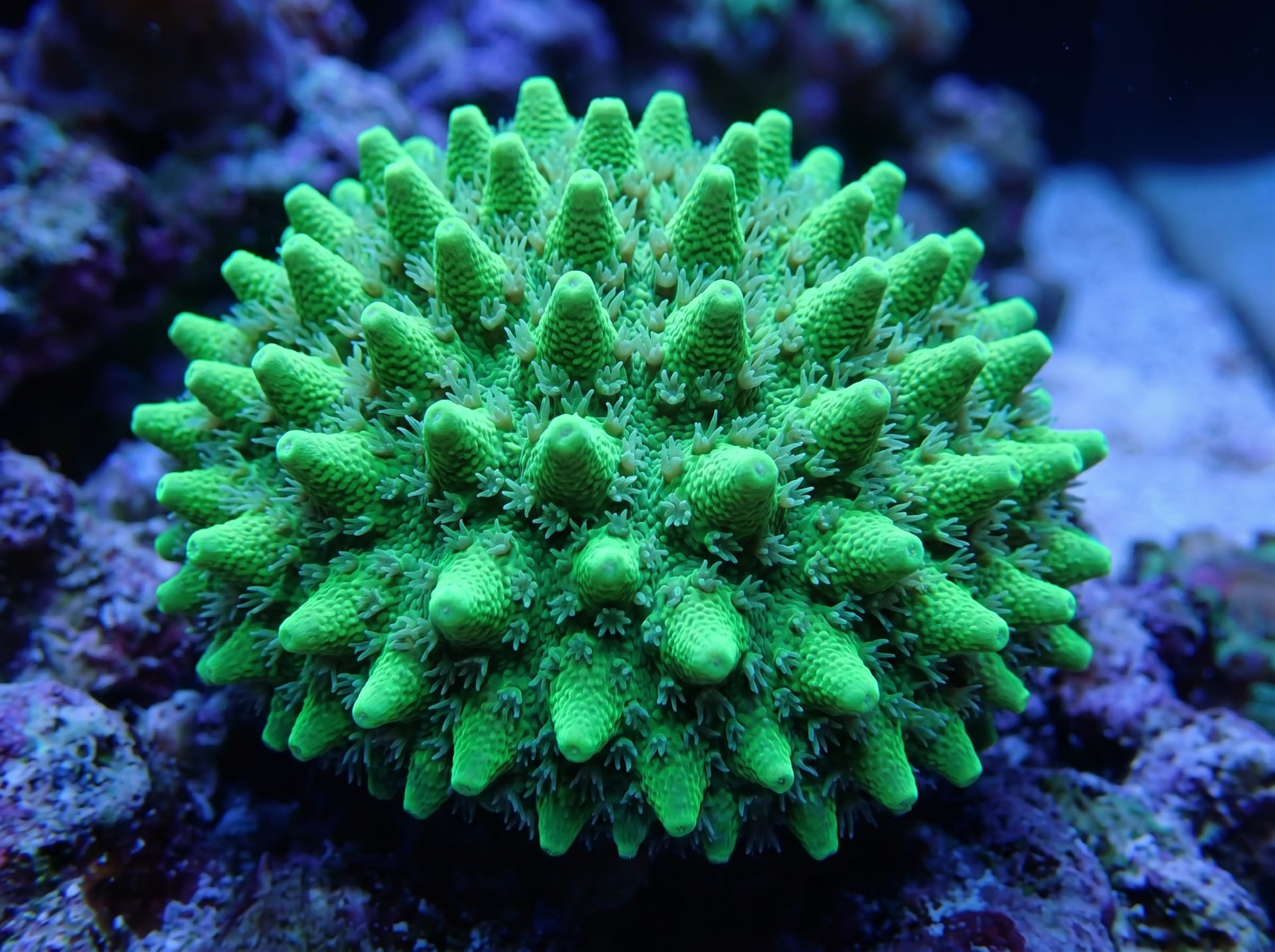
Montipora (Plate Coral) The easiest among SPS to maintain. Thin plate-like skeleton displaying beautiful fluorescent green, blue, and red hues. Broader water quality tolerance than Acropora.
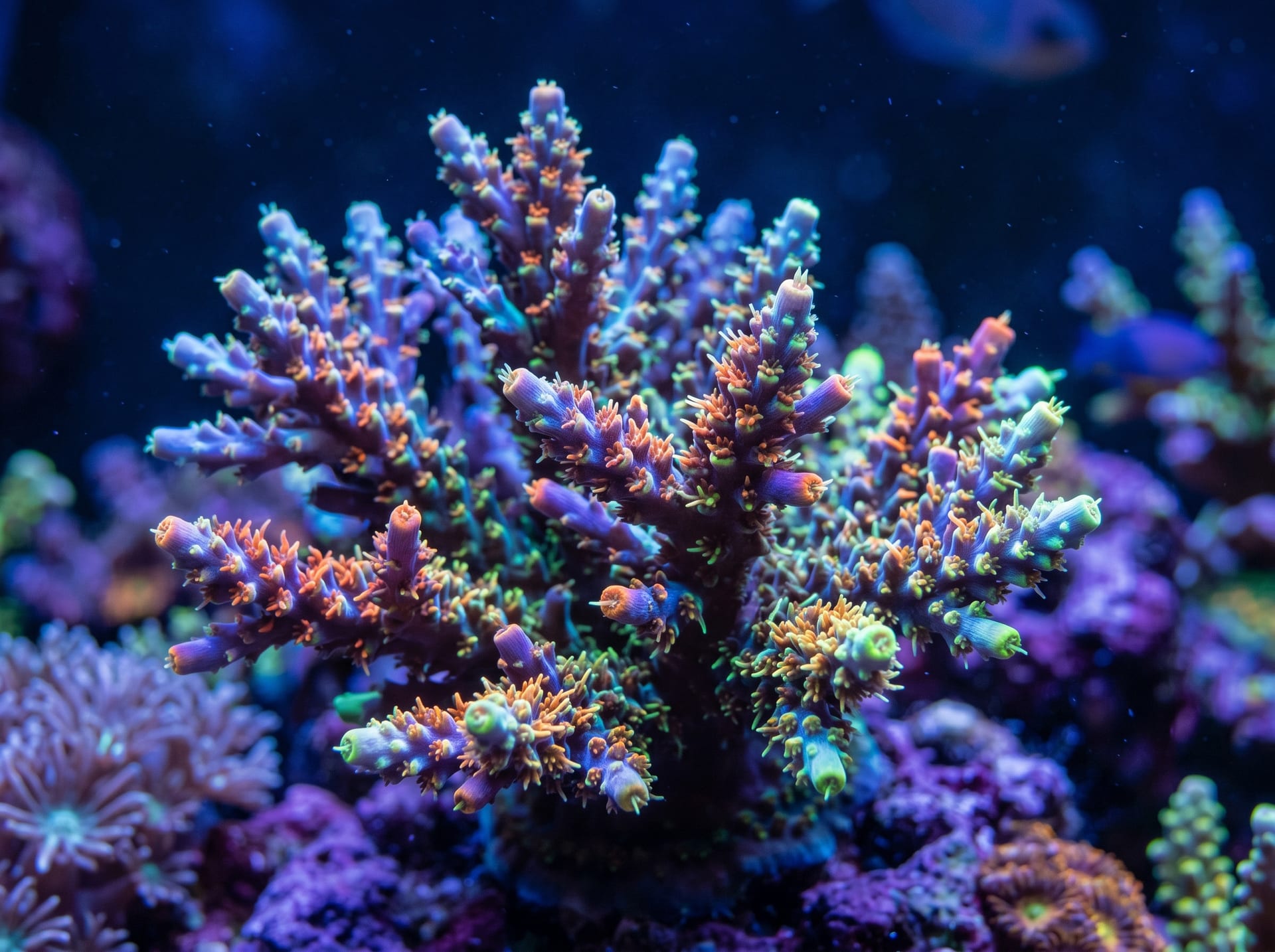
Acropora (Staghorn Coral) The hallmark of SPS husbandry. Diverse morphologies—branching, table-form—make it the centerpiece of any display. However, it bleaches easily and is sensitive to environmental changes. Introduce only after water quality is completely stable.
Euphyllia paraancora—Special Consideration
Euphyllia paraancora is classified within LPS Euphyllia but often confused with Euphyllia glabrescens (frogspawn), warranting separate discussion.
Identification and Characteristics
While frogspawn (Euphyllia glabrescens) has "grape-like cluster" polyp tips, Euphyllia paraancora features "J-shaped hook-like" polyp tips. Though both belong to Euphyllia and are similar, Euphyllia paraancora tends to prefer slightly higher water flow and PAR values.
Husbandry Parameters
- Light: PAR 150–300 (slightly higher than frogspawn)
- Water flow: Moderate to strong (polyps sway gently)
- Alkalinity: 8–10 dKH (standard for LPS)
- Aggression: Long sweeper tentacles (15cm+ distance recommended)
Difficulty Assessment for Euphyllia paraancora
It is best classified as "intermediate LPS" for beginners. Given stable water quality fundamentals, it grows relatively easily but requires careful tank layout due to high aggression.
Husbandry Difficulty Summary Table
| Category | Difficulty | Light (PAR) | Water Quality | Representative Species |
|---|---|---|---|---|
| Soft Corals | Low | 50–150 | Low | Disk coral, star polyp |
| LPS (Beginner) | Low–Moderate | 75–200 | Moderate | Trachyphyllia, Lobophyllia |
| LPS (Intermediate) | Moderate | 100–250 | Moderate–High | Frogspawn, Euphyllia paraancora |
| SPS (Montipora) | Moderate–High | 200–350 | High | Montipora |
| SPS (Acropora) | High | 300–500 | Very High | Acropora spp. |
Beginner Progression Roadmap
- Stabilize your tank with soft corals (3–6 months)
- Add beginner LPS like Trachyphyllia and Lobophyllia (after stabilization)
- Challenge intermediate LPS—frogspawn and Euphyllia paraancora (1+ years in)
- Experience Montipora as your entry into SPS (once water quality is stable)
- Acropora (staghorn coral) as the mark of advanced keeping
Rushing into high-difficulty SPS increases the risk of losing expensive corals. Gradual progression ensures long-term enjoyment.
Conclusion
Coral husbandry difficulty progresses as follows: soft corals < beginner LPS < intermediate LPS < SPS (Montipora) < SPS (Acropora). Euphyllia paraancora occupies the intermediate LPS tier, requiring management of sweeper tentacle aggression and adaptation to moderately intense lighting. Beginners should start with soft corals and beginner LPS, mastering water quality management before progressing—the surest path to sustained enjoyment of a thriving coral aquarium.