SPS (Small Polyp Stony) Corals
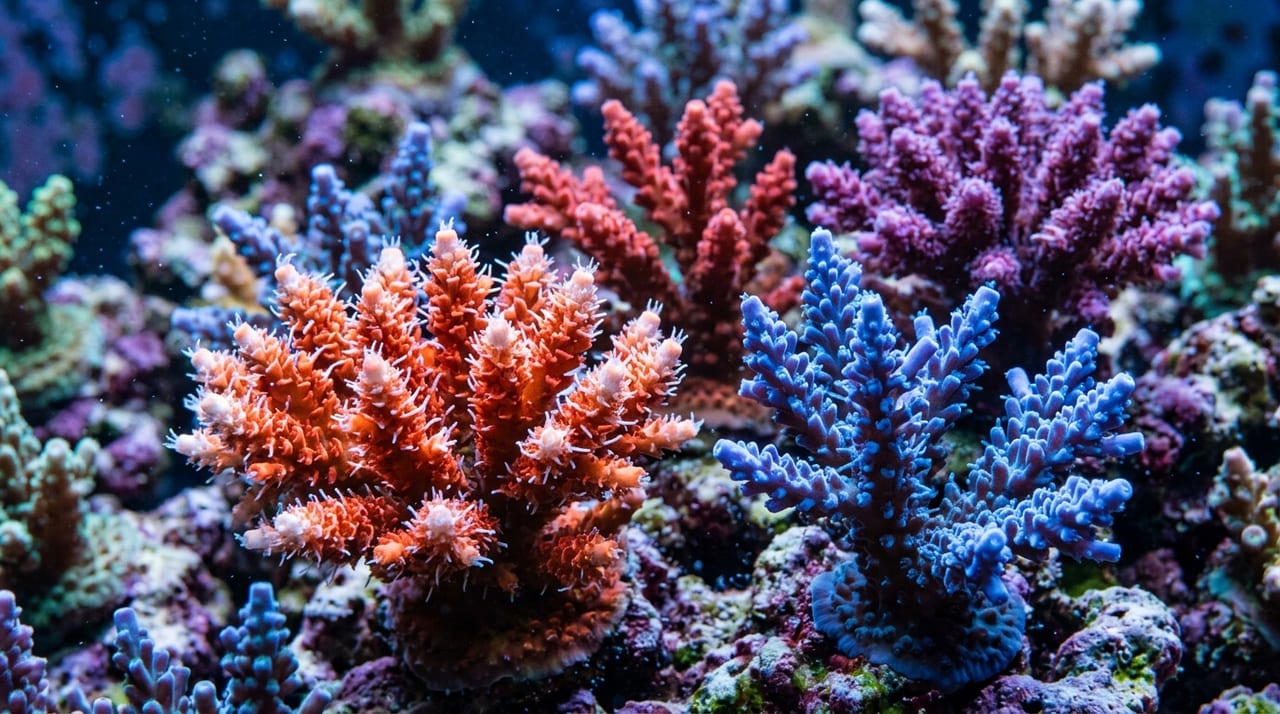
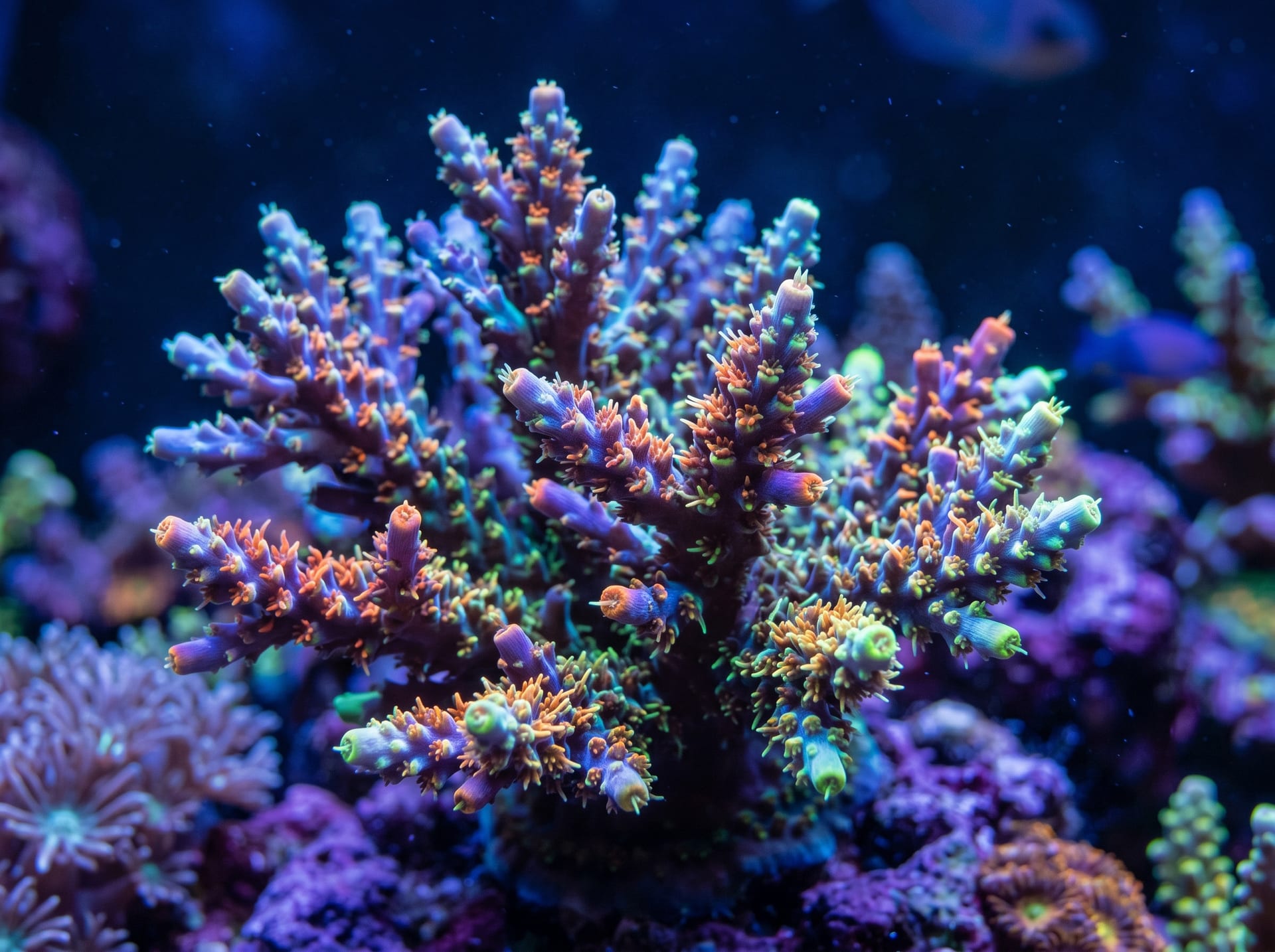
SPS (Small Polyp Stony Coral) are a type of hard (stony) coral characterized by small polyps and a rigid skeleton. The representative species is Acropora, which stands as the pinnacle for enhancing the aesthetic value of reef tanks.
The greatest appeal of SPS is their diversity of colors. Specimens with yellow, orange, red, blue, and purple hues are commonly available in the trade, and the skill lies in how effectively you can bring out these colors—a true mark of an advanced aquarist.
Coral Pigments and Expression Mechanisms
Coral Colors Consist of Multiple Pigments
- Chlorophyll a (Green): Used by zooxanthellae for photosynthesis
- Carotenoids (Yellow to Red): Serve dual roles in photoprotection and nutritional supplementation
- GFP-like Proteins (Fluorescent Proteins): UV absorption and secondary emission in blue to red wavelengths
Even within the same Acropora species, the expressed color varies significantly based on genetics and rearing conditions.
Color Enhancement Mechanisms
- UV Stress: Mild stress promotes pigment expression (GFP protein production)
- High Light Intensity: Increased photosynthetic activity leads to zooxanthellae proliferation → deeper green coloration
- Nutritional Supplementation: Supply of amino acids necessary for carotenoid synthesis → more vivid red tones
- Water Stability: Optimal PAR, K, Ca, Mg, and phosphate levels → stable coloration
Step-by-Step Color Enhancement Process
Phase 1: Baseline Setup (First 4 Weeks)
Newly introduced SPS corals have faded coloration from transport stress. Priority should be given to recovery.
Lighting:
- Initial introduction: 6 hours per day at 40% full intensity
- Extend by 1 hour per week, reaching 10 hours at 100% intensity after 4 weeks
Nutritional Supplementation:
- Phytoplankton feeding: once daily
- Brine shrimp feeding: twice weekly
- Do not restrict nutrients at this stage (initial phase)
Phase 2: Lighting Enhancement (Weeks 4–12)
The main color-enhancement phase. Ultraviolet light (UV-A and UV-B) promotes pigment expression.
Recommended LED Spectrum:
- Wavelength 400nm (violet): 10% of total output
- Wavelength 460nm (blue): 40% of total output
- Wavelength 660nm (red): 50% of total output
Commercial coral-specific LED lights (ATI Sunpower, Kessil A360X, etc.) allow adjustment of this balance.
Phase 3: Nutritional Adjustment (After Week 12)
Once colors begin to emerge, fine-tune nutritional supplementation further.
Feeding High in Carotenoids:
- Spirulina: twice weekly
- Food containing astaxanthin: daily
- Fresh brine shrimp and copepods: daily
Water Quality Parameters
Target water quality parameters for color enhancement:
| Parameter | Target Range | Purpose |
|---|
| Phosphate (PO4) | 0.05–0.1 ppm | Lower levels enhance red coloration (excessive depletion causes fading) |
| Calcium | 400–450 ppm | Essential for skeletal formation |
| Magnesium | 1300–1500 ppm | Promotes calcium absorption |
| Potassium | 380–420 ppm | Involved in pigment synthesis |
| Silicate | 1–3 ppm | Minor but important |
In particular, the trend toward complete phosphate removal has been reported to negatively impact color enhancement. Maintaining appropriate nutrient levels directly influences coloration.
Common Color Enhancement Mistakes
Mistake 1: Excessive LED Intensity
There is a misconception that higher light intensity always equals more vibrant colors. In reality, excessive lighting can cause coral bleaching.
Gradual intensity ramping and daily observation are essential.
Mistake 2: Insufficient Nutrition
Many aquarists attempt to completely eliminate nutrient salts, but adequate nutrition is essential for color enhancement. Shift to feeding that includes astaxanthin-rich foods.
Mistake 3: Sudden Water Quality Changes
Abrupt shifts in PAR, phosphate, or potassium levels cause corals to lose color due to stress responses. Make changes to water-change frequency and feeding quantity gradually.
Color Enhancement Strategies by Specimen Type
Red Acropora
- Emphasize red LED wavelength (660nm)
- Feed foods rich in carotenoids
- Maintain slightly lower phosphate levels (~0.05 ppm)
Blue Acropora
- UV-A (365–375nm) exposure promotes fluorescent protein (GFP) expression
- Maintain slightly higher phosphate (~0.08 ppm) to support zooxanthellae activity
Yellow Acropora
- Balanced full-spectrum approach (red 40% / blue 40% / violet 20%)
- Daily feeding to supplement yellow pigments (carotenoids)
Conclusion
SPS color enhancement succeeds only through the integration of light, nutrition, and water quality. Rather than maximizing a single factor (e.g., light intensity alone), maintain balanced management across all parameters. Once colors begin to emerge, the beauty of your reef tank increases dramatically, and the satisfaction is incomparable.