Goby and Pistol Shrimp Symbiosis Tank Guide | Recommended Pairs and How to Set Up a Care Environment
Explains how to care for gobies and pistol shrimp to enjoy their symbiotic relationship in an aquarium. We introduce recommended pairs, sand substrate layouts, water quality management, and pairing procedures.
Key Takeaways
Explains how to care for gobies and pistol shrimp to enjoy their symbiotic relationship in an aquarium. We introduce recommended pairs, sand substrate layouts, water quality management, and pairing procedures.
Related Species
Gobies and Pistol Shrimp—Ocean Symbiosis Partners
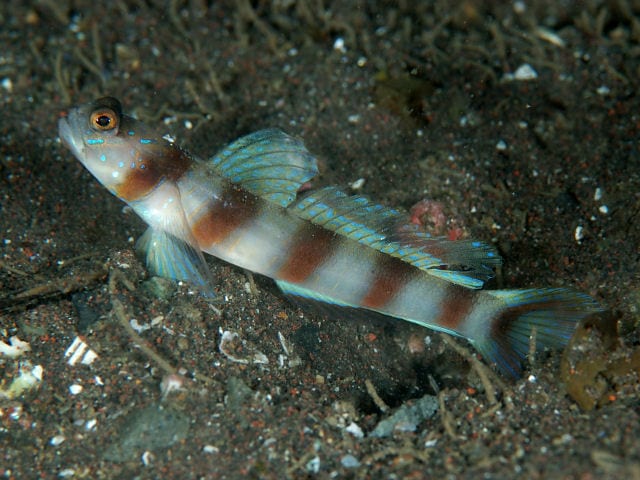
On the sandy seafloor of coral reefs, gobies and pistol shrimp build a remarkable symbiotic relationship. The pistol shrimp, whose eyes are nearly non-functional, takes on the role of digging and maintaining burrows, while the sharp-sighted goby keeps watch for predators and quickly retreats into the burrow to signal danger to the shrimp. This mutually dependent relationship has evolved over millions of years, and it can be faithfully recreated in an aquarium. Eating, maintaining burrows, communicating by touching antennae—each behavior is fascinating to observe, and you will never tire of watching.
In a tank where symbiosis has been established, you will see the scene of "the guard goby standing at the entrance while the shrimp carries sand out" every day. The greatest appeal of this pair is that you can bring a miniature version of nature directly into your home.
Recommended Symbiotic Pairs
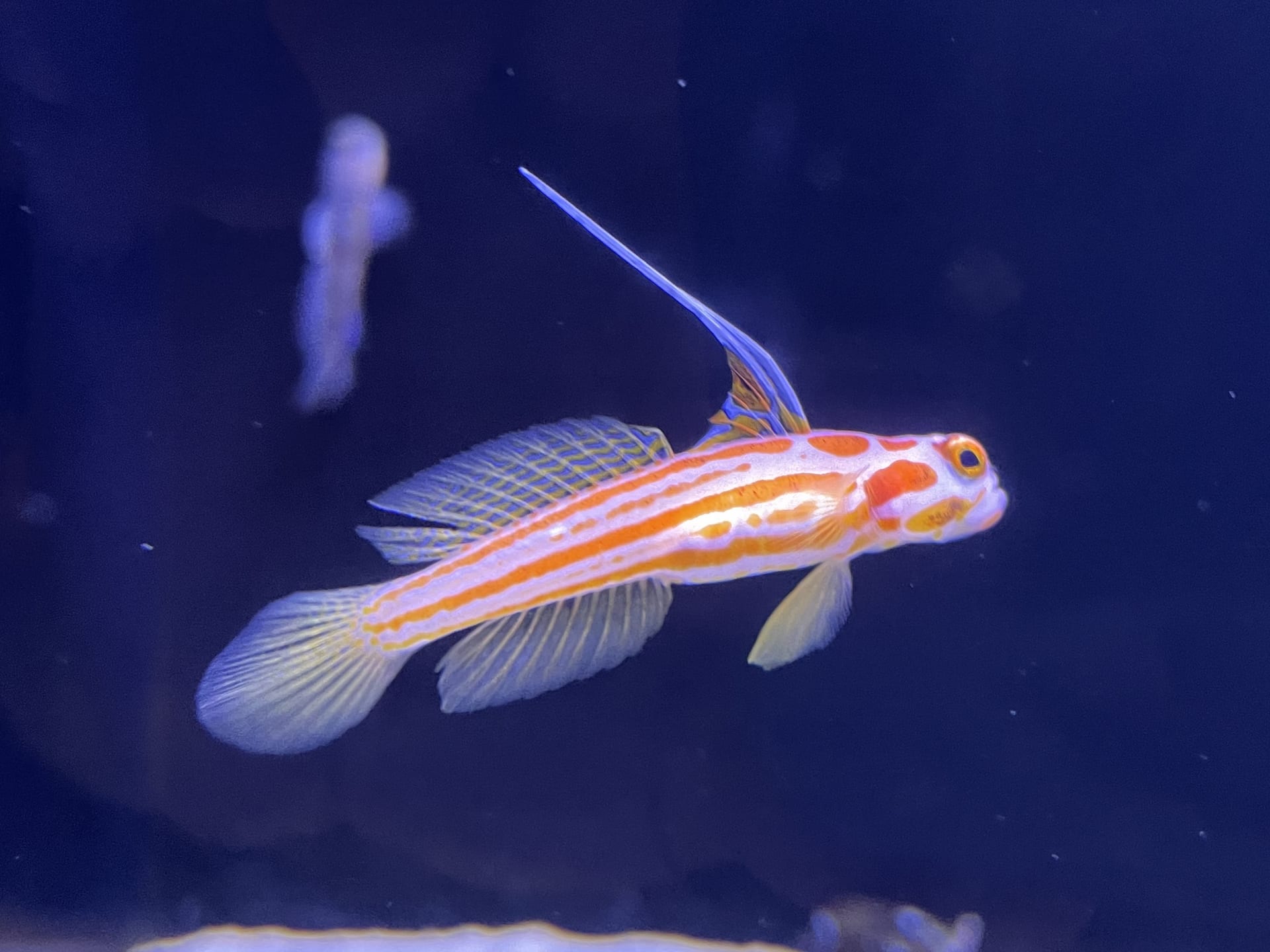
Yasha Goby + Randall's Pistol Shrimp (Alpheus randalli) The most popular combination. The Yasha Goby stands out with the reddish-orange stripes on its white body, giving it exceptional visual appeal. The Randall's has striking red and white stripes, and when the pair is together you get a colorful, eye-catching display. They have gentle temperaments and mix well with other species, making them easy for beginners to introduce.
Amblyeleotris japonica (Datehaze) + Tiger Pistol Shrimp (Alpheus bellulus) A combination also found in Japanese waters. Amblyeleotris japonica is a shrimp goby that shares burrows on sandy bottoms with pistol shrimp such as the tiger pistol shrimp.
Steinitz Goby (Amblyeleotris steinitzi) + Pistol Shrimp species A large species reaching about 10cm in length with striking presence. It is compatible with commercially available pistol shrimp species (genus Alpheus generally), and shows its presence well in sand-focused reef tanks or tanks with a spacious substrate area.
Twistfin Goby + Bellulus Pistol Shrimp (Alpheus bellulus) The Twistfin Goby is characterized by its slender body and large dorsal fin. The Bellulus Pistol Shrimp is somewhat smaller, and can be kept comfortably even in tanks around 30cm with adequate space. Many individuals are timid, so a quiet environment is key.
How to Create a Breeding Environment
Substrate depth and grain size A sand depth of 5–8cm is essential for the pistol shrimp to dig and establish burrows. A grain size of around 1–2mm fine coral sand is ideal; if too coarse, it will collapse easily and the burrow will be unstable. It is also important to provide a large substrate area, as the pistol shrimp may create maze-like tunnels with multiple exits, and the larger the substrate, the more natural behaviors you will observe.
Water flow control Strong linear currents can kick up sand and cause burrow collapse. Use a circulation fan or wave pump to provide gentle, diffused flow throughout the tank. When using a high-output pump, it is effective to direct the flow toward a wall or rock to create indirect flow.
Layout considerations Placing flat rocks or foundation stones near the sand substrate allows the pistol shrimp to expand its burrow starting from beneath or between them. Partially burying rocks in the sand increases stability and reduces collapse risk. Avoid fixing heavy liverock in very deep areas as this carries risk; when using weighty stones near the substrate, be careful to prevent tipping.
Tank size A single pair can be kept in a tank as small as 30cm, but since the pistol shrimp is highly active in excavation, a tank with a larger substrate area will allow them to establish more easily. If housing multiple pairs, 60cm or larger is recommended, and you can prevent conflict by creating divisions in the substrate layout so each pair's territory does not overlap.
Water quality management Maintain the following:
- Specific gravity: 1.024–1.026
- pH: 8.1–8.3
- Water temperature: 25–27°C
- Ammonia and nitrite: zero
The pistol shrimp is sensitive to sudden water quality changes, so weekly water changes of around 10–15% of total volume are ideal.
Pairing Procedure and Tips for Introduction
Purchasing individuals that are already paired from the shop is the most reliable approach. Select pairs where the goby and shrimp are already living together in the same tank at the shop. If purchasing individuals separately, it is safer to introduce them simultaneously to a small tank (around 20–30L) and observe for 1–2 weeks before moving to the main tank.
Immediately after introduction to the main tank, the pair will often remain hidden for 2–3 days. This is a precaution and not a sign of failure. They will settle in more quickly if kept in a dimly lit environment with reduced lighting. Once the burrow is complete, the goby will hover near the entrance while monitoring the surroundings, and the shrimp will regularly carry sand in its mouth and expel it—this scene will become a daily delight.
Feeding and Daily Management
Gobies have the habit of eating benthic organisms, so they respond readily to sinking pellet food, frozen copepods, or frozen brine shrimp dropped near the substrate. They rarely eat floating food near the surface, so choosing sinking food with greater density is important.
The pistol shrimp often picks up uneaten food from the goby, so additional feeding is usually unnecessary; however, dropping small food pieces (frozen mysis, etc.) near the burrow 1–2 times per week will stimulate active behavior.
Important notes: The pistol shrimp sometimes piles sand it has excavated onto liverock or corals. If you place LPS corals (such as hammer corals) near the substrate, consider the burial risk and position them away from the expected burrow area, or fix them on elevated liverock to prevent issues. Additionally, since the pistol shrimp has an escape risk, do not neglect managing gaps in the tank lid.
Summary—Enjoying Observation and Symbiosis in Saltwater Fish Keeping
The goby and pistol shrimp pair offers not only visual beauty but also "the joy of observing behavior" that is incomparable to other saltwater fishkeeping. This tank, which recreates natural symbiosis as it is, can be enjoyed by both beginners and experienced aquarists alike. It is recommended to start with an easily available pair, and once you become comfortable with care, step up to a high-display species like the Yasha Goby. If you develop the habit of carefully observing the substrate, a rich aquarium life with small discoveries awaits you every day.