Complete Clownfish and Anemone Symbiosis Guide — Compatibility, Introduction Order, and Tank Setup
How to successfully keep clownfish with anemones: compatible species pairings, introduction order, lighting and flow requirements, and long-term anemone care.
Key Takeaways
How to successfully keep clownfish with anemones: compatible species pairings, introduction order, lighting and flow requirements, and long-term anemone care.
Related Species
Symbiosis Between Ocellaris Clownfish and Sea Anemones
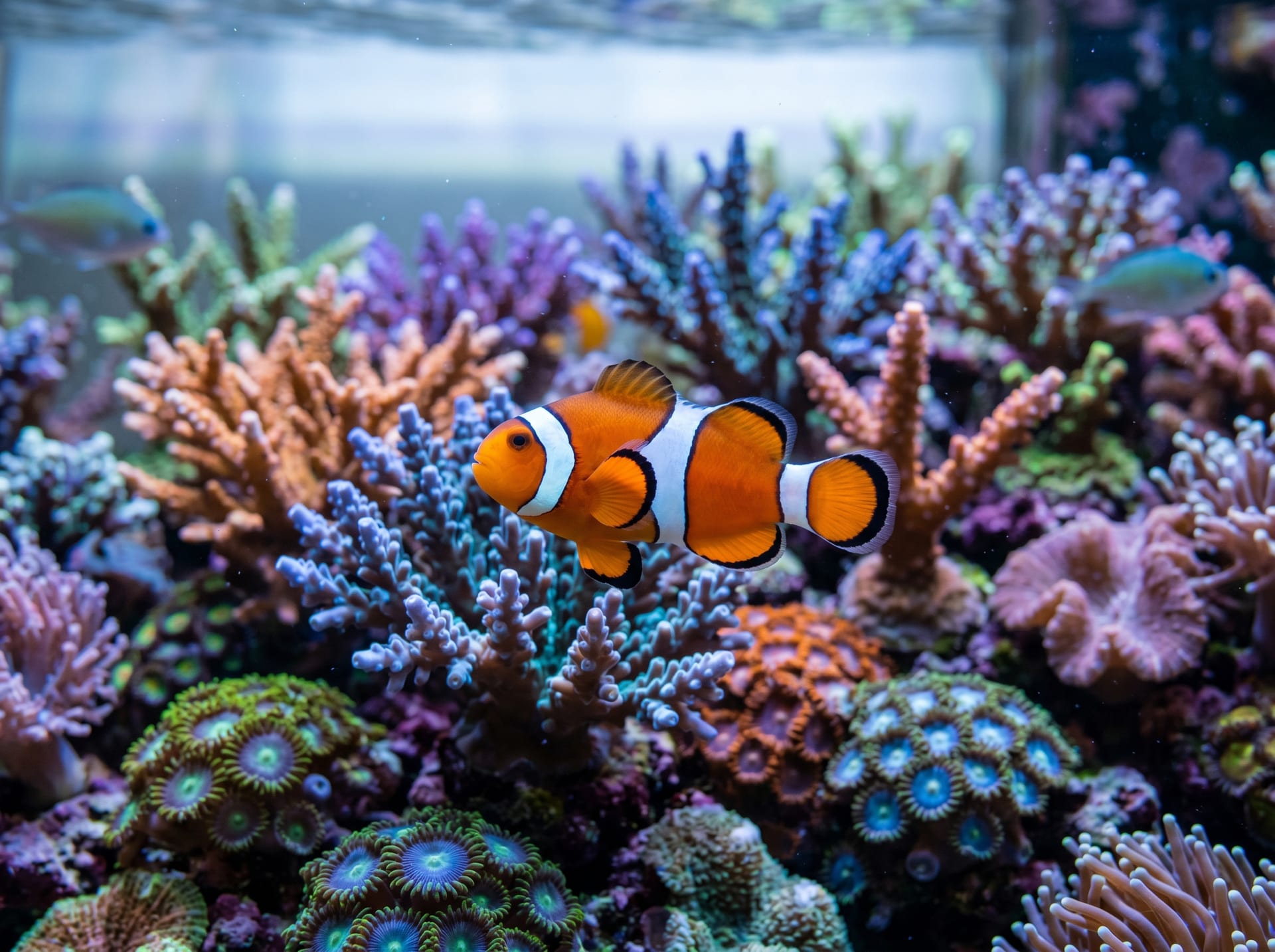
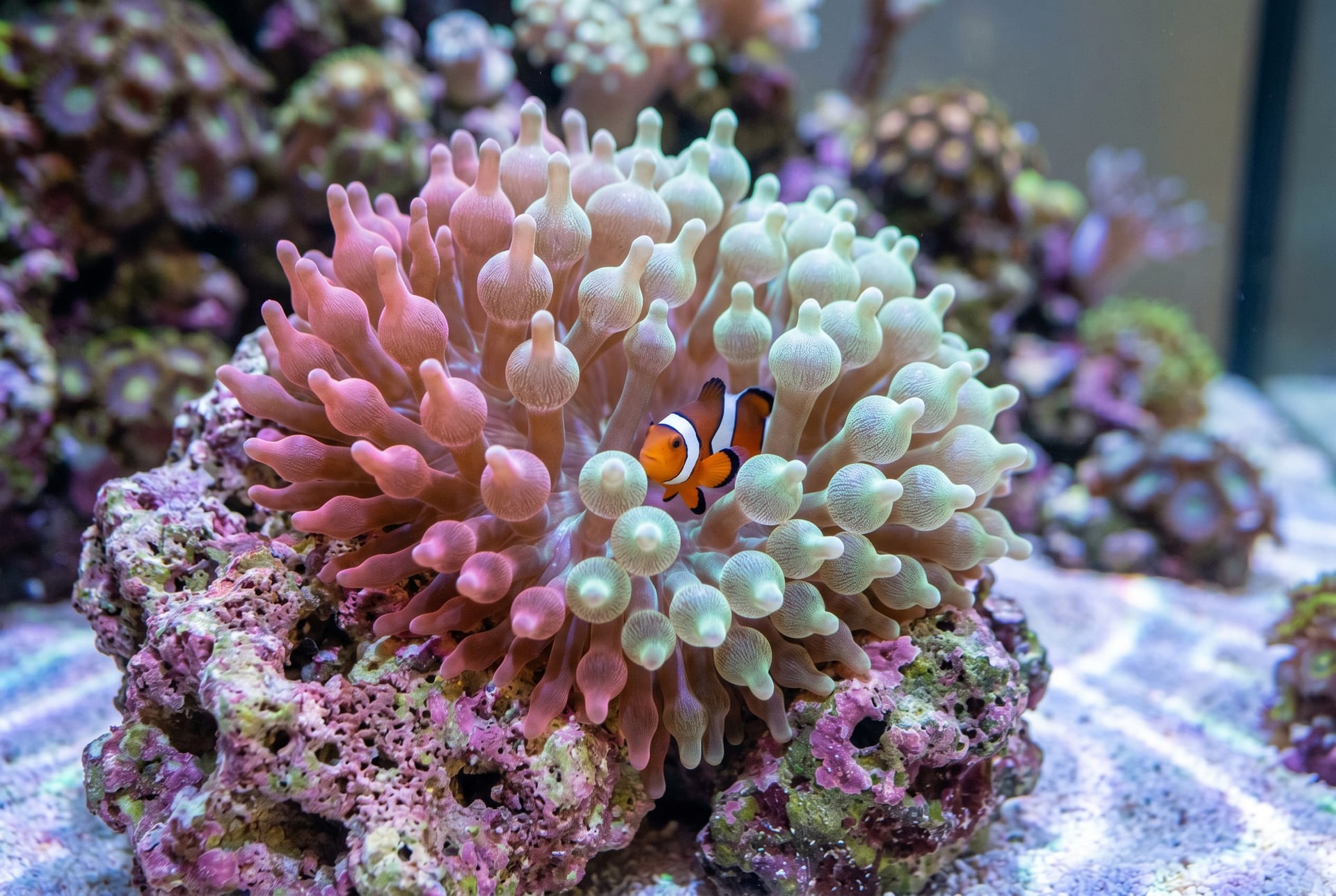
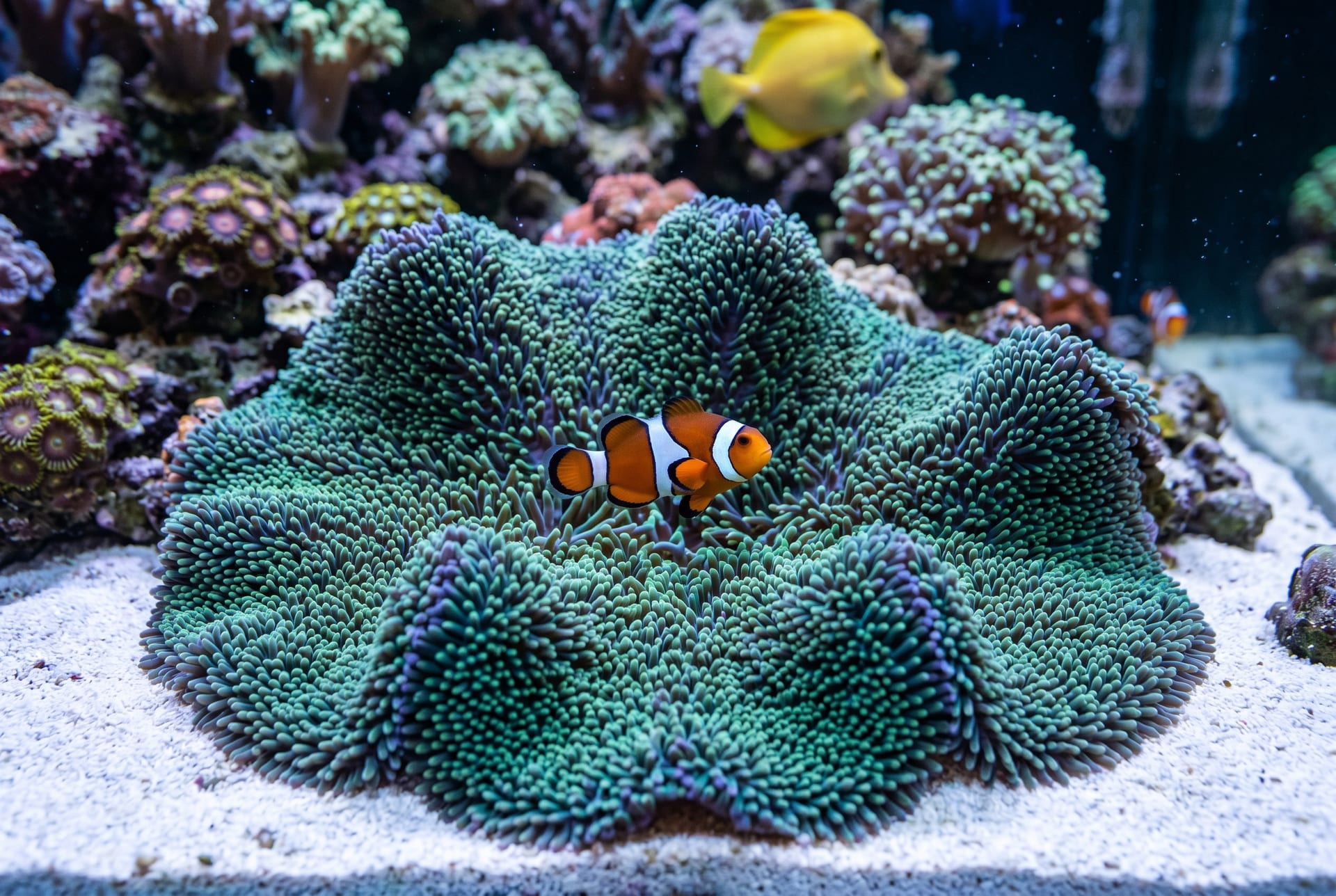
The symbiosis between ocellaris clownfish (Amphiprion ocellaris) and sea anemones is one of the most popular combinations in saltwater aquariums. Sea anemone tentacles contain toxins that normally repel fish, but ocellaris clownfish acquire tolerance to the toxin by rubbing their bodies against the tentacles and make their home within the anemone.
In nature, ocellaris clownfish host Entacmaea quadricolor (bubble-tip anemone) and Heteractis crispa (sebae anemone). In an aquarium, symbiosis can be observed with proper environmental setup, but sea anemones are among the most difficult saltwater animals to care for, requiring caution for beginners.
Compatible Pairings
Sea anemones favored by ocellaris clownfish (symbiotic hosts in nature) and their difficulty levels in aquariums:
| Sea Anemone | Difficulty | Characteristics |
|---|---|---|
| Bubble-tip Anemone (Entacmaea quadricolor) | High | Best compatibility. Powerful toxins and large tentacles. Difficult to maintain. |
| Sebae Anemone (Heteractis crispa) | Medium | Beautiful white tentacles. CO2 and high light levels crucial for long-term care. |
| Long-tentacle Anemone (Macrodactyla doreensis) | Medium–High | Natural host for clownfish. Mobile and challenging to manage. |
| Carpet Anemone (Stichodactyla haddoni) | Medium | Relatively hardy and easier to maintain in aquariums. |
| Corallimorpharia (Ricordea) | Easy | Hardiest and beginner-friendly. Clownfish may not enter them. |
For beginners, corallimorpharia is recommended; the carpet anemone makes a good next step.
Introduction Order and Precautions
Introduce the anemone first The basic rule is to add the anemone to the aquarium before the clownfish and introduce the clownfish only after the anemone has settled. Clownfish rarely enter an anemone while it is moving repeatedly.
Introduce after establishing the tank Sea anemones cannot be maintained long-term without stable, mature water conditions. Wait at least 2–3 months after setup, allowing algae and bacteria to stabilize before introducing an anemone.
Multiple clownfish Ocellaris clownfish are social fish naturally kept as pairs of 1–2 individuals. Housing them in groups can form multiple pairs, but territorial conflicts are likely and warrant caution.
Sea Anemone Care Environment
Lighting Symbiotic zooxanthellae (brown algae) live within the anemone and derive nutrition through photosynthesis. Strong light (medium–high light levels) is necessary, with a PAR value of 150–250 or higher as a guideline. LED reef lighting (Kessil, AI Prime, etc.) is recommended.
Water Flow Soft, even water flow is required. Overly strong flow damages anemones, but no flow starves them of oxygen. Random flow or multi-point flow patterns are ideal.
Temperature and Water Quality
- Temperature: 24–26°C
- Specific Gravity: 1.025–1.026
- KH: 8–11 dKH
- Nitrate: 10 ppm or less
Common Mistakes and Solutions
Anemone shrinks or moves constantly The main causes are insufficient light, poor water quality, or excessive flow. Review lighting, water flow, and water change frequency.
Clownfish won't enter the anemone Tank-bred (CB) specimens in particular have lower anemone dependence and may not enter. Continue observing patiently, or try a corallimorpharia.
Anemone is sucked into pump or intake Attaching a sponge cover to pump and filter intakes is essential.
Find Healthy Ocellaris Clownfish at BreederDirect
At BreederDirect, you can purchase domestically bred (CB) ocellaris clownfish raised by saltwater fish specialists. CB specimens are hardier than wild-caught individuals and adapt to prepared foods more quickly, making them ideal as a first saltwater fish. You can ask breeders directly: "How compatible is this with anemones?" and "Which anemone do you recommend?" Realize your dream symbiotic scene—start with BreederDirect.