Wrasse Care Guide | Characteristics of Popular Species and Tankmate Compatibility
Complete guide to wrasses (Labridae) popular in saltwater aquariums. Discover the characteristics of popular species like Yellow Coris, Sixline Wrasse, and Fairy Wrasse, how to manage their sand-burrowing habits, reef tank compatibility, and mixing guidelines.
Key Takeaways
Complete guide to wrasses (Labridae) popular in saltwater aquariums. Discover the characteristics of popular species like Yellow Coris, Sixline Wrasse, and Fairy Wrasse, how to manage their sand-burrowing habits, reef tank compatibility, and mixing guidelines.
Related Species
Wrasses (Labridae): Their Appeal and Basic Characteristics
Wrasses are one of the most diverse groups among saltwater fish, with over 600 species existing worldwide. Centered around tropical and subtropical coral reefs, they add vibrant color and active movement to your aquarium.
Wrasses share several common traits: well-developed teeth capable of crushing hard objects, sexual dimorphism (color differences between males and females) in many species, and dramatic changes in coloration and body shape as they mature. In species with distinct juvenile, female (initial phase), and male (terminal phase) forms, individuals at different life stages may appear to be completely different species. The more you learn about wrasses, the more their diversity will astound you.
They come in varied sizes, from small species around 10cm to large species exceeding 1 meter. Most wrasses in the aquarium trade are medium to small species ranging from 15 to 30cm, making it easy to select one suited to your tank size and goals.
Popular Wrasse Species and Characteristics
Yellow Coris (Yellowhead Wrasse)
Covered entirely in brilliant yellow, this is one of the most readily available beginner-friendly species. Relatively mild-mannered and hardy, it's recommended for those new to saltwater fish-keeping. It burrows into sand to sleep at night, making proper substrate essential for its care.
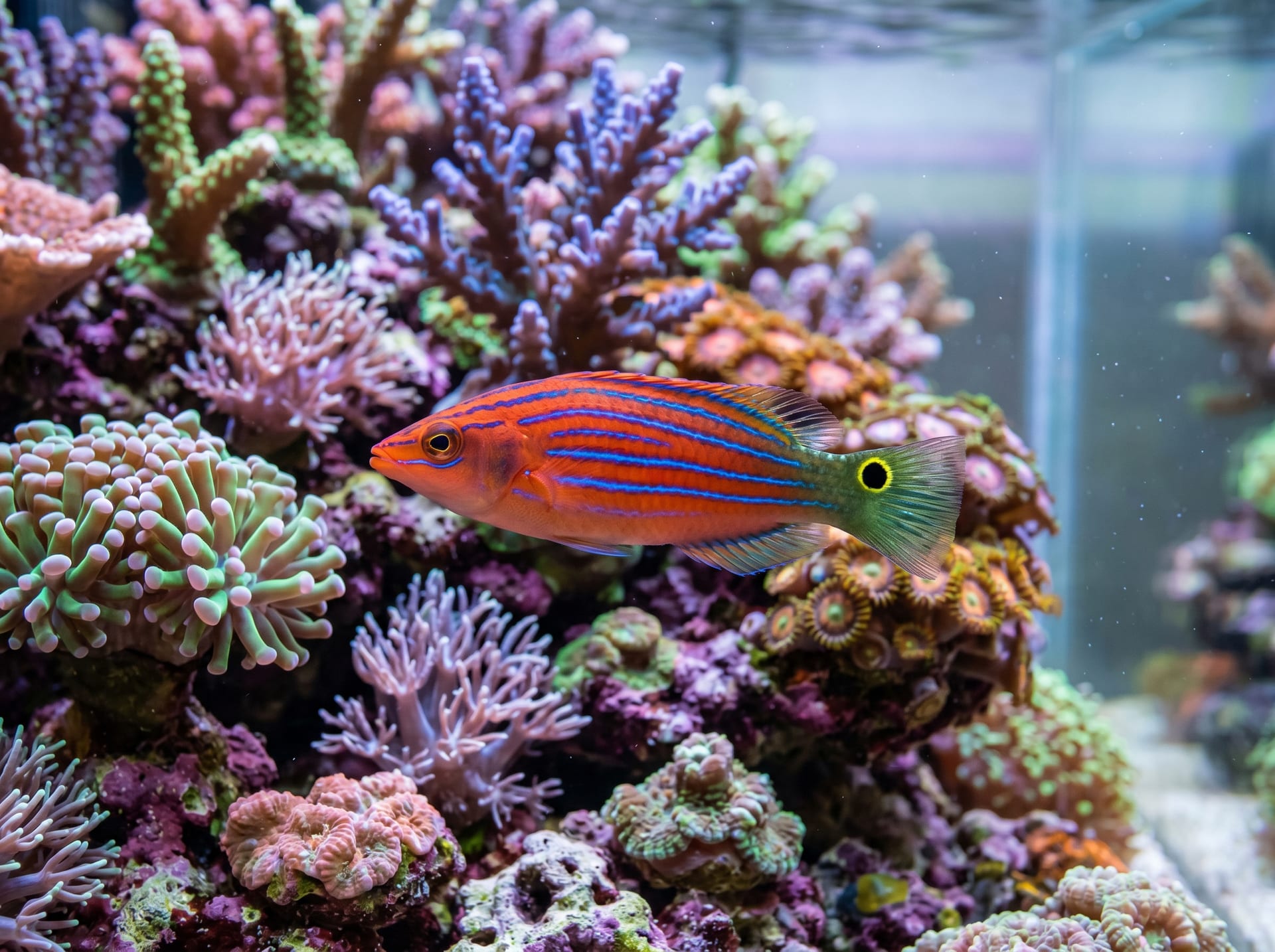
Sixline Wrasse
A small wrasse featuring six brilliant horizontal stripes, it actively swims through live rock crevices. It also serves as a "beneficial fish," actively predating on harmful organisms like flatworms and bristle worms, making it a popular choice for reef tanks. However, it has a strong temperament and may attack fish added later, so introduction order is important.
Fairy Wrasse (Cirrhilabrus species)
A beauty with vibrant colors—pink, purple, and red—that gracefully swims through the mid-water column. Males display a spectacular behavior called "flashing," where they spread their fins during courtship—a sight worth seeing. With minimal impact on corals, this species group is well-suited for reef tanks.
Flasher Wrasse (Paracheilinus species)
Closely related to fairy wrasses, its name derives from its impressive courtship display, with elongated dorsal and tail fins spread wide. Males exhibit particularly striking coloration, making them worthy showpieces in any tank.
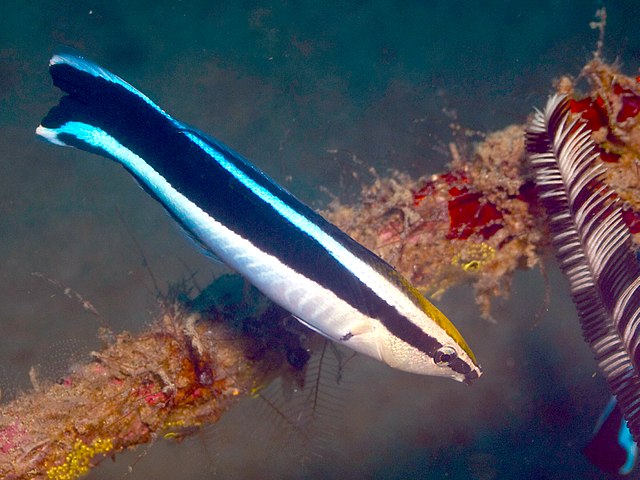
Bicolor Cleaner Wrasse
Famous as a "cleaner fish," it feeds on parasites and damaged tissue on other fish. While helpful in reducing parasite risk in the tank, some individuals may pick at coral mucus, so introduction to reef tanks should be carefully considered.
Popular Wrasse Species Quick Reference
| Species | Characteristics | Reef Suitable | Difficulty |
|---|---|---|---|
| Yellow Coris | Brilliant yellow, gentle, burrows in sand | ○(caution with tiny shrimp) | Beginner |
| Sixline Wrasse | Six stripes, beneficial fish, strong-tempered | ◎ | Beginner |
| Fairy Wrasse | Vibrant, harem breeding possible | ◎ | Intermediate |
| Flasher Wrasse | Flashy courtship display | ◎ | Intermediate |
| Bicolor Cleaner Wrasse | Parasite-eating cleaner | △(may pick at coral mucus) | Intermediate |
| Large species like Thalassoma | Prey on shrimp and crabs | × | Advanced |
Managing Sand-Burrowing Habits and Tank Setup
Many wrasses burrow into sand at night to sleep. Yellow Coris, Pink Streaked Wrasse, and Melanesian Wrasse are typical examples, and accommodating this behavior is key to successful husbandry.
Substrate Selection For species that burrow in sand, use fine, roundish coral sand (powder to fine grain) with a depth of at least 5cm. Coarse substrate prevents proper burrowing and can damage their body surface, leading to infections. A bare-bottom tank is unsuitable for burrowing wrasses.
During Acclimation Newly introduced fish may be confused by the environmental change and stay buried in the sand for several days. Once they detect food scent, they'll naturally emerge. Avoid forcefully excavating them.
Jump Prevention Wrasses jump when startled or at night. Always provide a secure tank cover, ensuring no gaps around cables or equipment. Since jump accidents are preventable, maintain your setup carefully.
Compatibility with Reef Tanks
When keeping wrasses in coral tanks, understanding the characteristics of each species is crucial.
Reef-Safe Species Fairy Wrasse, Flasher Wrasse, and Sixline Wrasse rarely directly consume corals. They generally coexist well with small shrimp and crabs, making them popular inhabitants of vibrant reef tanks.
Species Requiring Caution Large wrasses like Sunset Wrasse and Humphead Wrasse actively hunt crustaceans like shrimp and crabs. With enough strength to overturn live rock, they pose high risk to corals and are unsuitable for coral-focused reef tanks.
Yellow Coris is generally reef-safe but may prey on ultra-small shrimp like Sexy Shrimp. When mixing small invertebrates, carefully observe individual behavior.
Mixing Considerations and Wrasse Compatibility
Combining Wrasses Housing multiple same or closely related species often escalates territorial disputes. One species per tank is generally safest. However, Fairy Wrasse and Flasher Wrasse can thrive in harem setups (one male with multiple females), allowing observation of natural spawning behavior.
Mixing with Other Fish Most wrasses have good social compatibility and generally coexist without problems with same-sized fish from other families. However, being fast swimmers with hearty appetites, they may out-compete slower, docile species for food. During feeding, distribute food at multiple locations so all fish can eat.
Strong-tempered species like Sixline Wrasse require careful tankmate selection and introduction order (add stronger species last).
Introduction order matters greatly in wrasse tanks. Add gentle species first, then slightly more aggressive species last—this is the secret to successful mixing. Also, introducing wrasses after lights-out allows them to acclimate while other fish sleep, reducing aggression.
Most wrasses burrow into sand at night, so laying fine coral sand (1-2mm) at least 5cm deep is essential. Without sand, they can't rest securely, leading to stress and disease. In tanks without covers, jump accidents are very common, so secure your tank with netting or acrylic sheeting.
Welcome Home Quality Wrasses Through Breederdirect
Wrasses are sensitive to transport stress, and their condition upon introduction greatly affects long-term husbandry success. Fish that have been carefully acclimated and conditioned by an experienced breeder adjust far more smoothly than those kept long-term in shop systems.
Through Breederdirect, you can purchase wrasses directly from experienced breeders. You can also consult with the breeder themselves about any concerns—burrowing behavior, tankmate compatibility, reef compatibility—a major advantage.
Even first-time wrasse keepers can start confidently through Breederdirect, gaining expert advice while connecting with knowledgeable breeders. Enjoy the full beauty of these magnificent fish in your aquarium.