Marine Fish Guide | Characteristics and Care of Popular Species
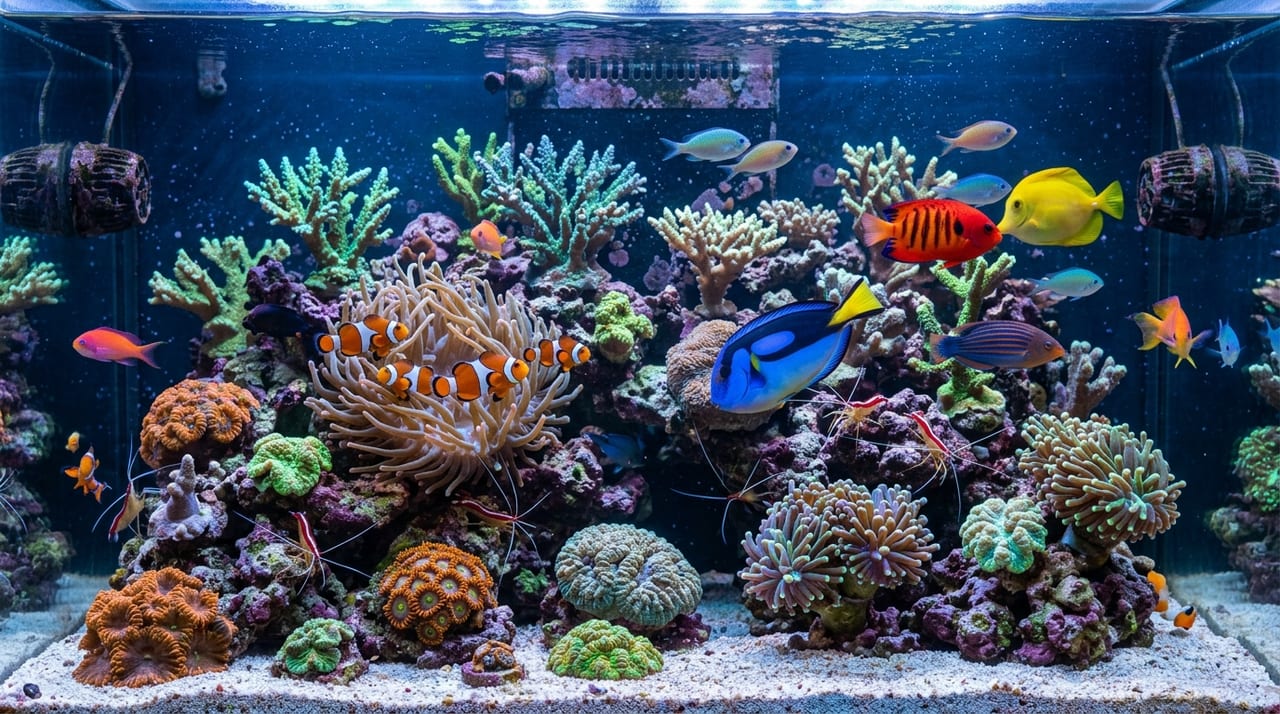
A curated guide to popular species in marine aquarium keeping, including Ocellaris Clownfish, Palette Surgeonfish, Yellow Tang, and Blue Damselfish. Detailed explanations of each species' characteristics, care difficulty, compatibility with tank mates, and recommended tank sizes.
Key Takeaways
A curated guide to popular species in marine aquarium keeping, including Ocellaris Clownfish, Palette Surgeonfish, Yellow Tang, and Blue Damselfish. Detailed explanations of each species' characteristics, care difficulty, compatibility with tank mates, and recommended tank sizes.
Related Species
The Appeal of Marine Fish and Basic Care Knowledge
Marine fish swimming in tropical seas captivate aquarium enthusiasts with their overwhelming colors and unique ecosystems. The appeal of marine fish keeping is the ability to recreate "the ocean world" at home—a realm distinct from freshwater aquariums, with vibrant colors, graceful schooling behavior, and symbiotic relationships with anemones.
However, keeping marine fish is somewhat more challenging than freshwater aquariums, with careful water quality management and proper equipment setup being critical. The basics include maintaining the specific gravity (salinity) of artificial seawater at 1.020–1.025, removing organic matter with a protein skimmer, and ensuring adequate filtration capacity. With these conditions in place, even beginners can enjoy beautiful marine fish for years to come. For a complete overview of necessary equipment, see Essential Equipment for Marine Aquarium Keeping.
Recommended Species for Beginners
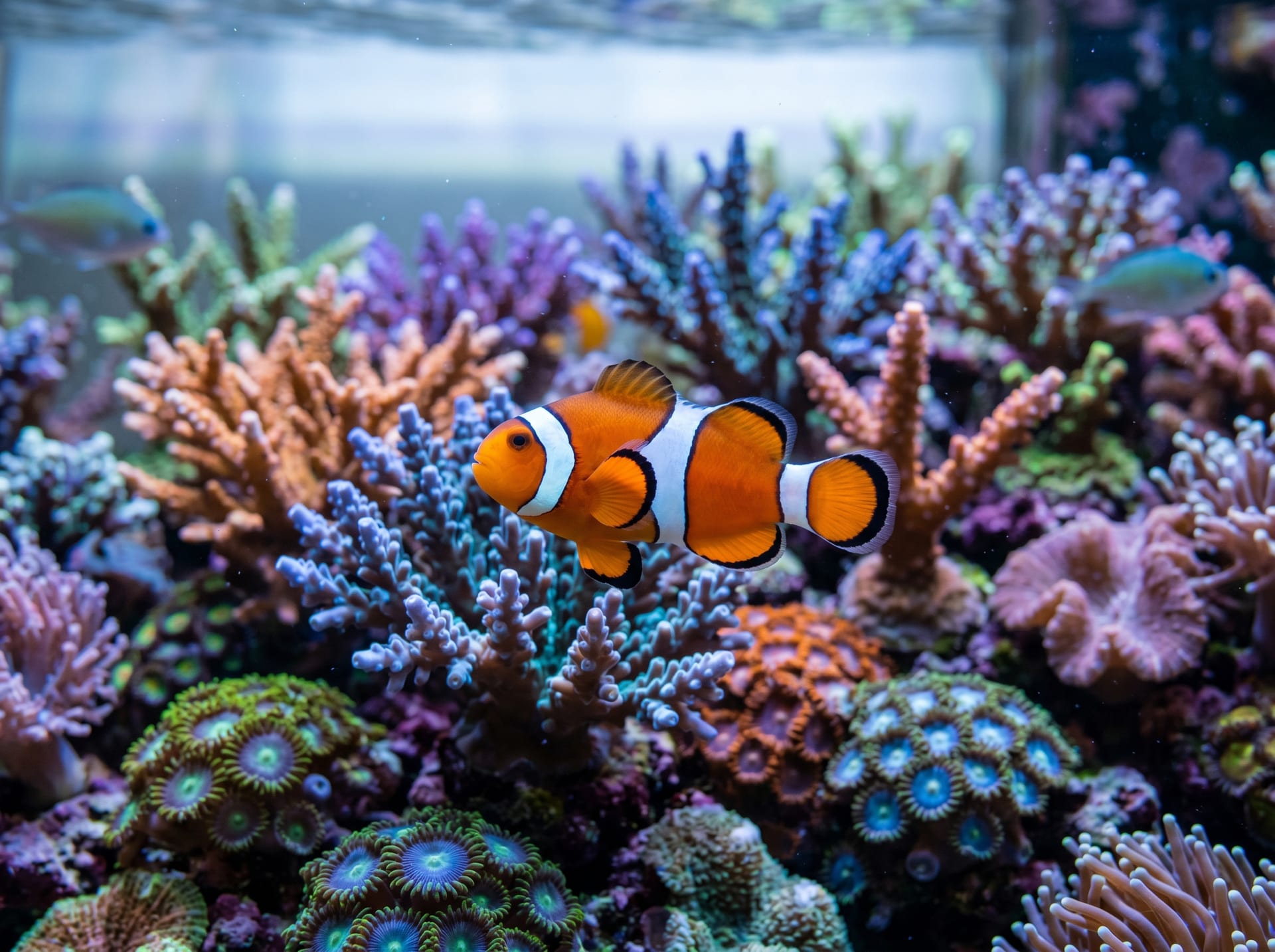
Ocellaris Clownfish
The iconic marine fish species. Its striking orange and white coloring is stunning, and it has gained worldwide popularity through film depictions. It is relatively easy to care for, requiring a tank of 60 cm or larger. While symbiosis with anemones is not essential, pairing with bubble-tip anemones or carpet anemones creates a more natural environment. They are territorial, so keeping them in pairs (one male and one female) is the standard approach. As of 2026, the availability of domestically bred specimens is increasing, making it easier to select healthy individuals compared to wild-caught specimens.
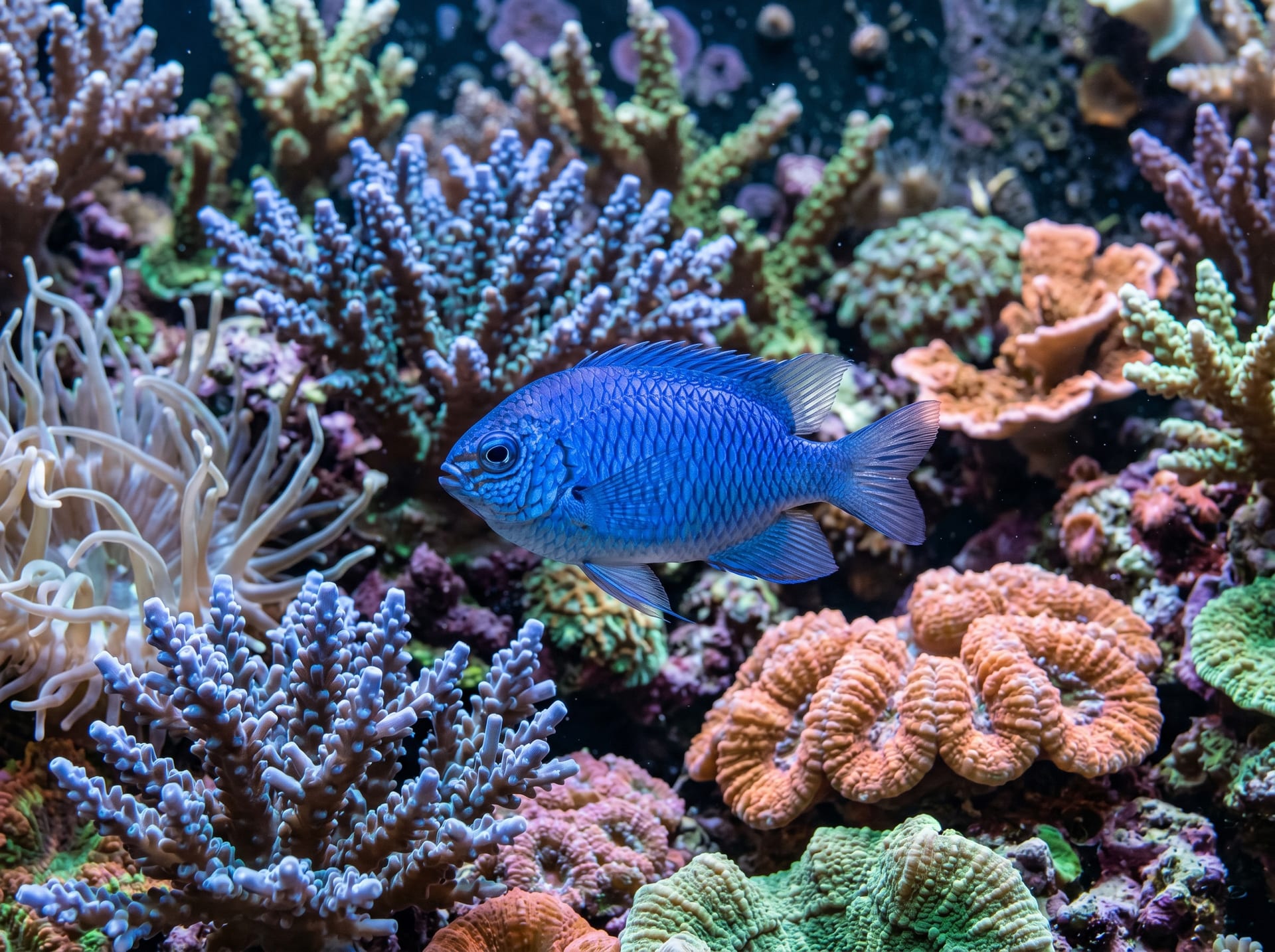
Blue Damselfish
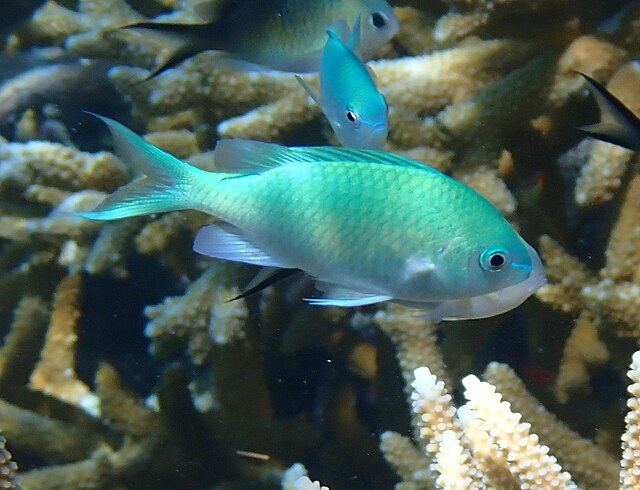
A small, elegant fish with a pale blue-green metallic shine. Their schooling behavior is like living jewels of the sea. Among marine fish, they are among the hardiest species and can be kept in 45 cm tanks. They are often introduced as test fish during the cycling phase of new tanks and have a very peaceful temperament, being compatible with most tank mates. Their relatively low cost makes them ideal for beginning marine aquarium keeping.
Firefish Goby
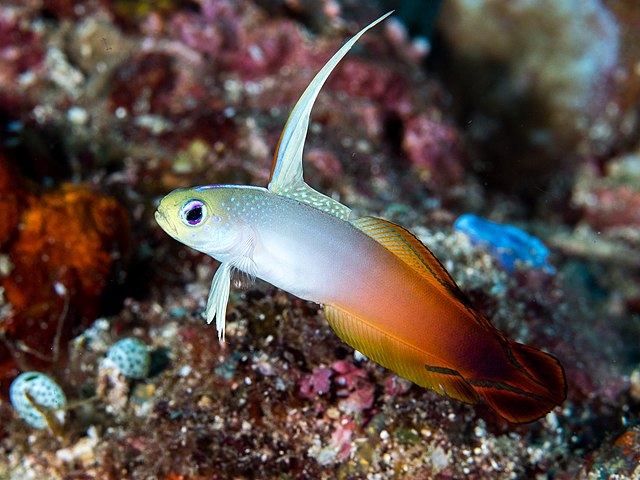
A goby species notable for its beautiful white-to-orange gradient coloring and distinctive tall, pointed dorsal fin. It can be kept in 60 cm tanks and has a peaceful temperament. However, since they are somewhat timid, avoid housing them with aggressive fish such as angelfish or tangs. Additionally, they have a tendency to jump out of the tank when startled, so a secure lid is essential.
Popular Species for Intermediate Aquarists
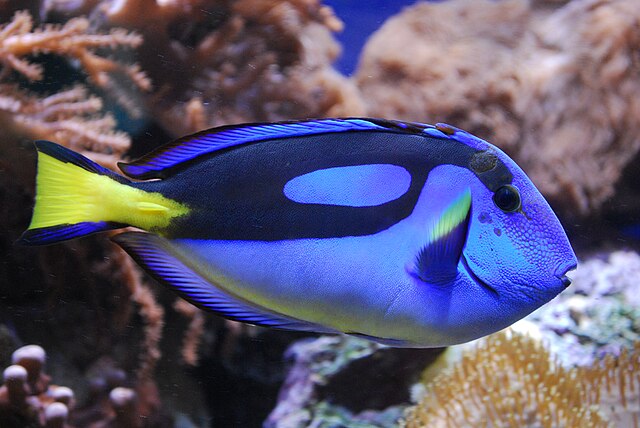
Palette Surgeonfish (or Blue Tang)
A popular species with striking blue, black, and yellow contrasts. While it grows fairly large and requires a tank of 120 cm or more, its appearance is truly exceptional. It is susceptible to white spot disease (Cryptocaryon irritans), so we strongly recommend quarantining new specimens in a separate tank for 2–4 weeks before introduction. With stable water quality and proper immune support, long-term care is entirely achievable. For information on disease prevention and treatment, see Disease Prevention and Treatment for Marine Fish.
Flame Angelfish
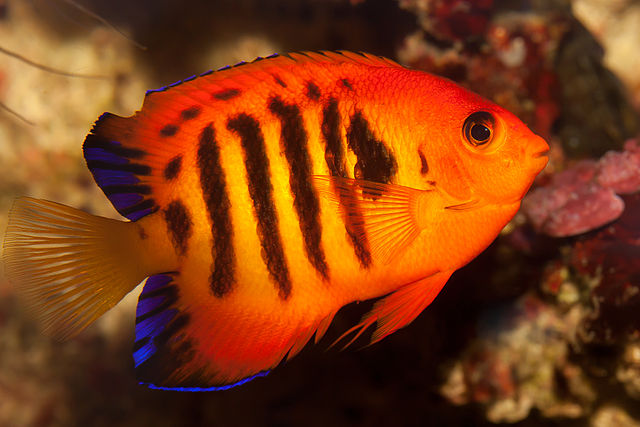
Among dwarf angelfish, this is particularly beautiful with vibrant red and orange body colors accented by blue outlines. It can be kept in 60 cm tanks and is relatively hardy. However, it is somewhat territorial, so care must be taken when housing it with the same or similar species. In reef tanks, it may nip at corals, so careful observation is necessary if housing it with corals.
Yellow Tang
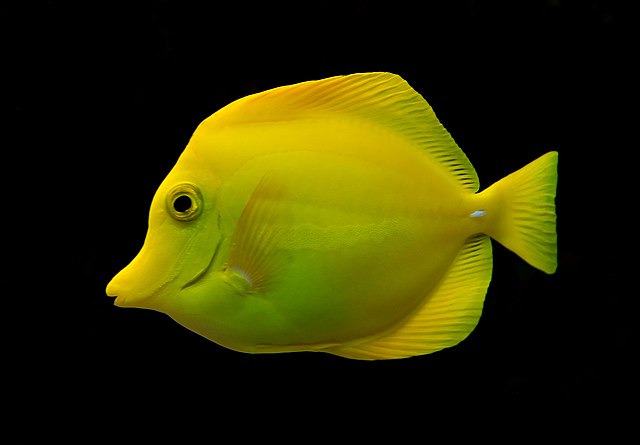
A popular species known for its striking, solid yellow coloring. It has a strong herbivorous diet and actively grazes on algae in the tank, making it an excellent algae controller. While it requires a tank of 90 cm or larger, it has a peaceful temperament, is compatible with most tank mates, and works well in reef tanks. Since housing multiple tangs leads to territorial disputes, keeping one per tank is the standard practice.
Rare and Challenging Species for Advanced Aquarists
Mandarin Fish
Its intricate pattern of blue, orange, and green is considered so artistic that it has been called "the most beautiful fish in the world." However, it is extremely challenging to keep, as it rarely accepts prepared foods and instead feeds primarily on microscopic crustaceans (such as copepods) that live on live rock. Long-term care is only possible in a mature, well-established tank with abundant live rock. Without an experienced keeper's setup, purchased specimens often decline within a few weeks, making thorough preparation essential.
Royal Dottyback
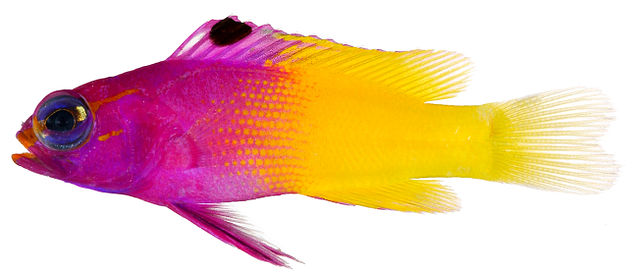
A small fish native to the Caribbean, notable for its striking two-tone coloring: vibrant purple on the front half and yellow on the rear. Relatively hardy and can be kept in 60 cm tanks, but since it is somewhat shy, providing hiding spots with live rock or cave-like structures helps it feel secure. It has a peaceful temperament and is suitable for community tanks, but specimens of the same species will fight fiercely, so keeping one per tank is standard.
Key Points to Know Before Keeping Marine Fish
Before starting your marine aquarium, familiarize yourself with these key points to avoid common failures.
- Water quality management is critical: Regular testing of specific gravity, pH, ammonia, nitrite, and nitrate is essential. During the first 1–2 months of tank setup, water quality is unstable, so testing at least weekly is recommended.
- Allow room with tank size: The "required tank size" listed is only a minimum. Larger water volumes lead to more stable water quality.
- Make quarantine a habit: Always quarantine new specimens in a separate tank for 2–4 weeks before introducing them to the main tank to prevent bringing diseases such as white spot disease into your primary aquarium.
- Confirm feeding: Before purchasing, verify that the fish is acclimated to frozen or prepared foods. For difficult species like mandarin fish, whether the specimen is already feeding on prepared foods significantly affects survival rates.
- Tank mate compatibility: Compatibility between fish species varies. Consult with a breeder or specialty shop before purchasing to ensure compatibility with your current tank inhabitants.
- Take time with acclimation: When introducing new fish, slowly acclimate them to your tank's water conditions using the drip method. For detailed procedures, see Acclimation Methods and Precautions for Marine Fish.
For tank setup procedures, refer to Marine Fish Tank Setup | 7 Steps to Success.
BreederDirect's Safe and Reliable System
BreederDirect is a platform for directly purchasing from marine fish specialists and breeders. By eliminating middlemen, it offers the best specimens at fair prices—a major advantage.
Benefits of Using BreederDirect
- Acclimated and quarantined specimens: Select specimens that breeders have carefully acclimated to prepared foods and quarantined. These can be introduced to your main tank immediately upon arrival, making them ideal for beginners.
- Direct access to husbandry information: Consult directly with breeder sellers about care methods, water conditions, and tank mate compatibility. You receive advice based on deeper knowledge and hands-on experience compared to shop staff.
- Fair pricing: Reduced distribution costs mean you can obtain high-quality specimens at fair prices. The savings are most significant for rare and difficult species.
- Clear specimen provenance: Background information including origin, care history, and health status is transparent. You can confirm whether specimens are wild-caught or captive-bred, supporting more sustainable aquariums.
As of 2026, domestic breeding and distribution of Ocellaris Clownfish and Blue Damselfish continue to expand, making it easier than ever to select healthy specimens. For information on running costs, see How Much Does Marine Fish Keeping Cost? A Guide to Monthly Operating Expenses. We encourage you to find a trustworthy breeder through BreederDirect and cultivate your own personal ocean.