Complete Moray Eel Care Guide|Species, Tank Size, Feeding, and Tankmates Explained
A comprehensive guide to caring for moray eels (Moray Eel), popular in saltwater aquariums. Learn the characteristics of popular species like Ribbon Eel, Whitemouth Moray, and Spotted Moray, appropriate tank sizes, feeding methods, and escape prevention measures.
Key Takeaways
A comprehensive guide to caring for moray eels (Moray Eel), popular in saltwater aquariums. Learn the characteristics of popular species like Ribbon Eel, Whitemouth Moray, and Spotted Moray, appropriate tank sizes, feeding methods, and escape prevention measures.
The Appeal and Challenges of Moray Eel Care
✍️
BreederDirect Editorial
The BreederDirect editorial team specializes in care information for animals, covering veterinary care and breeding to deliver beginner-friendly guides.
Find Marine Fish on BreederDirect
Buy directly from verified breeders
Browse Related Listings
Find Marine Fish listings related to this article on BreederDirect. Buy directly from verified breeders.
The moray eel (Moray Eel) is a saltwater fish prized for its distinctive long body, sharp teeth, and imposing appearance. In FOWLR-style tanks, it commands a starring role and attracts aquarists of all skill levels, from beginners to experts. Given proper conditions, most species are relatively hardy and some live 10–30 years or longer.
However, they are also demanding fish. Adequate knowledge and preparation are essential before purchasing:
Many species grow large and require substantial tank space
They have a strong tendency to escape
As carnivores, they are selective about tankmates
Risk of bite injuries during feeding
Avoid impulse purchases. First understand the size and behavior of the species you can properly care for, then proceed.
Common Aquarium Species and Their Characteristics
Species
Maximum Length
Characteristics
Ribbon Eel (Rhinomuraena quaesita)
80–120 cm
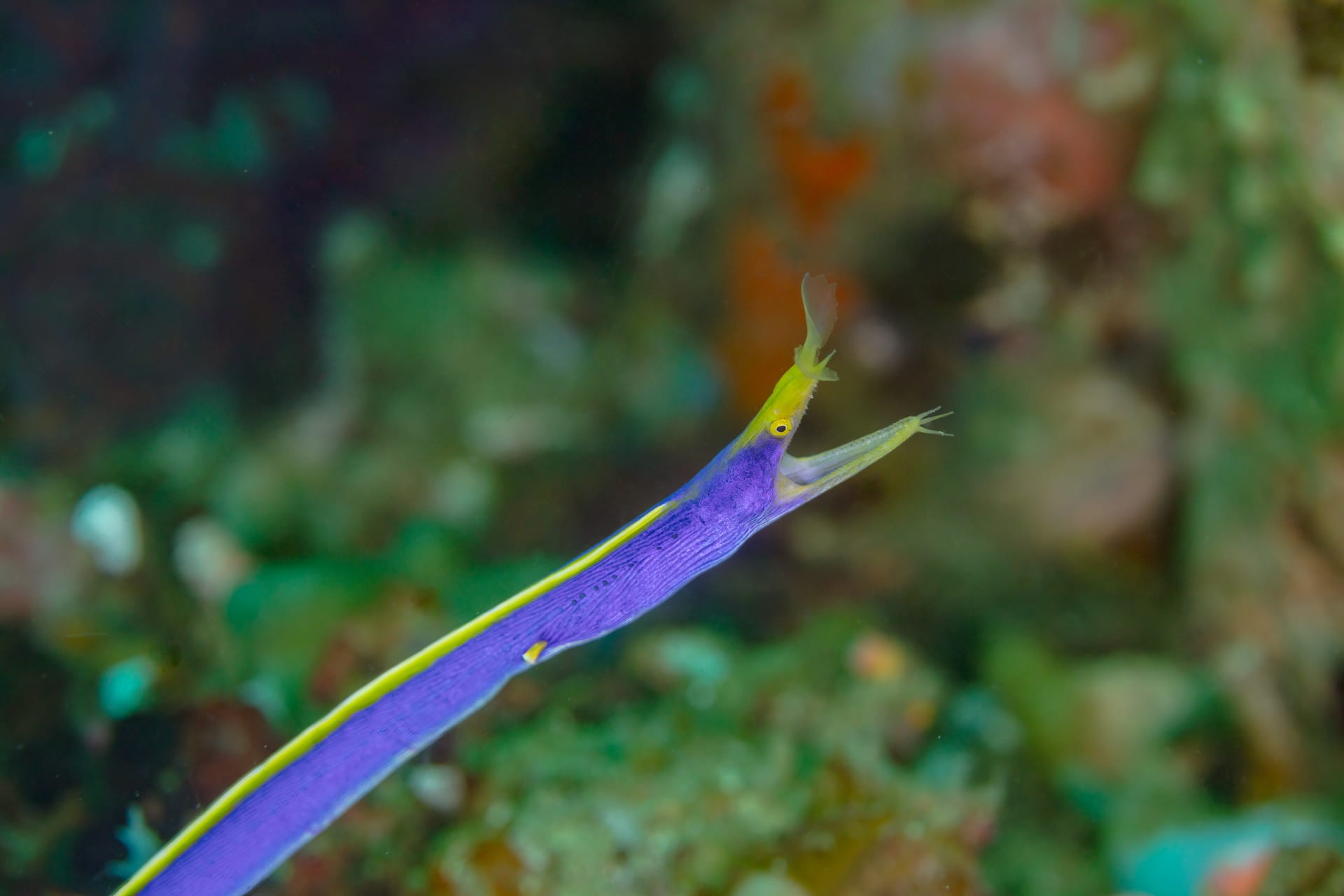
Juveniles are black with bright yellow stripes; adults undergo dramatic color change to cobalt blue. Among moray eels, they have relatively calm temperaments and can be kept alone in 90 cm tanks. However, they have a strong burrowing habit and require substrate 10 cm or deeper.
Whitemouth Moray (Gymnothorax favagineus)
Over 1.8 m maximum
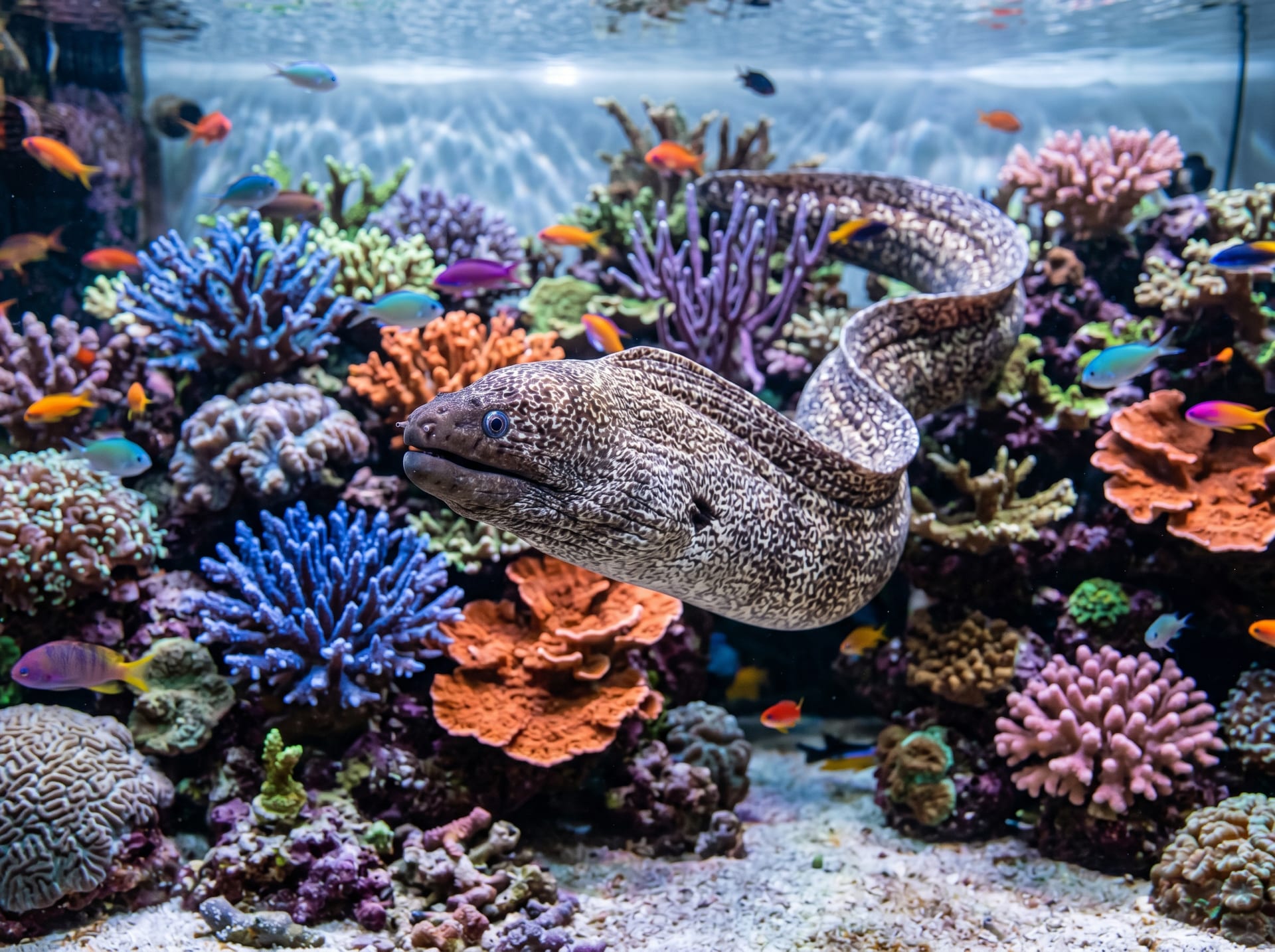
Large species distinguished by white body with black reticulated pattern. Adult specimens require 180 cm or larger tanks. Digestion is robust and they adapt readily to prepared foods. A popular choice for beginners seeking hardy large species.
Spotted Moray (Gymnothorax meleagris)
60–90 cm
Medium-sized species with white spots scattered across the entire body. Can be kept in 60–90 cm tanks, but may accumulate tetrodotoxin by preying on tetrodotoxin-bearing fish, causing "toxification." Keep only for conservation purposes; never for consumption.
Pygmy Moray (Gymnothorax rueppelliae)
40–60 cm
Among aquarium species, one of the smallest. Readily available and reasonably priced; one of the best choices for first-time moray eel keepers.
Undulated Moray (Gymnothorax javanicus)
Over 2 m maximum
One of the largest species, widely distributed across the Indian and Pacific Oceans. While they command impressive presence in captivity, they require correspondingly large tanks and robust filtration.
Tank Size and Environmental Setup
Tank size should follow the guideline "3–5 times the body length in bottom surface area." A 60 cm specimen requires a minimum 120 cm tank; large species may eventually need 180–240 cm tanks. Planning for final adult size from the start reduces stress on the animal and overall cost.
Moray eels naturally hide in rockwork and crevices. Multiple hide structures—live rock cavities or PVC pipe tubes large enough for the fish to fit—are essential. Insufficient hiding spots cause stress leading to refusal to feed or erratic behavior. Distributing multiple hiding places throughout the tank stabilizes conditions.
Critical: escape prevention. Moray eels escape through even tiny gaps in the lid and desiccate on the floor—such deaths are frequently reported. Preventing this requires:
Ensure the lid has zero gaps
Block all holes through which pump cords and heater cables pass with sponge or mesh
Maintain these parameters:
Temperature: 25–27°C
Salinity: 1.020–1.025
They are sensitive to rapid temperature changes, so winter heating and summer chiller control are mandatory.
Filtration and Water Quality
Moray eels are voracious carnivores with high waste output, easily fouling water. Ammonia and nitrite accumulation causes immediate health decline, demanding robust filtration.
FOWLR (Fish Only With Live Rock) setups are standard. Key water management points:
Protein skimmer: An oversized skimmer relative to tank volume is strongly recommended
Live rock: Provides biofilter surface for beneficial bacteria, greatly contributing to water stability
Water changes: Approximately 15–20% of tank volume, once weekly
Nitrate: Maintain below 40 mg/L
Feeding Methods and Safe Handling
Primary foods:
Frozen silversides
Frozen shrimp (vannamei shrimp, grass shrimp)
Frozen squid
Moray eels have poor eyesight and locate food by smell; pungent foods elicit better response. Use stainless steel tongs or forceps at least 30 cm long, bringing food slowly to the fish's mouth to encourage strikes.
Absolute rule: never feed by hand. Moray eel teeth are curved backward like hooks; once bitten, they cannot release, causing deep lacerations. Serious injuries have been documented. Even during water changes, always monitor the fish's behavior before placing hands in the tank. Feed 2–3 times weekly; overfeeding degrades water quality and causes obesity.
If the fish stops eating, main causes include:
Water quality decline
Stress
Insufficient hiding places
Falling temperature
Offering small live shrimp sometimes restores appetite.
Tankmates and Compatibility Notes
Moray eels eat anything small enough to fit in their mouths.
Category
Organisms
Generally incompatible (predation risk)
Small fish, crustaceans, shrimp, octopus
Relatively compatible
Large fish of equal or greater size, fast swimmers, and peaceful species (large angels, tangs, groupers, etc.)
Keeping multiple moray eels or closely related species is possible with abundant hiding space and tanks 180 cm or larger, though size differences create risk of larger individuals attacking and consuming smaller ones. Introduce simultaneously or add larger newcomers to minimize aggression.
Additionally, moray eels may bite cleaner organisms like hermit crabs and sea cucumbers. When housing mixed species, regular observation of individual condition is essential.