Hercules Beetle Care Guide — Raising Large Adults from Larvae | ブリちょく
Insects| ✍️ BreederDirect Editorial
Hercules Beetle Care Guide — Raising Large Adults from Larvae
Complete Hercules beetle care guide: larval substrate selection, temperature management, using fungal substrate jars, and adult care for raising record-sized individuals.
Key Takeaways
Complete Hercules beetle care guide: larval substrate selection, temperature management, using fungal substrate jars, and adult care for raising record-sized individuals.
What is the Hercules Beetle?
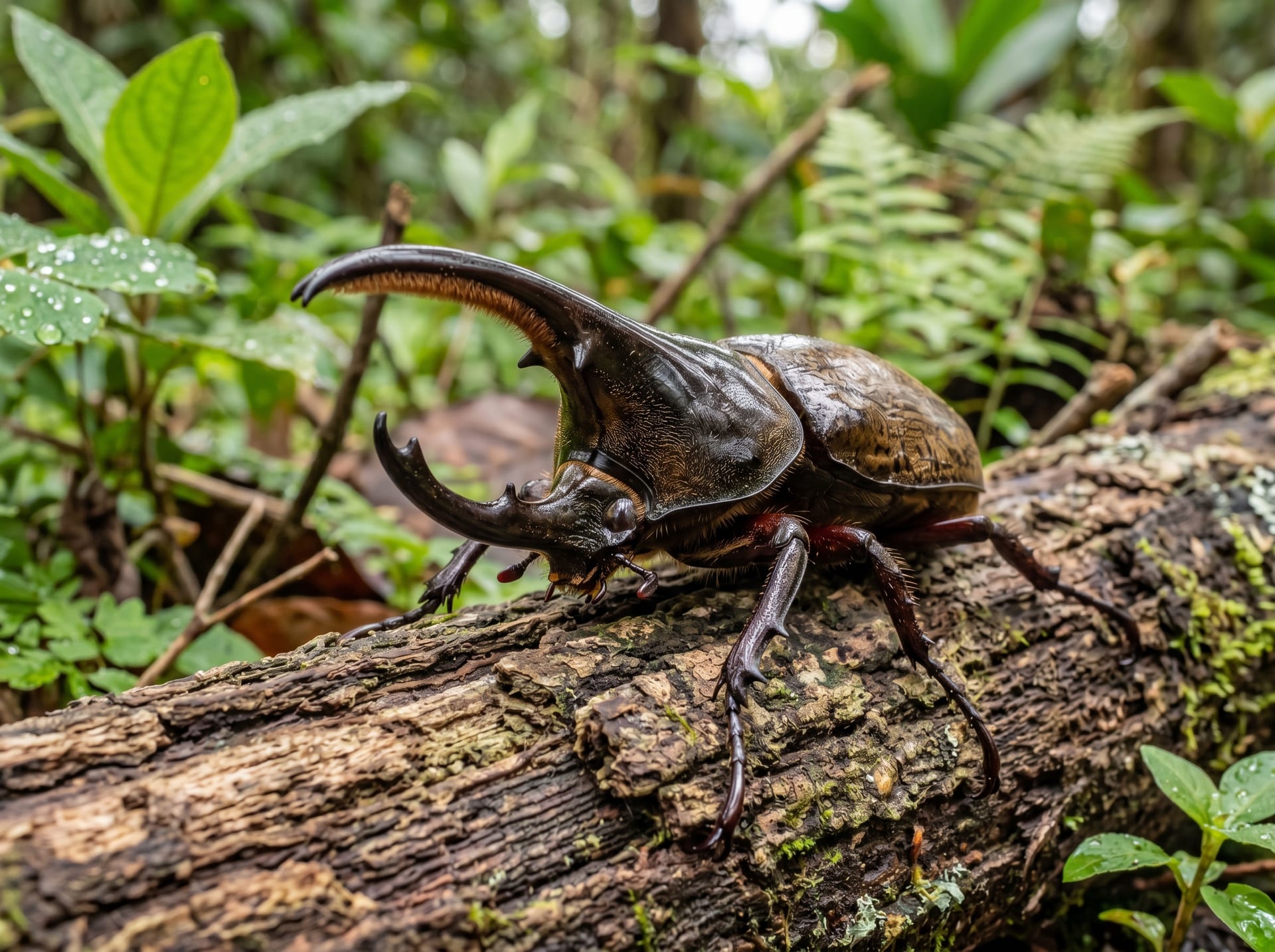
The Hercules beetle (Dynastes hercules) is the world's largest beetle, characterized by a giant body exceeding 180mm at maximum size and two long, extended horns. It is native to Central and South America (Colombia, Ecuador, Venezuela, etc.) and inhabits cloud forests (mountainous forests in cloudy regions).
✍️
BreederDirect Editorial
The BreederDirect editorial team specializes in care information for animals, covering veterinary care and breeding to deliver beginner-friendly guides.
Find Insects on BreederDirect
Buy directly from verified breeders
Browse Related Listings
Find Insects listings related to this article on BreederDirect. Buy directly from verified breeders.
The Hercules beetle is not listed under the Washington Convention (CITES), so it is possible to purchase legally imported or domestically bred individuals. As breeding and rearing have become more common, prices have become more accessible than before. However, as a large-sized species, it requires sufficient space and long-term management.
---
Larval Rearing Management
Substrate Bedding vs. Fungal Media Bottle
For Hercules beetle larval rearing, fermented substrate (leaf mold-based) is the most common. While fungal media bottles can also be used, many experts believe fermented substrate is more suitable for large beetles.
Choosing fermented substrate:
- Use completely fermented substrate for beetles (secondary fermented substrate)
- Substrates for longhorn beetles and general-purpose substrates may have strong ammonia odors—use caution
- Popular brands include Tsukiyo-no Mushroom Garden, FourTech, and Taimumu Substrate
Container Size and Replacement Timing
- First instar larvae: Start with 800cc–1L containers
- 2nd–3rd instar: Move to large containers of 3L or larger
- Late 3rd instar: Use mature substrate and prepare for pupation
Substrate replacement frequency is approximately once every 3–4 months. When the substrate becomes dark from frass, it's time to replace it.
Temperature Management
The ideal temperature for larval rearing is 22–26°C. High temperatures (30°C or above) are dangerous, and low temperatures (18°C or below) extremely slow growth. Temperature management is one of the most critical factors in raising large-sized individuals.
---
Pupation and Emergence Management
From Pre-Pupation to Pupa
When larvae stop moving and their bodies begin to shrink, pupation is near. Disturbing the container or vibration during this period can cause pupation failure. Manage them in as quiet an environment as possible.
Creating an Artificial Pupa Chamber
If the larvae fail to construct a pupa chamber in the container (shallow bottom, overly hard soil, etc.), transfer to an artificial pupa chamber is necessary.
- Hollow out oasis (flower arranging foam sponge) and create a hole sized for the pupa
- Maintain appropriate moisture with a spray bottle (avoid mold growth)
Post-Emergence Management
Immediately after emergence, the body is soft and internal organs are incomplete—do not remove them. Keep them in the container for at least 1 month, preferably 2–3 months. Once they emerge on their own, transfer to adult rearing.
---
Adult Rearing Environment
Rearing Container
Males require an extra-large container (60–90L or larger). Extra-large fruit fly shutoff containers and goldfish tanks are commonly used. Since the horns are long, the lid must have adequate height.
Temperature
The ideal temperature for adults is 24–28°C. At low temperatures (20°C or below), activity becomes sluggish.
Food
Provide high-protein, high-sugar jelly (insect jelly). High-protein jellies specifically formulated for beetles, such as Pro Jelly and Bio Jelly, are optimal.
---
Tips for Raising Large Individuals
To aim for large specimens (140mm or larger), the following are important:
Bloodline Selection: Offspring of large parent individuals tend to be large
Rigorous Temperature Management: Rear slowly at 22–24°C over a long period (rushing causes undersizing)
Substrate Quality: Use completely fermented, high-quality substrate
Spacious Rearing Containers: Provide ample containers to allow larvae to develop freely
The larval period lasts 18–24 months, and patient, careful management is the shortcut to raising large individuals.
---
Find Large-Bloodline Hercules Beetles on Br-Choku
On Br-Choku, you can purchase larvae and adults directly from breeders with proven track records of producing large individuals. You can also ask breeders directly questions like "How large are the parents?", "What generation of line breeding is this?", and "Can this bloodline potentially exceed 140mm?". Start your challenge with a large Hercules beetle from Br-Choku.