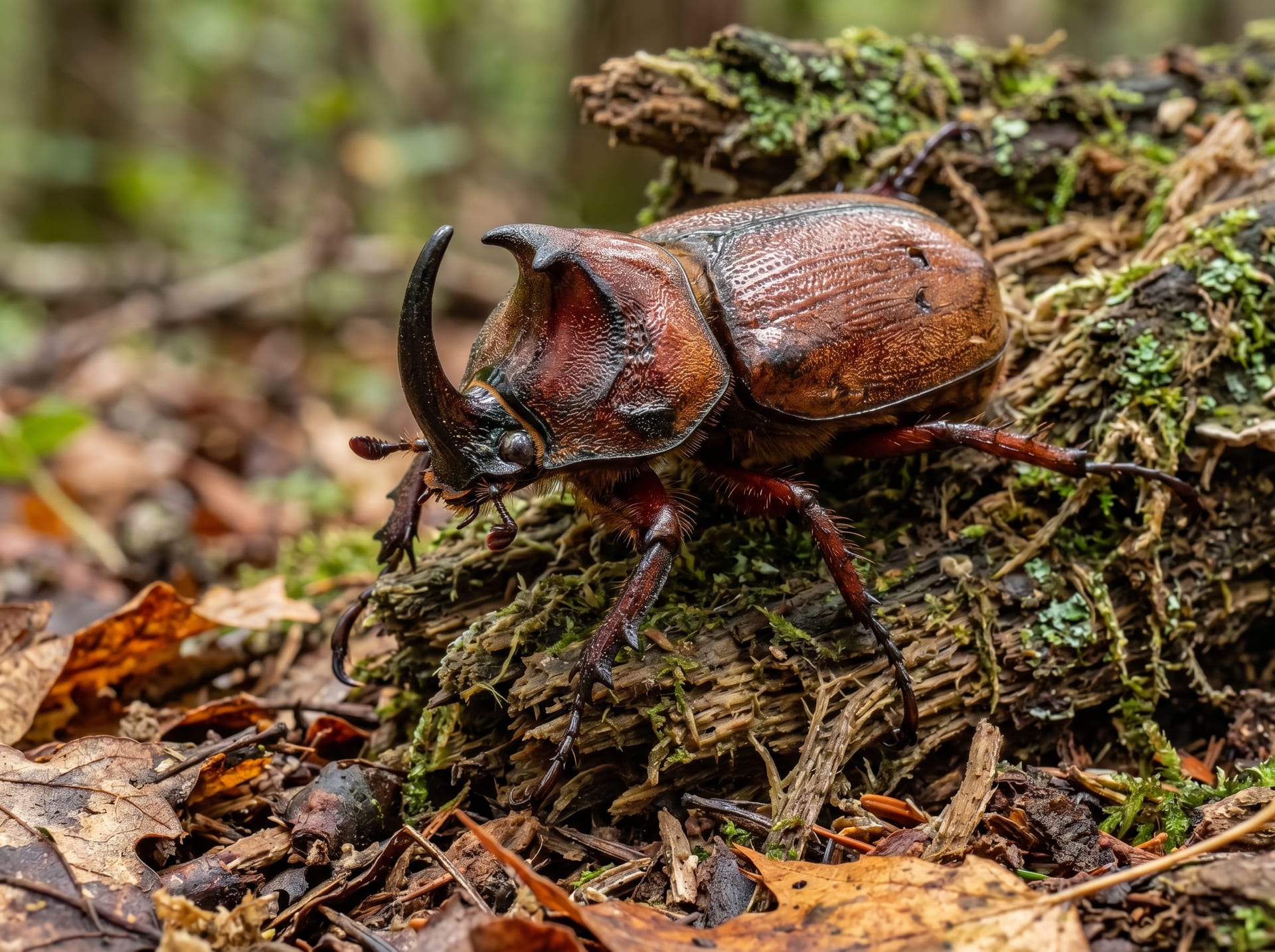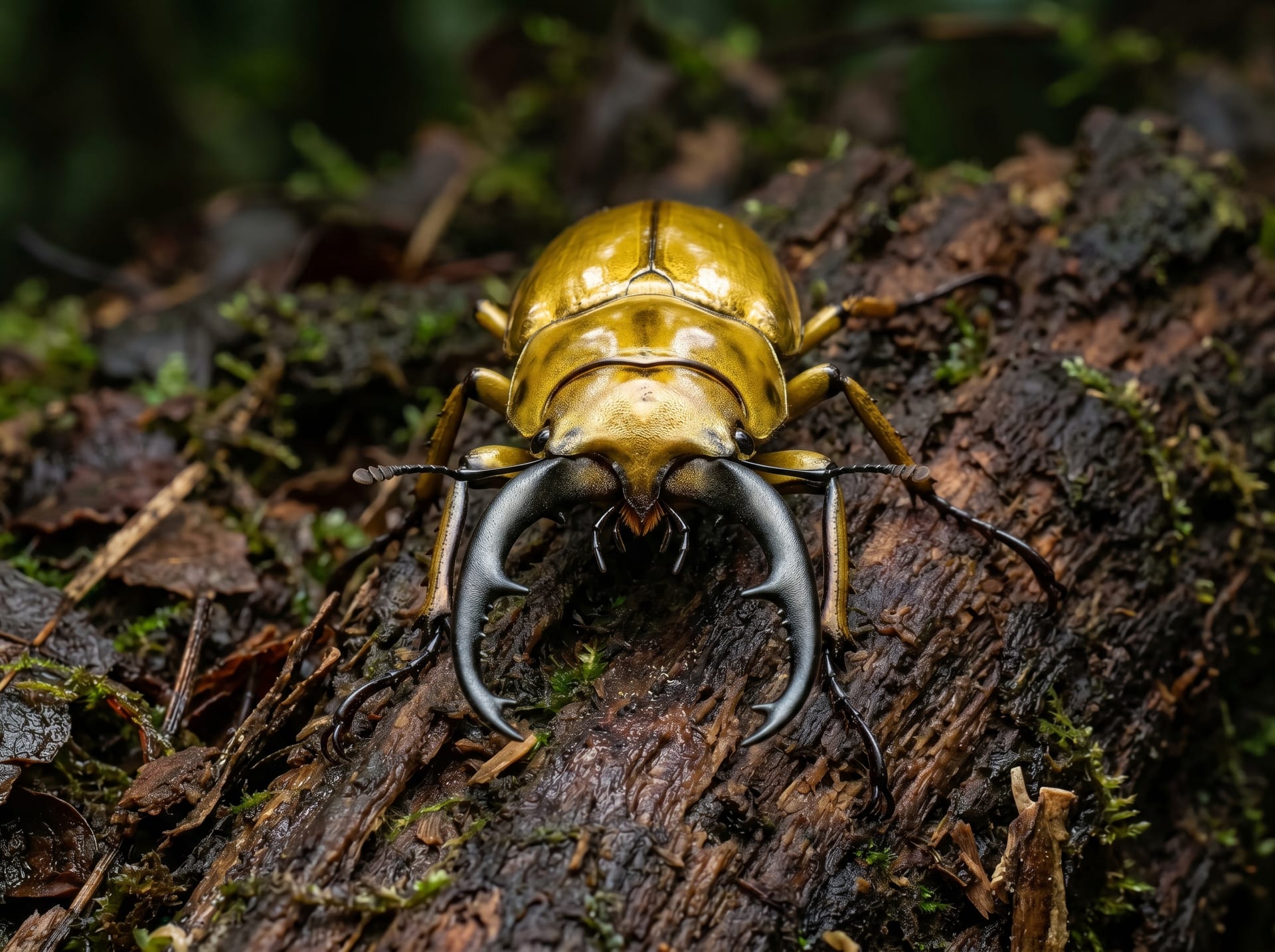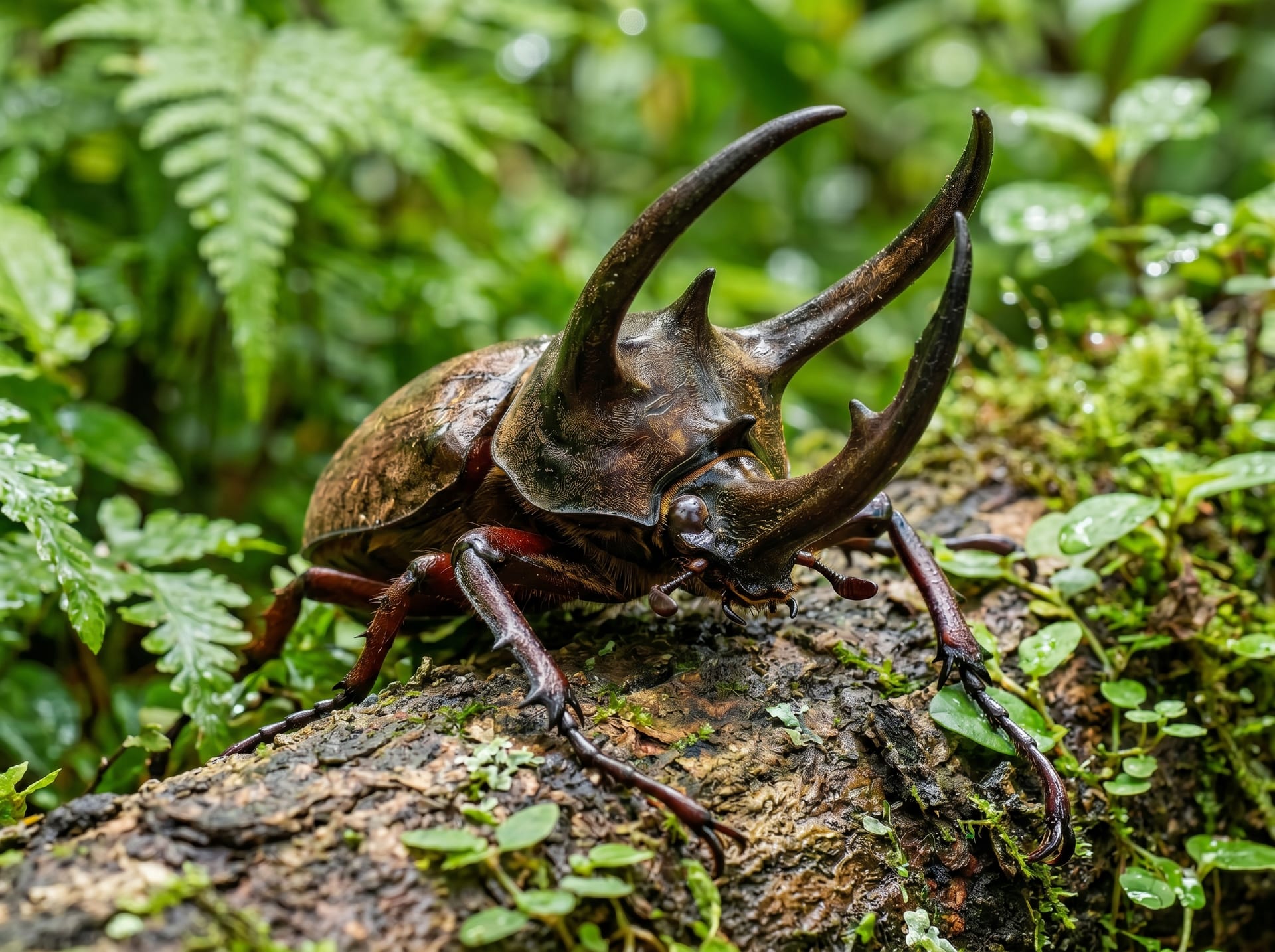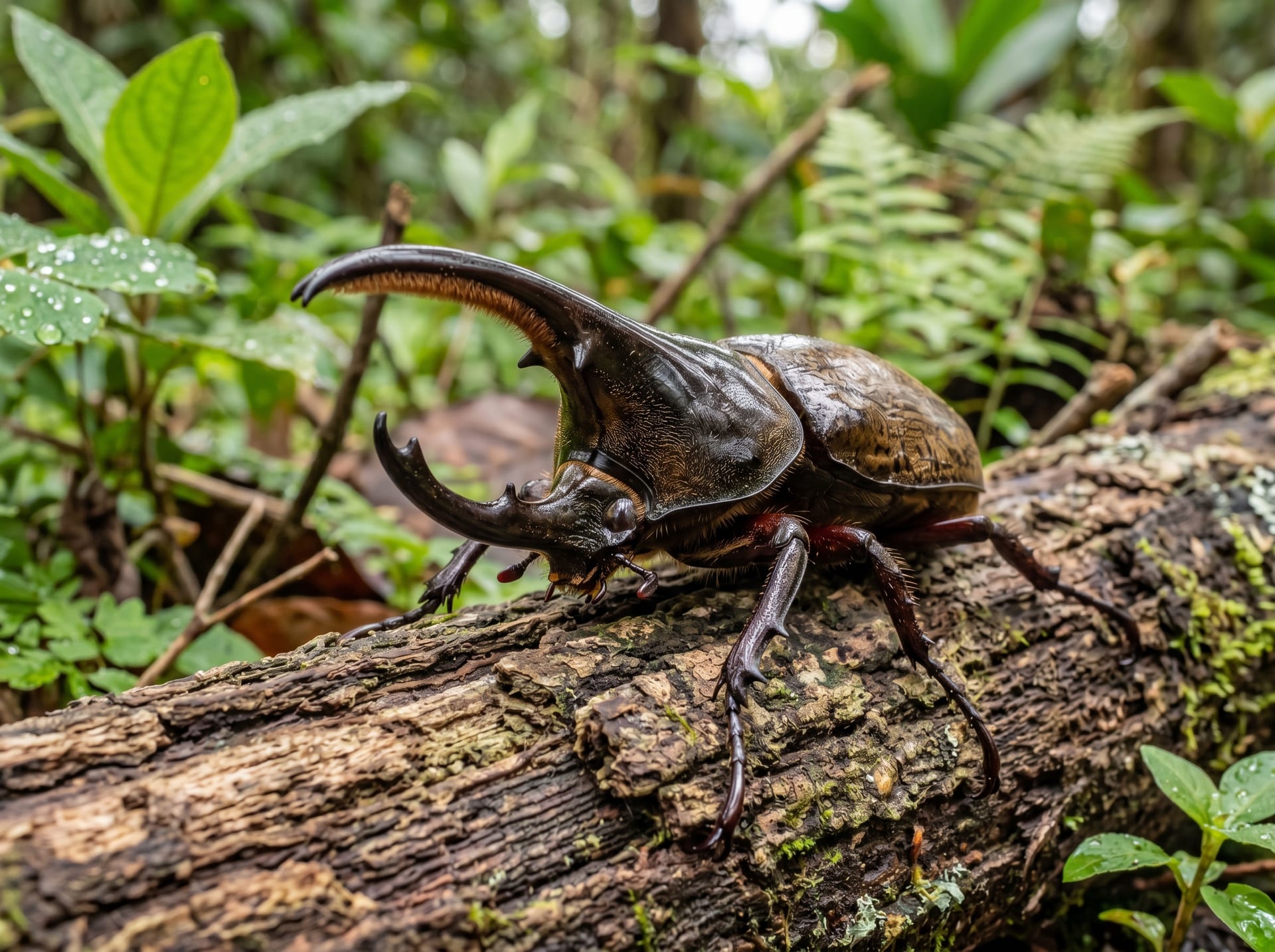
AI-generated image
Hercules Beetle
IntermediateDynastes hercules
Worlds largest beetle. Massive horns reaching 180mm are breathtaking. Central/South American origin. Dream species for beetle keepers.
Difficulty
Intermediate
Temperature
20〜25℃
Lifespan
Adult 6-12 months, larva 1-2 years
Size
Up to 180mm (including horn)
Humidity
60〜80%
Diet
Beetle jelly (adult), fermented substrate (larva)
About
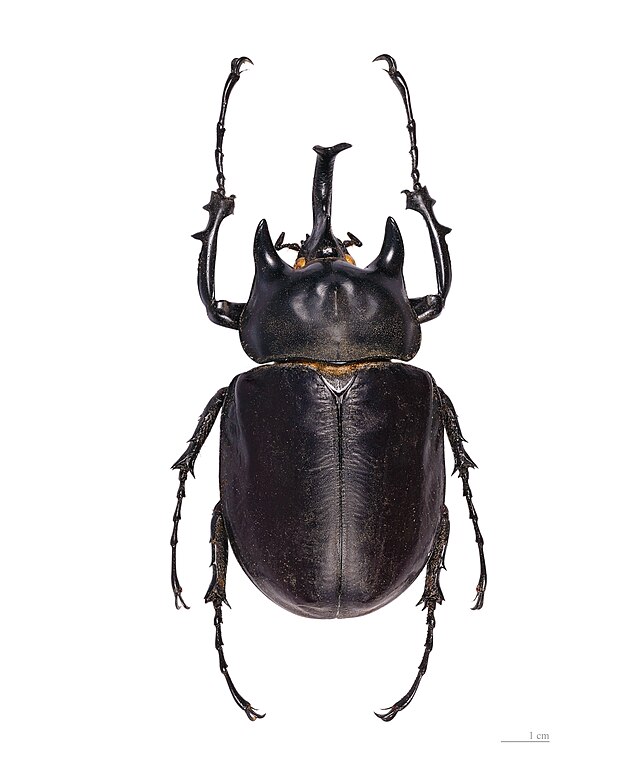
Dynastes hercules, the Hercules beetle, is the longest extant beetle species and one of the largest flying insects on Earth. It is native to the tropical rainforests of southern Mexico, Central America, South America, and the Lesser Antilles. Males can reach a total length of up to 180 mm, including their distinctive paired horns—a long cephalic horn and a thoracic horn used to grasp and flip rivals. Elytra color shifts from yellowish-green to black with changing humidity, a unique trait among large beetles. The larval stage lasts one to two years and demands substantial substrate volumes. Females lay 30–50 eggs per clutch in fermented mat. Adults feed on beetle jelly or banana and live approximately 6–12 months. As the undisputed king of beetles, Hercules beetles are the most coveted species among collectors worldwide.
Source: Wikipedia (CC BY-SA 4.0)
Lifespan of the Hercules Beetle
The Hercules Beetle lives Adult 6-12 months, larva 1-2 years.
Size of the Hercules Beetle
The Hercules Beetle grows to Up to 180mm (including horn).
Temperature & humidity for the Hercules Beetle
The ideal temperature for the Hercules Beetle is 20〜25℃.
Captive husbandry requires an oversized enclosure with fermented substrate at least 20 cm deep, maintained at 20–25°C; temperatures above 28°C are harmful.
Basic Info
Origin
the tropical forests of southern Mexico, Central America, South America, and the Lesser Antilles
Breeding Records & Localities
Captive record (♂)
184.3 mm
Record source: BE-KUWA 2025 edition (species overall maximum = nominate subspecies captive-bred 184.3mm Huang Sheng-Yao 2025, total length = including horns)
Notable localities
Central and South America (southern Mexico to Bolivia)Lesser Antilles
Regional subspecies
- Dynastes hercules hercules(nominate subspecies) — Guadeloupe and Dominica
- Dynastes hercules lichyi — Andes (Colombia to Bolivia)
- Dynastes hercules ecuatorianus — Ecuador
- Dynastes hercules occidentalis
- Dynastes hercules septentrionalis — Central America
The world's largest rhinoceros beetle. Records are total length including horns. The captive-breeding record for the entire species is held by the nominate subspecies (184.3mm). Size and body form vary by subspecies and locality. Captive-breeding records are updated annually through BE-KUWA (Mushi-sha) contests. Individual value fluctuates significantly based on locality, generation (CBF/WF/WD), and size.
Generation codes
- WD
- Wild-caught
- WF1
References & Sources
Edited & verified by: BreederDirect editorial team
The taxonomic, regulatory, and husbandry data on this page are compiled and verified against the authoritative primary sources below.
Primary sources
Taxonomy & Authority
Accepted name: Dynastes hercules (Linnaeus, 1758)
Synonyms: Dynastes hercules var. caribaea Stehlé & Stehlé, 1958, Dynastes hercules var. niger Endrödi, 1947, Scarabaeus hercules Linnaeus, 1758
Authority databases: GBIF
Nomenclature follows global taxonomic authority databases.
Regulations & Conservation Status
Not CITES-listed
Plant Protection Act: When importing live specimens of Scarabaeoidea (including rhinoceros beetles, stag beetles, flower beetles, etc.), a species identification certificate issued by the exporting country government agency or equivalent must be attached in accordance with the Invasive Species Act (import ports are limited to Narita, Chubu, Kansai, Fukuoka, and Kagoshima airports). This species itself is not a designated invasive species, and import is possible upon submission of the certificate.
Sources: Ministry of the Environment, Invasive Species Act: "Guidance for Those Importing Live Insects in Scarabaeoidea" / CITES Appendix (checklist.cites.org)
Regulations may change. Always verify the latest information with the relevant authorities.
Hercules Beetle Listings
Loading latest listingsFind listings for this species