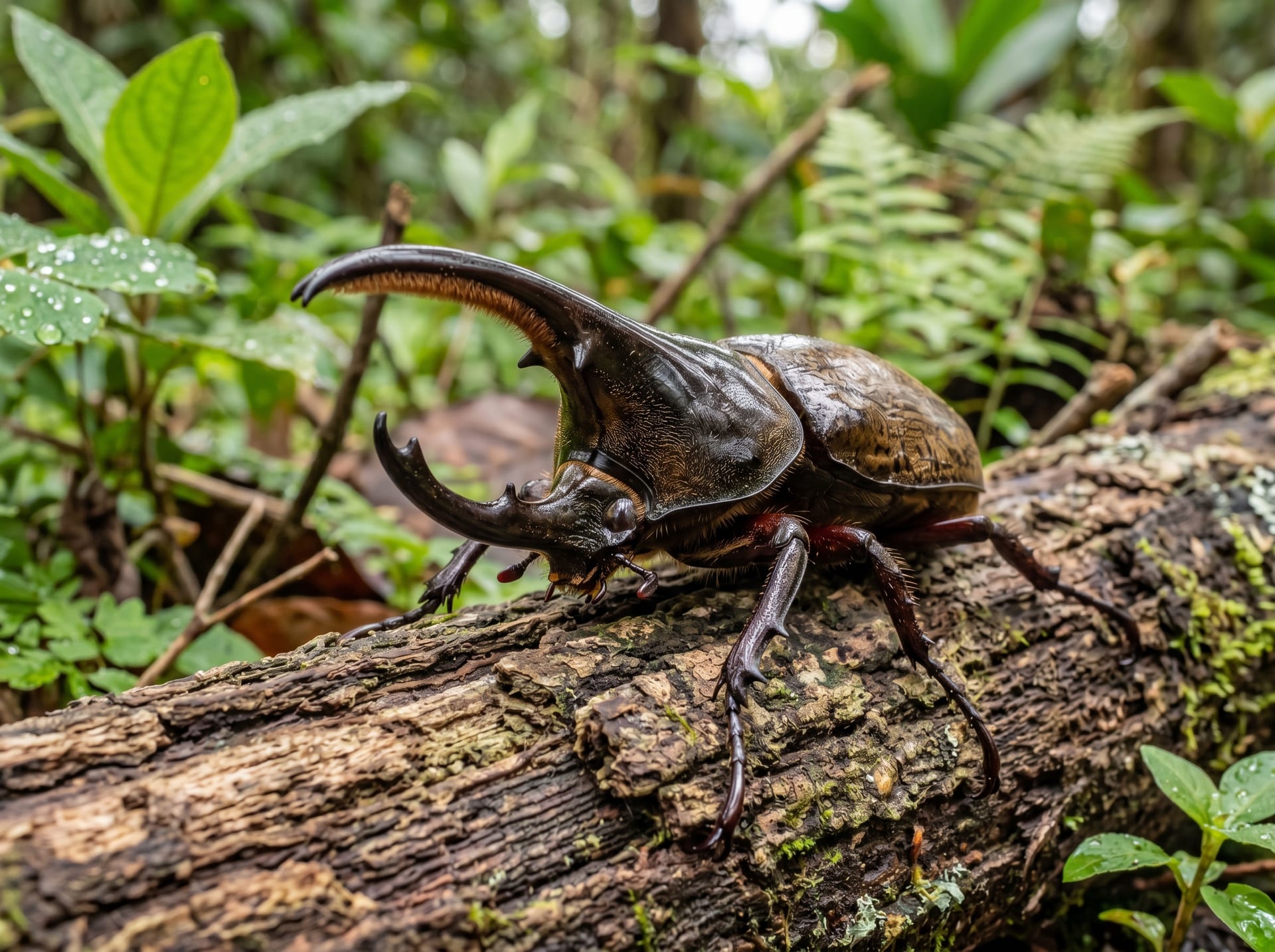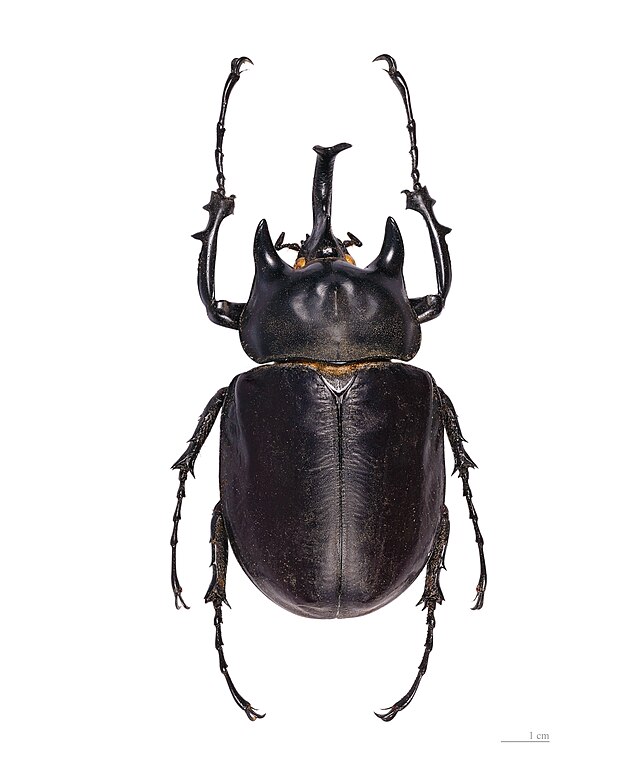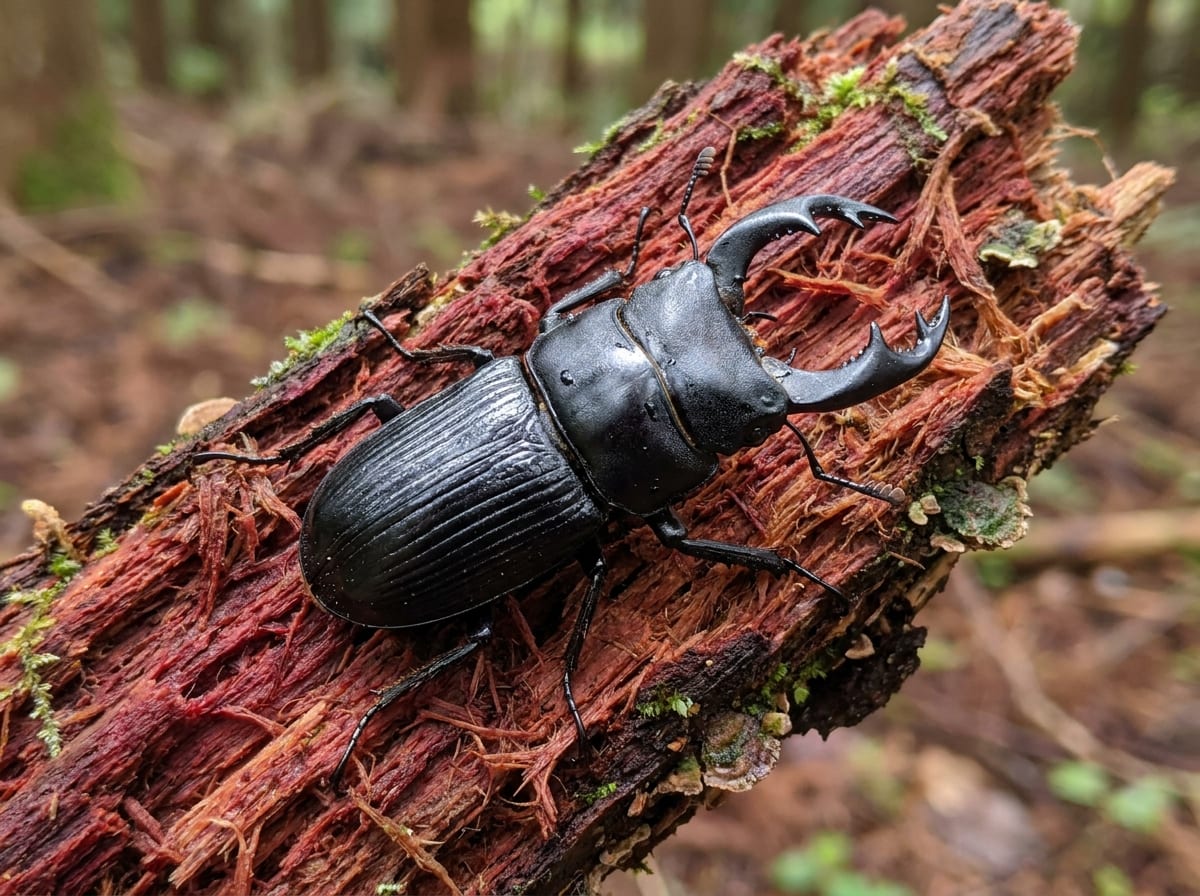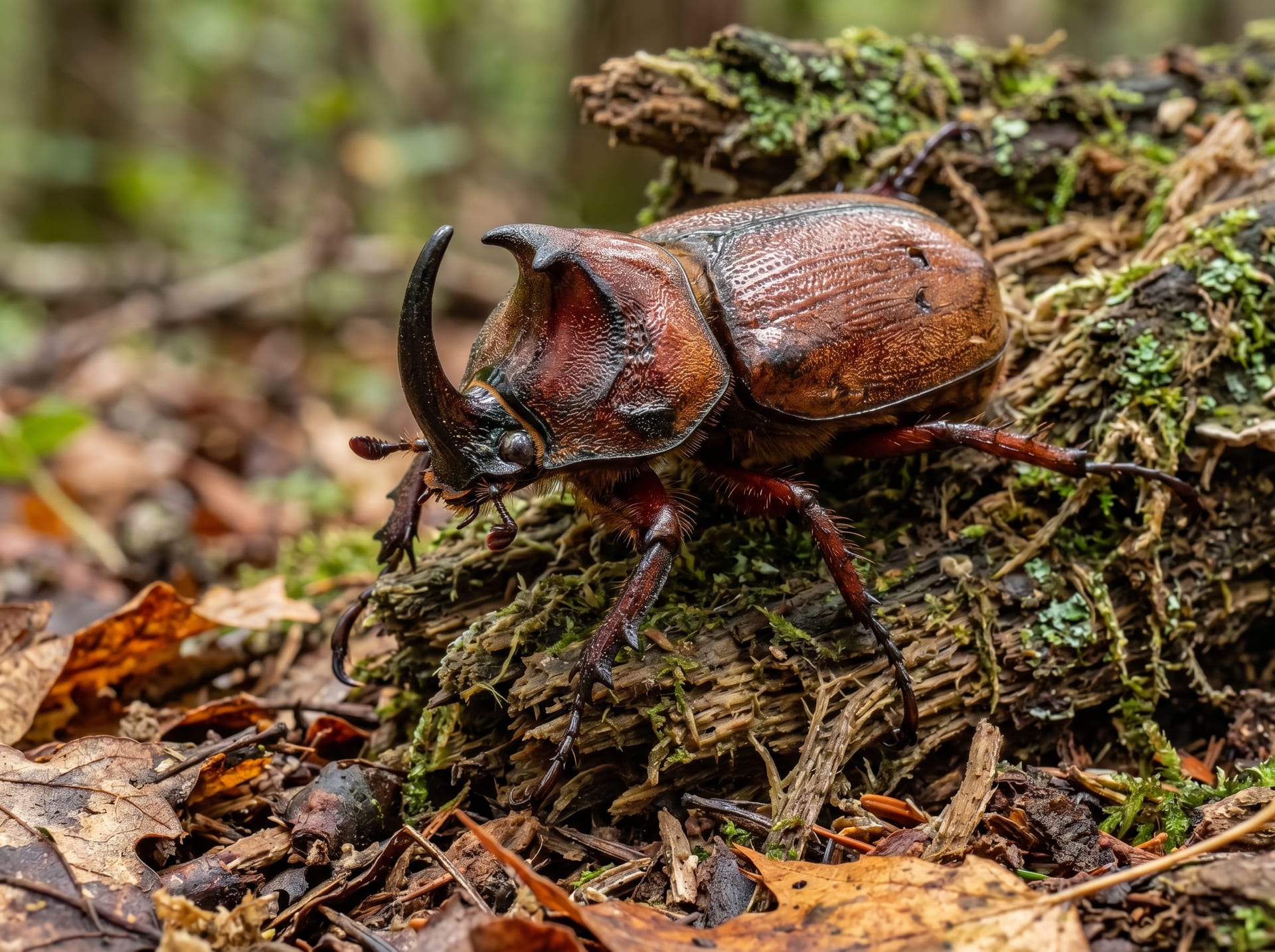
Source: Wikimedia Commons
Titan Beetle
AdvancedTitanus giganteus
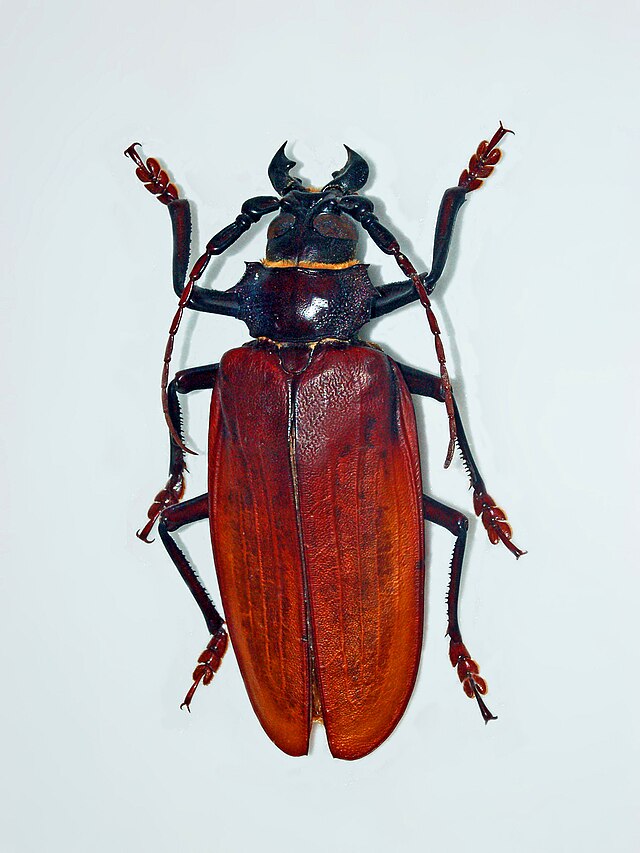
One of the world's largest beetles. Lives in the South American Amazon, reaching 16cm in legendary proportions.
Difficulty
Advanced
Temperature
20〜28℃
Lifespan
Adult (short period)
Size
100-167mm
Humidity
60〜80%
Diet
(Adults don't eat)
About
Titanus giganteus, the titan beetle, is the world's largest known beetle by body length, native to the rainforests of the Amazon basin in Brazil, Colombia, Ecuador, Peru, Bolivia, and Guyana. Adults reach 100–167 mm in total length, with powerful mandibles capable of snapping a pencil in half. Body coloration is dark brown to blackish-brown. Adult beetles do not feed; they live for only a few weeks, subsisting entirely on fat reserves accumulated during the larval stage. Larvae are believed to bore through large-diameter deadwood for several years before pupating, but successful captive larval rearing has virtually never been achieved. Adults are almost exclusively encountered as dried museum specimens or as live specimens attracted to lights during nighttime collecting expeditions. As an insect that remains almost entirely beyond the reach of captive husbandry, the titan beetle occupies a legendary status as the ultimate trophy in the insect world.
Basic Info
Origin
Amazon basin rainforests of South America, including Brazil, Colombia, Ecuador, Peru, Bolivia, and Guyana
Lifespan
Adult (short period)
Size
100-167mm
Temperature
20〜28℃
Humidity
60〜80%
Diet
(Adults don't eat)
Care Guide
Care Specifications
AggressiveSolitaryBreeding: Very hard
Sources: Wikipedia タイタンオオウスバカミキリ
References & Sources
Edited & verified by: br-choku editorial team
The taxonomic, regulatory, and husbandry data on this page are compiled and verified against the authoritative primary sources below.
Primary sources
Taxonomy & Authority
Accepted name: Titanus giganteus (Linnaeus, 1771)
Synonyms: Cerambyx giganteus Drury, 1773, Cerambyx giganteus Gmelin, 1790, Cerambyx giganteus Linnaeus, 1771, Percnopterus giganteus Gistel, 1848, Prionus giganteus Fabricius, 1781, Prionus giganteus Guérin-Méneville, 1828, Prionus giganteus Lamarck, 1817, Prionus giganteus Lepeletier & Audinet-Serville, 1825, Prionus giganteus Olivier, 1795, Prionus giganteus Raye, 1827, Prionus giganteus Schönherr, 1817, Pronus giganteus Drury & Westwood, 1837, Titanus giganteus Castelnau, 1840, Titanus giganteus Lameere, 1913, Titanus giganteus Zajciw, 1967
Authority databases: GBIF
Nomenclature follows global taxonomic authority databases.
Regulations & Conservation Status
Not CITES-listed
Titanus giganteus(カミキリムシ科)。CITES 非掲載(1999年に附属書 II 掲載提案があったが採択されず)。
Sources: CITES 附属書(checklist.cites.org)
Regulations may change. Always verify the latest information with the relevant authorities.
Titan Beetle Listings
Loading latest listingsFind listings for this species