Beginner's Guide to Breeding Japanese Beetles & Stag Beetles | Foolproof Care Methods
For beginners wanting to start raising Japanese beetles and stag beetles. Complete guide covering how to choose breeding cases, bedding, and food, temperature management, sexing, and tips for keeping them healthy longer.
Key Takeaways
For beginners wanting to start raising Japanese beetles and stag beetles. Complete guide covering how to choose breeding cases, bedding, and food, temperature management, sexing, and tips for keeping them healthy longer.
Related Species

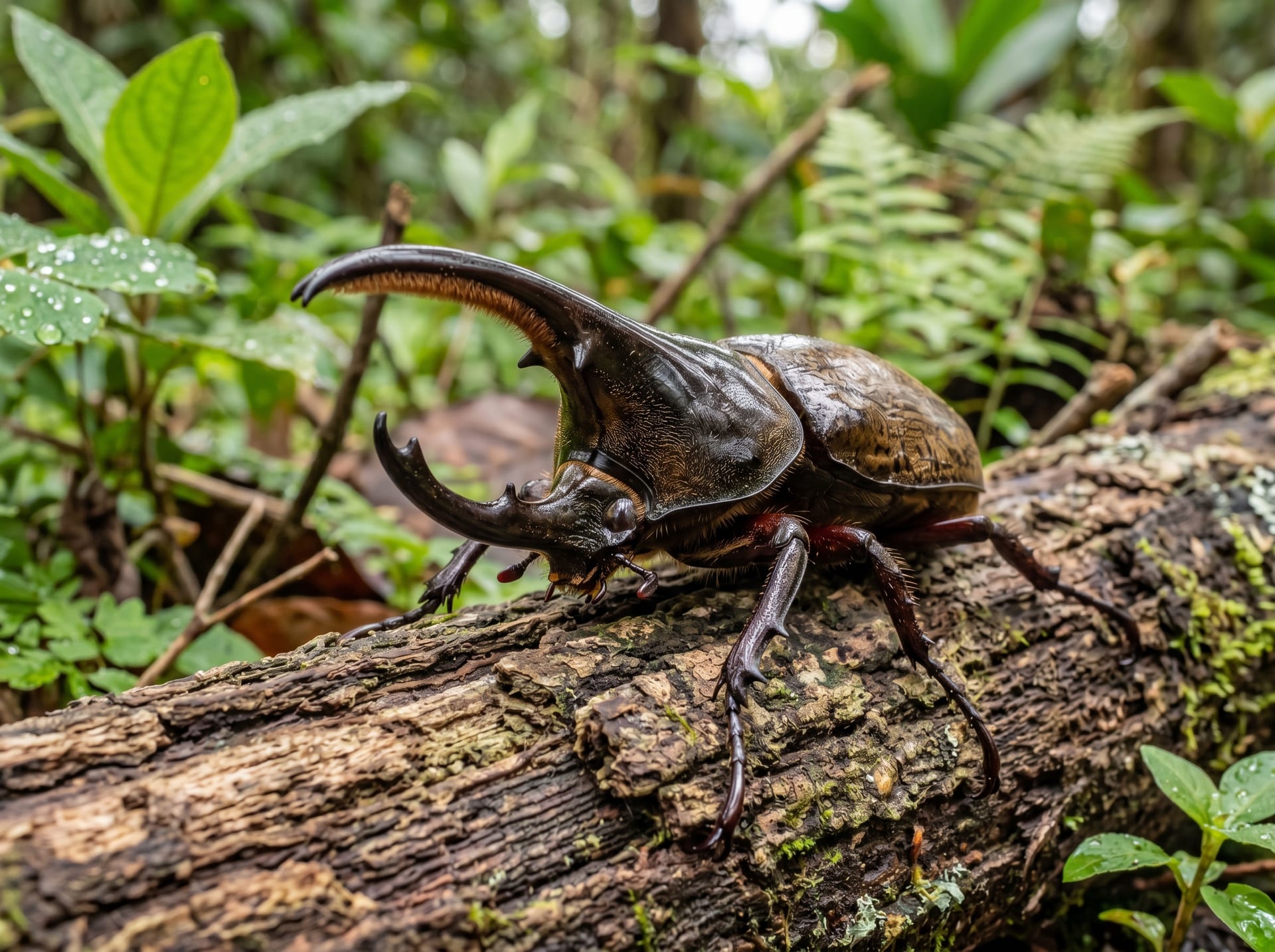
Japanese beetles (kabutomushi) and stag beetles are insects beloved by people of all ages, from children to adults. In recent years, with improvements in breeding techniques, many species of both domestic and foreign origin have entered the market. This article explains the fundamentals of raising Japanese beetles and stag beetles for those keeping them for the first time. On BreederDirect's insect category, breeders from across the country sell healthy specimens directly.
Choosing a Rearing Container
- Fruit fly shutter: Equipped with a filter to prevent fruit fly invasion. Ideal for indoor rearing
- Clear slider: Space-saving and stackable. Convenient for individual management
- Large plastic container: Used for pairing and egg-laying setups. 20cm or higher in height is recommended
As a size guide, an S-size container (approximately 23cm wide) is sufficient for one adult pair. For larval rearing or egg-laying setups, choose M to L-size containers. Selecting a container with a lid that closes firmly is the basic principle for preventing escapes.
Substrate and Bedding Material
- Adult rearing substrate: Conifer chips or hardwood mulch are common. Deodorizing and mite-resistant options are convenient
- Larval rearing substrate: Fermented hardwood. Japanese beetles require highly fermented substrate, while stag beetles vary depending on species
- Egg-laying substrate: Fine-grained, microgranular mat. Moisturize thoroughly and pack firmly
Change the substrate once every 2-3 weeks, and mist with water when the surface becomes dry. The moisture level should be such that the substrate holds its shape when squeezed.
Types of Food and Feeding Methods
- Insect jelly: The easiest and most hygienic option. 16g (wide-mouth cup) type is easy to consume
- High-protein jelly: Ideal for females before egg-laying and individuals recovering their strength
- Banana and apple: Can be given as a supplement, but be careful as fruit flies tend to appear
- Foods to avoid: Watermelon, melon, and other fruits with high water content (cause diarrhea and weakening)
Replace the jelly every 2-3 days for hygiene. Particularly in summer, mold and decay occur quickly, so check regularly.
Temperature Management
The ideal temperature for raising Japanese beetles and stag beetles varies by species, but guidelines are as follows.
- Domestic species (Japanese beetles, Dorcus hopei, etc.): 20-28°C. Can be reared at room temperature
- Foreign-origin beetles (Hercules beetles, etc.): 20-25°C. Most species are sensitive to high temperatures
- Foreign-origin stag beetles (Rainbow stag beetle, etc.): 18-25°C. Some species require cool temperature management
In summer, the risk of death rises sharply when temperatures exceed 30°C. Management in an air-conditioned room or cool chamber is safe. In winter, species that overwinter, such as the Japanese giant stag beetle, should be kept in a thicker layer of substrate in a cool location around 15°C.
Distinguishing Males from Females
Japanese Beetles
- Male: Has horns on the head. Body is larger and heavier
- Female: No horns. Body is more rounded, with shorter tarsi on the front legs
Stag Beetles
- Male: Enlarged mandibles. Larger body size
- Female: Smaller mandibles. Many species can be distinguished by the shape of the front leg tarsi
At the larval stage, they can be distinguished by the presence or absence of ovaries at the end of the third-instar larva's abdomen (many females show cream-colored spots on the ventral side).
Tips for Longevity
- House them individually — Cohabitation causes stress from fighting and shortens lifespan
- Maintain appropriate temperature — Avoid sudden changes in high or low temperature
- Keep them clean — Regularly change substrate and jelly to prevent mites and mold
- Avoid handling too much — Stress from handling is surprisingly significant. Enjoy observation with your eyes
- Provide quality food — Supplement nutrition with high-protein jelly and banana
Japanese giant stag beetles can live 3-5 years as adults with proper care. Japanese beetles have a short adult lifespan of 2-3 months, but with careful management, you can enjoy them a little longer.
Benefits of Purchasing from BreederDirect
You can purchase Japanese beetles and stag beetles directly from breeders on BreederDirect.
- Clear lineage and origin: You can confirm information about generation number (CBF1, CBF2, etc.) and collection location directly with the breeder
- Select healthy specimens: You can obtain healthy individuals carefully managed by breeders
- Receive rearing advice: Safe for beginners. You can consult on specific tips for feeding and temperature management
- No middleman markup: Direct transaction without a shop intermediary means you get quality specimens at fair prices
For information on raising stag beetle larvae, also refer to Basics of Stag Beetle Larval Rearing.
The Most Important Aspect of Rearing is Temperature and Humidity Management
In insect rearing, temperature and humidity control is the most basic yet most important factor. For Japanese giant stag beetles, 20-25°C is appropriate, but for foreign-origin Hercules beetles, it's necessary to maintain 23-26°C. If the temperature is too high, larvae will emerge early and become smaller; if too low, development will be delayed and, in the worst case, death will occur. Humidity should be around 60-70%, and the substrate should be regularly misted to prevent it from drying out. Installing a hygrothermograph near the container and making a habit of checking it daily is the key to successful rearing. Particularly, air-conditioning management in summer and heat retention measures in winter form the foundation for raising healthy specimens.