Beginner's Guide to Foreign Beetles | Characteristics and Care of Hercules, Caucasus, and Atlas Beetles | ブリちょく
Insects| ✍️ BreederDirect Editorial
Beginner's Guide to Foreign Beetles | Characteristics and Care of Hercules, Caucasus, and Atlas Beetles
A beginner's guide explaining the characteristics, acquisition methods, how to create a breeding environment, and larvae management of foreign beetles (Hercules Beetle, Caucasus Beetle, and Atlas Beetle).
Key Takeaways
A beginner's guide explaining the characteristics, acquisition methods, how to create a breeding environment, and larvae management of foreign beetles (Hercules Beetle, Caucasus Beetle, and Atlas Beetle).
Once you've gained experience raising domestic beetles, it's time to try raising foreign beetles. Around the world, you'll find impressive beetles like the Hercules Beetle, Caucasus Beetle, and Atlas Beetle. This article explains the characteristics of different foreign beetle species and the foundational knowledge needed to begin raising them, designed for beginners.
✍️
BreederDirect Editorial
The BreederDirect editorial team specializes in care information for animals, covering veterinary care and breeding to deliver beginner-friendly guides.
Find Insects on BreederDirect
Buy directly from verified breeders
Browse Related Listings
Find Insects listings related to this article on BreederDirect. Buy directly from verified breeders.
Characteristics of the 3 Most Popular Foreign Beetle Species
Hercules Beetle (*Dynastes hercules*)
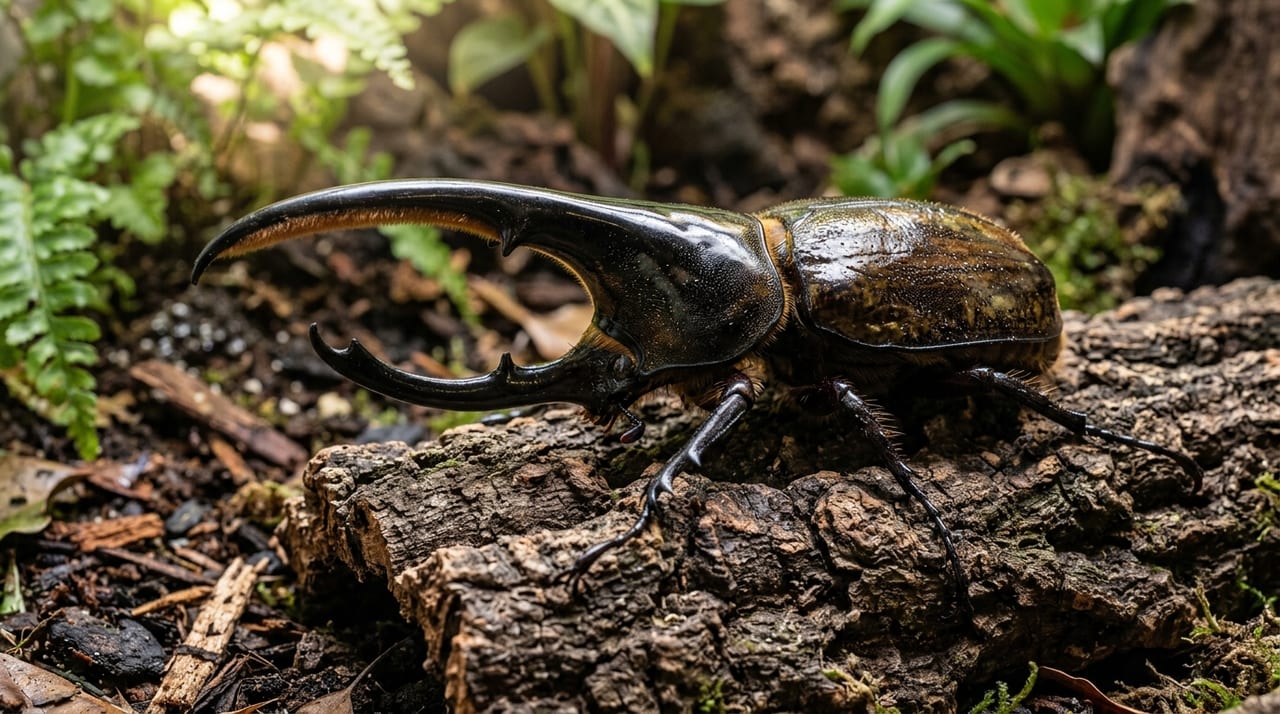
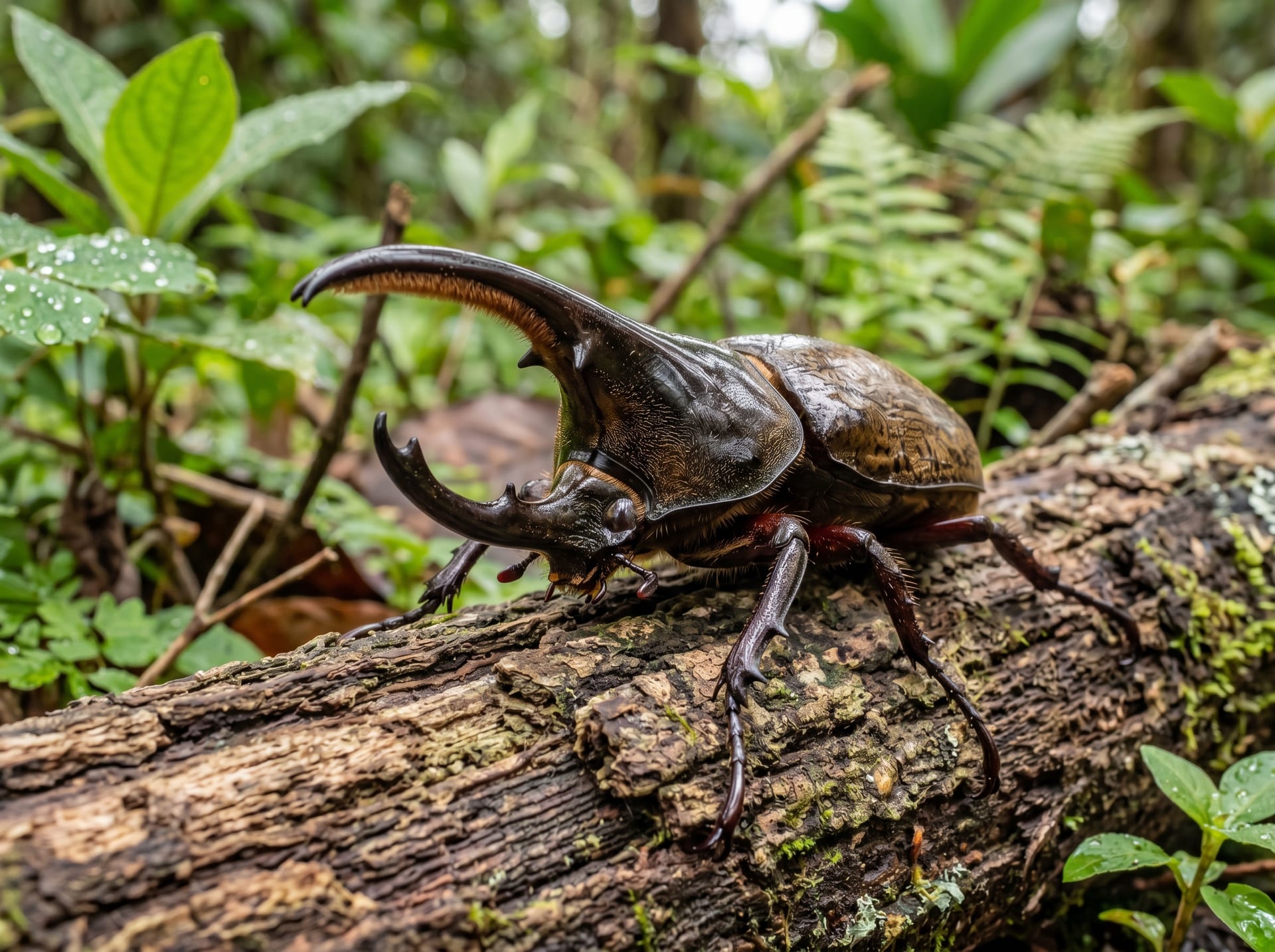
The Hercules Beetle, known as the world's largest beetle, originates from South America (Costa Rica, Colombia, Ecuador, and others). Males can exceed 175mm in total length, and are characterized by two prominent horns: a large thoracic horn (front horn) and a head horn.
The horn color changes depending on the individual, temperature, and humidity—turning yellowish-brown when dry and black when humidity is high. This color change is another part of the appeal for collectors. The horn shape varies by subspecies, with the most popular nominate subspecies (D. h. hercules), as well as Lichyi (D. h. lichyi) and Occidentalis (D. h. occidentalis).
The larval period is approximately 1–2 years, with adult lifespan around 6–9 months. A distinctive feature is that the larval period is longer than domestic beetles.
Caucasus Beetle (*Chalcosoma caucasus*)
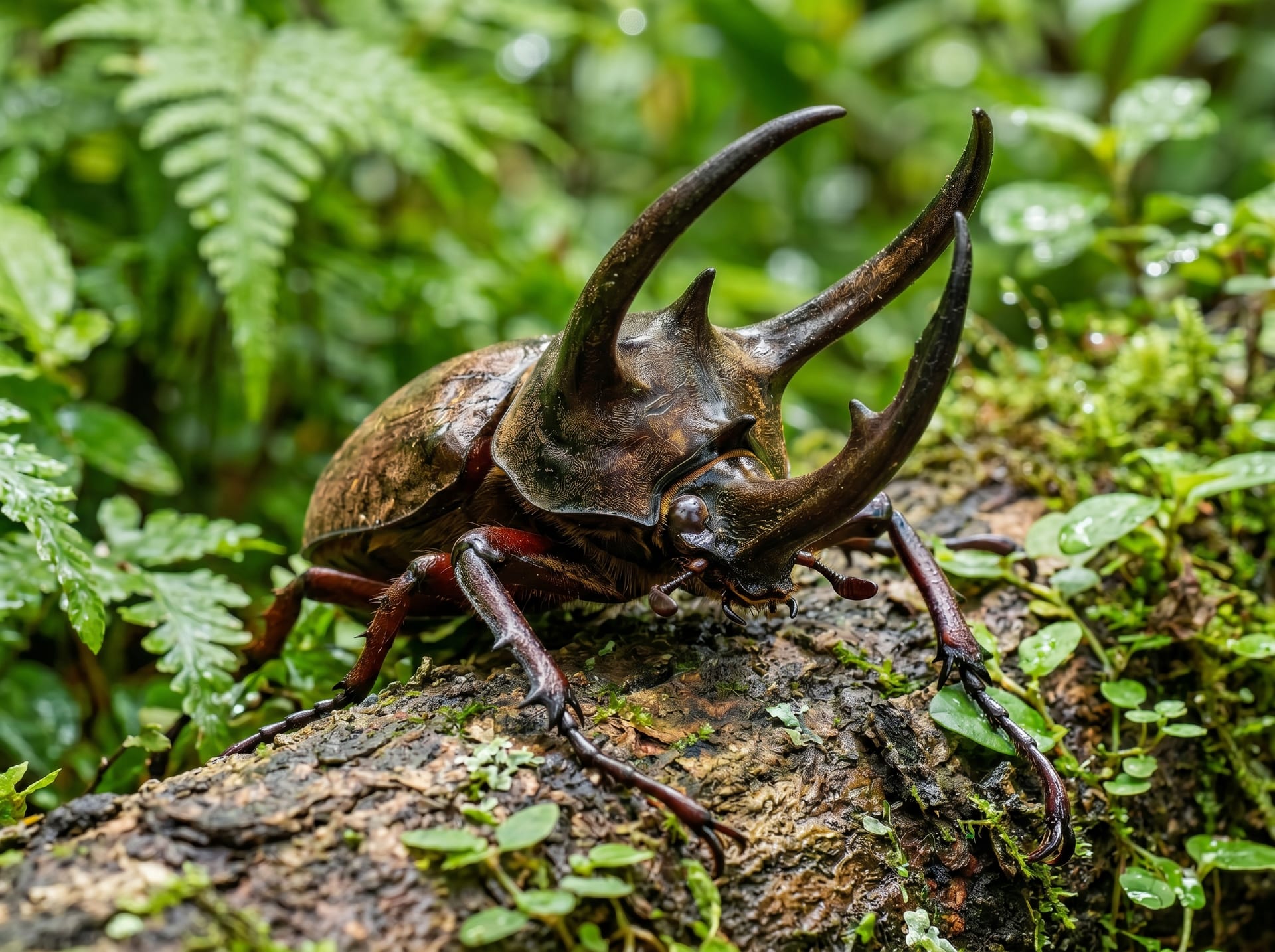
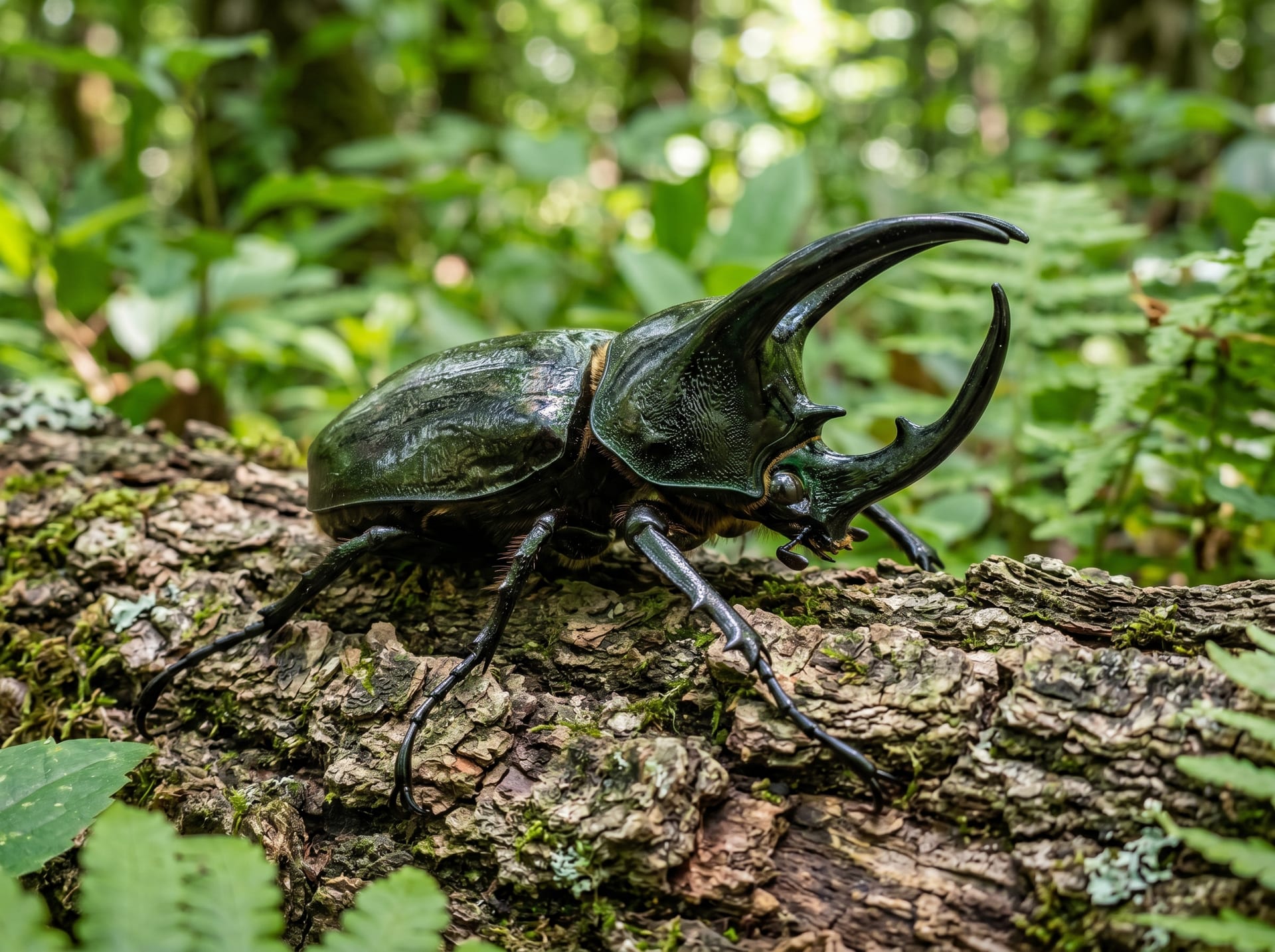
The Caucasus Beetle, found in Southeast Asia (Indonesia, Malaysia, and others), is an impressive species with three large horns (two thoracic and one head horn). Its body color is a beautiful bluish-black to green with a metallic sheen.
With a maximum length of around 130mm, it's smaller than the Hercules Beetle but has a distinctive horn shape with strong presence. It has a somewhat aggressive temperament, and males will fight fiercely when placed together.
The larval period is approximately 8–12 months, and adult lifespan is 3–6 months, similar to domestic beetles.
Atlas Beetle (*Chalcosoma atlas*)
A close relative of the Caucasus Beetle, distributed across India and Southeast Asia. It tends to be slightly smaller than the Caucasus Beetle with shorter horns. Its care difficulty is comparable to the Caucasus Beetle, making it easier to obtain and more reasonably priced.
It is considered one of the most accessible species for beginners to foreign beetle keeping.
Acquisition Methods for Foreign Beetles
Pet Shops and Reptile Specialty Stores
Insect specialty shops and reptile/insect events (such as HerculesFest) in major cities like Tokyo and Osaka sell adults, larvae, and eggs. The advantage is being able to see specimens before purchasing.
Online Shopping and Auctions
Domestic breeders and shops often offer online sales. Breeder-raised specimens are also listed on Yahoo Auctions and Mercari. To minimize transport stress, it's best to purchase in spring or fall when temperatures are mild.
Checking Import Regulations
Most foreign beetles are not covered by the Washington Convention (CITES), but quarantine based on plant health laws is required upon import. Personal live insect imports are legally complex, so purchasing domestic-bred specimens (CB individuals) from breeders is safest.
Setting Up the Breeding Environment
Container Size
For adult breeding, a storage container (60L or larger) is recommended at minimum. Since adult Hercules Beetles are large, choose a container with a height of 30cm or more to accommodate their horns.
Temperature Management
Temperature management is crucial since foreign beetles originate from tropical and subtropical climates.
Species
Ideal Temperature (Adult)
Ideal Temperature (Larva)
Hercules
23–26°C
20–24°C
Caucasus
24–27°C
22–25°C
Atlas
24–27°C
22–25°C
Japanese summers (exceeding 30°C) can be fatal, so air conditioning is essential. In winter, heating pads or greenhouse warming is necessary.
Choosing Substrate
For larval breeding, fermented substrate (third fermentation or higher) is recommended. Hercules Beetles are particularly voracious and consume large amounts of substrate, requiring substrate changes every 4–6 months.
Fungal substrate bottles are often considered unsuitable for Hercules Beetles, and high-quality fermented substrate is better for raising large specimens. Caucasus and Atlas Beetles also rely on substrate breeding as the standard method.
Key Points for Larval Management
Hatching to Second Instar
First instar larvae are extremely small immediately after hatching and should be kept on fine-particled substrate (microparticle type). Once they reach second instar, they can be moved to standard fermented substrate.
Third Instar (Large Larval Stage)
Hercules Beetle third instar larvae can exceed 100g in weight. Providing ample substrate in a large container (30L or larger) is key to raising large specimens. Change the substrate when larvae surface or when the substrate is covered with frass.
Pupation and Emergence Management
Once pupation occurs, keep pupae undisturbed, avoiding shock and vibration. Using an artificial pupal chamber (oasis or commercial products) makes observation and management easier. After emergence, keep the adult in the substrate for 2–3 weeks before allowing first feeding.
Daily Care for Adults
Food: High-protein insect jelly (18% protein or higher recommended) as the primary diet
Hydration: Moisture from jelly is usually sufficient, but maintain appropriate humidity in the substrate to prevent drying out
Mating: Perform pairing at least 3 weeks after the female begins first feeding
Egg-laying: Conduct breeding in an egg-laying setup filled deep (20cm or more) with soft fermented substrate
Conclusion
Foreign beetles require longer larval periods and temperature management costs compared to domestic beetles, but the sense of achievement when raising large adults is incomparable. With Hercules Beetles, aiming for large specimens exceeding 200mm with horns longer than body length becomes an ambitious breeding goal. The recommended progression is to first become accustomed to raising foreign beetles with Atlas or Caucasus Beetles before challenging yourself with Hercules Beetles.