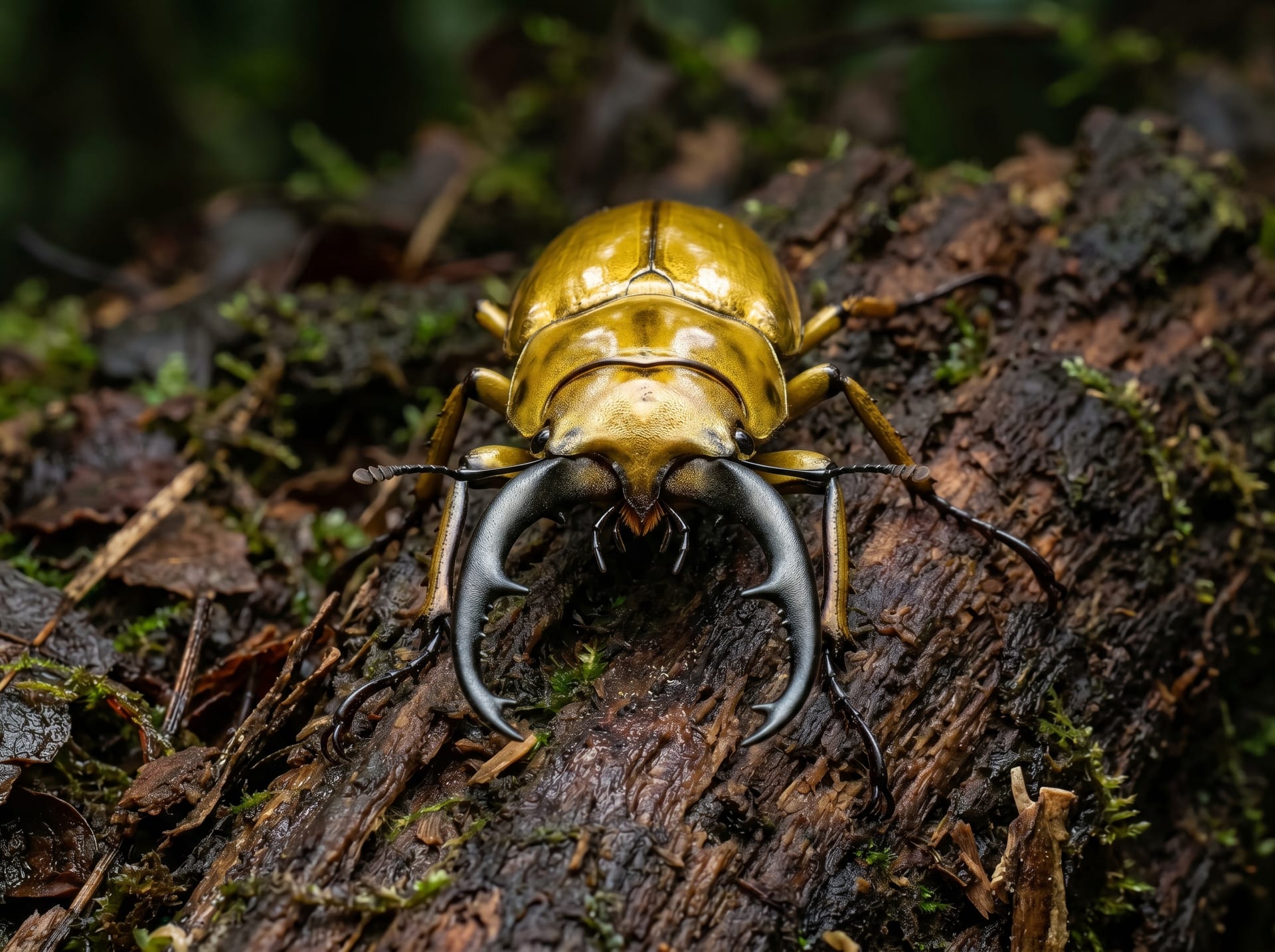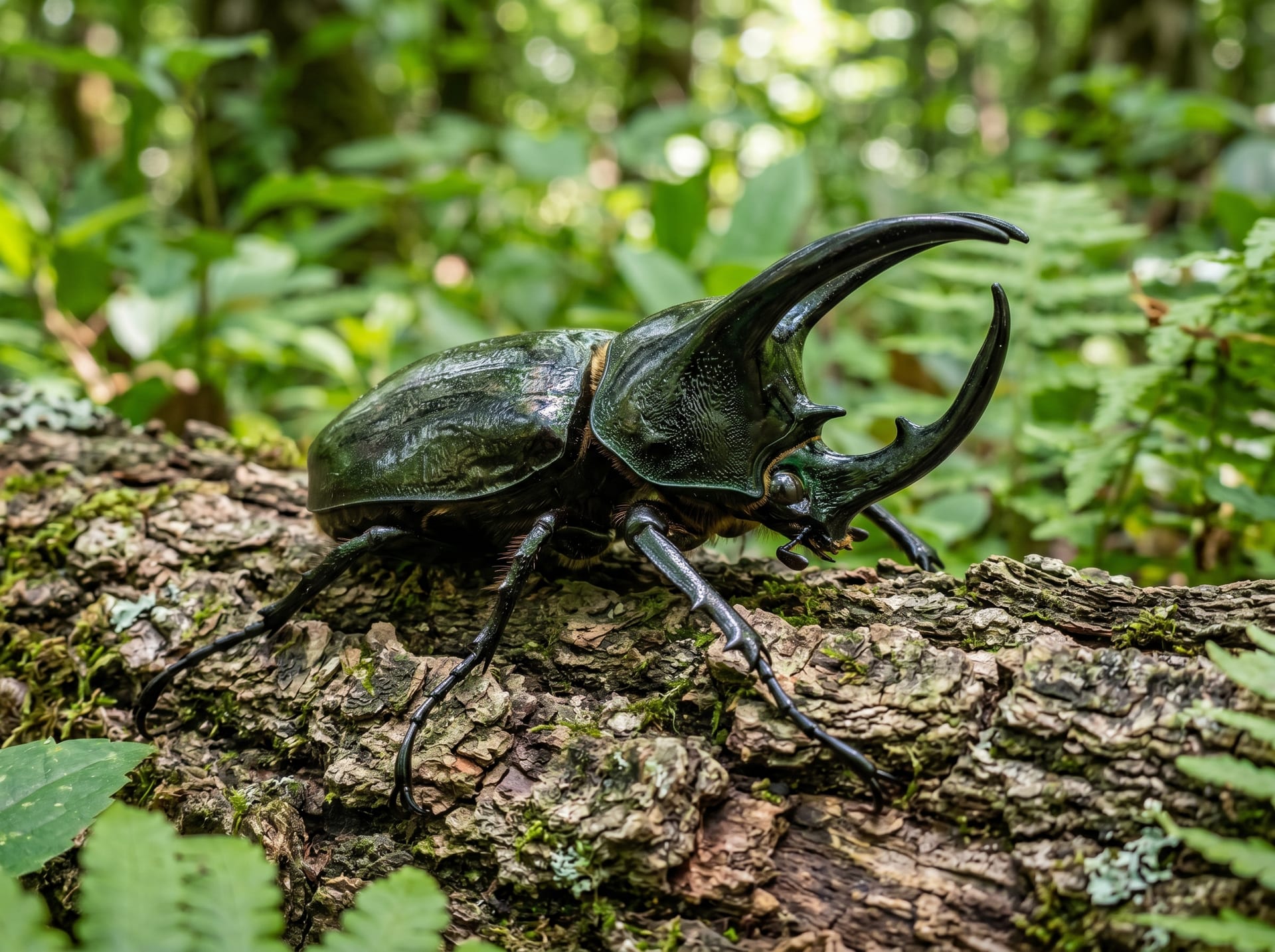
AI-generated image
Caucasus Beetle
IntermediateChalcosoma chiron
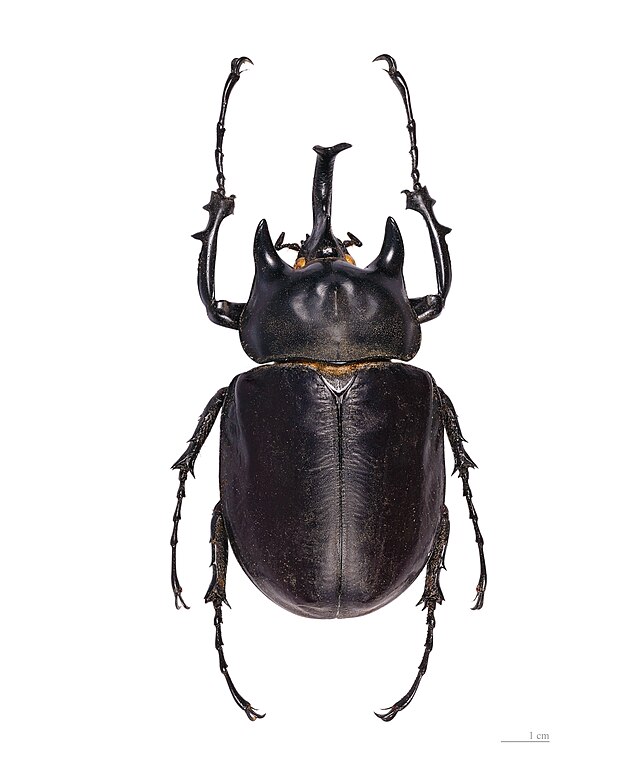
Largest beetle in Southeast Asia. Three long horns and aggressive nature. More accessible than Hercules and popular.
Difficulty
Intermediate
Temperature
18〜25℃
Lifespan
Adult 3-6 months, larva 1 year
Size
Up to 130mm
Humidity
60〜80%
Diet
Beetle jelly (adult), fermented substrate (larva)
About
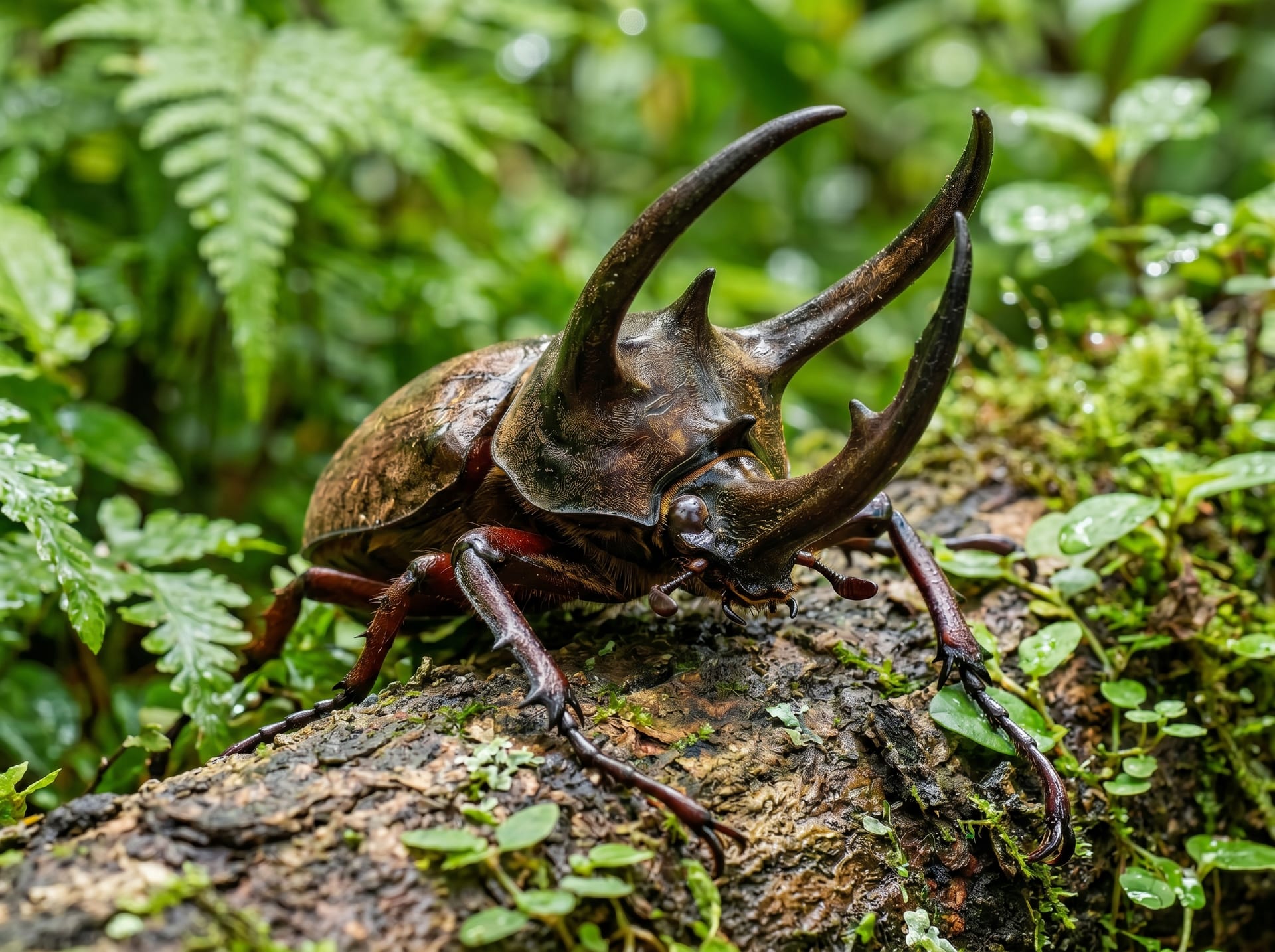
Chalcosoma chiron, commonly called the Caucasus beetle or Atlas beetle, is the largest rhinoceros beetle in Asia, distributed across tropical rainforests of Malaysia, Indonesia, and Thailand. Males bear three prominent horns—one cephalic and two thoracic—and reach total lengths of 50–130 mm. The body displays a lustrous dark green to black coloration. This species is notably aggressive; males use their three horns with great skill in combat over mating rights. A medium to large enclosure with a fine-mesh lid and at least 15 cm of fermented substrate is recommended. Due to their aggressive temperament, mating should be supervised and kept brief. Adults eat beetle jelly and live approximately 3–6 months. Revered alongside the Hercules beetle as one of the world's strongest beetles, it is a trophy species for serious collectors.
Source: Wikipedia (CC BY-SA 4.0)
Lifespan of the Caucasus Beetle
The Caucasus Beetle lives Adult 3-6 months, larva 1 year.
Size of the Caucasus Beetle
The Caucasus Beetle grows to Up to 130mm.
Temperature & humidity for the Caucasus Beetle
The ideal temperature for the Caucasus Beetle is 18〜25℃.
Captive temperatures must be kept between 18–25°C, as high heat above 28°C is detrimental.
Basic Info
Origin
Southeast Asia, including Malaysia, Indonesia, and Thailand
Breeding Records & Localities
Captive record (♂)
129.4 mm
Record source: BE-KUWA 2025 Edition (Caucasus – Asian form, captive-bred 129.4mm, Fujii Seitetsu, 2025), total length = including horns
Notable localities
SumatraJavaMalay PeninsulaIndochina
Regional subspecies
- Chalcosoma chiron chiron(nominate subspecies) — Java
- Chalcosoma chiron janssensi — Sumatra
- Chalcosoma chiron kirbyi — Malay Peninsula
- Chalcosoma chiron belangeri — Indochina
The largest Chalcosoma species. Bears 3 sharp horns. Size varies by locality (Thailand 129.4 / Malaysia 128.1 / nominate subspecies 119.6 mm). Records are total length including horns. Captive-breeding records are updated annually in the BE-KUWA (Mushi-sha) contest. Individual value varies significantly by locality, generation (CBF/WF/WD), and size.
Generation codes
- WD
- Wild-caught
- WF1
- Offspring of a wild-caught female
- F1〜
References & Sources
Edited & verified by: BreederDirect editorial team
The taxonomic, regulatory, and husbandry data on this page are compiled and verified against the authoritative primary sources below.
Primary sources
Taxonomy & Authority
Accepted name: Chalcosoma chiron (Olivier, 1789)
Synonyms: Chalcosoma caucasus bidentata Endrödi, 1976, Chalcosoma caucasus crassicornis Endrödi, 1976, Chalcosoma caucasus edentata Endrödi, 1976, Chalcosoma caucasus inornata Endrödi, 1976, Chalcosoma caucasus janssensi Becker, 1937, Geotrupes caucasus Fabricius, 1801, Scarabaeus belangeri Guérin-Méneville, 1834, Scarabaeus chiron Olivier, 1789
Authority databases: GBIF
Nomenclature follows global taxonomic authority databases.
Regulations & Conservation Status
Not CITES-listed
Plant Protection Act: When importing live specimens of Scarabaeoidea (including rhinoceros beetles, stag beetles, flower beetles, etc.), a species identification certificate issued by the exporting country government agency or equivalent must be attached in accordance with the Invasive Species Act (import ports are limited to Narita, Chubu, Kansai, Fukuoka, and Kagoshima airports). This species itself is not a designated invasive species, and import is possible upon submission of the certificate.
Sources: Ministry of the Environment, Invasive Species Act: "Guidance for Those Importing Live Insects in Scarabaeoidea" / CITES Appendix (checklist.cites.org)
Regulations may change. Always verify the latest information with the relevant authorities.
Caucasus Beetle Listings
Loading latest listingsFind listings for this species