Source: Wikimedia Commons
Actaeon Beetle
AdvancedMegasoma actaeon
One of South America's largest elephant beetles. A heavyweight alongside Elephas, with giant larvae.
Difficulty
Advanced
Temperature
20〜28℃
Lifespan
Adult 3-6 months
Size
50-135mm
Humidity
60〜80%
Diet
Insect jelly
About
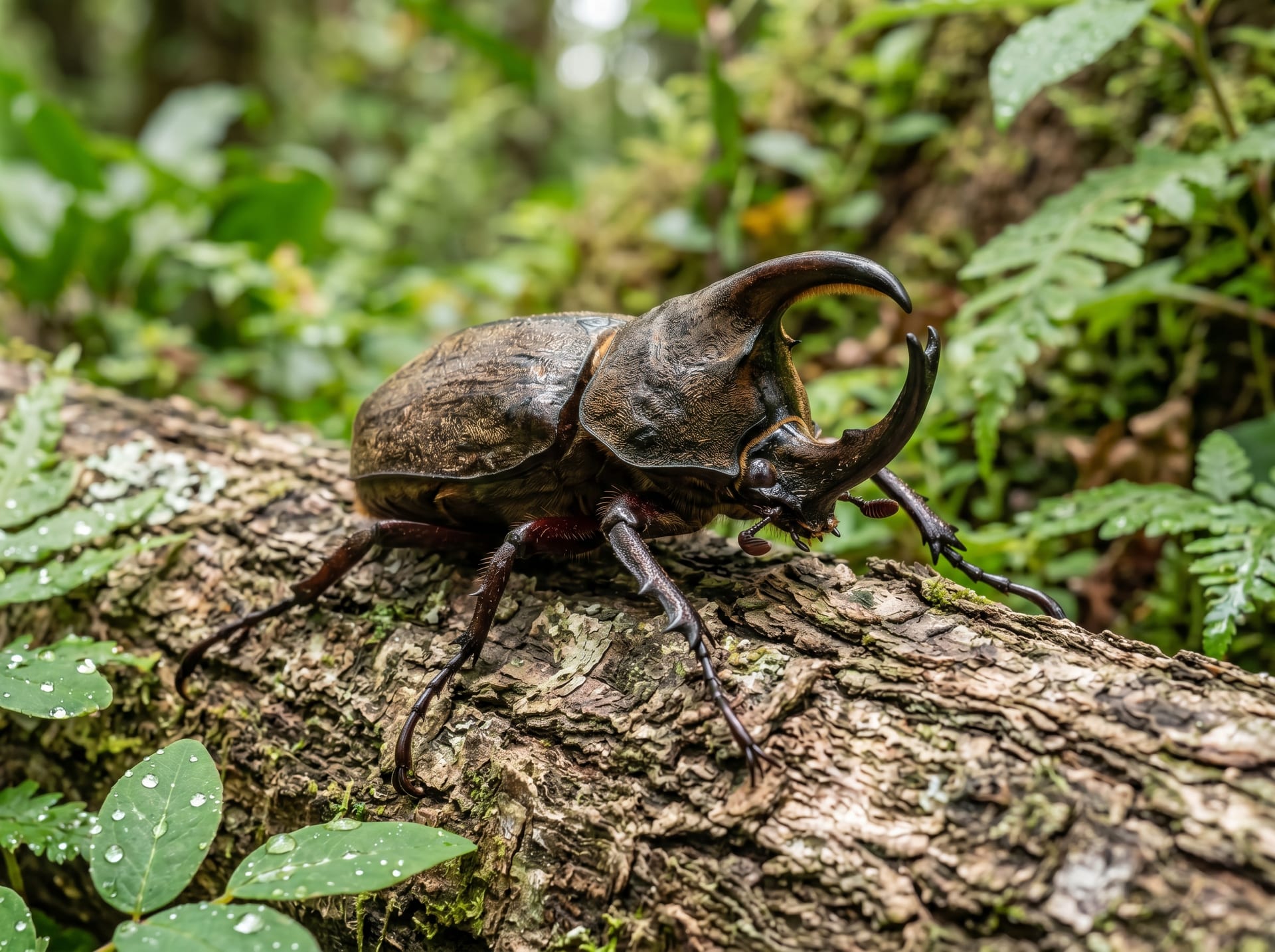
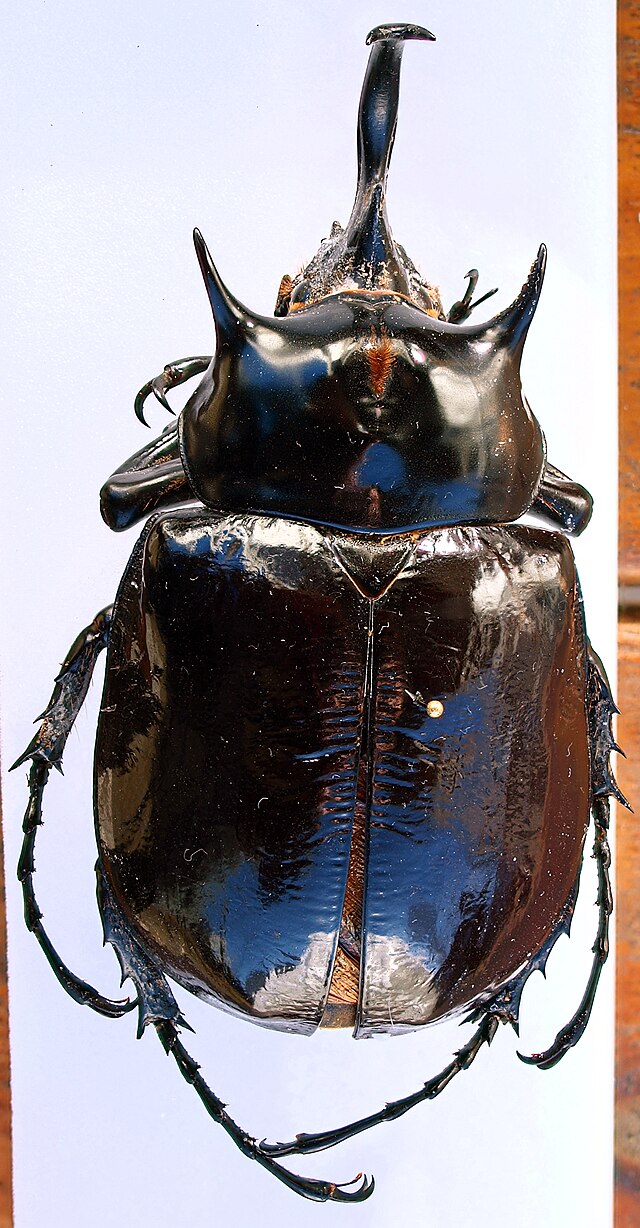
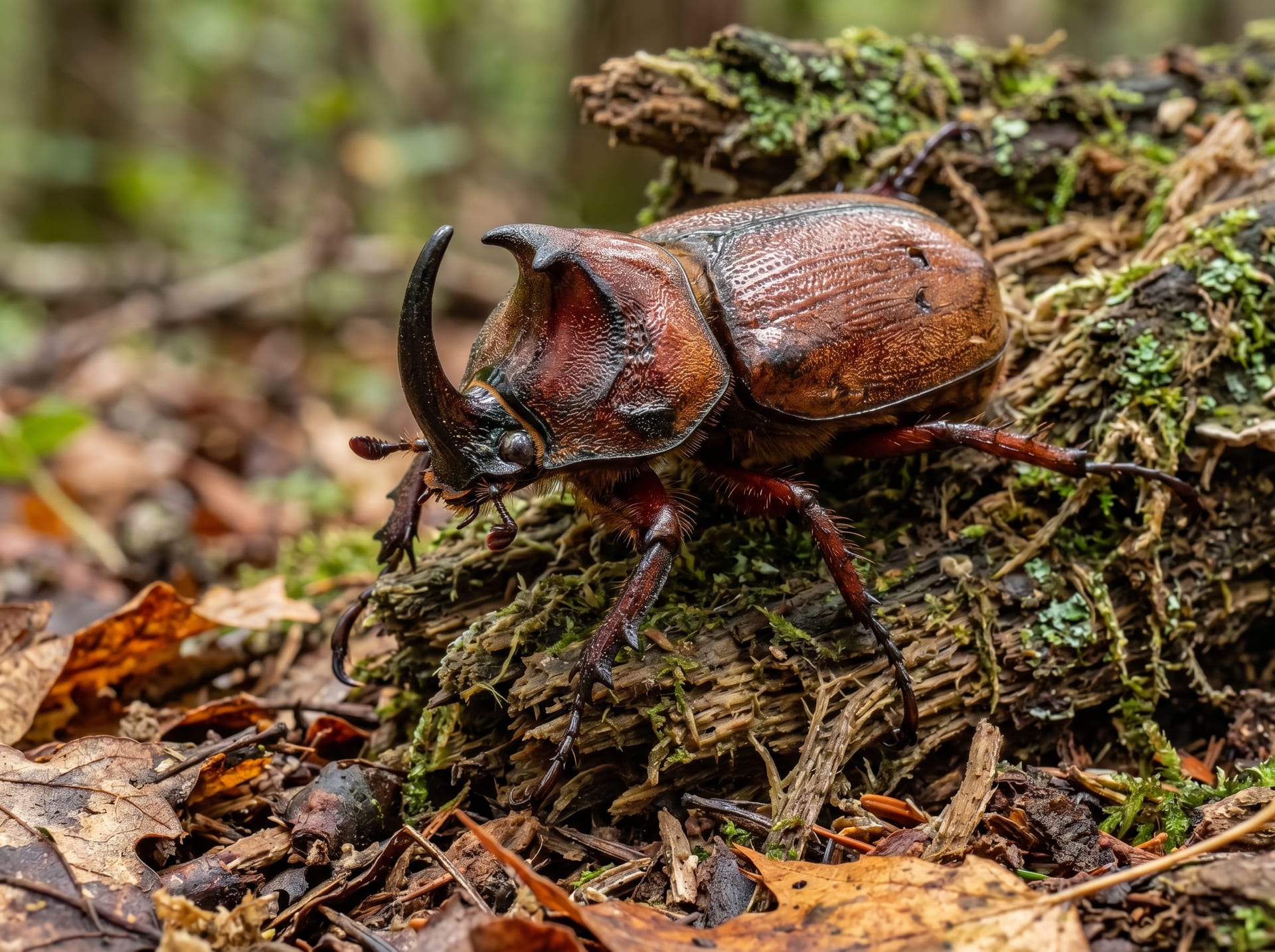
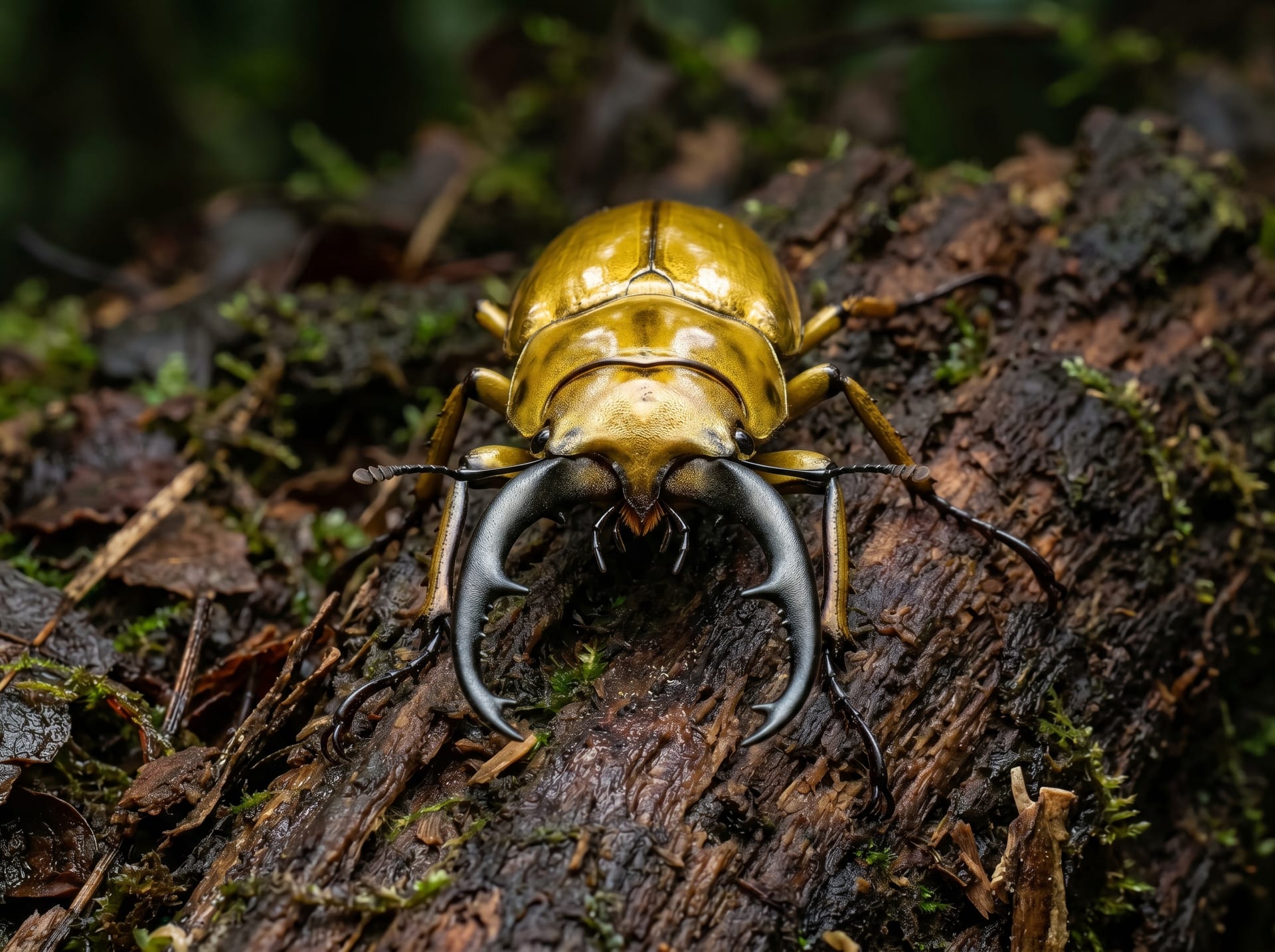
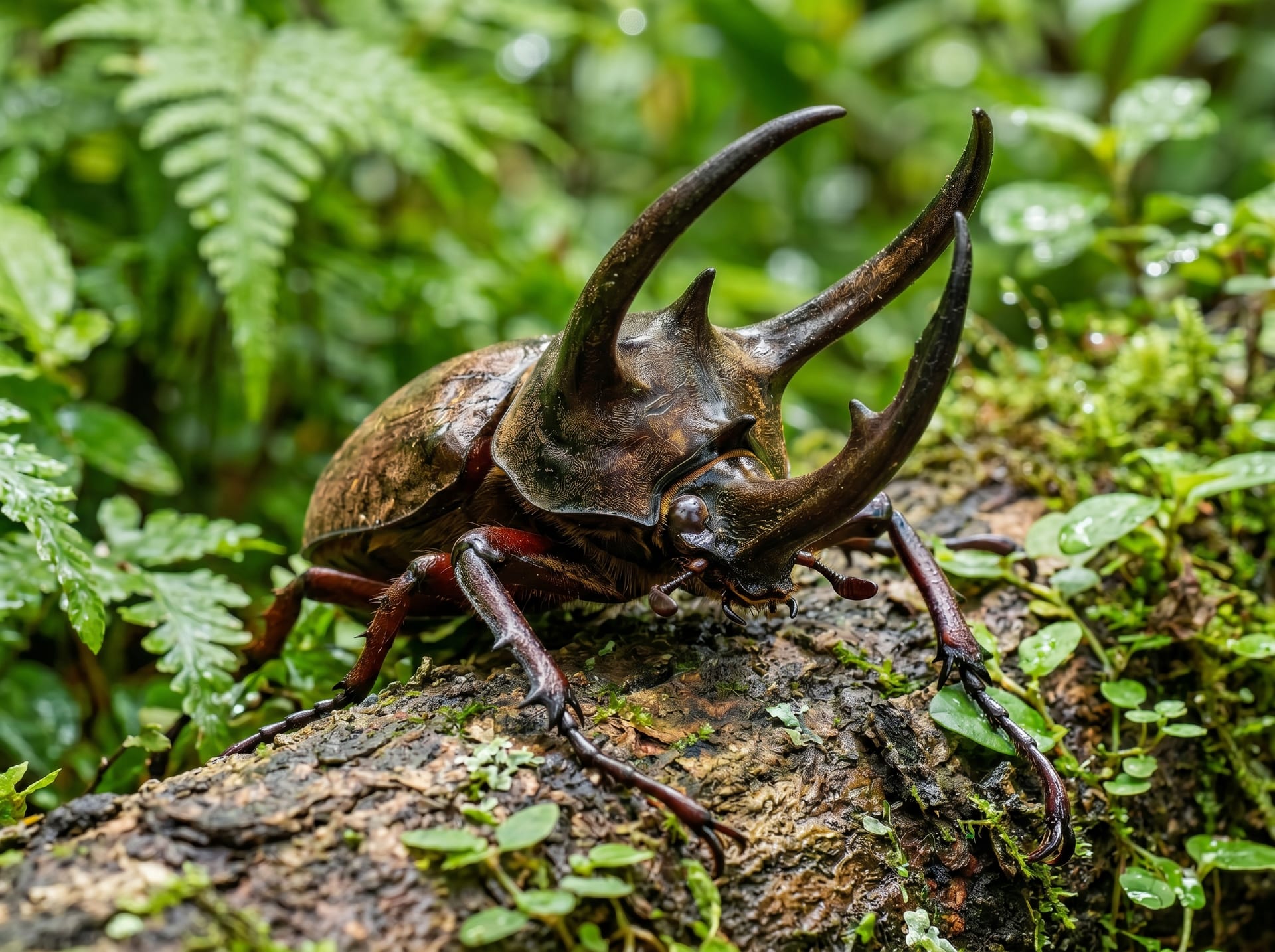
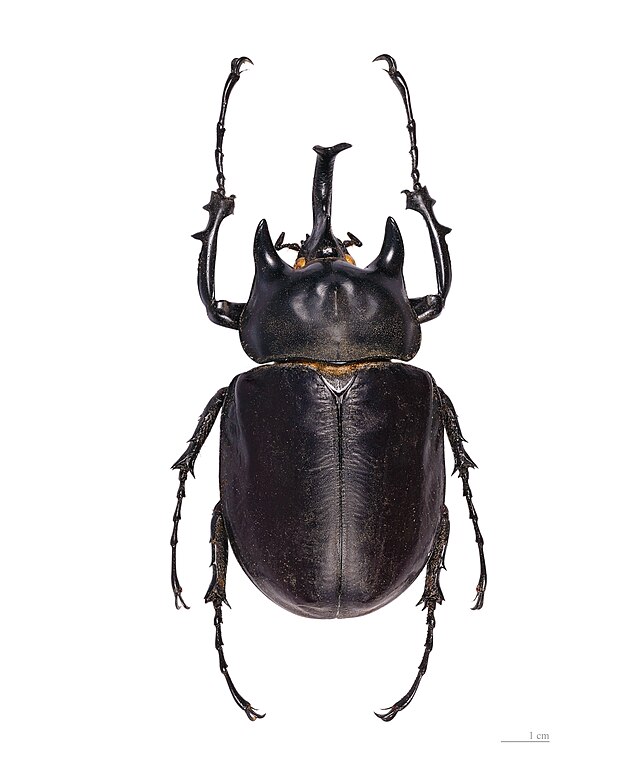
Megasoma actaeon, the actaeon beetle, is a large rhinoceros beetle of the family Scarabaeidae, distributed across tropical rainforests of northern and central South America, including Colombia, Ecuador, Peru, and Brazil. The species name honors Actaeon, the hunter of Greek mythology. Body coloration is a lustrous dark brown to black. As with other Megasoma species, larvae grow to substantial size, requiring very large enclosures and abundant leaf litter or fermented substrate, which must be replenished regularly over the lengthy larval period of 18–36 months. Adults eat beetle jelly or banana and live approximately 3–6 months. Alongside the elephant beetle, M. actaeon represents the pinnacle of heavyweight rhinoceros beetles and is a prestigious challenge species for advanced keepers.
Source: Wikipedia (CC BY-SA 4.0)
Lifespan of the Actaeon Beetle
The Actaeon Beetle lives Adult 3-6 months.
Size of the Actaeon Beetle
The Actaeon Beetle grows to 50-135mm.
It is the largest species in the genus Megasoma among those lacking dense body hair, with adults reaching 50–140 mm in body length.
Temperature & humidity for the Actaeon Beetle
Optimal captive temperature is 22–26°C.
Basic Info
Lifespan
Adult 3-6 months
Size
Breeding Records & Localities
Notable localities
BoliviaBrazilColombiaEcuadorPeru
One species of Megasoma beetle. Holds the record for heaviest insect larva by weight (Guinness record), but this is not a body length (mm) record. As registration in BE-KUWA-certified breeding records cannot be confirmed, size records are not listed here.
Generation codes
- WD
- Wild-caught
- WF1
- Offspring of a wild-caught female
- F1〜
- Captive generations (same locality)
- CBF1
- Cross-locality captive-bred (reset)
Sources: BE-KUWA Certified Breeding Records (Mushi-sha, FY2025 edition, JA)
References & Sources
Edited & verified by: BreederDirect editorial team
The taxonomic, regulatory, and husbandry data on this page are compiled and verified against the authoritative primary sources below.
Taxonomy & Authority
Accepted name: Megasoma actaeon (Linnaeus, 1758)
Synonyms: Geotrupes crenatus Leach, 1817, Megasoma actaeon johannae Van Meenen & Schouteet, 2018, Megasoma acteon (Linnaeus, 1758), Megasoma rex Prandi, 2018, Scarabaeus actaeon Linnaeus, 1758
Authority databases: GBIF
Nomenclature follows global taxonomic authority databases.
Regulations & Conservation Status
Not CITES-listed
Plant Protection Act: When importing live specimens of Scarabaeoidea (including rhinoceros beetles, stag beetles, flower beetles, etc.), a species identification certificate issued by the exporting country government agency or equivalent must be attached in accordance with the Invasive Species Act (import ports are limited to Narita, Chubu, Kansai, Fukuoka, and Kagoshima airports). This species itself is not a designated invasive species, and import is possible upon submission of the certificate.
Sources: Ministry of the Environment, Invasive Species Act: "Guidance for Those Importing Live Insects in Scarabaeoidea" / CITES Appendix (checklist.cites.org)
Regulations may change. Always verify the latest information with the relevant authorities.
Actaeon Beetle Listings
Loading latest listingsFind listings for this species