Guide to Growing Large Horns in Rhinoceros Beetles | Optimizing Substrate, Temperature, and Container Size
Comprehensive explanation of larval care management for maximizing rhinoceros beetle horns. Covers selection of high-nutrient fully-fermented substrate, the importance of 6–10L container size per individual, temperature management strategy (22–24℃) effective for growing large specimens, timing of substrate replacement, and complete procedures for pre-pupation care to maximize large individuals.
Key Takeaways
Comprehensive explanation of larval care management for maximizing rhinoceros beetle horns. Covers selection of high-nutrient fully-fermented substrate, the importance of 6–10L container size per individual, temperature management strategy (22–24℃) effective for growing large specimens, timing of substrate replacement, and complete procedures for pre-pupation care to maximize large individuals.
Related Species
To Grow Large Horns on Rhinoceros Beetles, Larval Care Management is Everything
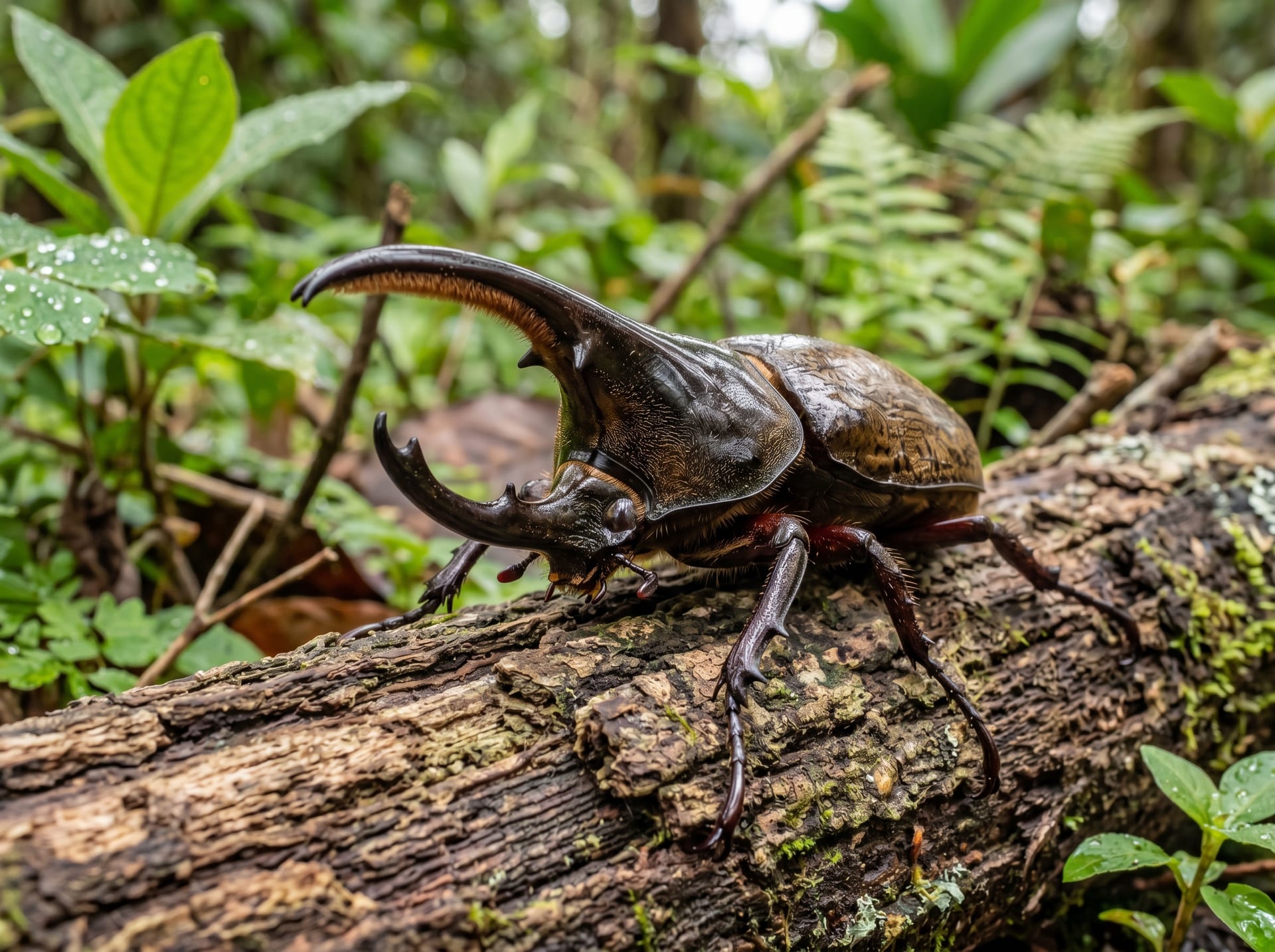
One of the greatest attractions of the rhinoceros beetle (Trypoxylus dichotomus) is the male's massive horn. The length of the horn is strongly correlated with the individual's size (body length and weight), and "raising a large rhinoceros beetle" is the shortcut to maximizing horn size. Horn size is determined by both genetic factors and nutrition and environmental management during the larval stage. This guide focuses on larval stage management and explains practical techniques for growing large horns.
Factors Determining Horn Size
Genetic Factors
Horn size has a genetic upper limit. Larvae raised from eggs obtained from large parent individuals tend to grow larger than larvae from small parent individuals.
- Line Maintenance: Select females for breeding from large males with body length of 85mm or more
- Maintaining Same Bloodline: Repeating breeding with only large individuals over multiple generations tends to increase the proportion of large specimens
- Avoiding Inbreeding (Consanguineous Mating): After several generations, introduce outside bloodlines to prevent loss of vigor
Environmental and Nutritional Factors (Controllable)
Larval stage management maximizes genetic potential.
- Substrate Quality and Quantity
- Temperature Management
- Container Size
- Replacement Timing
How to Choose Substrate for Larvae
Substrate Quality Directly Affects Horn Size
The main food for rhinoceros beetle larvae is humus soil (fermented substrate). The nutritional value and degree of fermentation of the substrate greatly affects larval growth.
Recommended Substrate Types
- Fully-Fermented Rhinoceros Beetle Substrate: The most nutrient-rich among commercially available products. A high-quality fermented substrate also used for large species like Hercules beetles.
- Homemade Fermented Substrate: A self-made product made by fermenting broadleaf tree chips (Quercus acutissima and Quercus mongolica) as a base with rice bran and wheat flour added. If made properly, it can exceed the nutritional value of commercial products.
- General Leaf Mold-Based Substrate: Inexpensive but inferior in nutritional value.
Unsuitable Substrates
- Those containing coniferous trees (cedar and cypress) (repellent components negatively affect larvae)
- Insufficiently fermented substrate (gas is generated and larvae die)
- Substrate with excessive or insufficient moisture
Adjusting Substrate Moisture
The ideal is when you squeeze the substrate with your hand, it forms a clump but crumbles (moisture 30–40%). If water seeps out when squeezed, there is too much. If it remains loose and doesn't clump, there is too little.
The Importance of Container Size
The amount of substrate per larva directly correlates with the size of the adult.
Recommended Container Sizes
| Target Body Length | Larval Weight (3rd Instar Peak) | Container Capacity | Substrate Amount |
|---|---|---|---|
| 70mm or less | 15–25g | 1.5–2L container | 1–1.5kg |
| 70–80mm | 25–35g | 3–4L container | 2–3kg |
| 80–90mm | 35–50g | 6–8L container | 4–6kg |
| Over 90mm (large) | 50g or more | 10–15L container | 8–12kg |
Important: Preparing 6–10L of substrate per larva is the basic principle for raising large specimens. Placing multiple larvae in the same container results in cannibalism and nutritional competition, reducing final size. Always maintain one larva per container (individual rearing).
Temperature Management: The Most Critical Factor for Growing Large Specimens
Temperature has the greatest impact on larval growth rate and final weight.
Effects by Temperature Range
| Temperature | Growth Speed | Effect on Final Weight |
|---|---|---|
| 20–22℃ | Slow | Easy to maximize. Slow growth at low temperature promotes larger size |
| 23–25℃ | Standard | Standard management temperature for Japanese rhinoceros beetles |
| 26–28℃ | Fast | Rapid growth but difficult to reach upper weight limit |
| 29℃ or above | Very fast | Early pupation, tends to result in smaller size. Danger zone |
Temperature Strategy for Growing Large Specimens
2nd Instar to Early 3rd Instar (Growth Phase): Raise at 22–24℃ slowly. Low temperature management at this stage is effective for final weight.
Late 3rd Instar (Maximum Weight Phase): Raise temperature slightly (24–25℃) and provide abundant fresh substrate to match the period of vigorous feeding appetite.
Pre-Pupation (Pre-Pupa): Maintain at 20–22℃. Not rushing pupation may affect horn size.
Timing of Substrate Replacement
Replace substrate according to consumption rate and larval size.
Guidelines for Replacement
- When substrate turns dark and 80% or more is consumed (contaminated with feces)
- Between 2nd and 3rd Instar: Replacing substrate with fresh material after molting increases feeding appetite
- Replacement Frequency: Replace approximately every 1–2 months. In late 3rd instar, feeding appetite decreases so frequency can be reduced.
Precautions During Replacement
- Prepare fresh substrate by lightly moistening 2–3 days in advance
- Immediately after replacement, larvae may temporarily not burrow and stay on the surface (will burrow within 1–2 days)
- If larvae don't burrow after replacement, check substrate moisture and temperature
- Avoid substrate replacement from March onwards (pre-pupation may have begun)
Supporting Pupation Chamber Formation
Fully-developed 3rd instar larvae create a pupation chamber as preparation for pupation.
- From around March to May, activity increases and they begin creating pupation chambers
- If the pupation chamber is visible on the side of the container, you can observe it if using a transparent container
- Do not damage the pupation chamber (if collapsed, transfer to a commercial artificial pupation chamber)
- After pupation, avoid vibration and light, keep undisturbed for approximately 30 days
Summary: Checklist for Raising Large Specimens
- ✓ Select eggs from large parent individuals (secure genetic potential)
- ✓ Use high-nutrient fully-fermented rhinoceros beetle substrate
- ✓ Provide sufficient 6–10L substrate per larva (individual rearing)
- ✓ Raise 2nd to early 3rd instar at low temperature (22–24℃) slowly
- ✓ Replace substrate regularly every 2 months
- ✓ Avoid unnecessary substrate replacement from March onwards
- ✓ Observe pupation quietly without damaging the pupation chamber
Raising large rhinoceros beetles takes over a year to see results, but the emotion when a large specimen exceeding 90mm emerges is incomparable. Continue careful management and record-keeping while establishing your own rearing method.