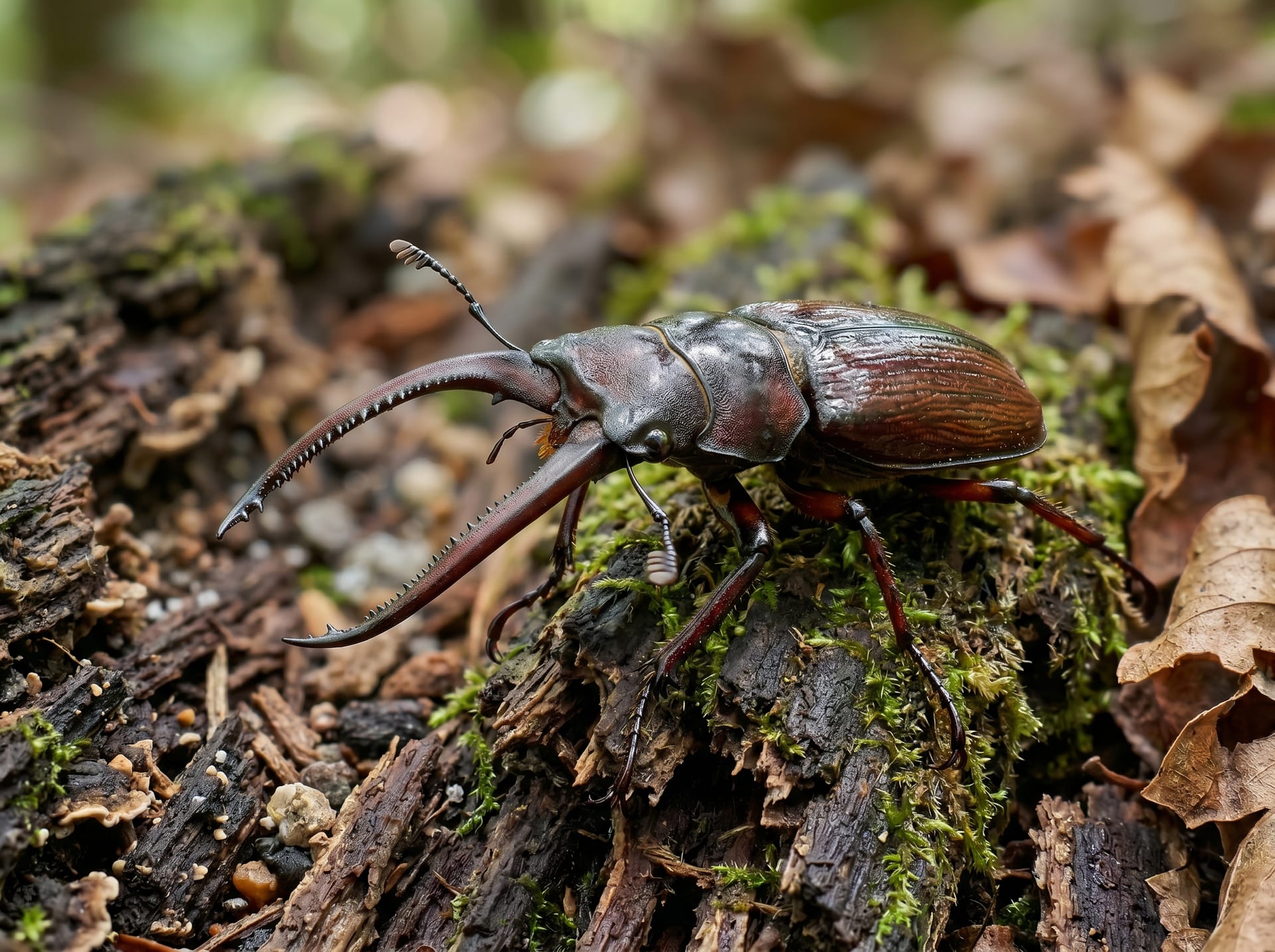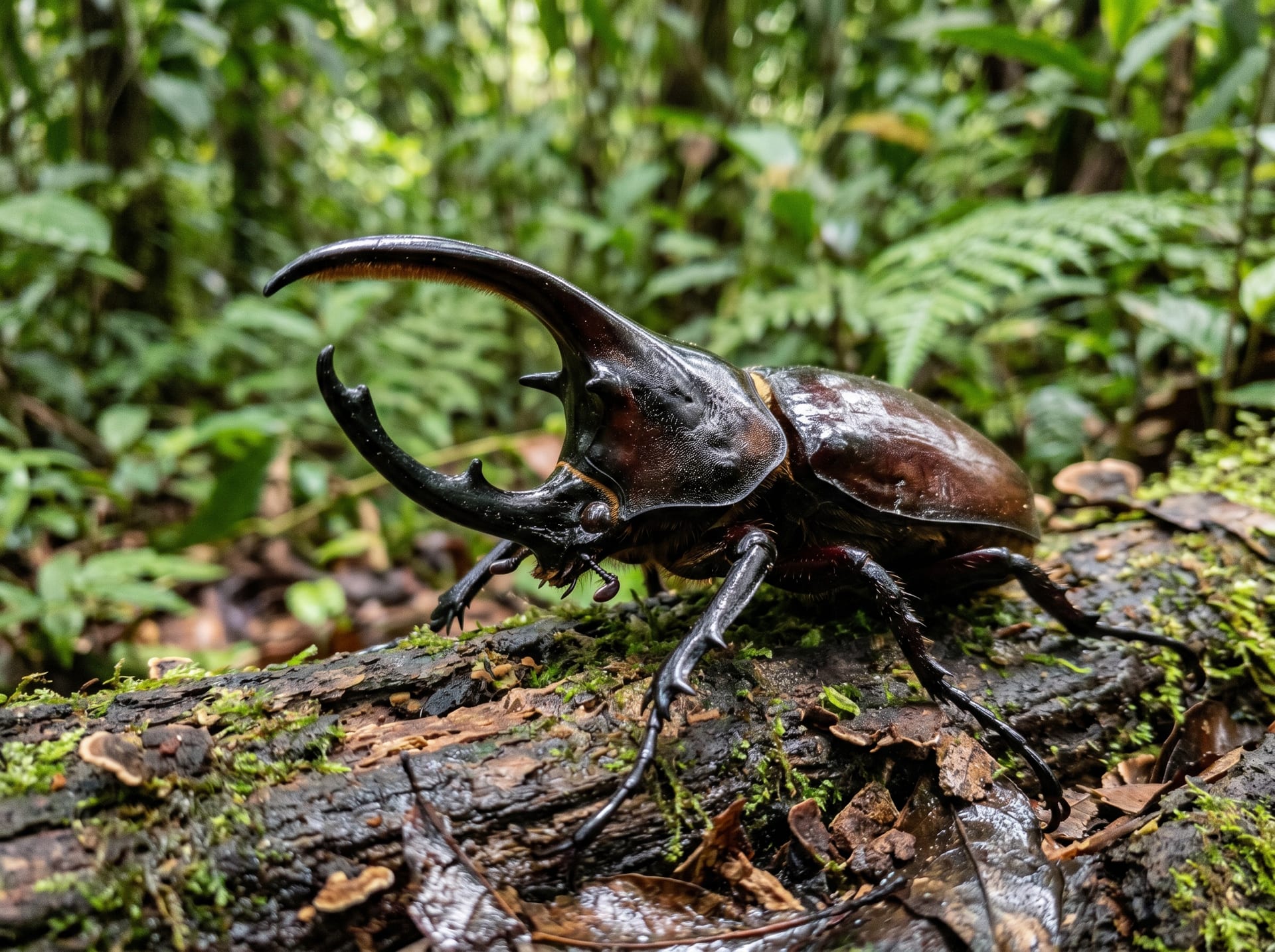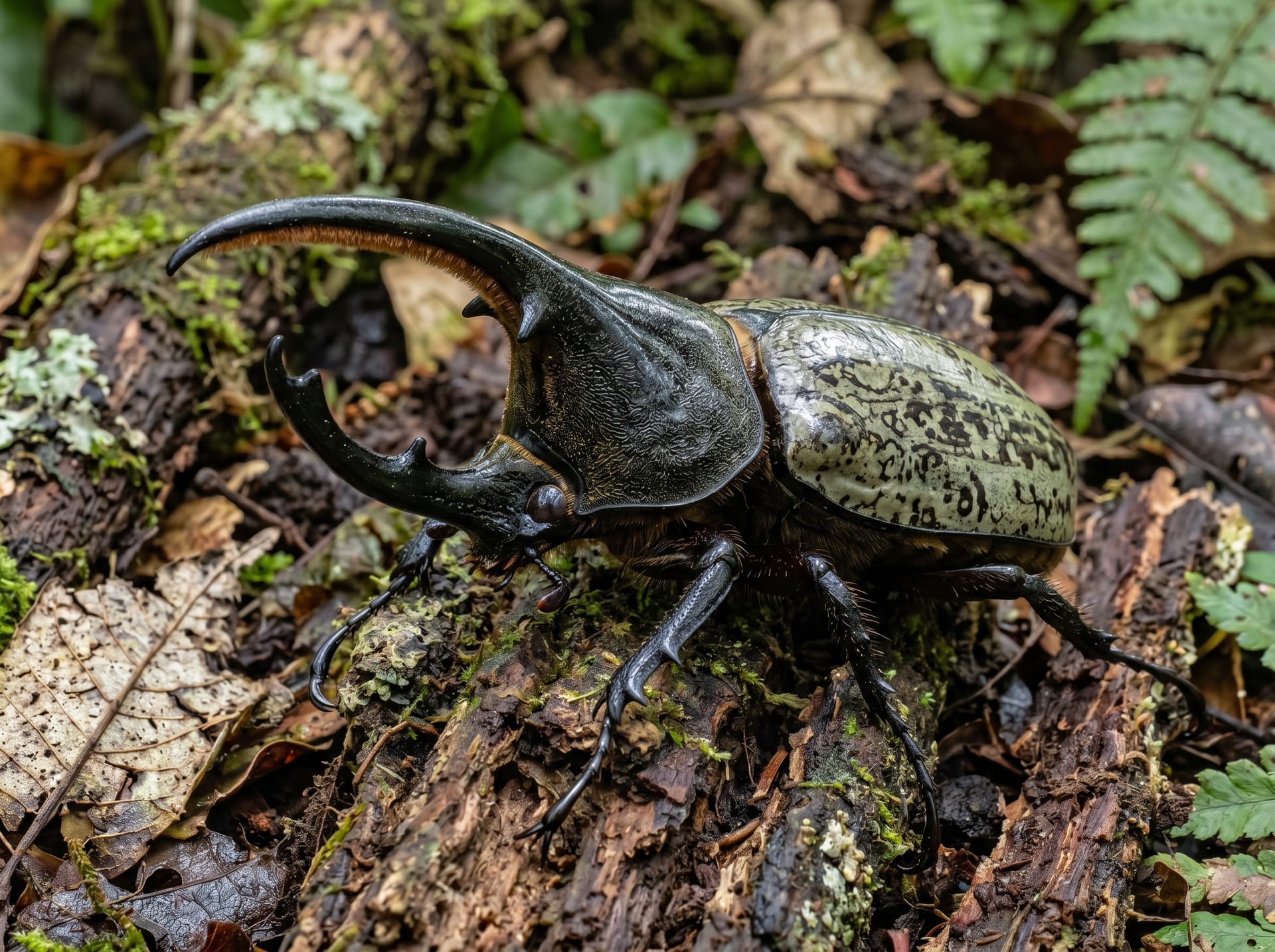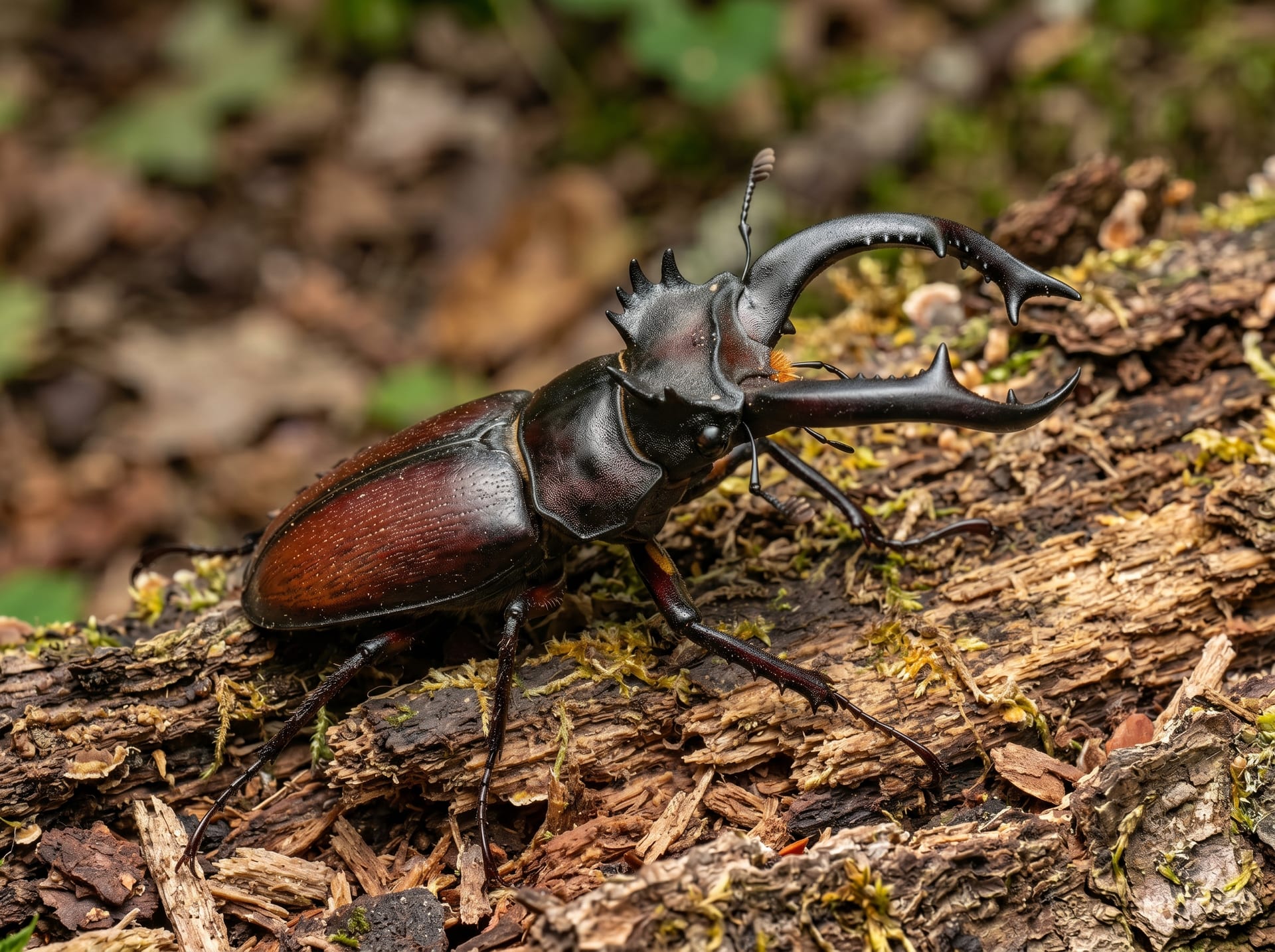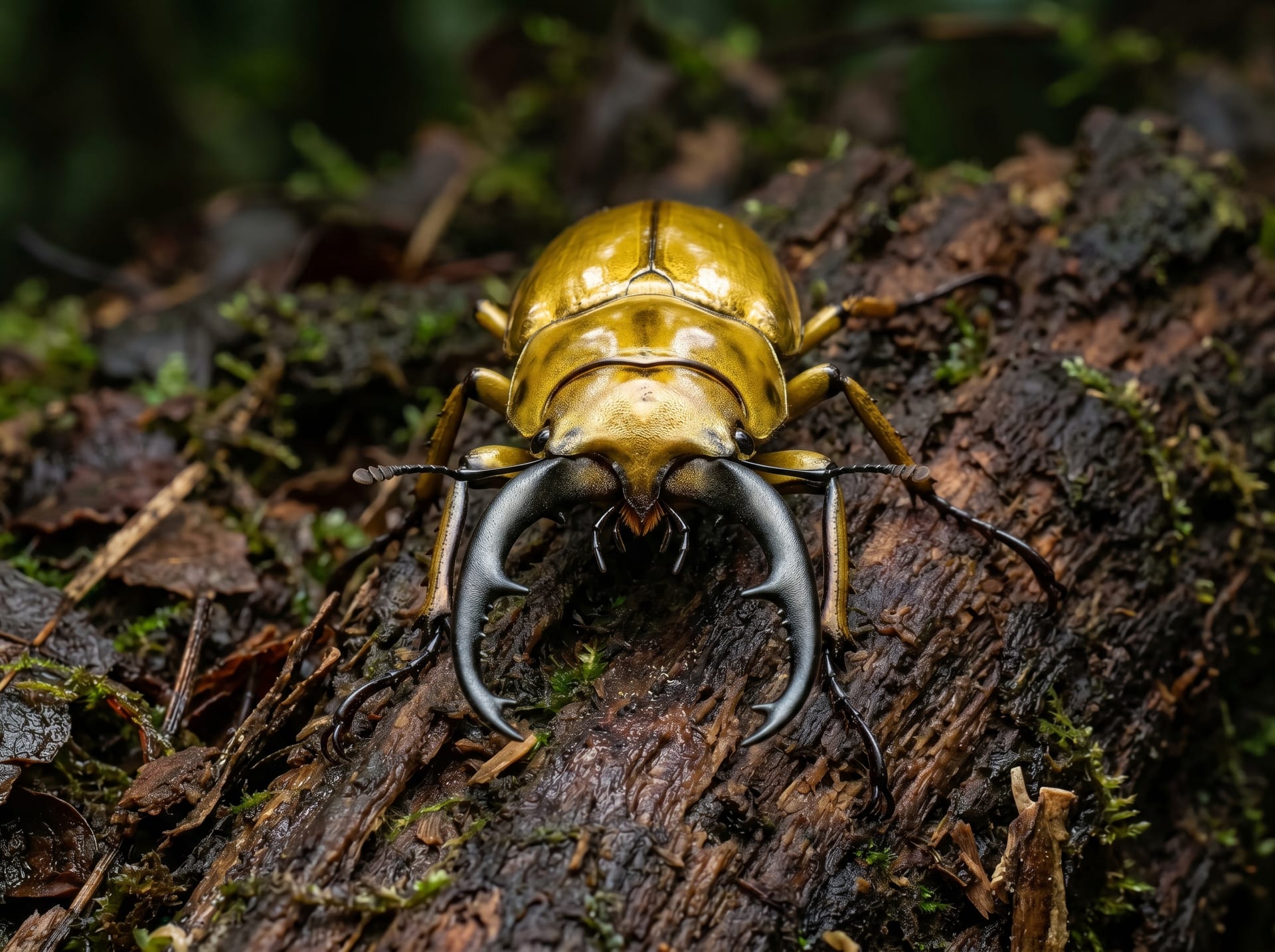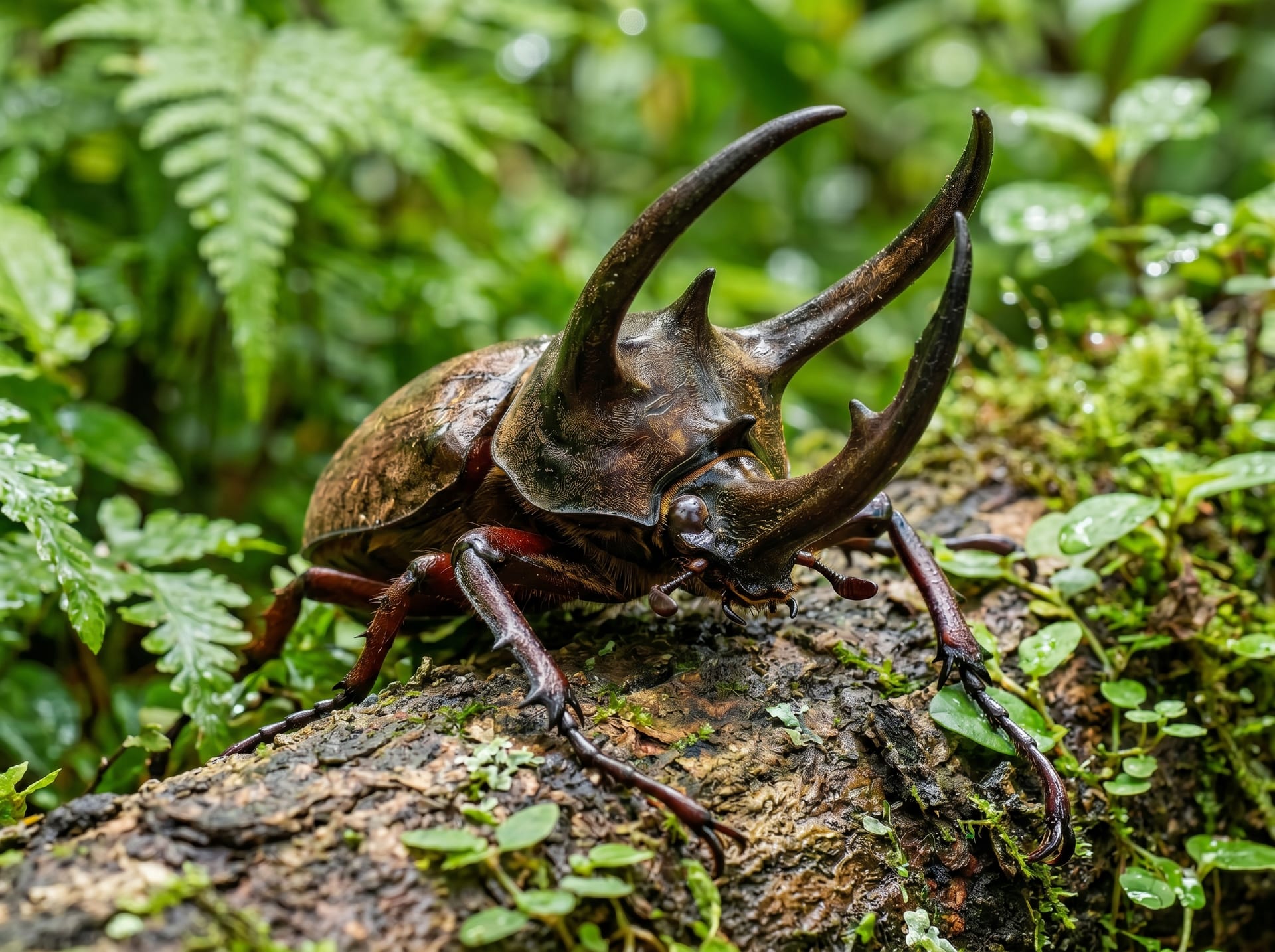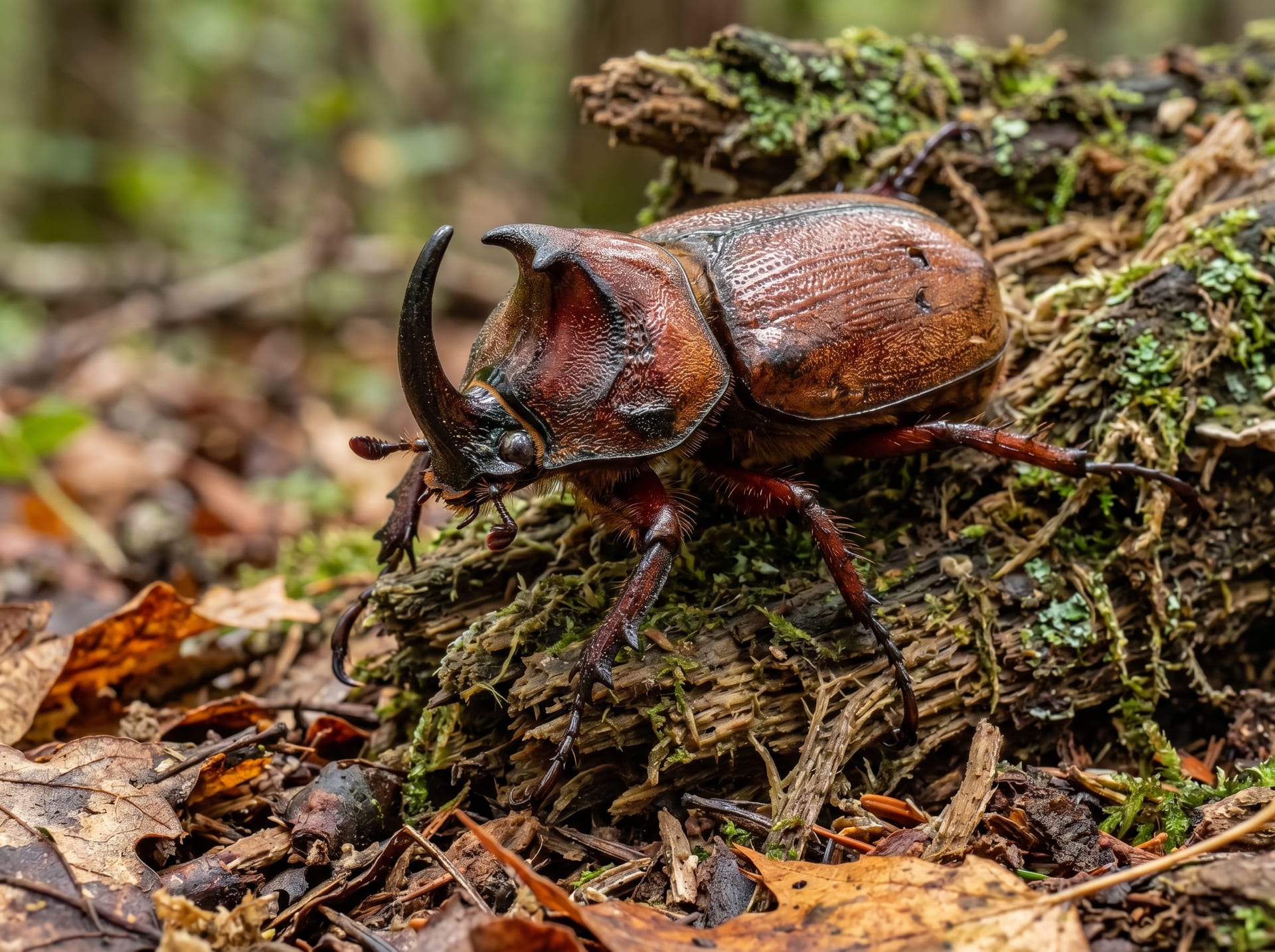
AI-generated image
Sabii Beetle
BeginnerAllomyrina pfeifferi
A beetle from Southeast Asia whose rusty (sabi) body color is the origin of its name. Same genus as the Japanese rhinoceros beetle, sharing similar keeping methods, making it an easy-to-keep exotic beetle even for beginners. Horn shape is similar to the Japanese species.
Difficulty
Beginner
Temperature
22〜28℃
Lifespan
Adult 2-4 months
Size
30-70mm
Humidity
60〜80%
Diet
Tree sap, beetle jelly
About
Allomyrina pfeifferi is a rhinoceros beetle distributed across parts of Southeast Asia, named in Japanese for its rusty reddish-brown coloration. It belongs to the same genus as the Japanese rhinoceros beetle (Allomyrina dichotoma), and males bear a single cephalic horn. Adults are typically around 40–60 mm, with morphology and ecology similar to the Japanese species, so the same husbandry applies. A medium enclosure with deep fermented substrate suits them; adults are fed insect jelly, and females oviposit in the substrate where larvae develop. Hardy and easy to keep, it is well suited as an introductory exotic rhinoceros beetle.
Source: Wikipedia (CC BY-SA 4.0)
Lifespan of the Sabii Beetle
The Sabii Beetle lives Adult 2-4 months.
Size of the Sabii Beetle
The Sabii Beetle grows to 30-70mm.
Temperature & humidity for the Sabii Beetle
The ideal temperature for the Sabii Beetle is 22〜28℃.
Basic Info
Origin
Southeast Asia
Lifespan
Adult 2-4 months
Size
30-70mm
Temperature
References & Sources
Edited & verified by: BreederDirect editorial team
The taxonomic, regulatory, and husbandry data on this page are compiled and verified against the authoritative primary sources below.
Taxonomy & Authority
Accepted name: Allomyrina pfeifferi (Redtenbacher, 1868)
Synonyms: Myrina pfeifferi Redtenbacher, 1868
Authority databases: GBIF
Nomenclature follows global taxonomic authority databases.
Regulations & Conservation Status
Not CITES-listed
Plant Protection Act: When importing live specimens of Scarabaeoidea (including rhinoceros beetles, stag beetles, flower beetles, etc.), a species identification certificate issued by the exporting country government agency or equivalent must be attached in accordance with the Invasive Species Act (import ports are limited to Narita, Chubu, Kansai, Fukuoka, and Kagoshima airports). This species itself is not a designated invasive species, and import is possible upon submission of the certificate.
Sources: Ministry of the Environment, Invasive Species Act: "Guidance for Those Importing Live Insects in Scarabaeoidea" / CITES Appendix (checklist.cites.org)
Regulations may change. Always verify the latest information with the relevant authorities.
Sabii Beetle Listings
Loading latest listingsFind listings for this species