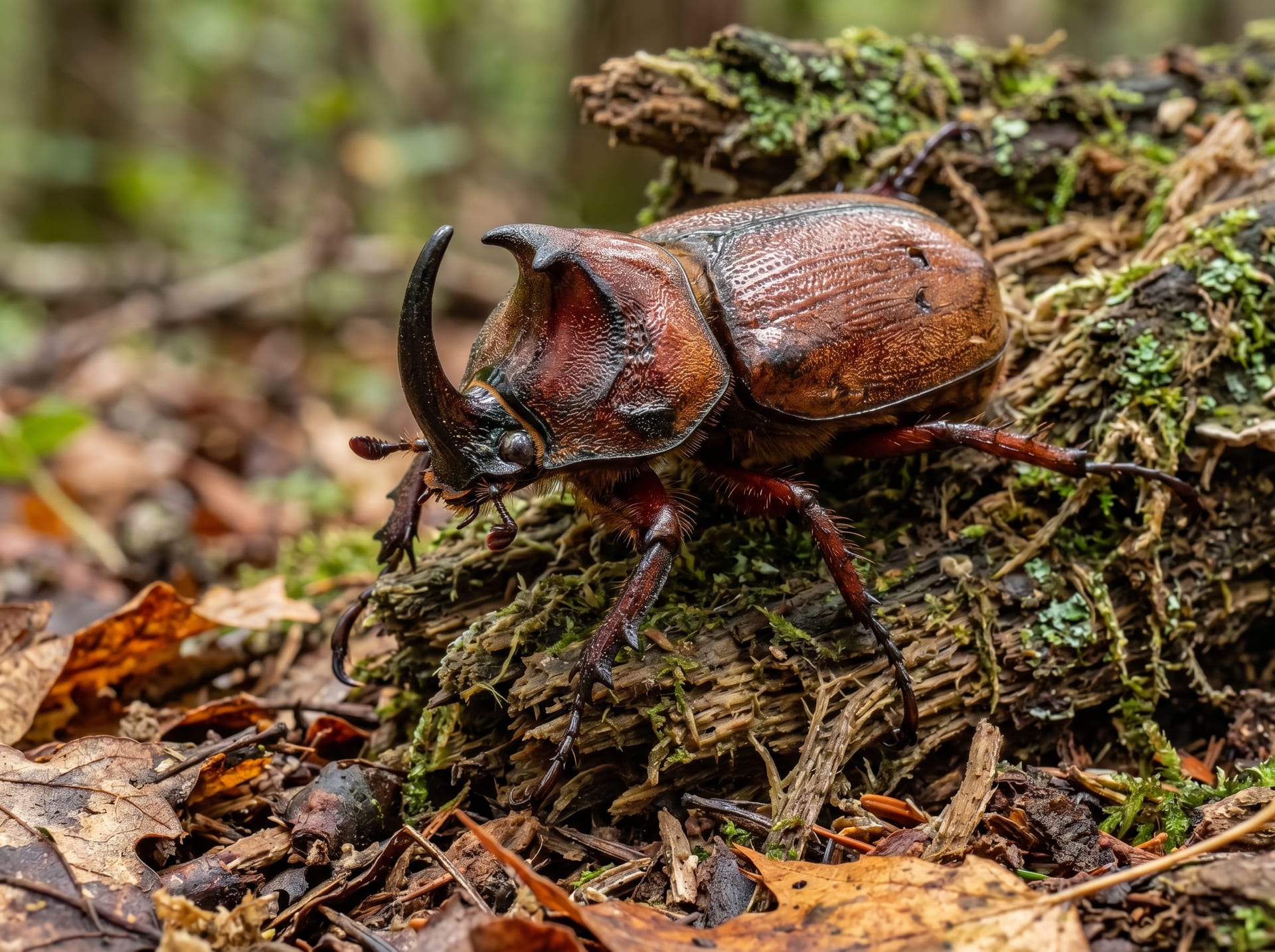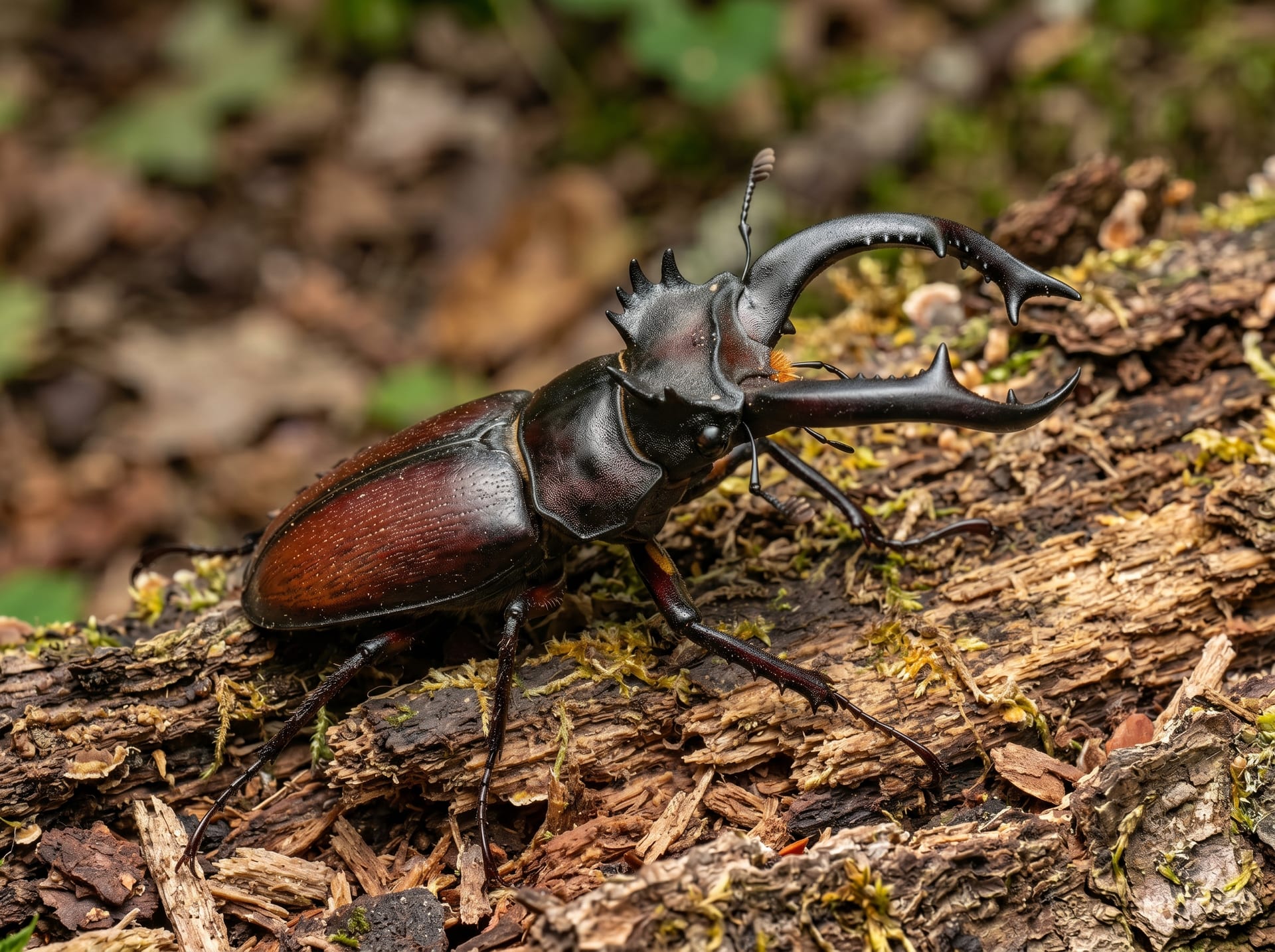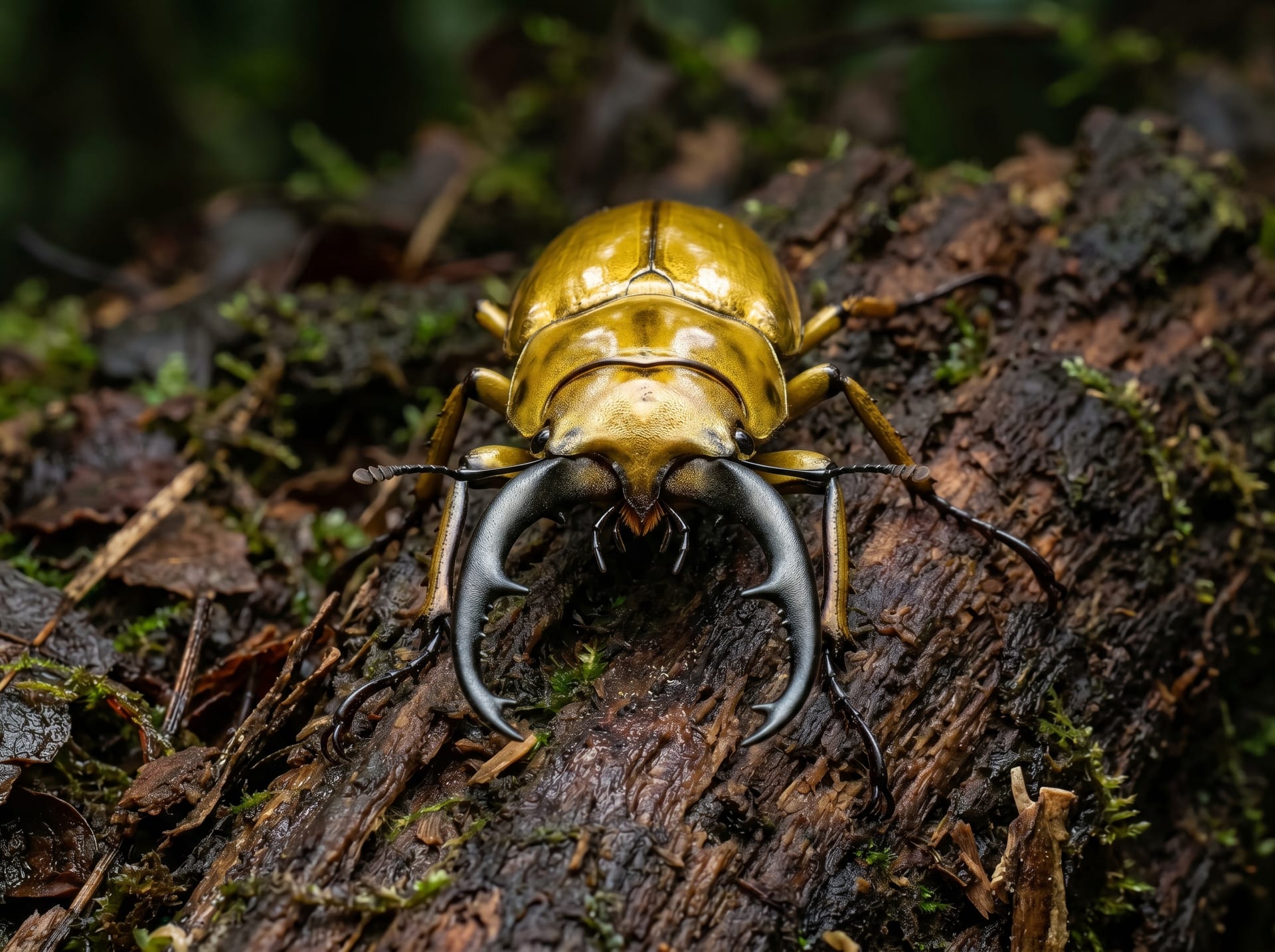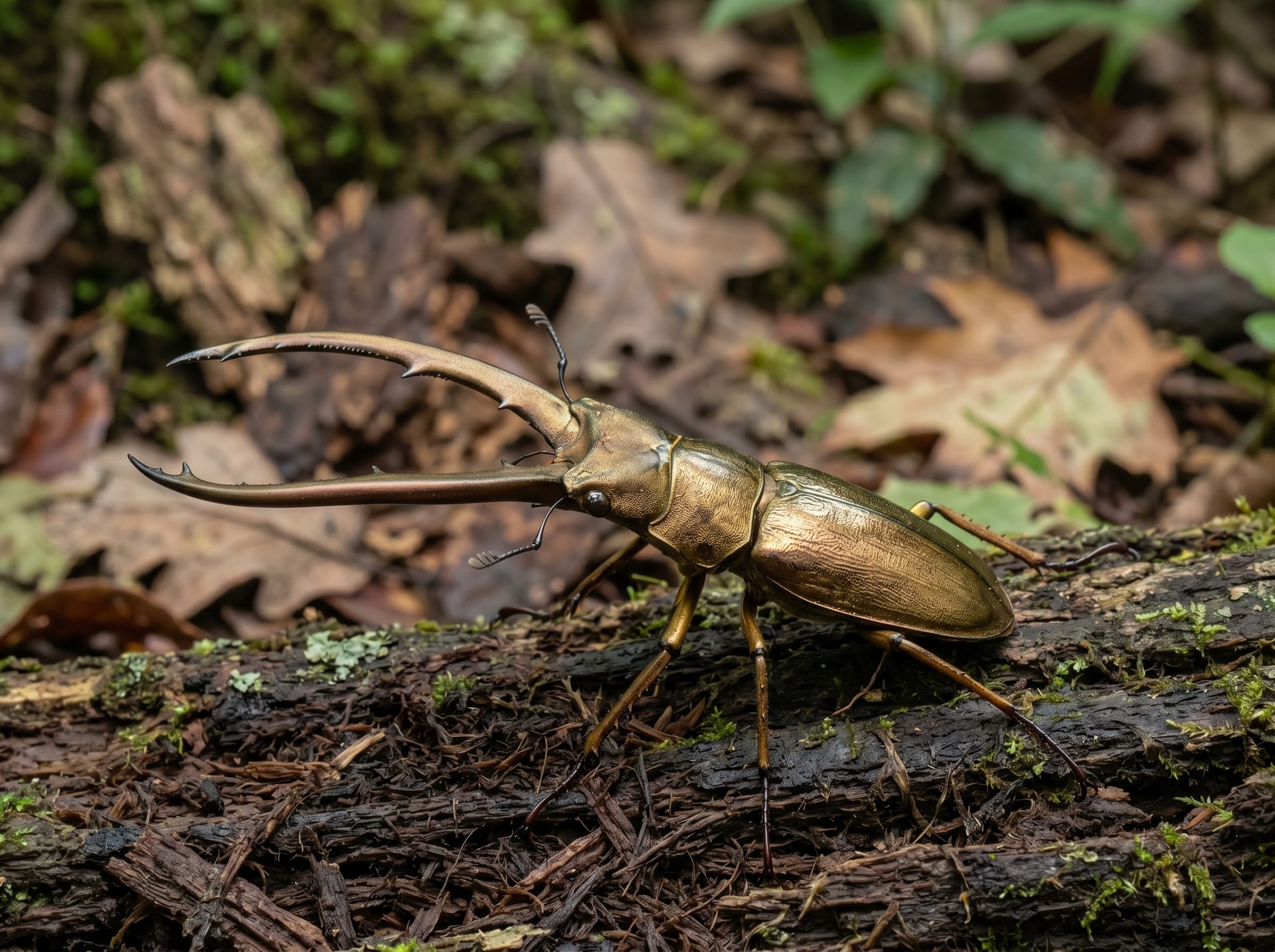
AI-generated image
Didier's Stag Beetle
IntermediateRhaetulus didieri
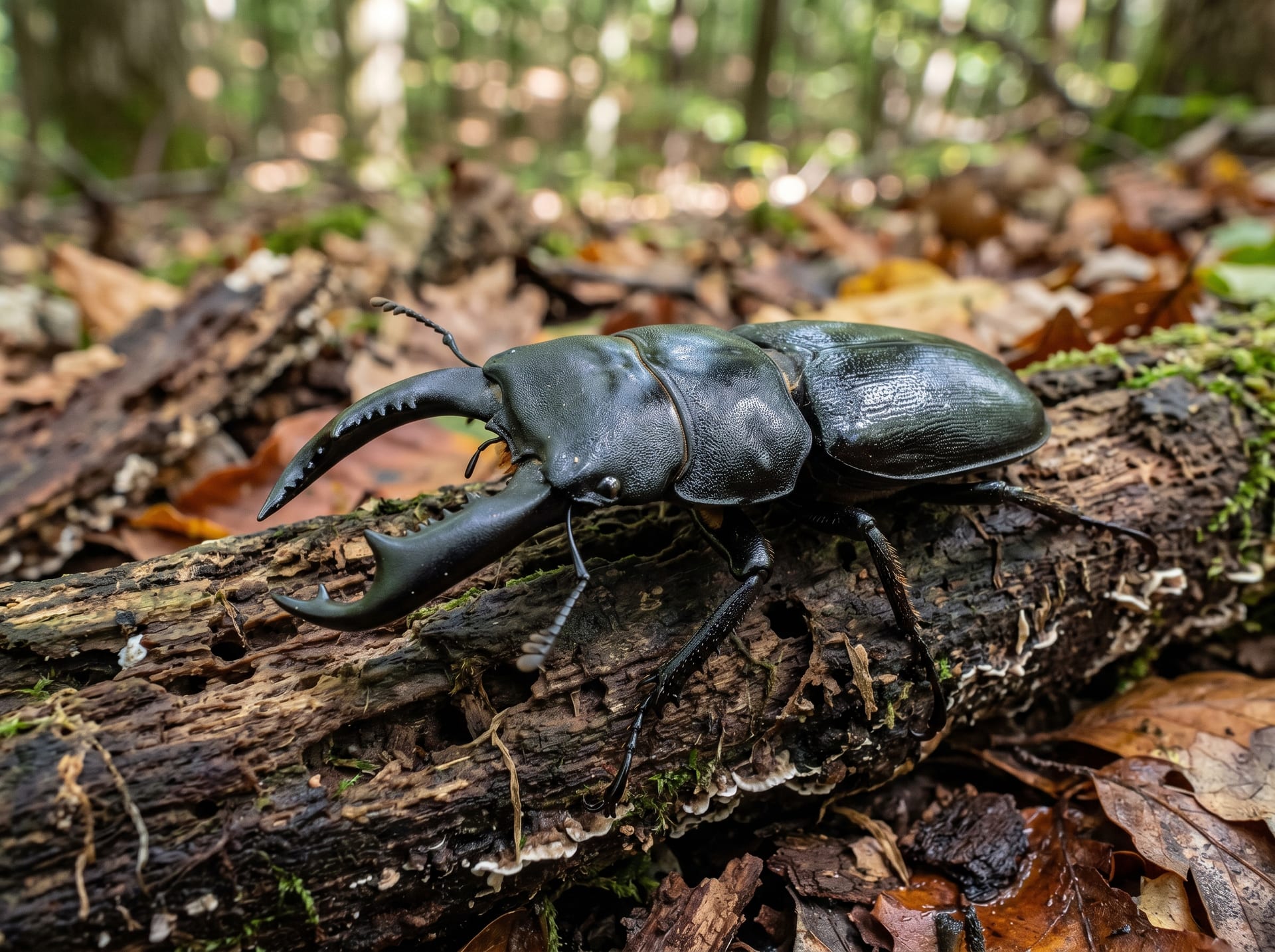
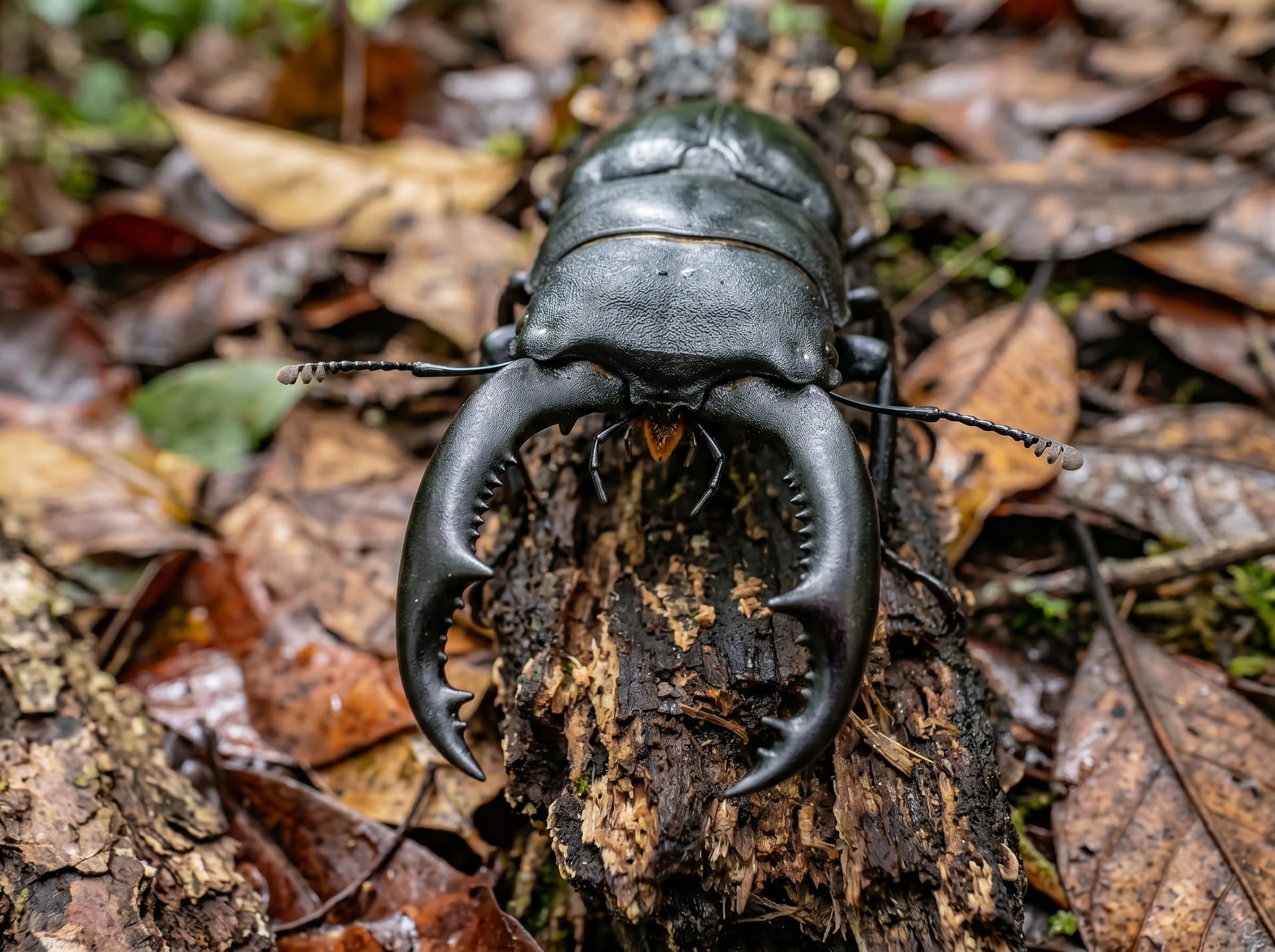
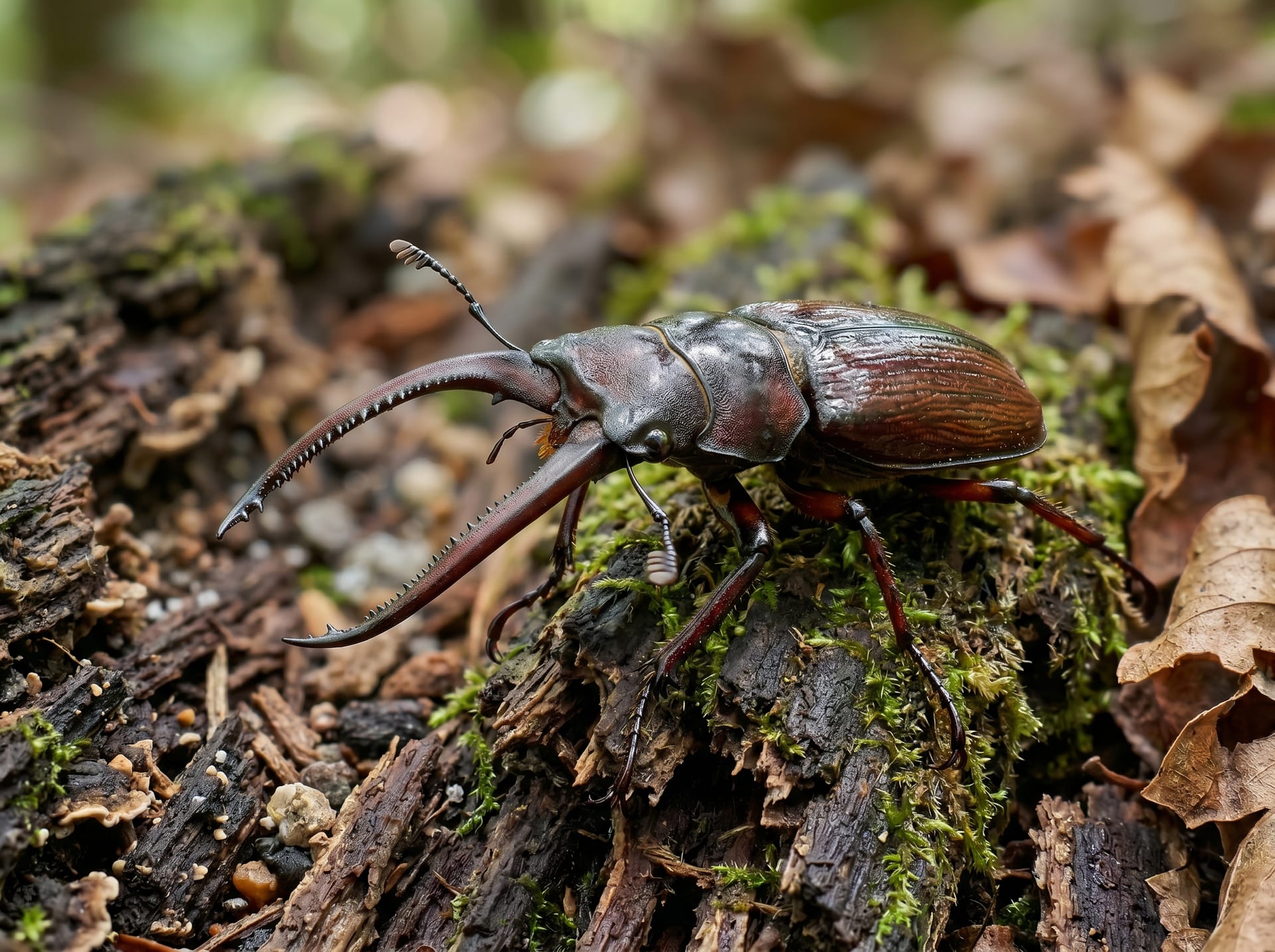
A species of Rhaetulus stag beetle distributed in Vietnam and southern China. Features uniquely shaped mandibles reminiscent of deer antlers, with a black glossy body. Relatively easy to handle and popular as an entry-level exotic stag beetle.
Difficulty
Intermediate
Temperature
20〜26℃
Lifespan
Adult 6mo-1yr
Size
30-70mm
Humidity
60〜80%
Diet
Tree sap, beetle jelly
About
Rhaetulus didieri is a deer stag beetle distributed across Vietnam and southern China. It features distinctive antler-like mandibles and a glossy black body. Relatively easy to handle, it is popular as an introductory exotic stag beetle. Husbandry uses a small to medium enclosure with oviposition logs and fermented substrate. Adults are fed insect jelly, and larvae can be reared in fungal substrate bottles or fermented substrate. Maintaining moderately high humidity keeps it stable. Combining a distinctive mandible shape with ease of care, it suits those keeping deer stag beetles for the first time.
Source: Wikipedia (CC BY-SA 4.0)
Lifespan of the Didier's Stag Beetle
The Didier's Stag Beetle lives Adult 6mo-1yr.
Size of the Didier's Stag Beetle
The Didier's Stag Beetle grows to 30-70mm.
Temperature & humidity for the Didier's Stag Beetle
The ideal temperature for the Didier's Stag Beetle is 20〜26℃.
Basic Info
Origin
Vietnam and southern China
Lifespan
Adult 6mo-1yr
Size
30-70mm
Temperature
Breeding Records & Localities
Captive record (♂)
86 mm
Wild record (♂)
87 mm
Record source: BE-KUWA 2025 edition (Didier - captive 86.0 mm Sasaki Taiga 2023 / wild 87.0 mm)
Notable localities
VietnamLaosChina (Yunnan)
The deer stag beetle with mandibles curved like deer antlers. Captive breeding records are updated annually through BE-KUWA (Mushi-sha) competitions. Individual value varies significantly depending on locality, generation (CBF/WF/WD), and size.
Generation codes
- WD
- Wild-caught
- WF1
- Offspring of a wild-caught female
- F1〜
- Captive generations (same locality)
- CBF1
- Cross-locality captive-bred (reset)
Sources: BE-KUWA Certified Breeding Records (Mushi-sha, FY2025 edition, JA)
References & Sources
Edited & verified by: BreederDirect editorial team
The taxonomic, regulatory, and husbandry data on this page are compiled and verified against the authoritative primary sources below.
Taxonomy & Authority
Accepted name: Rhaetulus didieri de Lisle, 1968
Authority databases: GBIF
Nomenclature follows global taxonomic authority databases.
Regulations & Conservation Status
Not CITES-listed
Plant Protection Act: When importing live specimens of Scarabaeoidea (including rhinoceros beetles, stag beetles, flower beetles, etc.), a species identification certificate issued by the exporting country government agency or equivalent must be attached in accordance with the Invasive Species Act (import ports are limited to Narita, Chubu, Kansai, Fukuoka, and Kagoshima airports). This species itself is not a designated invasive species, and import is possible upon submission of the certificate.
Sources: Ministry of the Environment, Invasive Species Act: "Guidance for Those Importing Live Insects in Scarabaeoidea" / CITES Appendix (checklist.cites.org)
Regulations may change. Always verify the latest information with the relevant authorities.
Didier's Stag Beetle Listings
Loading latest listingsFind listings for this species