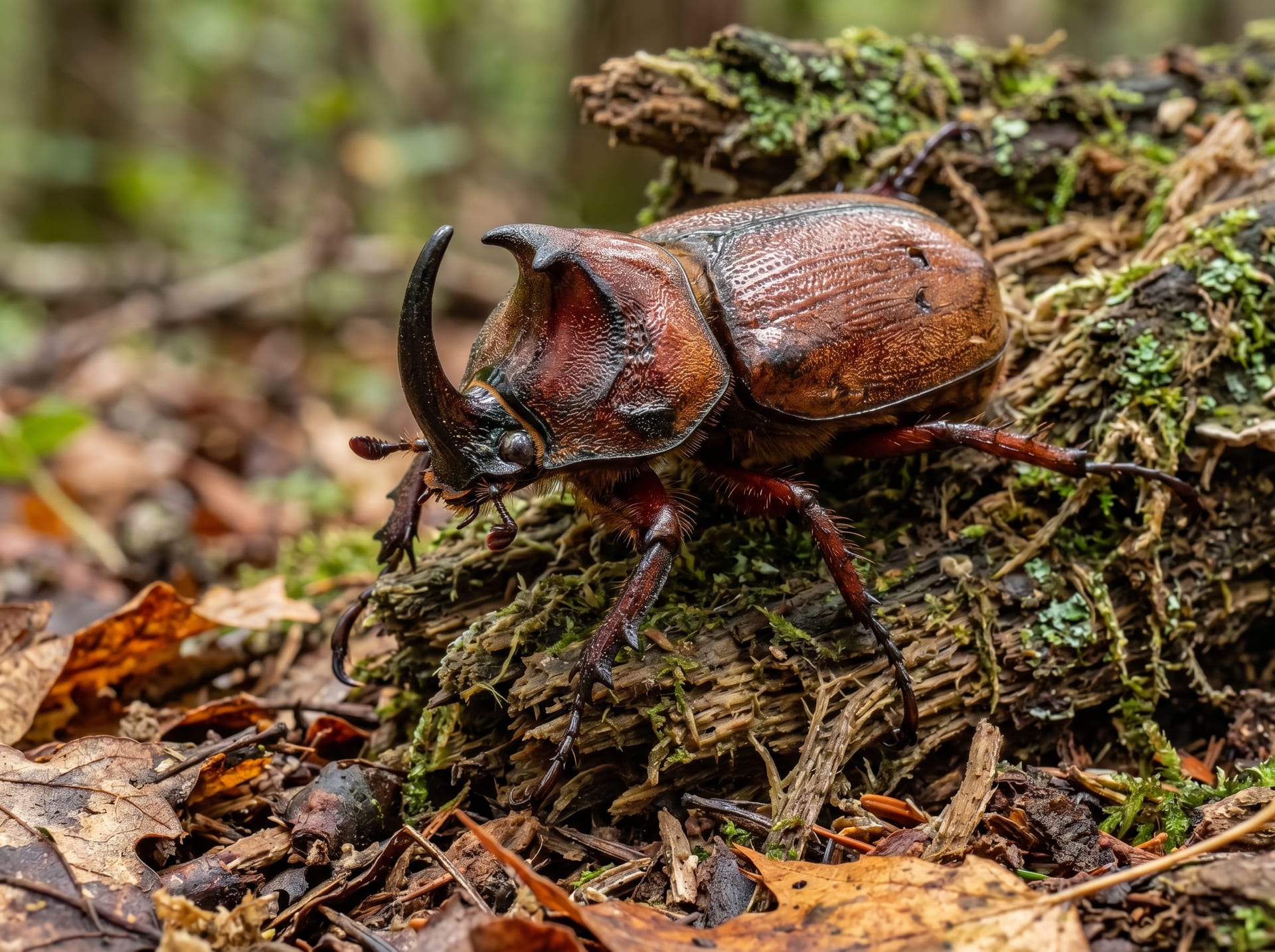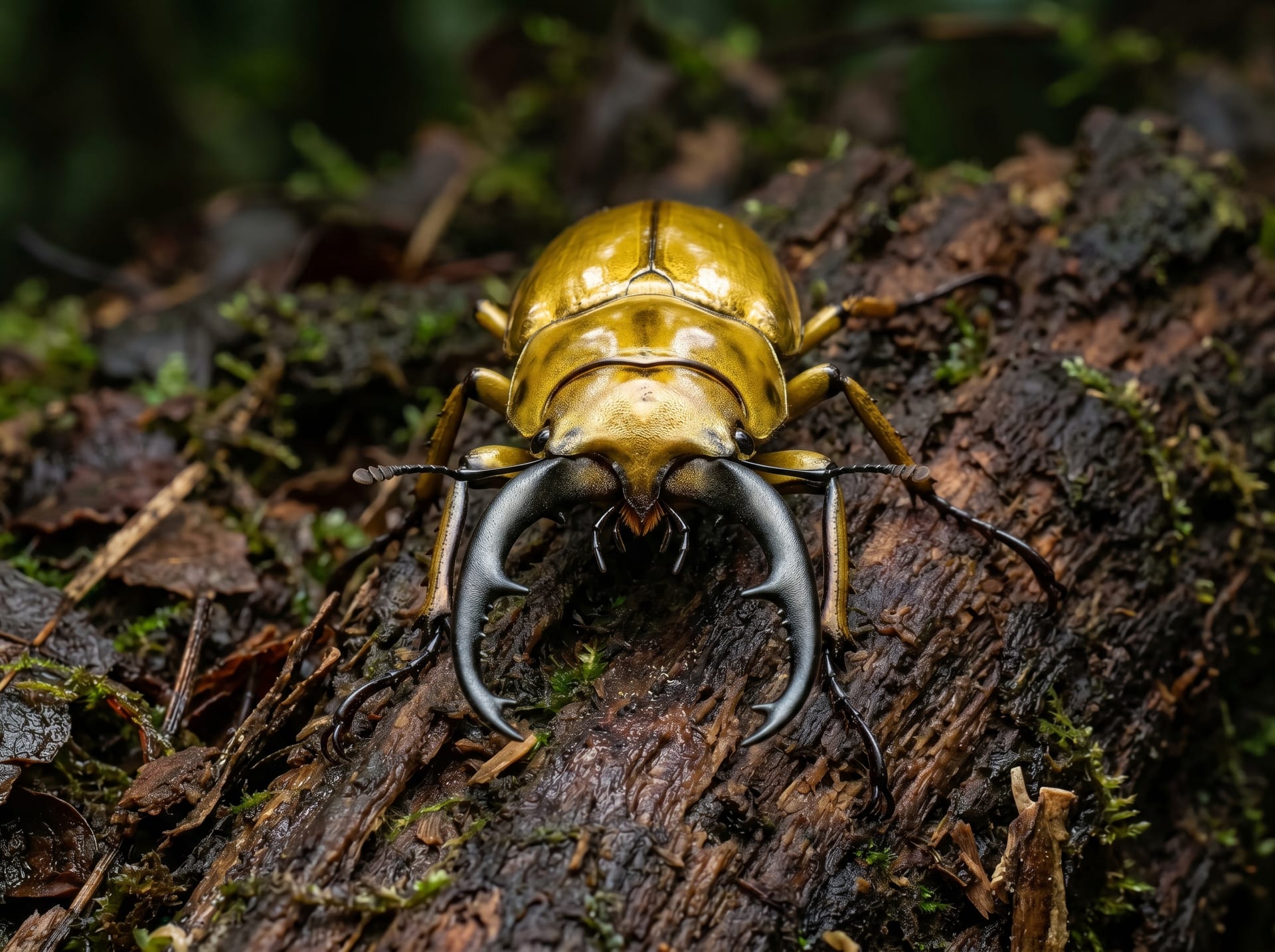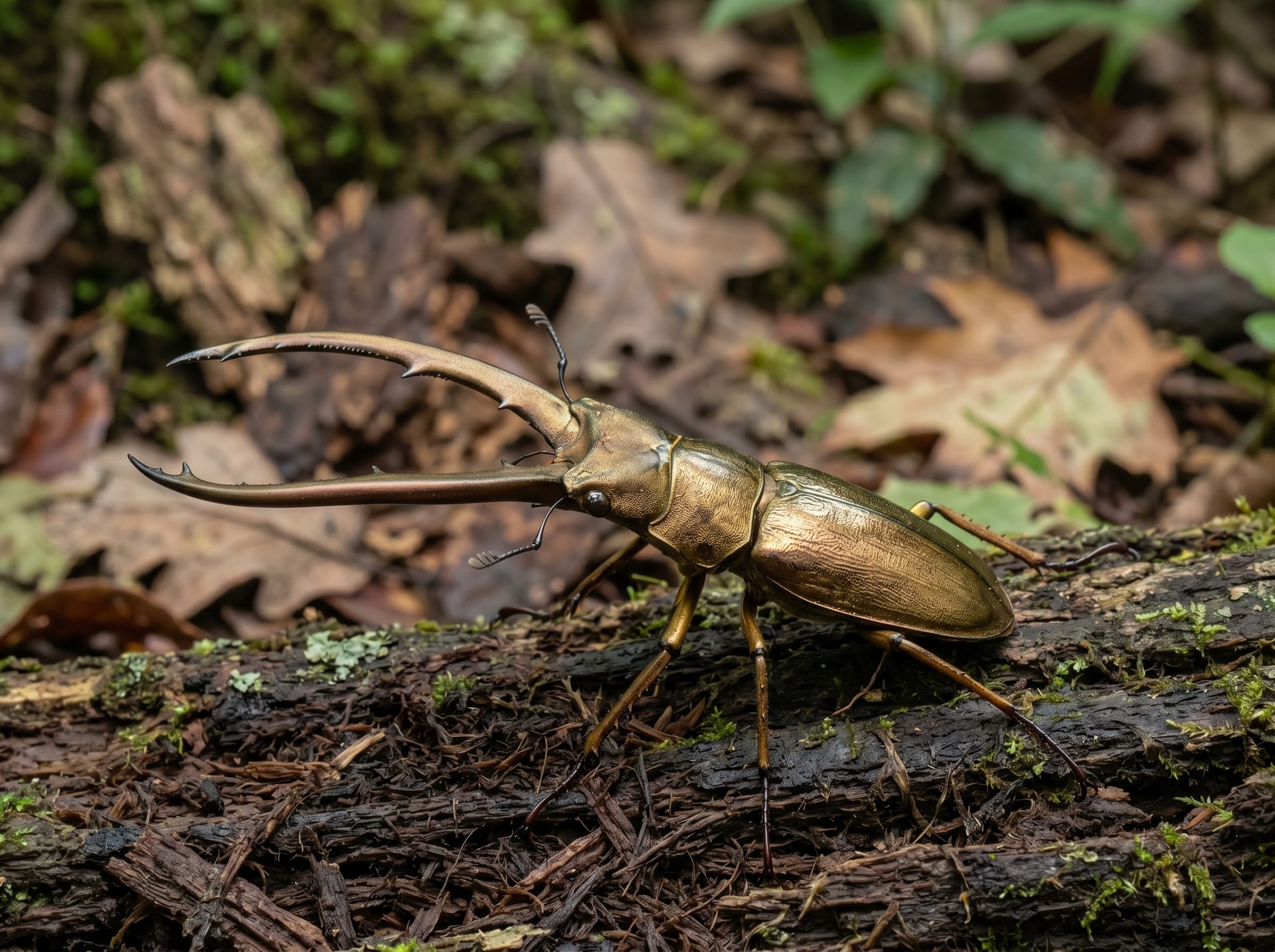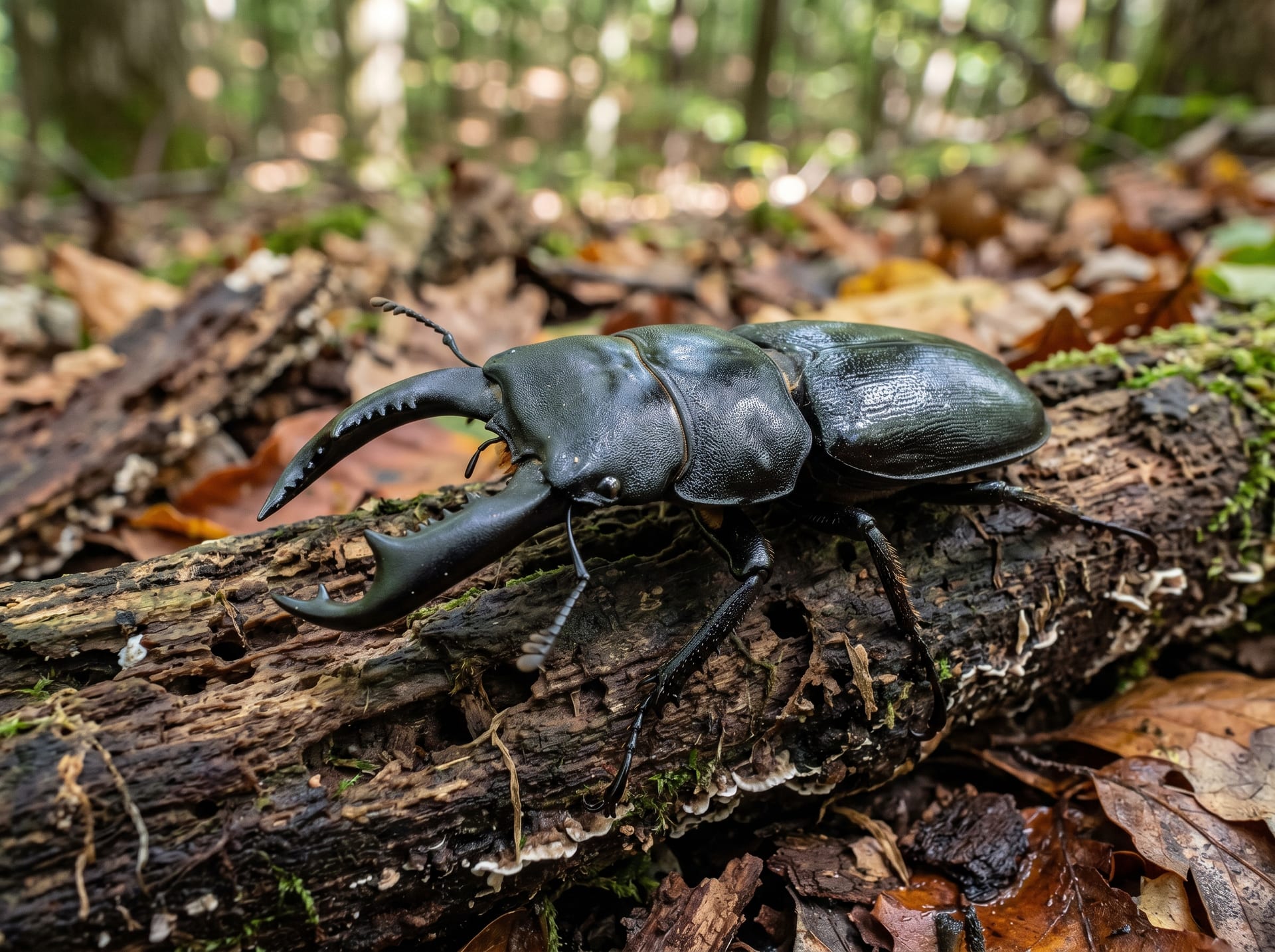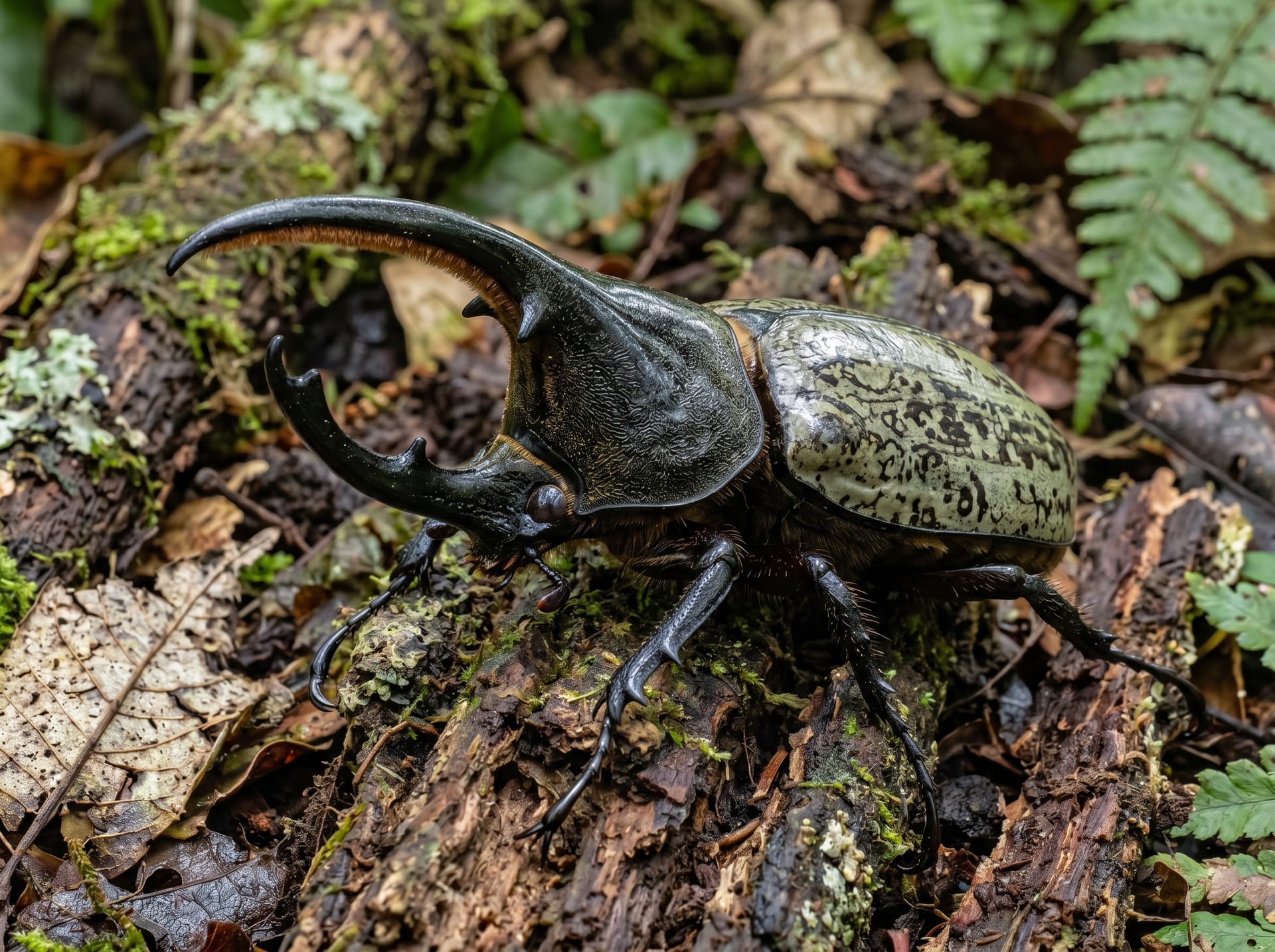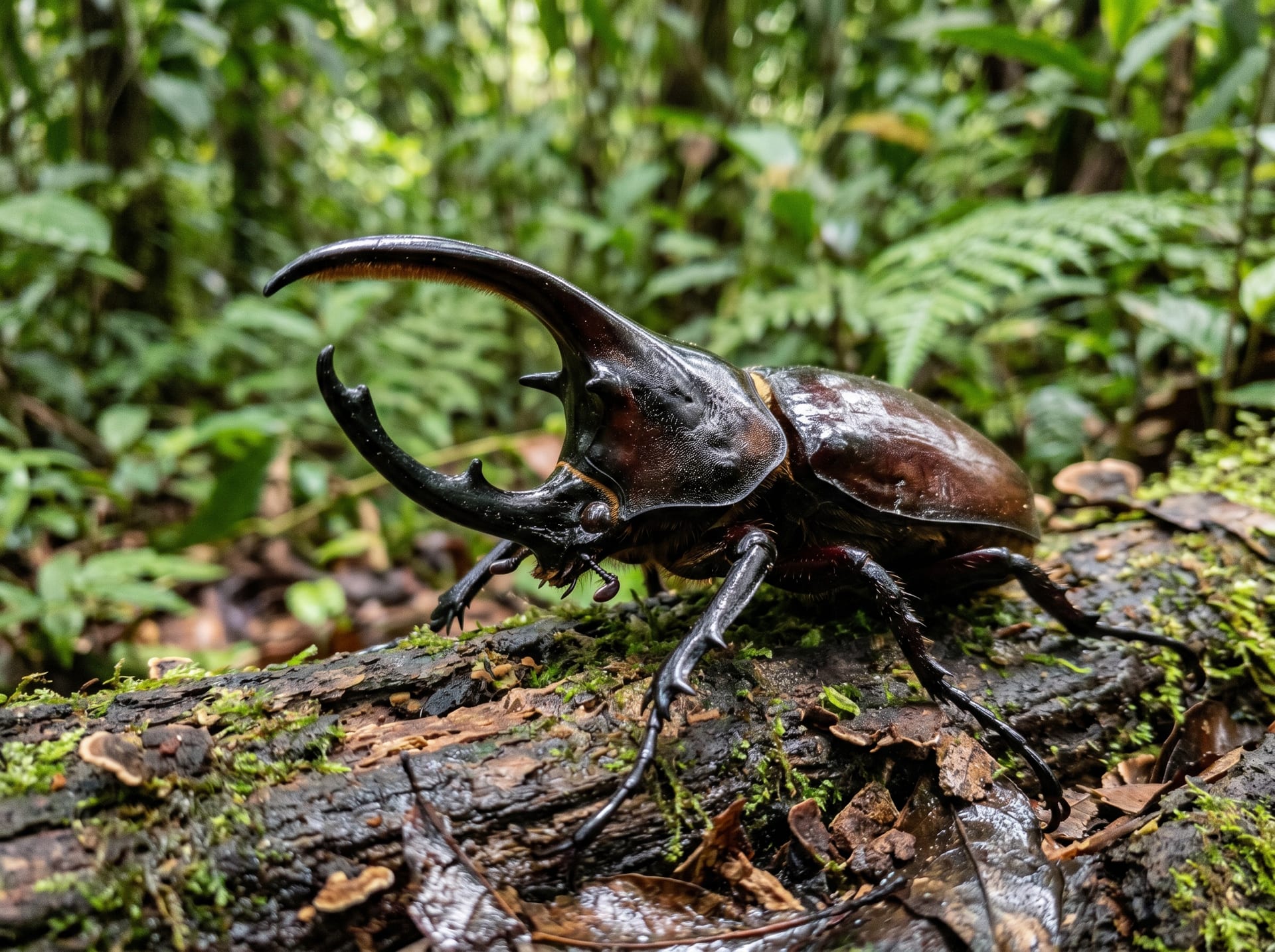
AI-generated image
Centaurus Beetle
IntermediateAugosoma centaurus
A large beetle from central-western Africa. Named after the mythological centaur, this is an imposing species. Has three-pronged horns similar to the Caucasus beetle and is considered the king of African beetles.
Difficulty
Intermediate
Temperature
22〜28℃
Lifespan
Adult 3-6 months
Size
40-100mm
Humidity
60〜80%
Diet
Tree sap, beetle jelly
About
Augosoma centaurus is a large rhinoceros beetle of the tropical forests of central and western Africa, named after the centaur of Greek mythology. Males bear well-developed horns on the thorax and head, giving a striking, trident-like appearance. Adults can reach roughly 50–100 mm in larger specimens. A large enclosure with deep fermented substrate is recommended; adults are fed insect jelly and females oviposit within the substrate. Larvae are reared in fermented substrate, and substantial volume and nutrition are needed to grow large individuals. It is a popular, imposing beetle representative of Africa.
Source: Wikipedia (CC BY-SA 4.0)
Lifespan of the Centaurus Beetle
The Centaurus Beetle lives Adult 3-6 months.
Size of the Centaurus Beetle
The Centaurus Beetle grows to 40-100mm.
Temperature & humidity for the Centaurus Beetle
The ideal temperature for the Centaurus Beetle is 22〜28℃.
Basic Info
Origin
central and western Africa
Lifespan
Adult 3-6 months
Size
40-100mm
Temperature
Breeding Records & Localities
Captive record (♂)
99.6 mm
Record source: BE-KUWA (Centaurus, captive-bred 99.6mm, Hirashina Tsukasa, BE-KUWA No. 87, 2023), total length = including horns
Notable localities
West AfricaCentral Africa
Among the largest beetles of Africa. Records include total length with horns. Breeding records are updated annually in BE-KUWA (Mushi-sha) contests. Individual value varies significantly based on locality, generation (CBF/WF/WD), and size.
Generation codes
- WD
- Wild-caught
- WF1
- Offspring of a wild-caught female
- F1〜
- Captive generations (same locality)
- CBF1
- Cross-locality captive-bred (reset)
Sources: BE-KUWA Certified Breeding Records (Mushi-sha, FY2025 edition, JA)
References & Sources
Edited & verified by: BreederDirect editorial team
The taxonomic, regulatory, and husbandry data on this page are compiled and verified against the authoritative primary sources below.
Taxonomy & Authority
Accepted name: Augosoma centaurus (Fabricius, 1775)
Synonyms: Archon emarginatus Kirby, 1825, Geotrupes ganymedes Fabricius, 1801, Geotrupes jephta Fabricius, 1801, Scarabaeus centaurus Fabricius, 1775, Scarabaeus melampus Olivier, 1789
Authority databases: GBIF
Nomenclature follows global taxonomic authority databases.
Regulations & Conservation Status
Not CITES-listed
Plant Protection Act: When importing live specimens of Scarabaeoidea (including rhinoceros beetles, stag beetles, flower beetles, etc.), a species identification certificate issued by the exporting country government agency or equivalent must be attached in accordance with the Invasive Species Act (import ports are limited to Narita, Chubu, Kansai, Fukuoka, and Kagoshima airports). This species itself is not a designated invasive species, and import is possible upon submission of the certificate.
Sources: Ministry of the Environment, Invasive Species Act: "Guidance for Those Importing Live Insects in Scarabaeoidea" / CITES Appendix (checklist.cites.org)
Regulations may change. Always verify the latest information with the relevant authorities.
Centaurus Beetle Listings
Loading latest listingsFind listings for this species