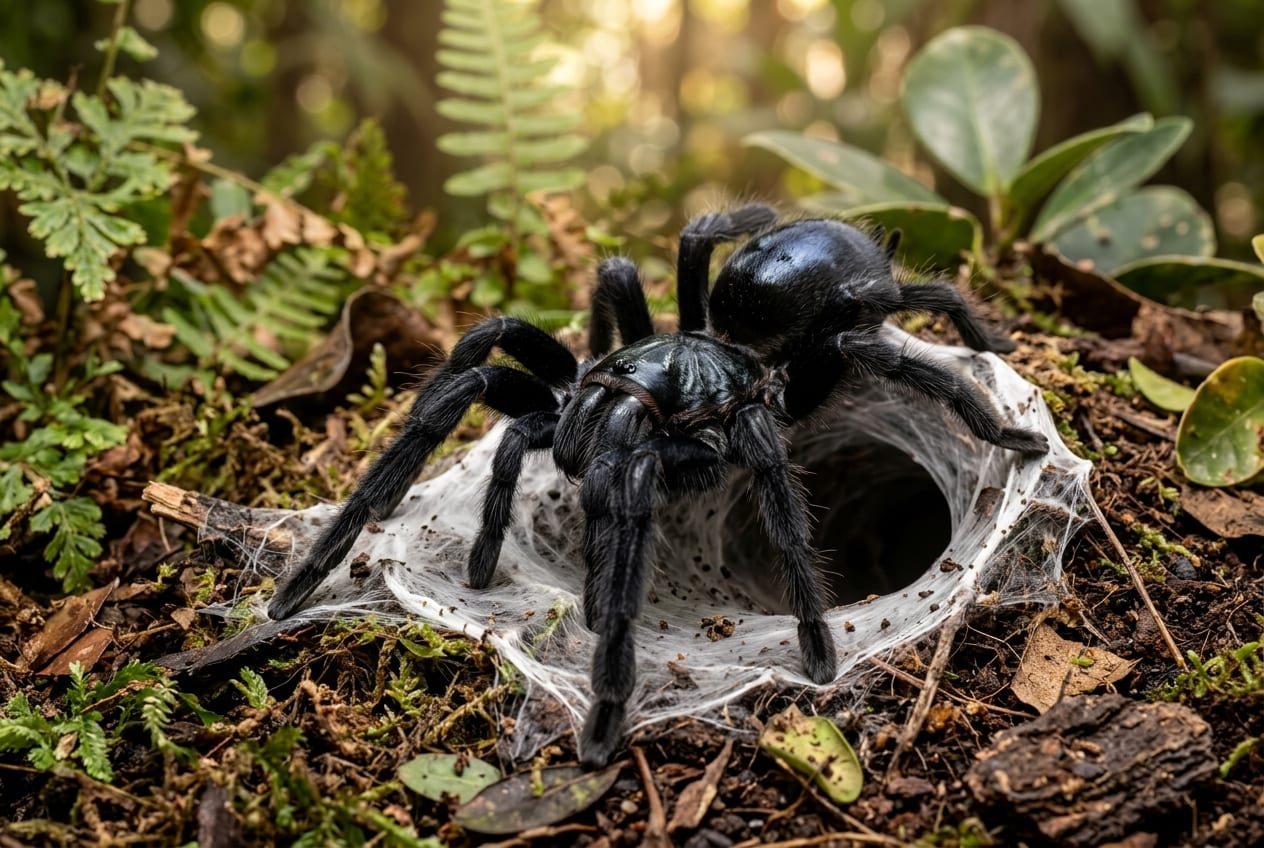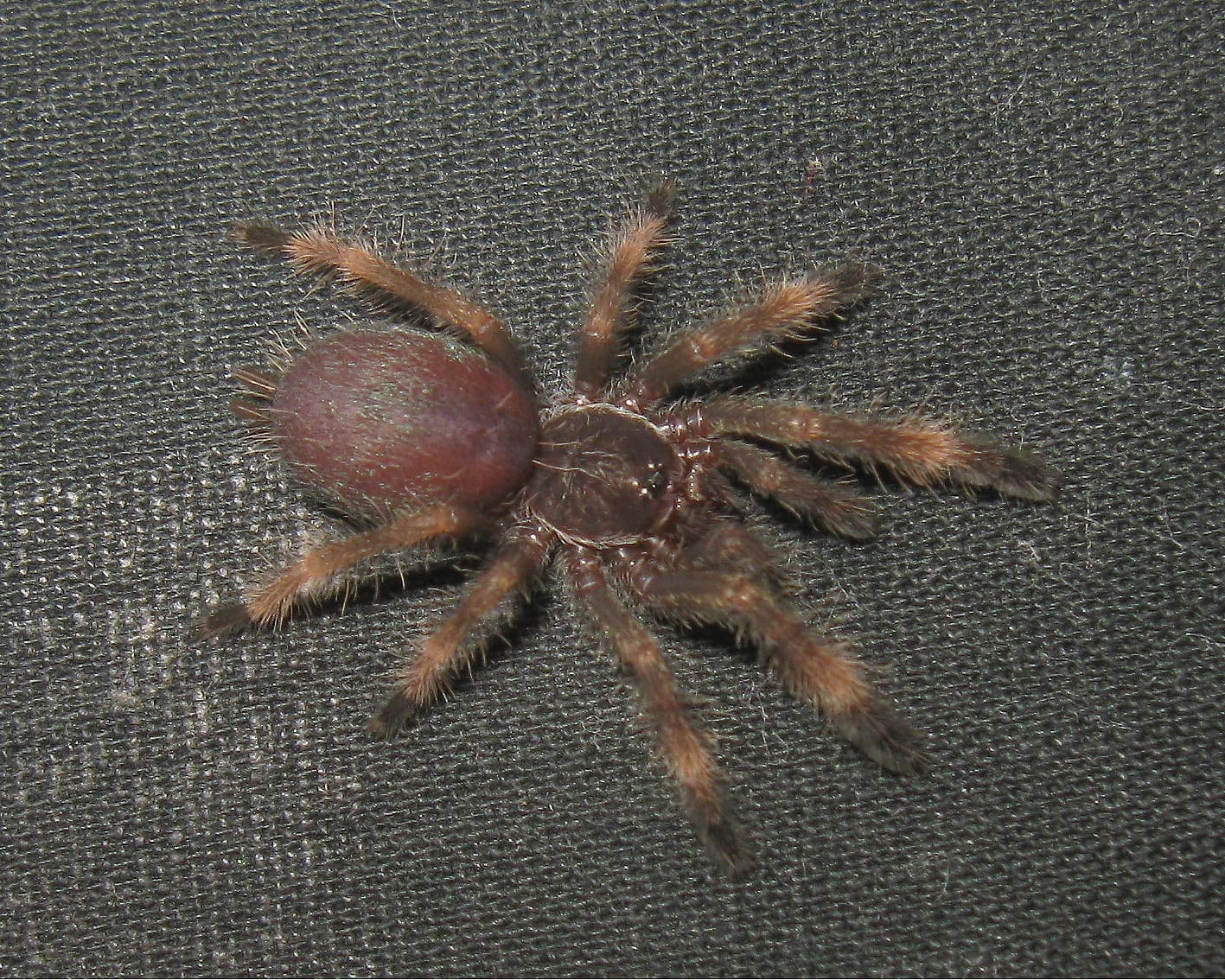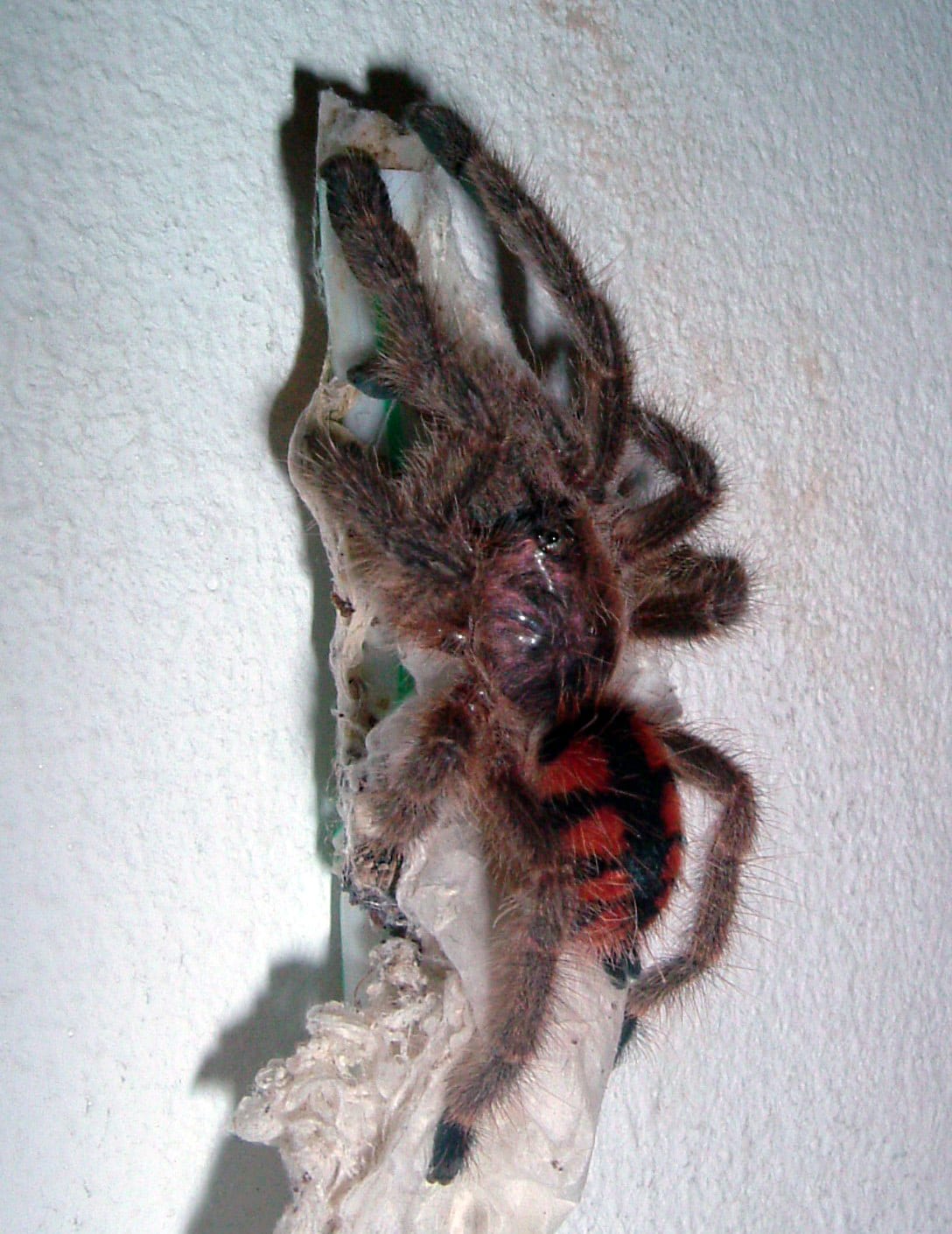
Source: Wikimedia Commons
Venezuelan Red Stripe Pinktoe
IntermediateAvicularia minatrix
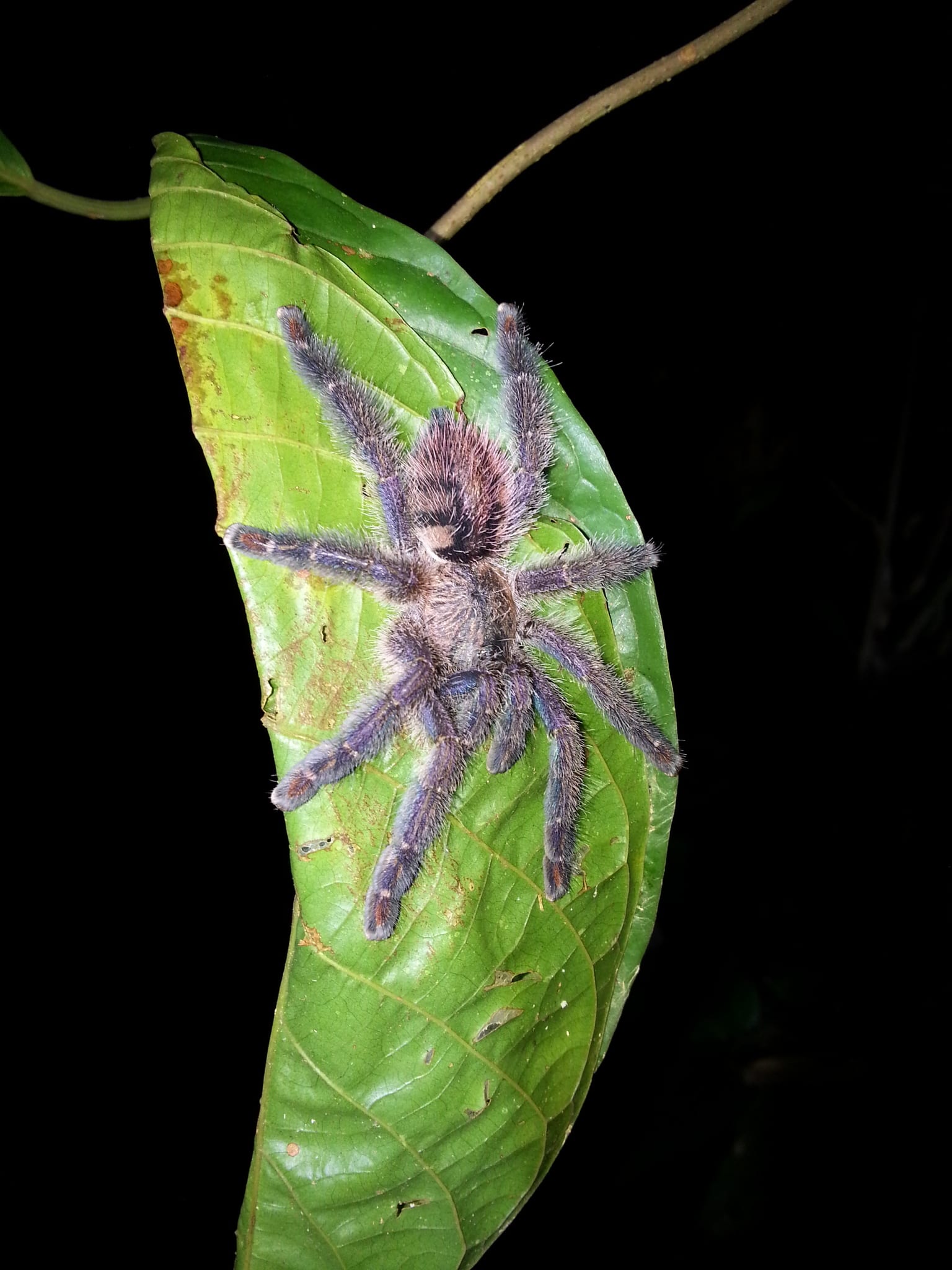
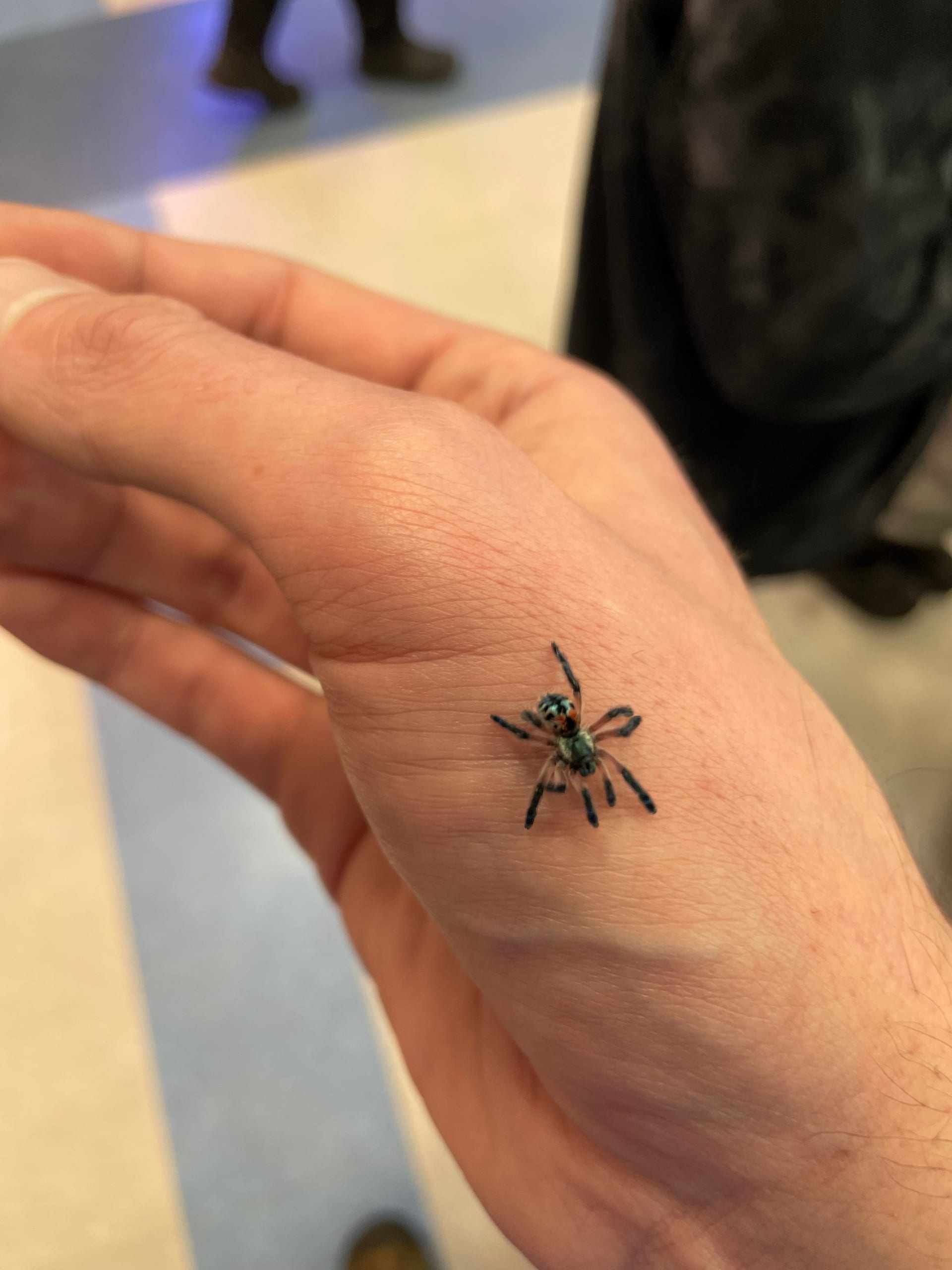
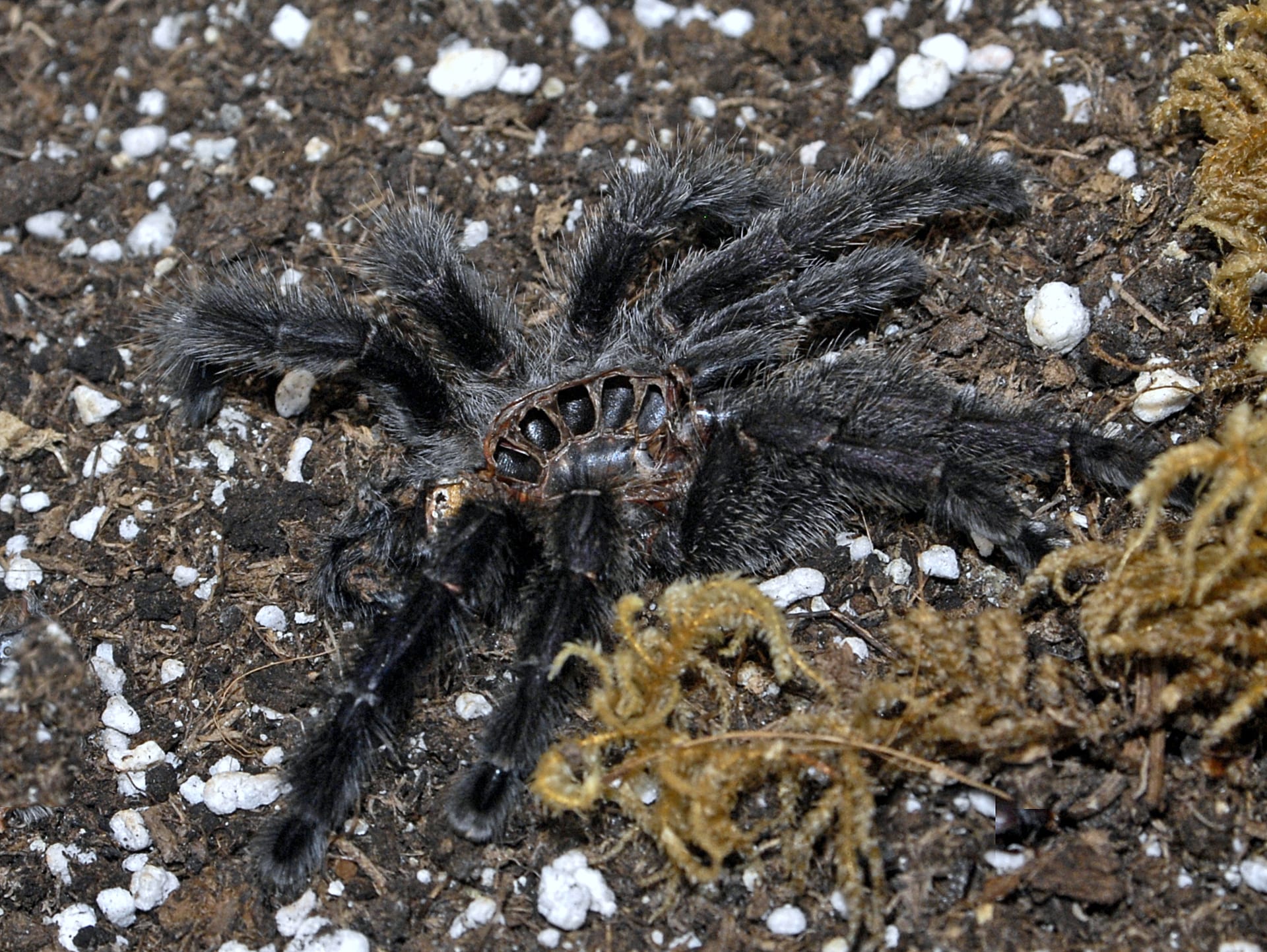
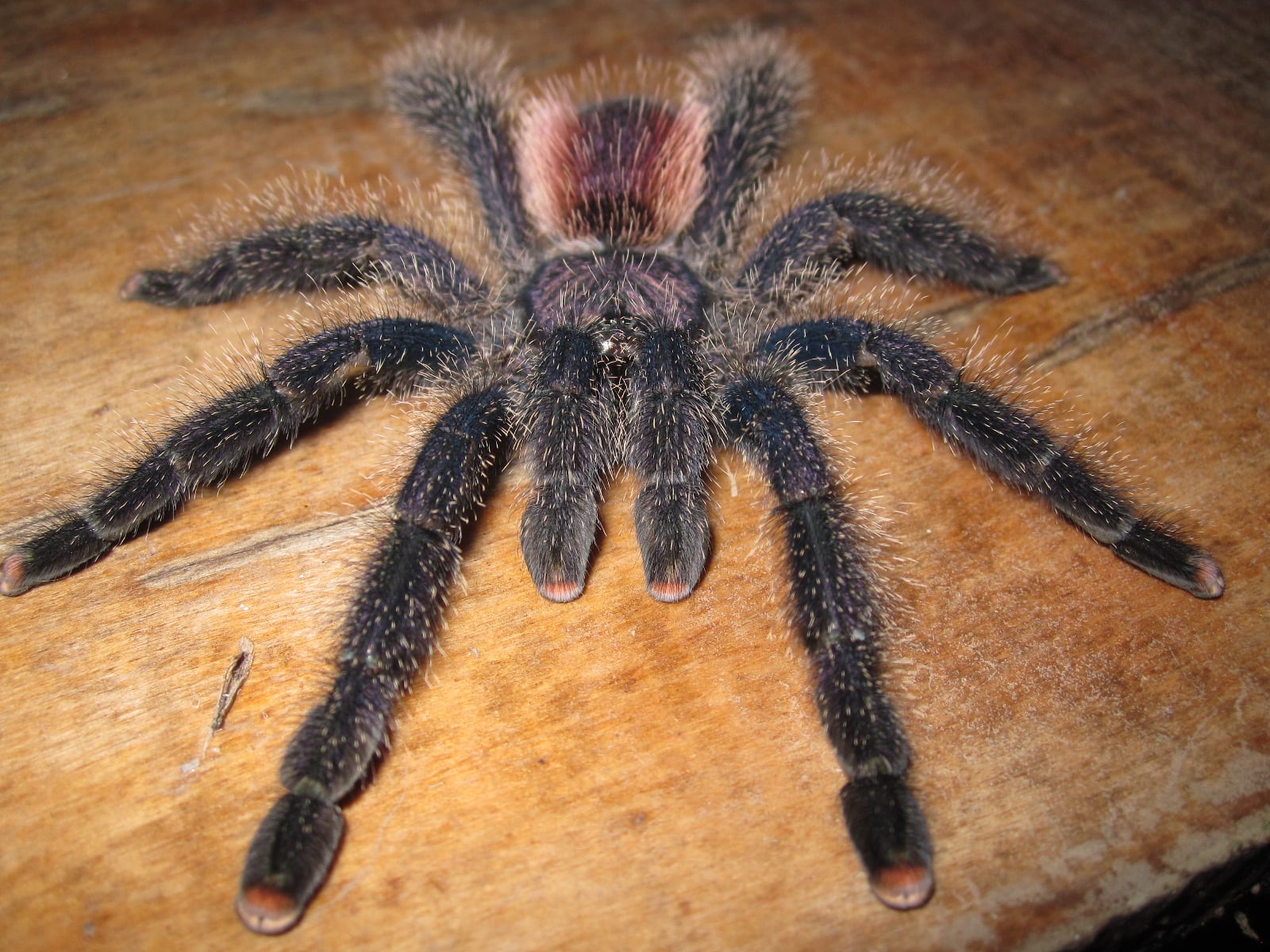
The smallest member of the genus Avicularia and strictly arboreal. The carapace and legs are reddish brown with white bands between the leg segments, and the black abdomen carries orange-red markings. It is highly reclusive and usually stays inside its web.
Difficulty
Intermediate
Temperature
20〜24℃
Lifespan
Females 10-12 years, males 2-3 years
Size
Up to about 7.5cm leg span
Humidity
65〜75%
Diet
Small live insects such as crickets
About
Avicularia minatrix, described by Pocock in 1903, is an arboreal tarantula and the smallest species in the genus Avicularia, reaching a leg span of only about 7.5 cm. Both sexes share the same pattern: a reddish-brown carapace and legs with white segmentation between the leg sections, and a black opisthosoma marked with orange-red spots that extend from near the top almost to the bottom. It shows some tolerance of being kept together but is not a communal species, so it should be housed alone. It is extremely reclusive and bolts into its silken tunnels the moment it notices a keeper. Egg sacs yield only 20 to 40 spiderlings, so the species is not common in the trade.
Source: Wikipedia (CC BY-SA 4.0)
Lifespan of the Venezuelan Red Stripe Pinktoe
The Venezuelan Red Stripe Pinktoe lives Females 10-12 years, males 2-3 years.
Size of the Venezuelan Red Stripe Pinktoe
The Venezuelan Red Stripe Pinktoe grows to Up to about 7.5cm leg span.
Temperature & humidity for the Venezuelan Red Stripe Pinktoe
The ideal temperature for the Venezuelan Red Stripe Pinktoe is 20〜24℃. Ideal humidity is 65〜75%.
Keep it at 20-24 C and 65-75% humidity with a large water dish and ample cross ventilation.
Basic Info
Origin
Venezuela (English Wikipedia also gives Brazil)
Lifespan
Care Specifications
PeacefulSolitaryBreeding: Hard
Sources: The Tarantula Collective: Avicularia minatrix / Wikipedia / GBIF
References & Sources
Edited & verified by: BreederDirect editorial team
The taxonomic, regulatory, and husbandry data on this page are compiled and verified against the authoritative primary sources below.
Taxonomy & Authority
Accepted name: Avicularia minatrix Pocock, 1903
Authority databases: GBIF
Nomenclature follows global taxonomic authority databases.
Regulations & Conservation Status
Not CITES-listed
Sources: CITES Appendices (species not listed)
Regulations may change. Always verify the latest information with the relevant authorities.
Venezuelan Red Stripe Pinktoe Listings
Loading latest listingsFind listings for this species