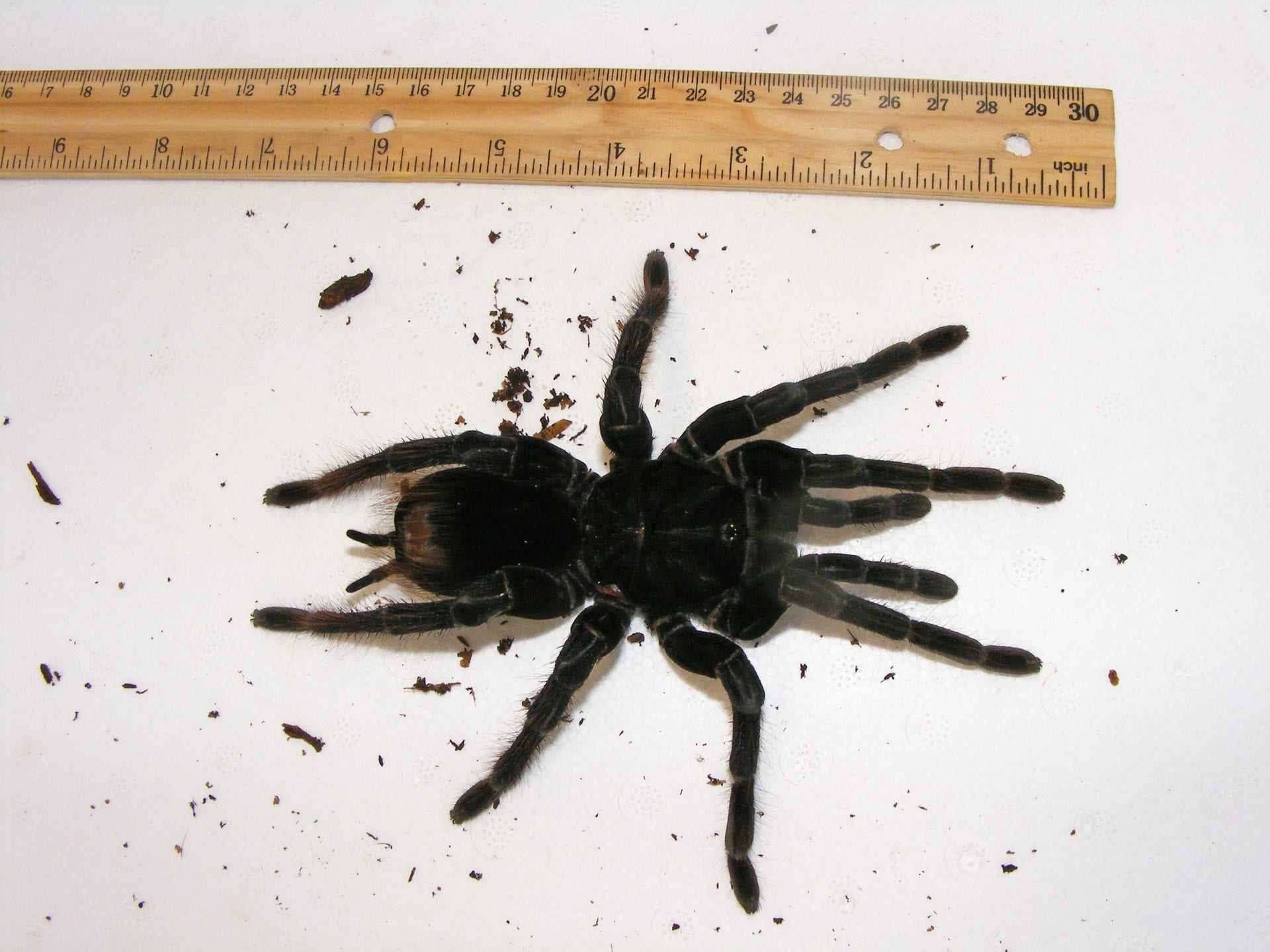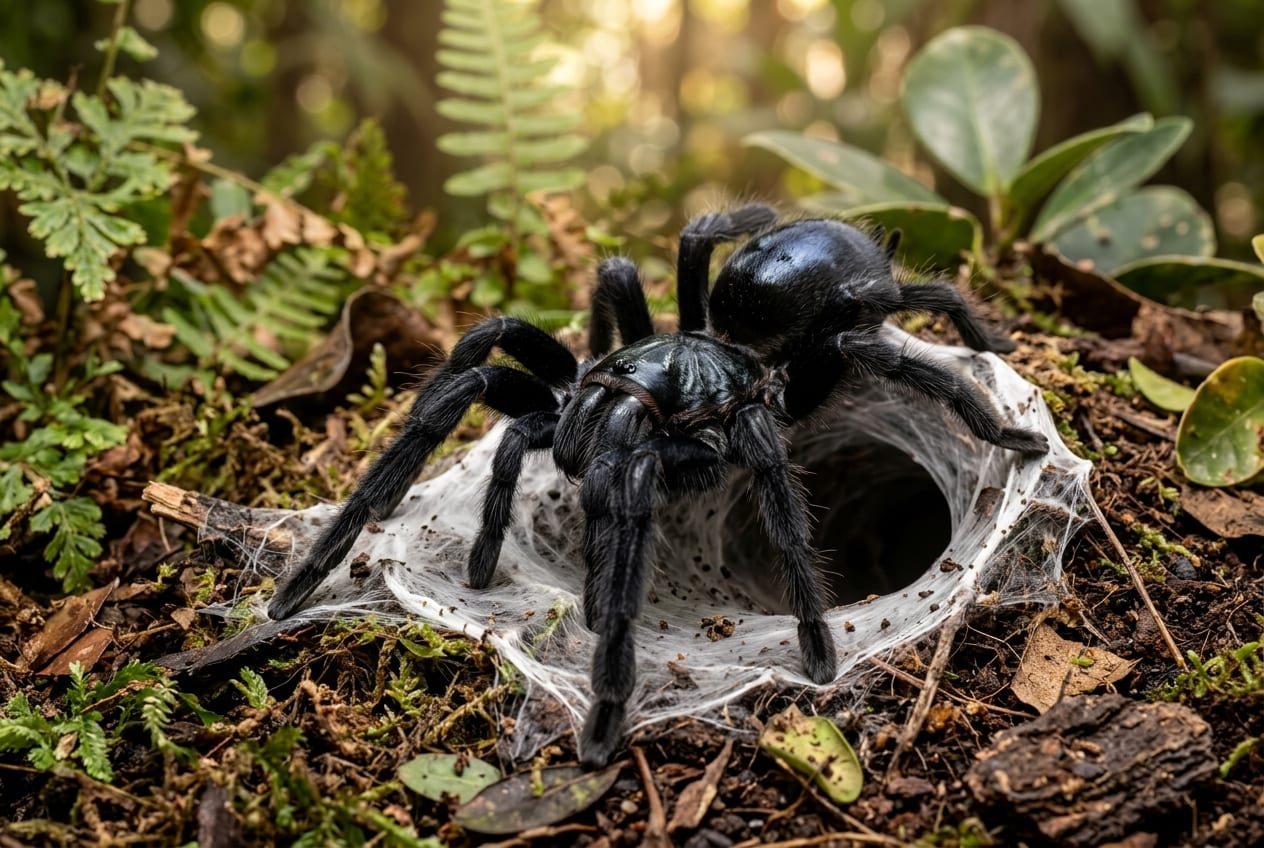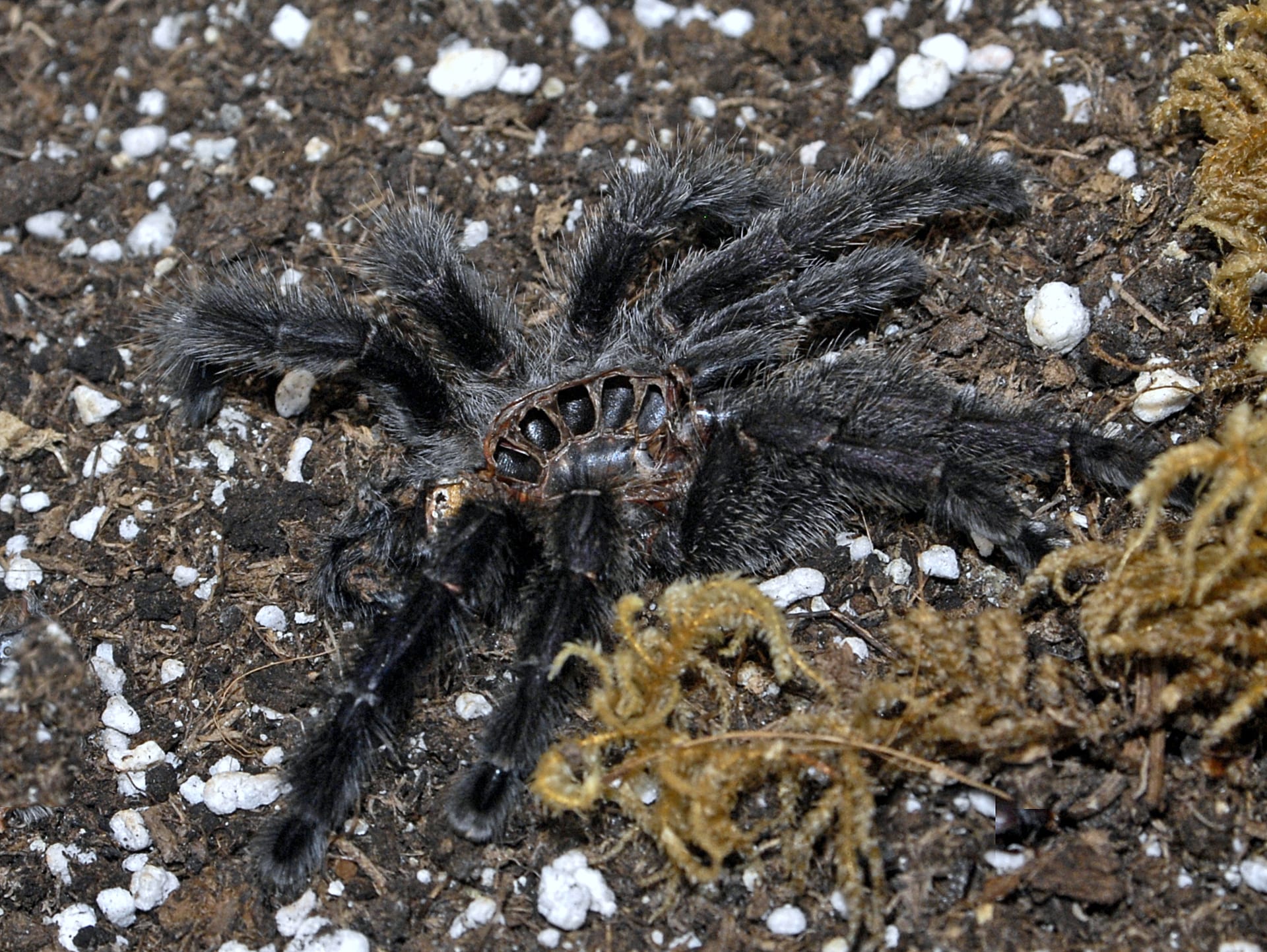
Source: Wikimedia Commons
Ecuadorian Purple Pinktoe
IntermediateAvicularia purpurea
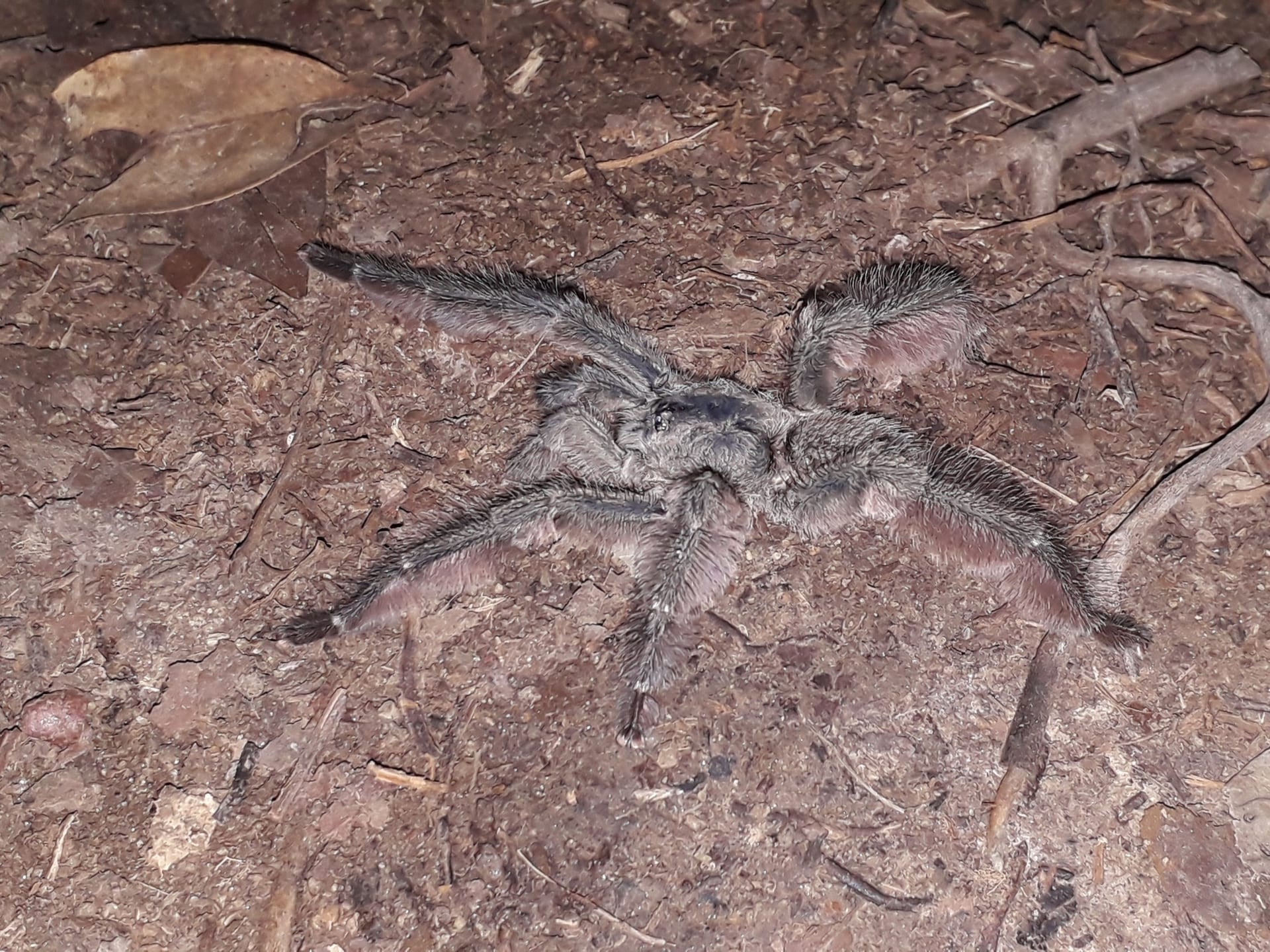
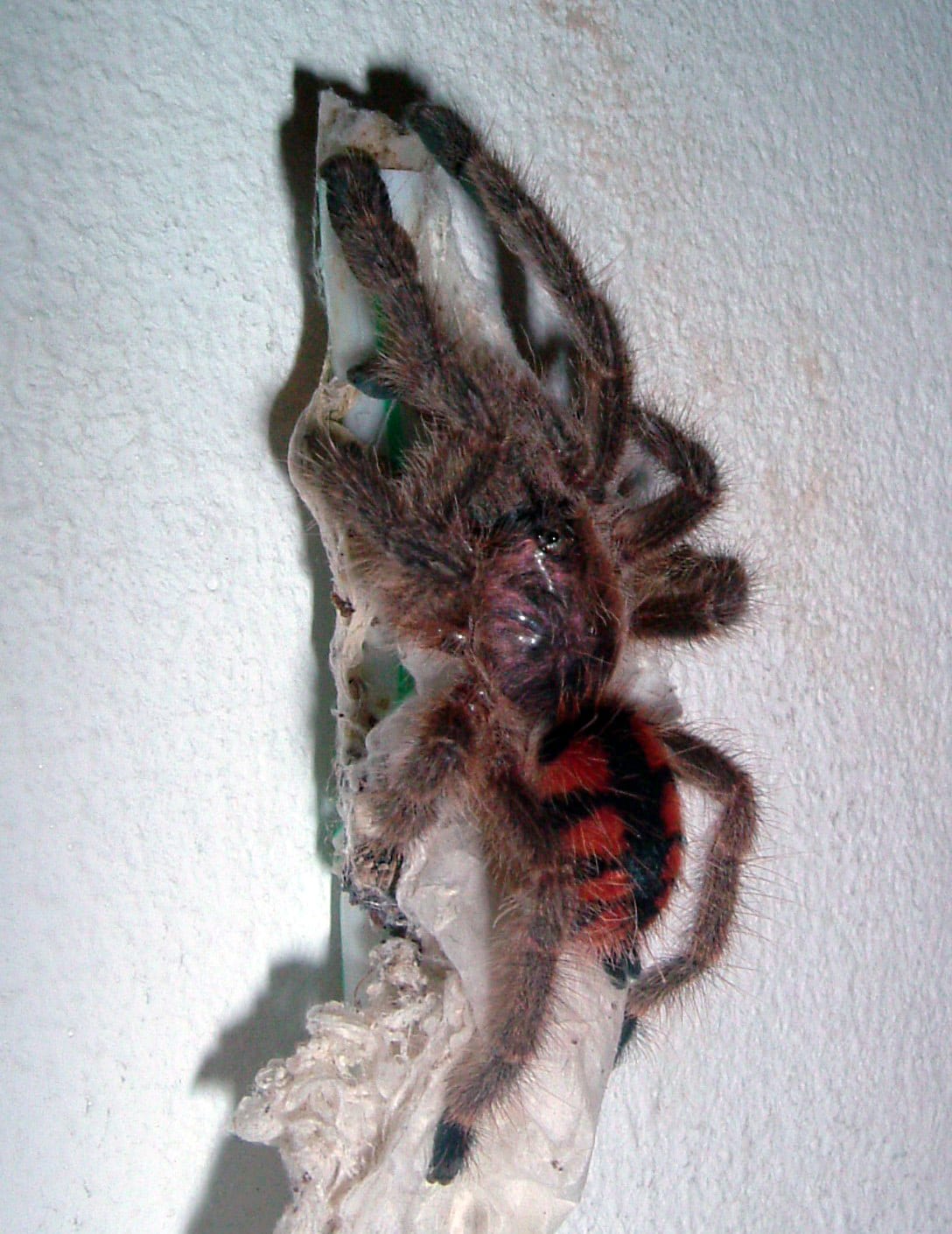
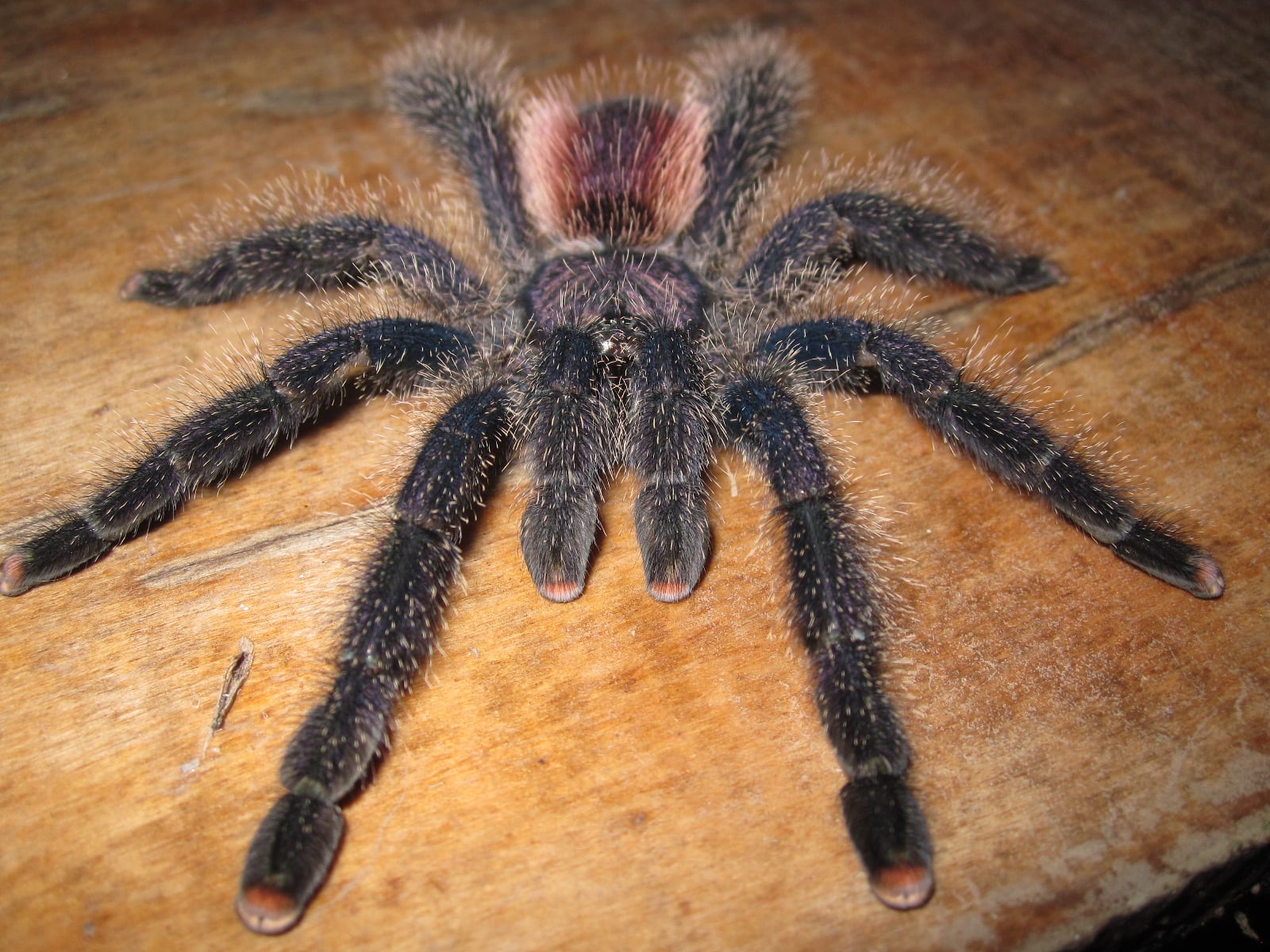
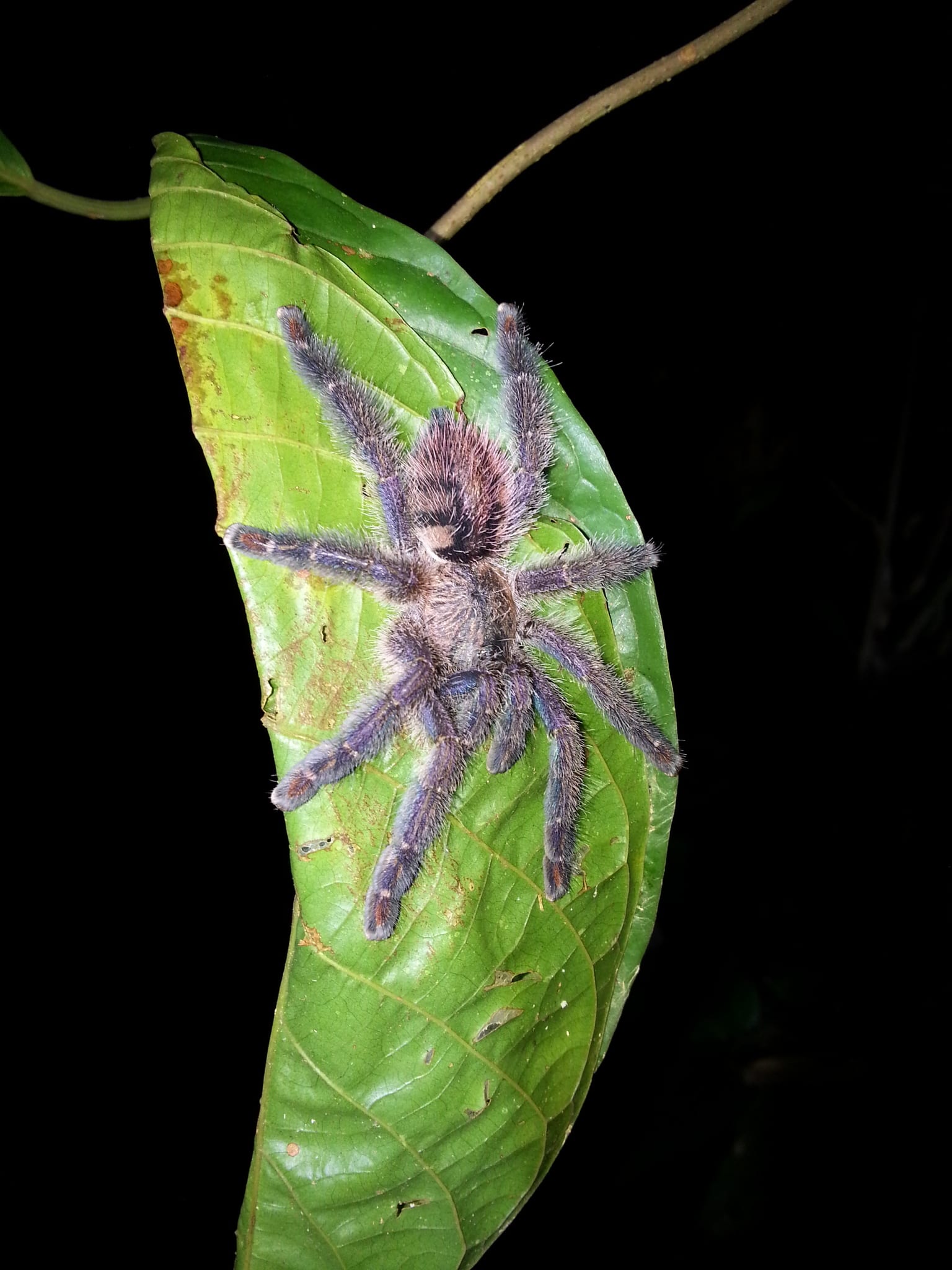
An arboreal tarantula from the Amazon region of Ecuador. In daylight the carapace and legs show an intense purple-blue iridescence, while the tarsal tufts are pale cream-pink. The abdomen is velvet-black and carries urticating hairs.
Difficulty
Intermediate
Temperature
21〜27℃
Lifespan
Females 10-12 years / males 3-4 years
Size
About 13cm across the outstretched legs
Humidity
60〜70%
Diet
Live insects such as crickets, roaches and mealworms
About
Avicularia purpurea is an arboreal tarantula from the Amazon region of Ecuador. In daylight the dorsal surface of the cephalothorax, the legs, palps and chelicerae take on an intense purple-blue iridescence; the long setae covering the legs and palps are dark red-brown and the tarsal tufts are pale cream-pink. The abdomen is velvet-black and covered with urticating hairs. It reaches about 13 cm across the outstretched legs. It occupies a wide range of habitats and is frequently found in agricultural land such as cattle pasture, sometimes entering holes in walls or spaces under roofs. In the wild it nests mainly in tree hollows, occasionally near epiphytic plants. Prey includes crickets, cockroaches, mealworms, waxworms and darkling beetles, and it can also catch small rodents. Females become aggressive towards males during mating; a few months later the female lays up to 120 eggs, and 50 to 120 nymphs hatch six to eight weeks after that.
Source: Wikipedia (CC BY-SA 4.0)
Lifespan of the Ecuadorian Purple Pinktoe
The Ecuadorian Purple Pinktoe lives Females 10-12 years / males 3-4 years.
Size of the Ecuadorian Purple Pinktoe
The Ecuadorian Purple Pinktoe grows to About 13cm across the outstretched legs.
Temperature & humidity for the Ecuadorian Purple Pinktoe
The ideal temperature for the Ecuadorian Purple Pinktoe is 21〜27℃. Ideal humidity is 60〜70%.
Basic Info
Origin
Ecuador (Amazon region)
Care Specifications
PeacefulSolitary
Sources: Wikipedia / GBIF / The Tarantula Collective: Avicularia avicularia (congener reference)
References & Sources
Edited & verified by: BreederDirect editorial team
The taxonomic, regulatory, and husbandry data on this page are compiled and verified against the authoritative primary sources below.
Taxonomy & Authority
Accepted name: Avicularia purpurea Kirk, 1990
Authority databases: GBIF
Nomenclature follows global taxonomic authority databases.
Regulations & Conservation Status
Not CITES-listed
Sources: CITES Appendices (species not listed)
Regulations may change. Always verify the latest information with the relevant authorities.
Ecuadorian Purple Pinktoe Listings
Loading latest listingsFind listings for this species