Source: Wikimedia Commons
Bolivian Steely Blue
IntermediatePamphobeteus antinous
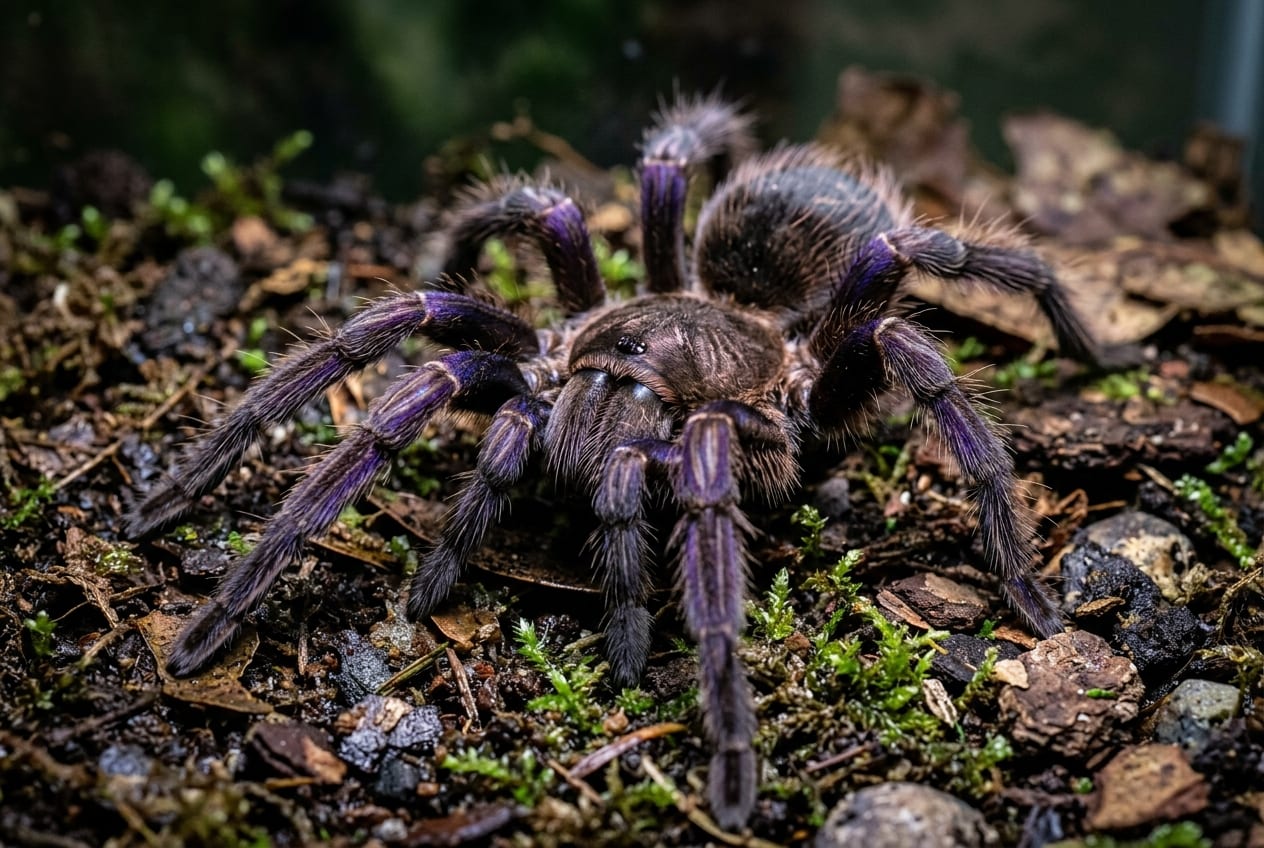
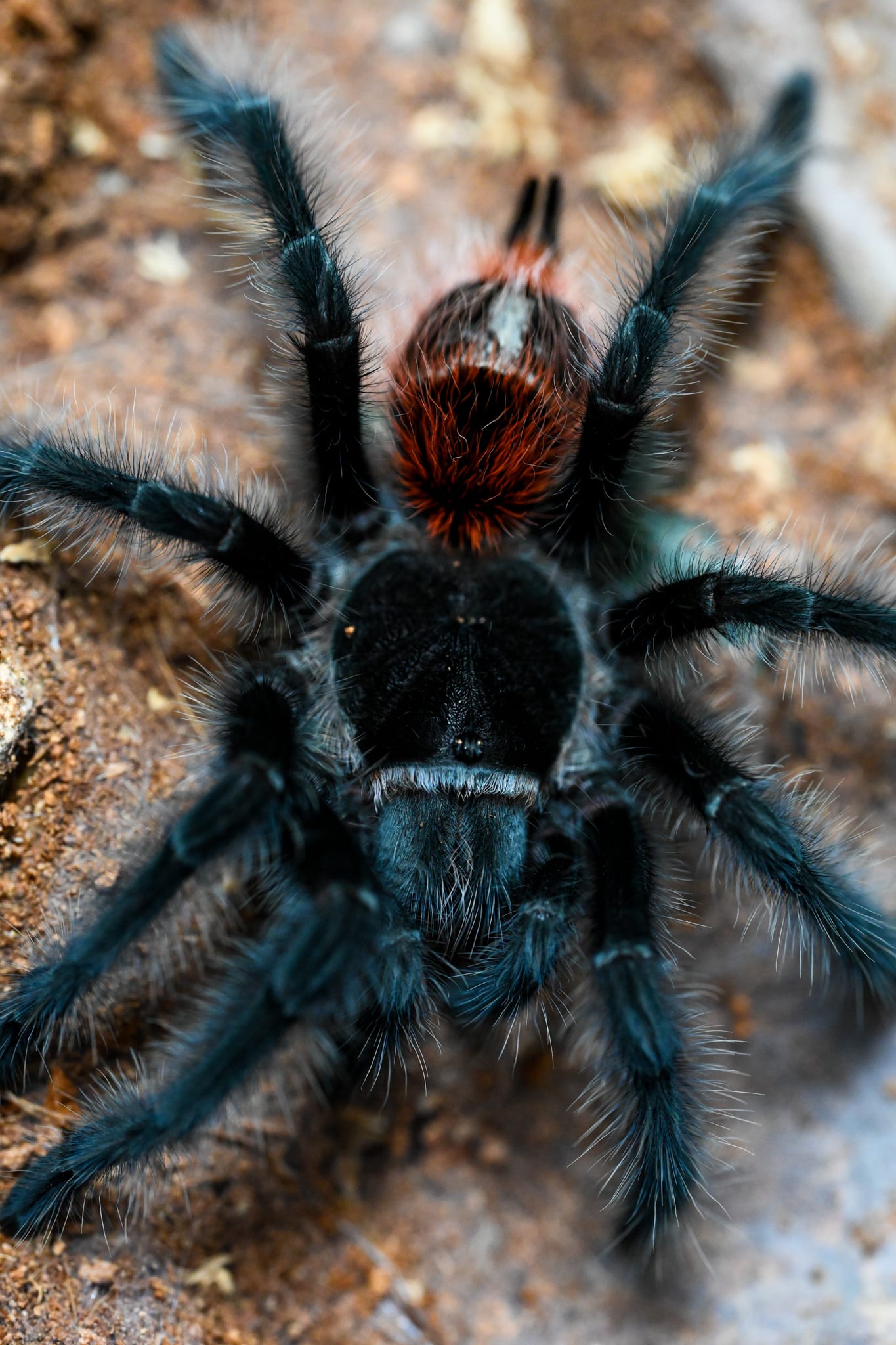
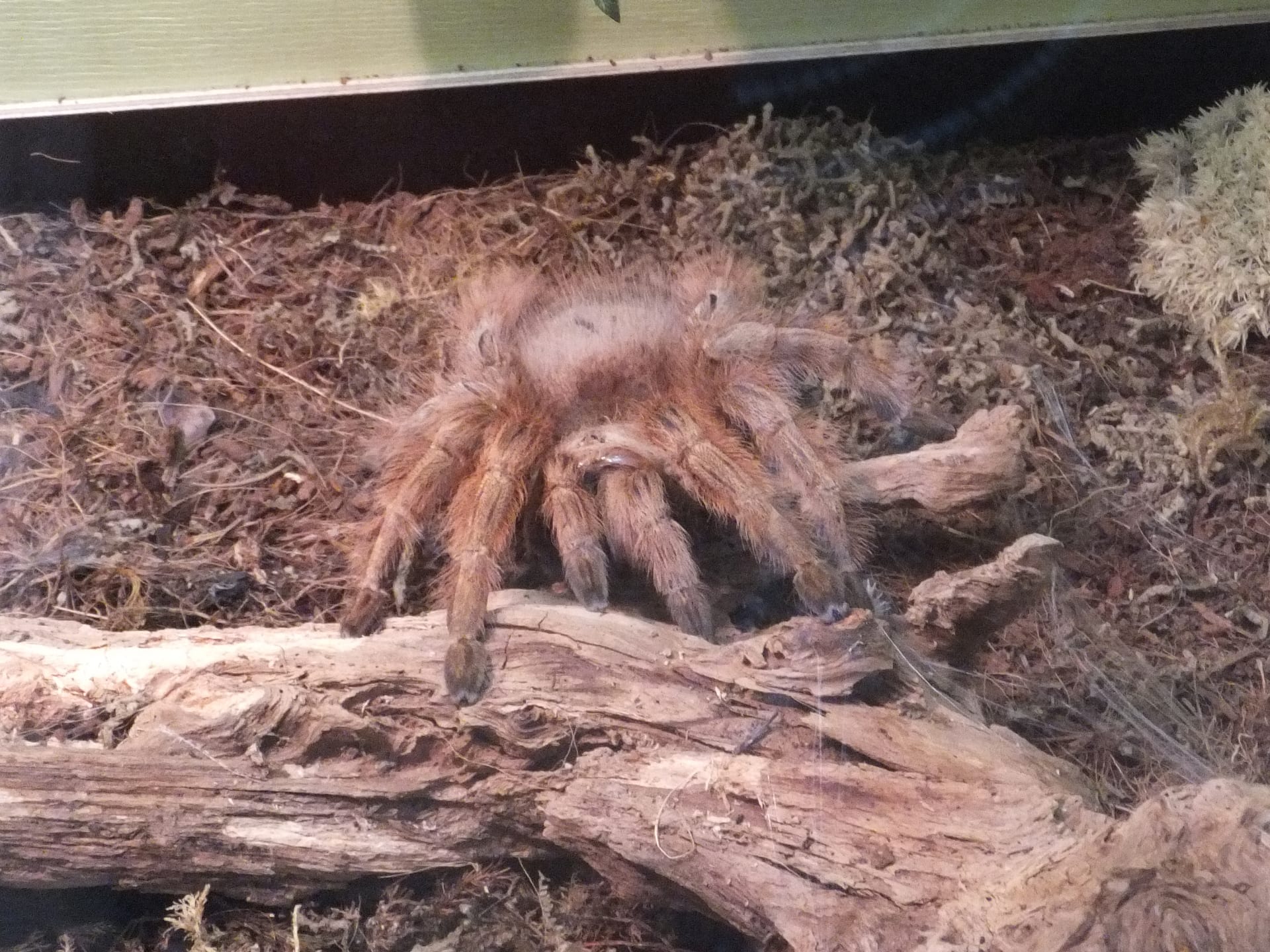
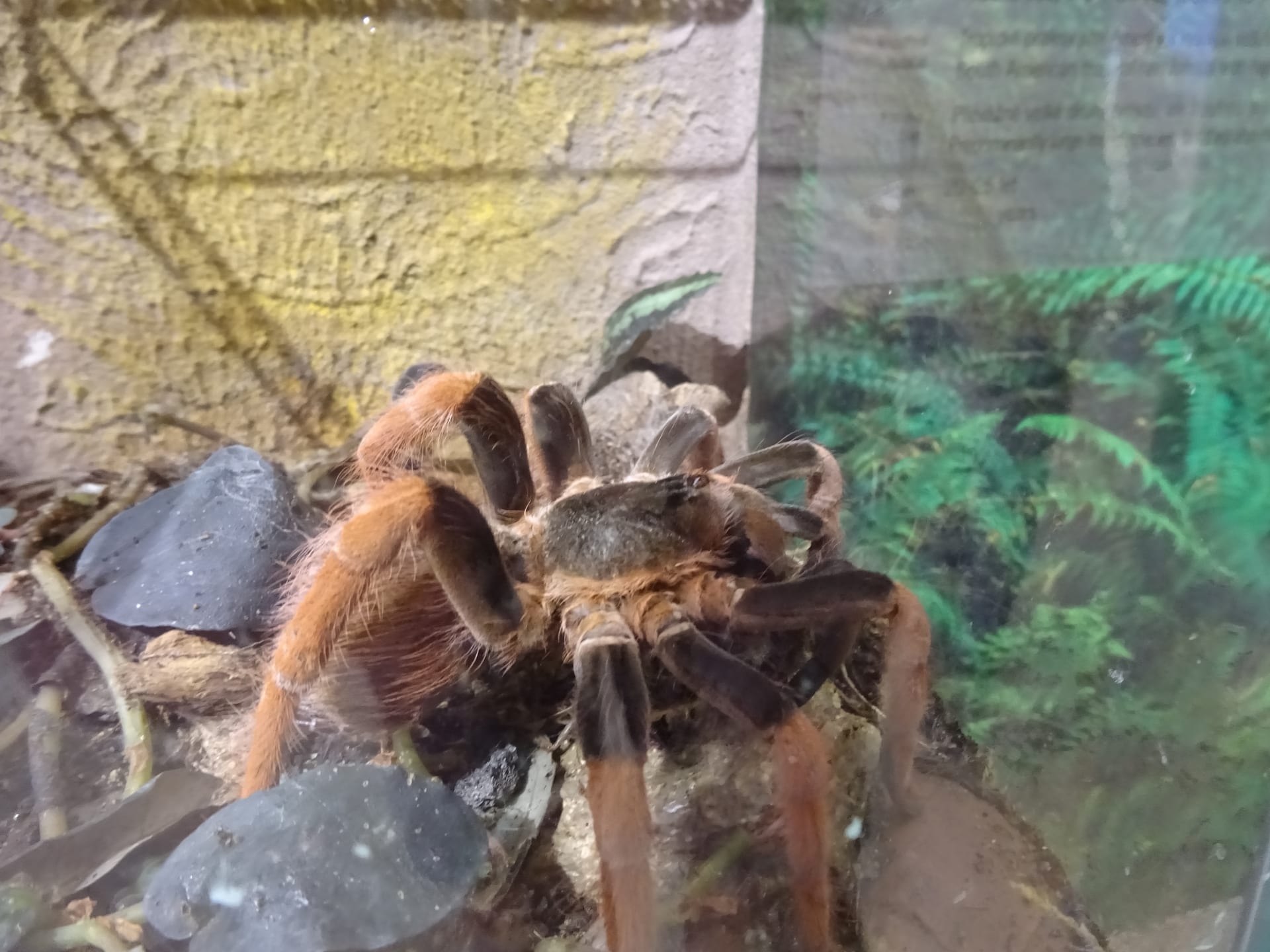
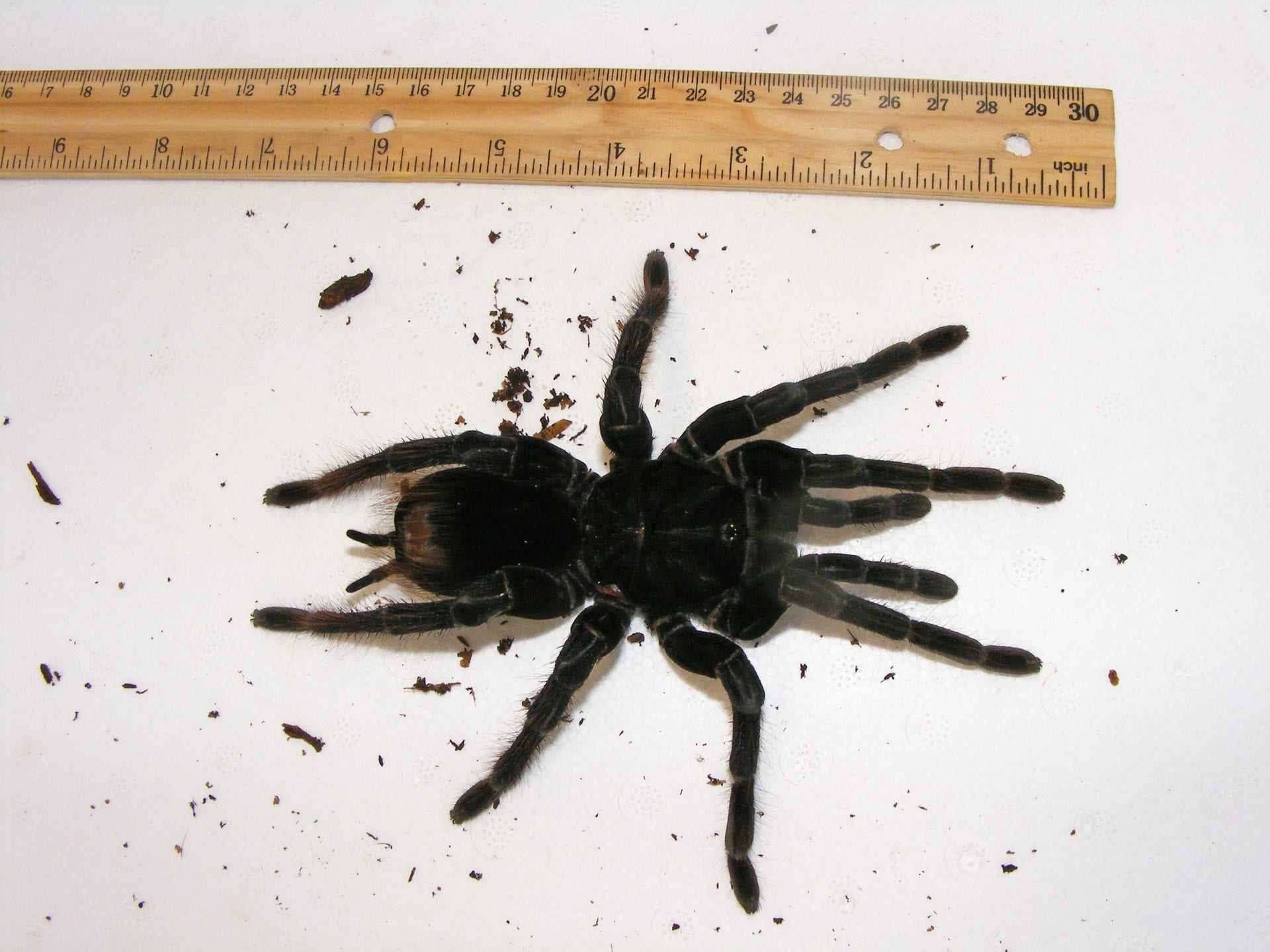
A large terrestrial tarantula in which mature males develop a vivid blue-violet iridescence on the legs while females are uniformly black, a striking sexual dimorphism. It lives in the rainforests of Bolivia and Peru and digs burrows in the substrate.
Difficulty
Intermediate
Temperature
21〜27℃
Lifespan
Females up to about 15 years, males about 4 years
Diet
Large live insects such as crickets and roaches
About
Pamphobeteus antinous was described by Pocock in 1903 and is a large terrestrial tarantula from the rainforests of Bolivia and Peru. Sexual dimorphism is pronounced: females are uniformly black while mature males show a vivid blue-violet iridescence on the setae of the coxa, trochanter and femur as well as on the pedipalps and chelicerae. The colour is structural rather than pigmentary, produced by a coaxial multilayer inside each seta that acts as a cylindrical Bragg mirror and selectively reflects light around 430nm. The hue shifts with viewing angle, and because it appears only in mature males a role in sexual signalling has been proposed. Females live up to 15 years and males about four. It has urticating hairs and will first try to flee when disturbed, but under persistent pressure it aims those hairs at the intruder. In captivity it needs somewhat higher humidity than many species, with deep substrate so it can burrow.
Source: Wikipedia (CC BY-SA 4.0)
Lifespan of the Bolivian Steely Blue
The Bolivian Steely Blue lives Females up to about 15 years, males about 4 years.
Temperature & humidity for the Bolivian Steely Blue
The ideal temperature for the Bolivian Steely Blue is 21〜27℃.
Basic Info
Origin
Rainforest in Bolivia and Peru, where mean annual temperature is around 26 C
Lifespan
Females up to about 15 years, males about 4 years
Temperature
21〜27℃
Care Specifications
Semi-aggressiveSolitary
Sources: Tom's Big Spiders: Pamphobeteus antinous / Wikipedia: Pamphobeteus antinous / GBIF
References & Sources
Edited & verified by: BreederDirect editorial team
The taxonomic, regulatory, and husbandry data on this page are compiled and verified against the authoritative primary sources below.
Taxonomy & Authority
Accepted name: Pamphobeteus antinous Pocock, 1903
Authority databases: GBIF
Nomenclature follows global taxonomic authority databases.
Regulations & Conservation Status
Not CITES-listed
Sources: CITES Appendices (species not listed)
Regulations may change. Always verify the latest information with the relevant authorities.
Bolivian Steely Blue Listings
Loading latest listingsFind listings for this species