Source: Wikimedia Commons
Yellow-banded Pinktoe
IntermediateAvicularia juruensis
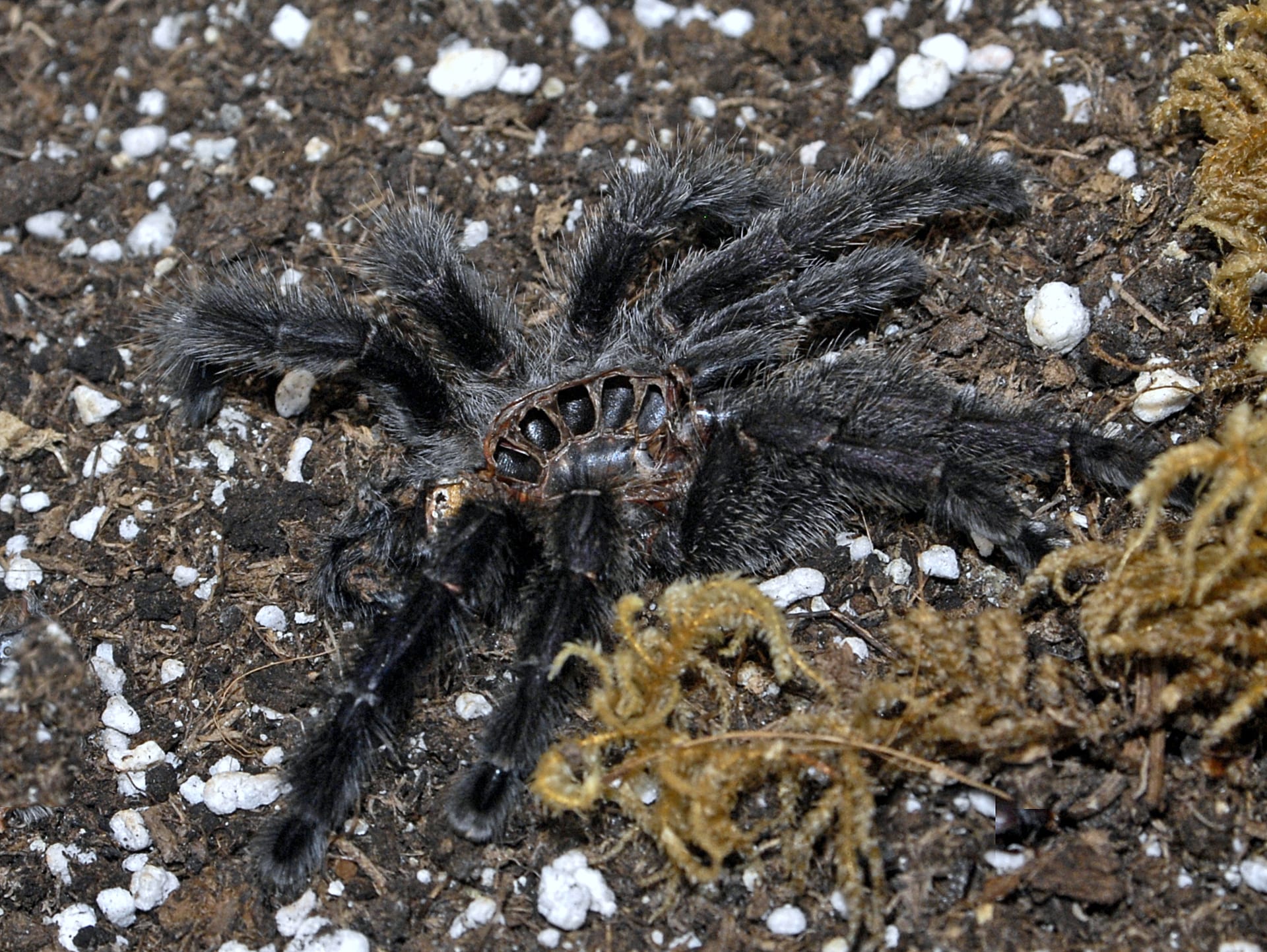
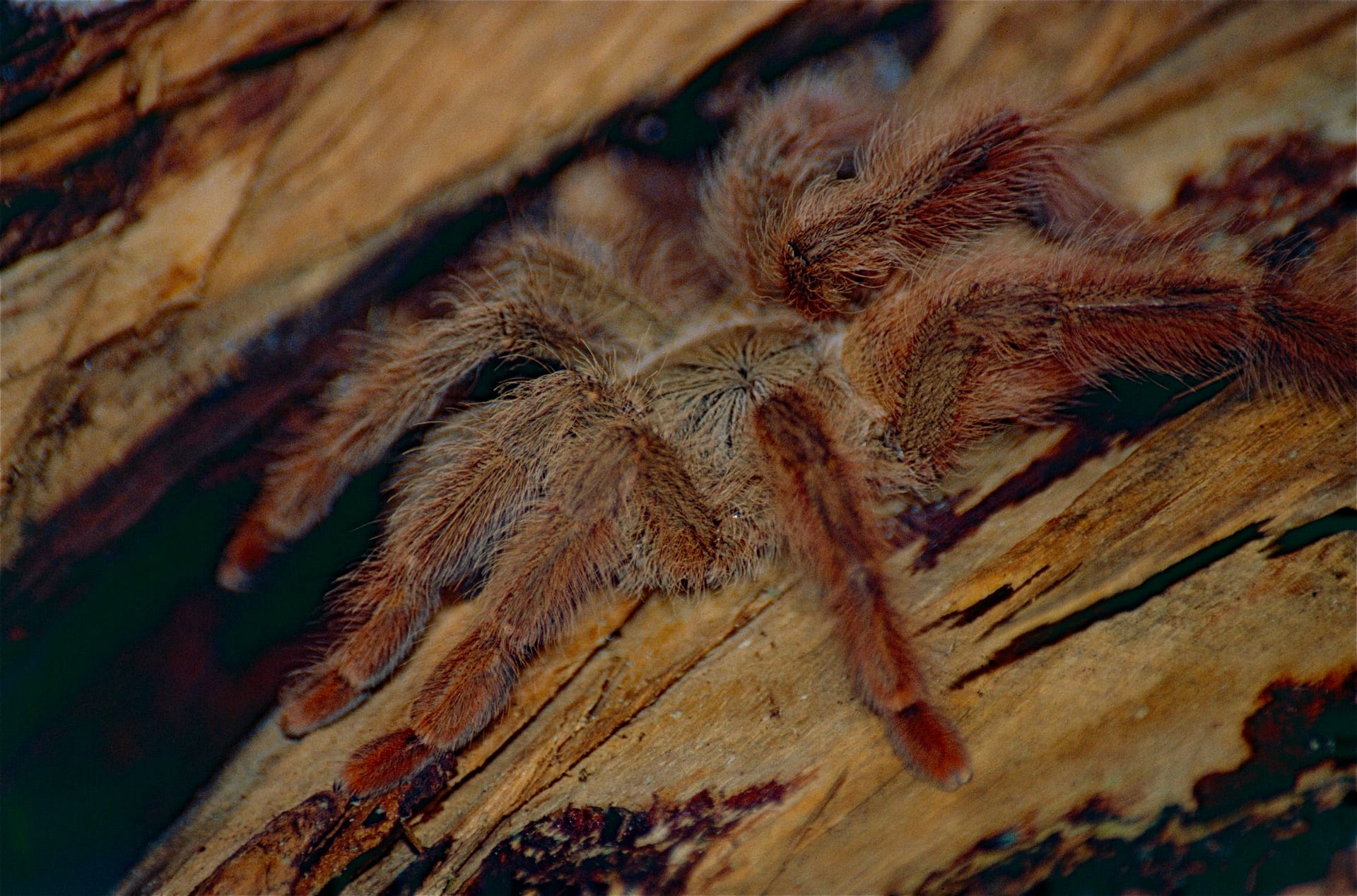
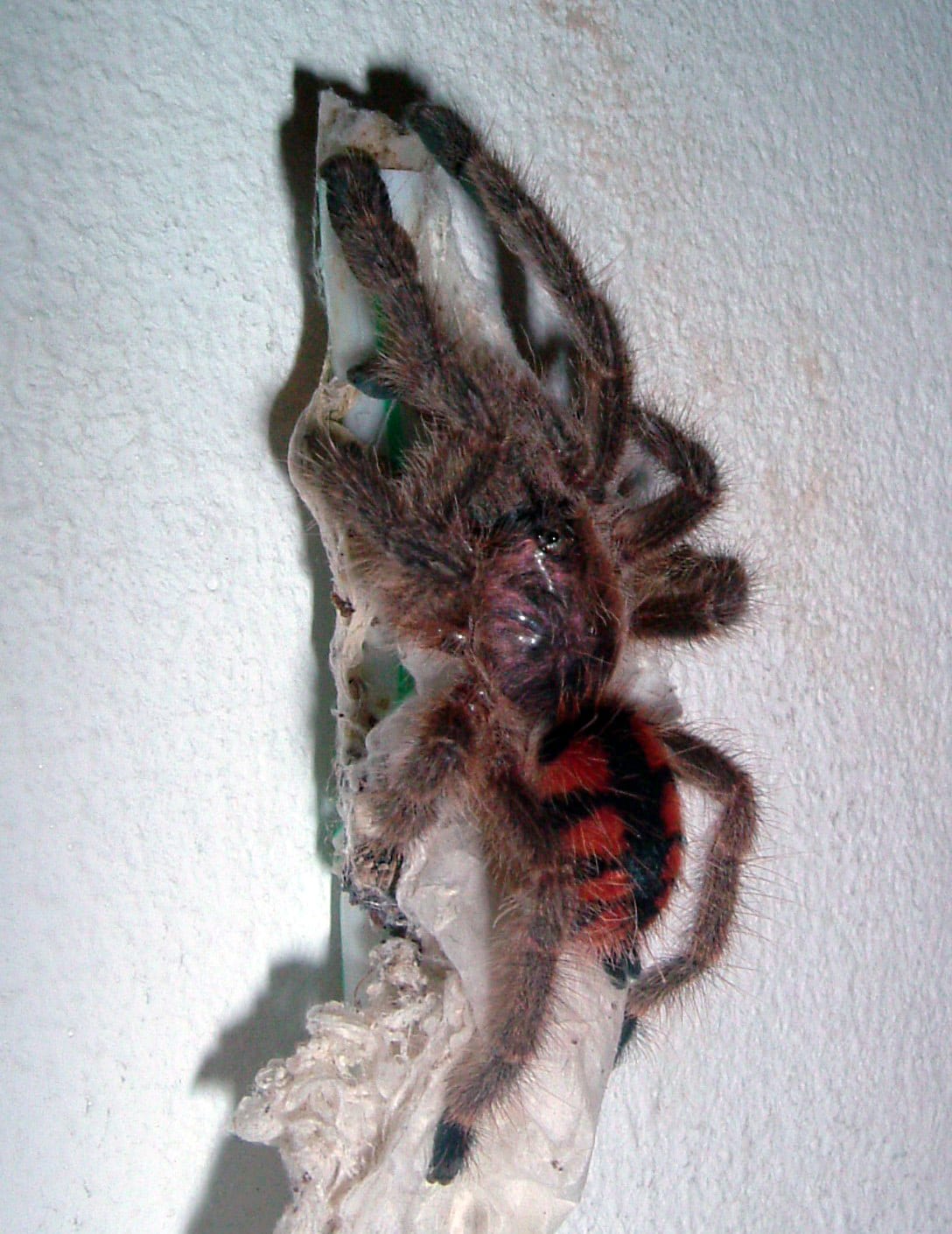
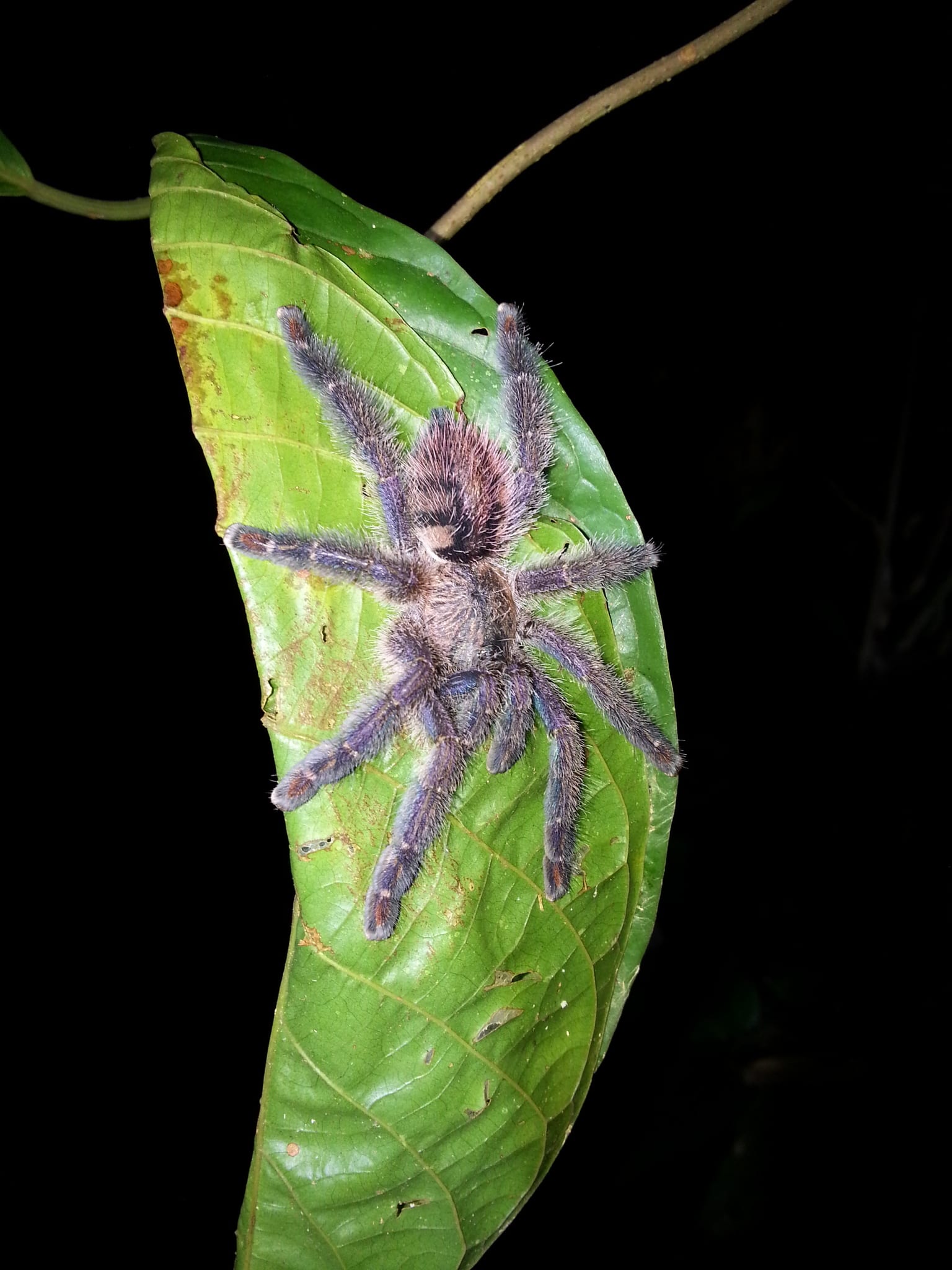
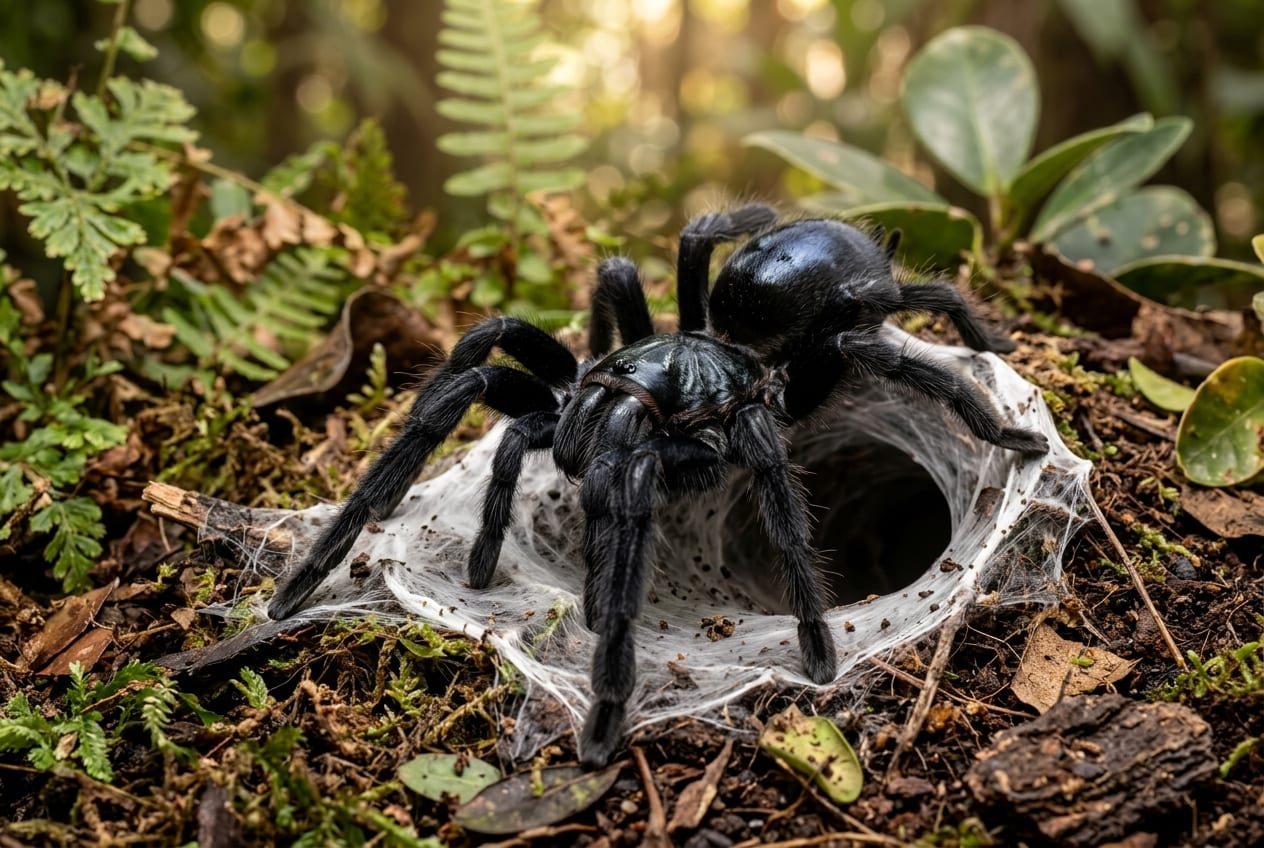
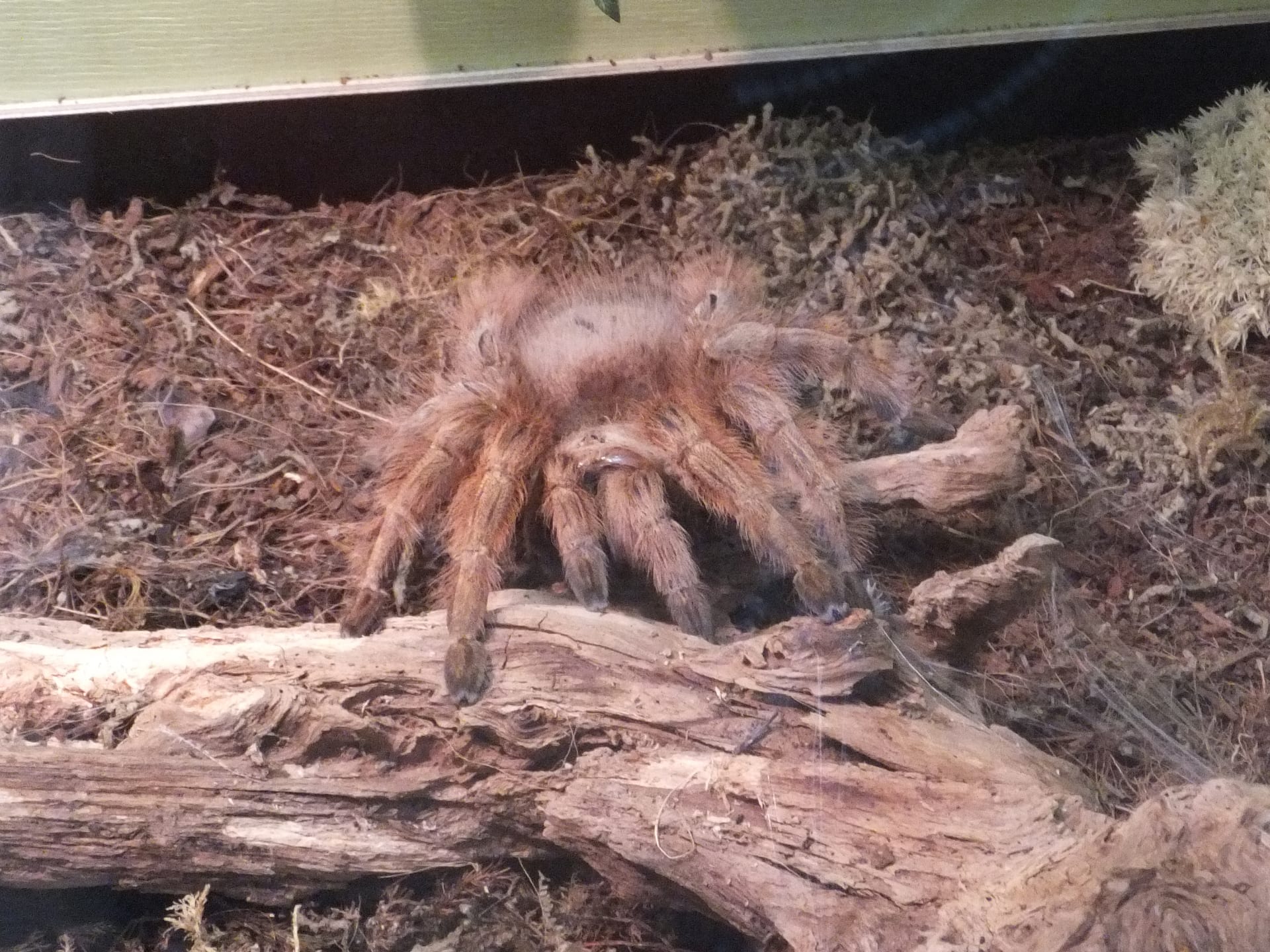
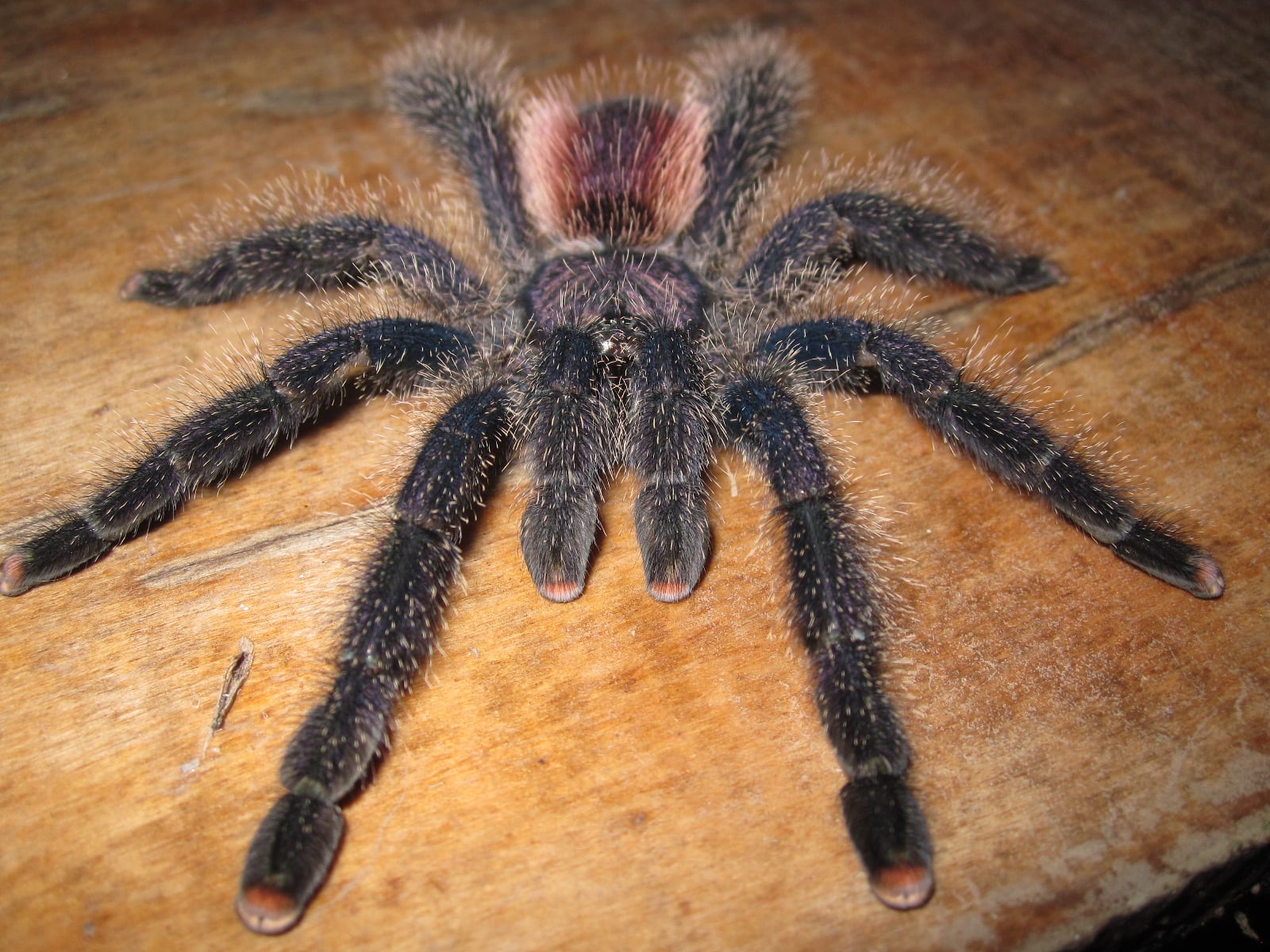
A pinktoe tarantula widespread in South America, centred on the Amazon. Juveniles have black tarsi and a striped reddish abdomen; adults lose the stripes and gain a metallic sheen. Two colour forms are known, one golden-pink and one intensely purple.
Difficulty
Intermediate
Temperature
21〜27℃
Lifespan
Females 8-10 years / males 2-3 years
Size
Body length over 3cm; longest leg about 6cm
Humidity
60〜70%
Diet
Live insects such as crickets and roaches
About
Avicularia juruensis is an arboreal tarantula found in Brazil, Peru, Ecuador and Colombia. Mello-Leitao described it in 1923 from specimens collected at Jurua in Brazil, and the specific name refers to that locality. The abdomen carries type II urticating setae. Juveniles have black tarsi and a reddish abdomen marked with longitudinal and transverse black stripes; adults lose the stripes and develop a metallic sheen. Two colour forms are recognised: morphotype 1 has a golden and pink sheen with a whitish carapace and pale leg rings and is commoner in Brazil, while morphotype 2 has an intense purple sheen and yellower leg rings and is commoner in Ecuador and Peru. Avicularia urticans, described in 1994, was synonymised with this species in 2017.
Source: Wikipedia (CC BY-SA 4.0)
Lifespan of the Yellow-banded Pinktoe
The Yellow-banded Pinktoe lives Females 8-10 years / males 2-3 years.
Size of the Yellow-banded Pinktoe
The Yellow-banded Pinktoe grows to Body length over 3cm; longest leg about 6cm.
Body length exceeds 3 cm and the longest fully extended leg measures about 6 cm.
Temperature & humidity for the Yellow-banded Pinktoe
The ideal temperature for the Yellow-banded Pinktoe is 21〜27℃. Ideal humidity is 60〜70%.
Basic Info
Origin
South America (Brazil, Peru, Ecuador, Colombia)
Care Specifications
PeacefulSolitary
Sources: Wikipedia / GBIF / The Tarantula Collective: Avicularia avicularia (congener reference)
References & Sources
Edited & verified by: BreederDirect editorial team
The taxonomic, regulatory, and husbandry data on this page are compiled and verified against the authoritative primary sources below.
Taxonomy & Authority
Accepted name: Avicularia juruensis Mello-Leitão, 1923
Synonyms: Avicularia urticans Schmidt, 1994
Authority databases: GBIF
Nomenclature follows global taxonomic authority databases.
Regulations & Conservation Status
Not CITES-listed
Sources: CITES Appendices (species not listed)
Regulations may change. Always verify the latest information with the relevant authorities.
Yellow-banded Pinktoe Listings
Loading latest listingsFind listings for this species