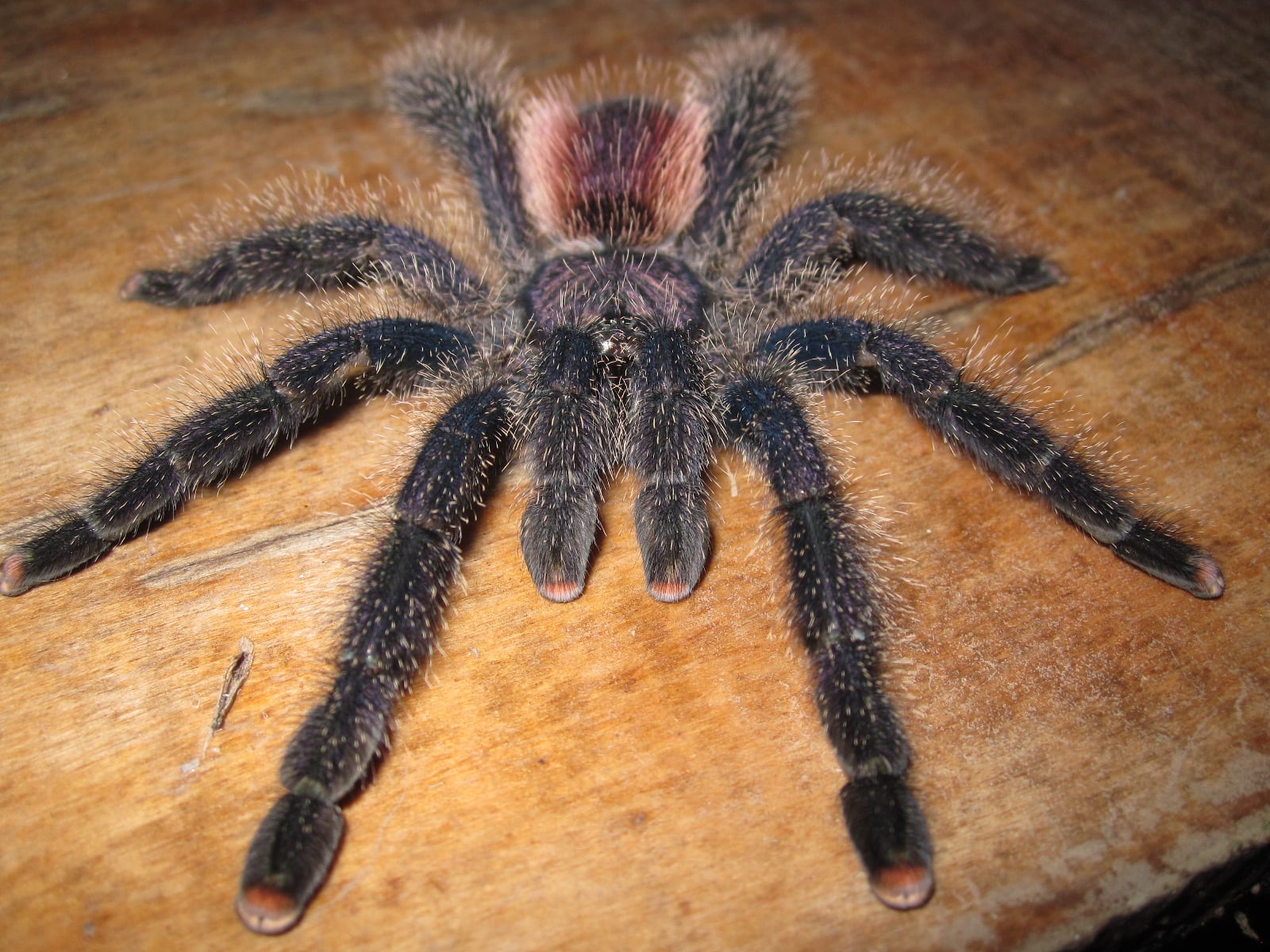
 © DiverDave / CC BY-SA 3.0
Yellow-banded Pinktoe
The Yellow-banded Pinktoe is a member of the pinktoe tarantula group found widely across South America, with populations centered in the Amazon. Juveniles are easy to spot thanks to their black-tipped legs and red-banded abdomens, but as they mature, those bands fade and give way to a striking metallic sheen in golden-pink or deep purple tones. Their arboreal habits make for an active, engaging tarantula to watch climb and explore. Because this species is generally considered suitable for intermediate keepers, it's best approached after gaining some basic experience with tarantula care.
View Yellow-banded Pinktoe encyclopedia →0% commission on your first sales!Register by September 30, 2026 and your first 2 sales are commission-free!
Breeder Wanted!
List on BreederDirect and sell directly to customers nationwide!
5 Transparency Standards You Can Trust
When listing Exotic Invertebrates, Breeders disclose the following. We guarantee transparency on growth stage and breeding unit.
- Real Photos
- Breeding Unit
- Generation Info
- Body Length (mm)
- Country of Origin
Browse all 249 breeds
Verified breeders wanted for Exotic Invertebrates
Breeders are signing up now ahead of launch. Subscribe to be notified when new listings go live.
Getting alerts is free with a member account. When new listings match your saved search, we'll notify you by email and in-app.
Browse other categories
Verified breeders (preview)
Are you raising exotic invertebrates?
Register as a breeder and connect with buyers directly.
Apply as a breederYellow-banded Pinktoe key facts
- Care level
- Intermediate
- Lifespan
- Females 8-10 years / males 2-3 years
- Size
- Body length over 3cm; longest leg about 6cm
- Temperature
- 21〜27℃
- Humidity
- 60〜70%
- Diet
- Live insects such as crickets and roaches
- Temperature & Humidity
- Care information for the genus Avicularia gives 21-27 C and 60-70% humidity, with ventilation treated as the most important factor.
- Enclosure
- Arboreal. Use a tall enclosure with cork bark to anchor the web, ventilate through both the top and the sides, keep the substrate shallow and provide a permanent water dish.
- Diet & Feeding
- Live insects such as crickets and roaches, sized to the spider. Wait a few days after a moult before feeding.
- Temperament & Venom
- Docile and shy. It has type II urticating setae on the abdomen, which are rubbed rather than kicked off, and the venom is considered weak.
- Notes
- Trade names and scientific names do not map cleanly onto each other for this species, and congeners are sometimes sold under the same name. Check locality data and photographs before buying.
About Yellow-banded Pinktoe
A pinktoe tarantula whose black-tipped legs and red-banded juvenile pattern give way to a golden-pink or deep purple metallic sheen as an adult. An active, arboreal species best suited to intermediate keepers.
7 things to know before welcoming a Yellow-banded Pinktoe
1Set Up a Vertical, Arboreal Enclosure
As an arboreal species, this tarantula does best in a tall enclosure furnished with climbing branches or artificial plants. Prioritize vertical space over substrate depth, and make sure the enclosure has good ventilation.
2Coloring Changes Dramatically With Age
Juveniles stand out with black-tipped legs and a red-banded abdomen, but these markings gradually fade as the spider grows. Adults develop a striking metallic sheen in golden-pink or deep purple tones, which is one of the species' biggest draws.
3Shy but Remarkably Quick
This tarantula tends to be skittish and will bolt for cover the instant it feels threatened. It's best enjoyed as an animal to observe rather than handle frequently.
4Keep Humidity on the Higher Side
Coming from humid regions of South America, this species needs consistent moisture rather than dry conditions. Mist the enclosure or provide a water dish to maintain humidity, while still ensuring enough airflow to prevent mold or unsanitary buildup.
5Handle Molting Periods Gently
Before a molt, the spider may go off its food or show darkening of the abdomen. During this time, avoid disturbing it and let it molt undisturbed in a quiet enclosure.
6Striking Looks, Defensive Temperament
Despite its colorful appearance, this species is primarily shy and defensive rather than aggressive. Some prior experience keeping tarantulas will help you manage day-to-day care and notice changes early.
7Prepare the Enclosure Before Arrival
Before bringing one home, set up climbing branches, plants, and misting supplies, and place the enclosure somewhere with stable temperature and humidity. It's also worth confirming a reliable source of feeder insects in advance.
Frequently asked questions about Yellow-banded Pinktoe
- Q.Why do juveniles and adults look so different?
- A.Juveniles' black leg tips and red-banded abdomen are thought to serve a protective purpose early in life. As the spider matures and this need lessens, the bands fade and give way to a metallic golden-pink or deep purple sheen.
- Q.How large an enclosure does it need?
- A.Adults can have a leg span of around 6 cm, so the enclosure needs enough height and depth to fit climbing branches comfortably. Since this is an arboreal species, prioritize vertical space over floor area.
- Q.Is it aggressive? Can beginners keep one?
- A.This species is mostly shy, quick to flee, and quick to hide when startled rather than aggressive. Some basic tarantula-keeping experience helps, since it's generally considered a species for intermediate keepers rather than a first tarantula.
- Q.Do I need any permits to keep or import one?
- A.This species is not subject to CITES.
- Q.How often does it molt, and are there signs to watch for?
- A.Molting frequency varies by individual, with juveniles typically molting more often than adults. Reduced appetite or a change in abdomen color can be signs a molt is approaching, so it's best to leave the spider undisturbed during this time.
Learn more about Yellow-banded Pinktoe in the encyclopedia
View Yellow-banded Pinktoe encyclopedia entry →
Care difficulty, lifespan, size and diet — all basics covered.
More in this category
Can't find the one you're looking for?
Post your wishes for free and breeders with matching animals will contact you with introductions.