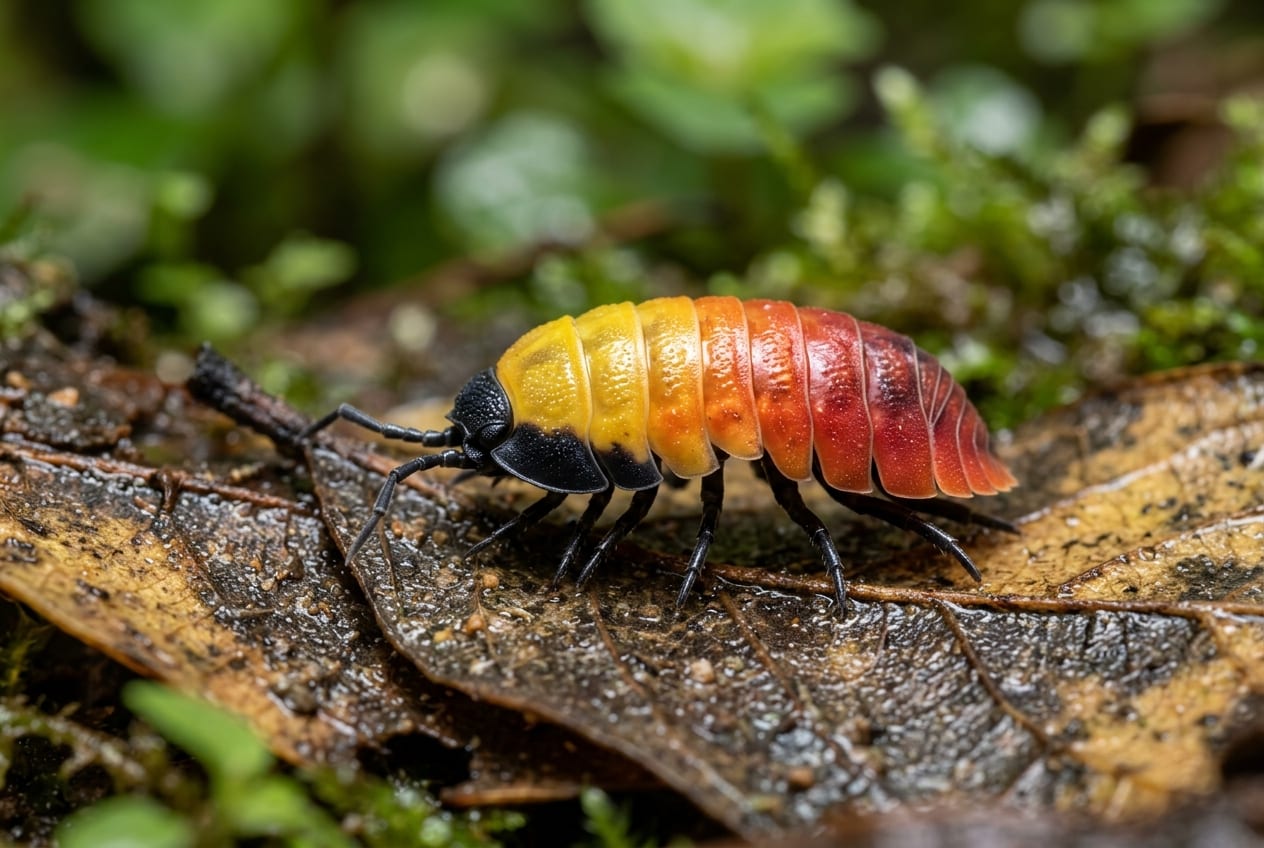
Ember Bee Isopod
The Ember Bee Isopod is an undescribed species from Vietnam that has been drawing attention among isopod keepers. Its most striking feature is the color contrast: jet-black legs and underside paired with a back that shifts gradually from yellow to orange to red. Unlike many isopods that stay hidden, this species stays active and visible during the day, making it a rewarding one to watch. At around 20mm, it also ranks among the larger members of its group, giving it a solid presence in any enclosure. It's generally considered suited to keepers with some prior isopod experience, comfortable managing humidity and ventilation.
View Ember Bee Isopod encyclopedia →0% commission on your first sales!Register by September 30, 2026 and your first 2 sales are commission-free!
Breeder Wanted!
List on BreederDirect and sell directly to customers nationwide!
5 Transparency Standards You Can Trust
When listing Exotic Invertebrates, Breeders disclose the following. We guarantee transparency on growth stage and breeding unit.
- Real Photos
- Breeding Unit
- Generation Info
- Body Length (mm)
- Country of Origin
Browse all 249 breeds
Verified breeders wanted for Exotic Invertebrates
Breeders are signing up now ahead of launch. Subscribe to be notified when new listings go live.
Getting alerts is free with a member account. When new listings match your saved search, we'll notify you by email and in-app.
Browse other categories
Verified breeders (preview)
Are you raising exotic invertebrates?
Register as a breeder and connect with buyers directly.
Apply as a breederEmber Bee Isopod key facts
- Care level
- Intermediate
- Lifespan
- 2-4 years
- Size
- About 20mm
- Temperature
- 20〜23℃
- Humidity
- 60〜73%
- Diet
- Hardwood leaf litter and white-rotted wood as the base, with small amounts of vegetable and the occasional pinch of fish flake; permanent cuttlebone or crushed limestone
- Temperature & Humidity
- 20-23C is ideal and it copes from 19 to 26C. Keep humidity in the 60s to low 70s with one end wetter than the other. Never put a heat mat under the enclosure.
- Enclosure
- It climbs, so use a tall enclosure with upright cork bark and 5-8cm of substrate. Mesh two opposing walls so air flows through, and seal every gap in the lid and seams.
- Diet & Feeding
- Hardwood leaf litter and white-rotted wood are most of the diet. Small amounts of vegetable and the odd pinch of fish flake; clear leftovers the next day.
- Temperament & Venom
- Harmless to people. Out and active by day as well as night, and it will roll into a ball if pushed. Kept in groups.
- Notes
- Warm, wet, stagnant air collapses colonies quietly. Note that sellers list it under either Ardentiella or Merulanella.
About Ember Bee Isopod
An undescribed isopod from Vietnam with jet-black legs and a yellow-to-red gradient back. Active by day and highly ornamental, best suited to keepers with some isopod experience.
7 things to know before welcoming a Ember Bee Isopod
1Color varies by individual
The yellow-to-red gradient on the back varies in intensity and pattern from one individual to another. Even under identical conditions, appearance can shift with growth stage and individual variation—part of the appeal of keeping this species.
2Diurnal and easy to observe
While many isopods are nocturnal and stay hidden, this species remains visible and active during the day. It's easy to observe through the enclosure glass, making it a good choice for keepers who want to watch their animals regularly.
3Suited to intermediate keepers
This species calls for some prior experience with humidity control and ventilation balance. First-time isopod keepers may want to start with a hardier beginner species before taking this one on.
4Large and eye-catching
Adults reach roughly 20mm, making this one of the larger species in its group. Its size gives individuals real visual presence, and it also looks impressive when kept as a growing colony.
5Balance humidity and airflow
As with isopods generally, excess moisture can trigger mold or pest issues, while overly dry conditions stress the animals. Regularly check substrate moisture and adjust ventilation to maintain a balanced level of humidity.
6Set up the enclosure before arrival
Prepare substrate, hiding spots, and food sources like decaying wood or leaf litter in advance, and let the environment stabilize before introducing the animals. On arrival, avoid disturbance and let them settle in a quiet spot.
7Provide a stable setup for breeding
Growing a colony calls for a stable environment free of sudden temperature or humidity swings, along with ample hiding spots and food sources. Minimize handling and avoid frequently rearranging the enclosure layout.
Frequently asked questions about Ember Bee Isopod
- Q.Can beginners keep the Ember Bee Isopod?
- A.This species is generally considered suited to intermediate keepers. It's best approached once you have some experience managing humidity and ventilation—first-time keepers may want to start with a hardier beginner species.
- Q.Why is it often visible during the day?
- A.Unlike many nocturnal isopods that stay hidden, this species tends to be active during daylight hours as well, making it a popular choice for observation.
- Q.How does the color gradient develop?
- A.The legs and underside are jet-black, while the back shifts continuously from yellow to orange to red. The intensity and extent of the gradient vary by individual and growth stage.
- Q.Is CITES permission required to keep this species?
- A.The Ember Bee Isopod is not listed under CITES, so no CITES-related procedures apply to this species.
- Q.How large does it grow?
- A.Adults reach approximately 20mm in length, making this one of the larger species within its group and giving it notable visual presence.
Learn more about Ember Bee Isopod in the encyclopedia
View Ember Bee Isopod encyclopedia entry →
Care difficulty, lifespan, size and diet — all basics covered.
More in this category
Can't find the one you're looking for?
Post your wishes for free and breeders with matching animals will contact you with introductions.