AI-generated image
Ember Bee Isopod
IntermediateMerulanella sp. "Ember Bee"
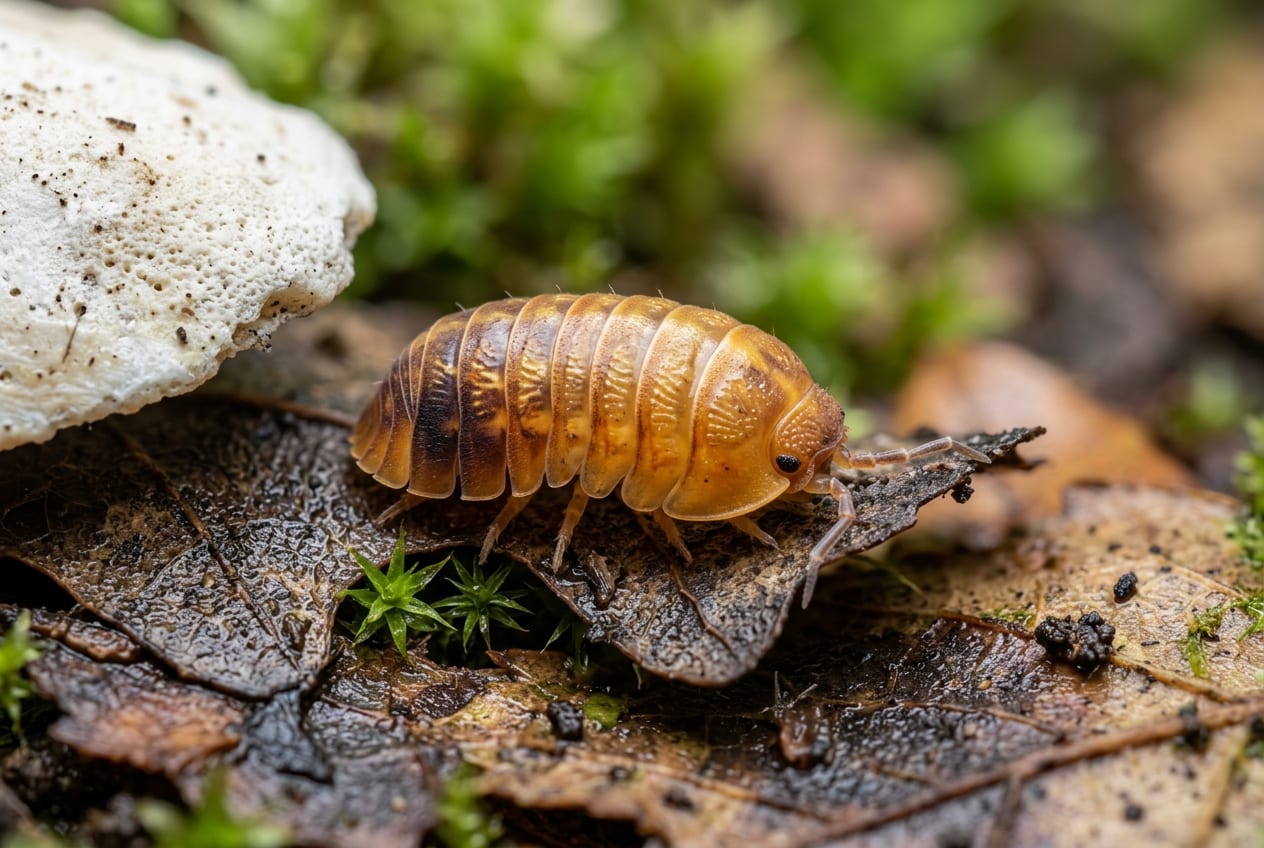
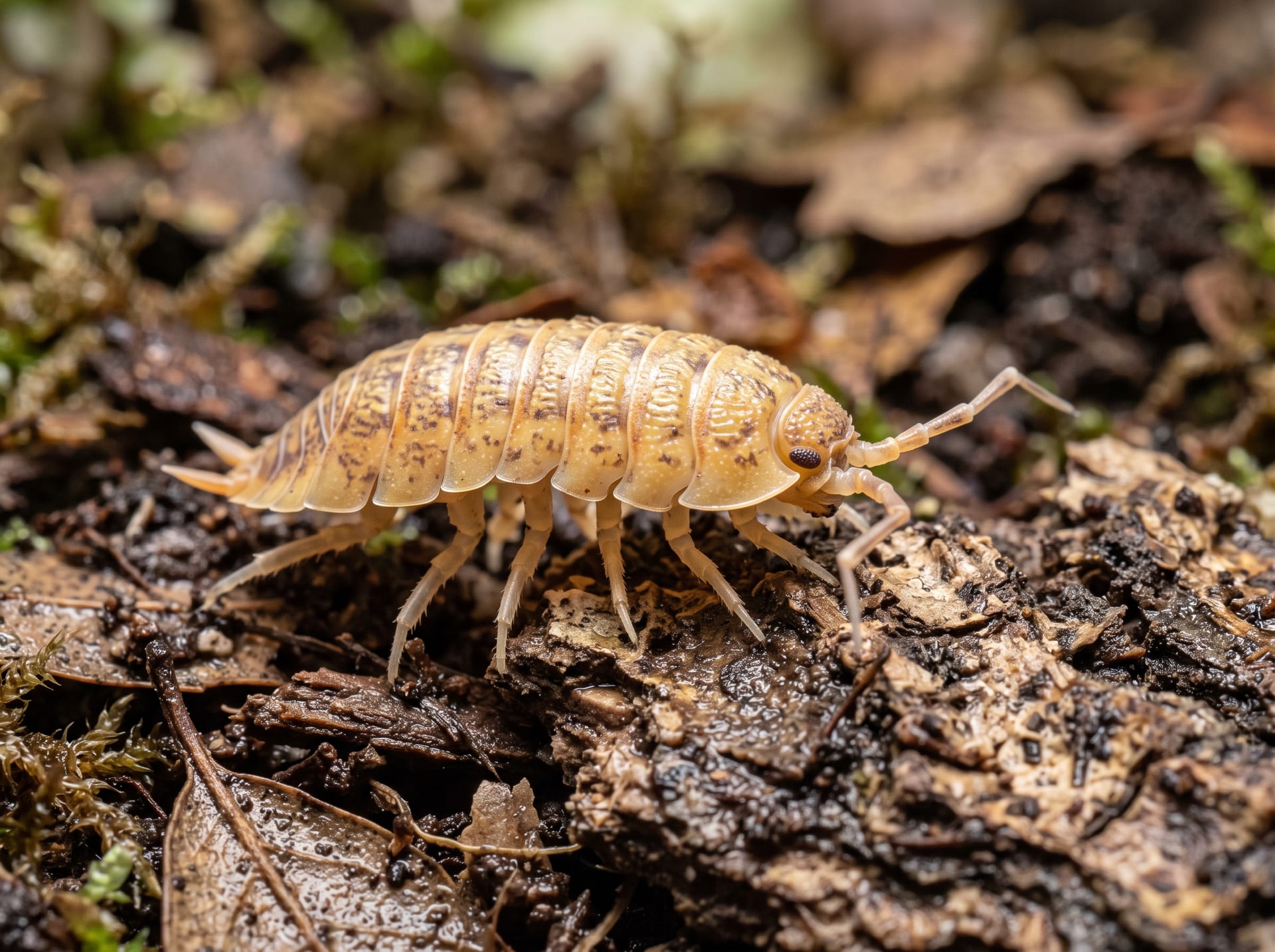
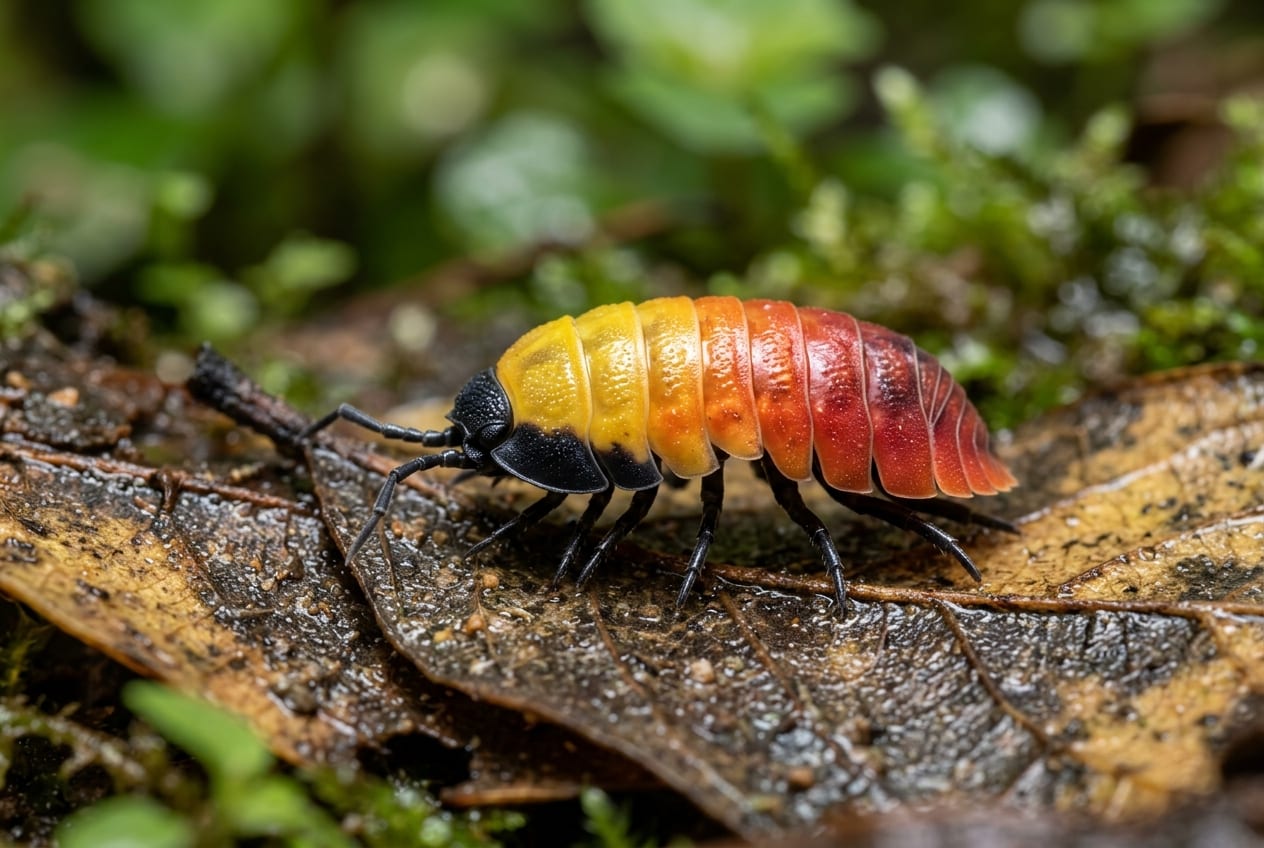
An undescribed woodlouse from Vietnam. The legs and underside are jet black while the shell runs yellow into orange and red. It stays out and active in daylight, which makes it unusually watchable, and at about 20mm it is large for its group.
Difficulty
Intermediate
Temperature
20〜23℃
Lifespan
2-4 years
Size
About 20mm
Humidity
60〜73%
Diet
Hardwood leaf litter and white-rotted wood as the base, with small amounts of vegetable and the occasional pinch of fish flake; permanent cuttlebone or crushed limestone
About
Merulanella sp. 'Ember Bee' is an undescribed woodlouse from the warm, humid forests of Vietnam; 'Ember Bee' is a breeder's line name, not a described species. The legs and underside are jet black while the shell runs yellow into orange into red, so a group crossing leaf litter looks like bees rising out of embers, which is where the name comes from. Markings differ between individuals. Adults reach about 20mm, large for the group. The genus is unsettled: since a 2025 split some sellers list it as Ardentiella while others keep the older Merulanella. The husbandry problem is holding humidity high while the air still moves, so mesh two opposing walls and let a current run through. Wet the substrate but never soak it. It does best at 20-23C and copes from 19 to 26C, but warm, wet, stagnant air empties colonies quietly. It climbs sheer surfaces, so use a tall enclosure with upright cork bark and seal every lid gap. Calcium goes fast, so keep cuttlebone in permanently.
Source: Wikipedia (CC BY-SA 4.0)
Lifespan of the Ember Bee Isopod
The Ember Bee Isopod lives 2-4 years.
Size of the Ember Bee Isopod
The Ember Bee Isopod grows to About 20mm.
Temperature & humidity for the Ember Bee Isopod
The ideal temperature for the Ember Bee Isopod is 20〜23℃. Ideal humidity is 60〜73%.
Basic Info
Origin
Vietnam
Lifespan
Care Specifications
PeacefulGroupBreeding: Moderate
Sources: PostPods Ember Bee Isopods (size, temperature, humidity, genus) / Insektenliebe Merulanella spec. 'Ember Bee' (origin, behaviour)
References & Sources
Edited & verified by: BreederDirect editorial team
The taxonomic, regulatory, and husbandry data on this page are compiled and verified against the authoritative primary sources below.
Regulations & Conservation Status
Not CITES-listed
Sources: CITES Appendices (species not listed)
Regulations may change. Always verify the latest information with the relevant authorities.
Ember Bee Isopod Listings
Loading latest listingsFind listings for this species