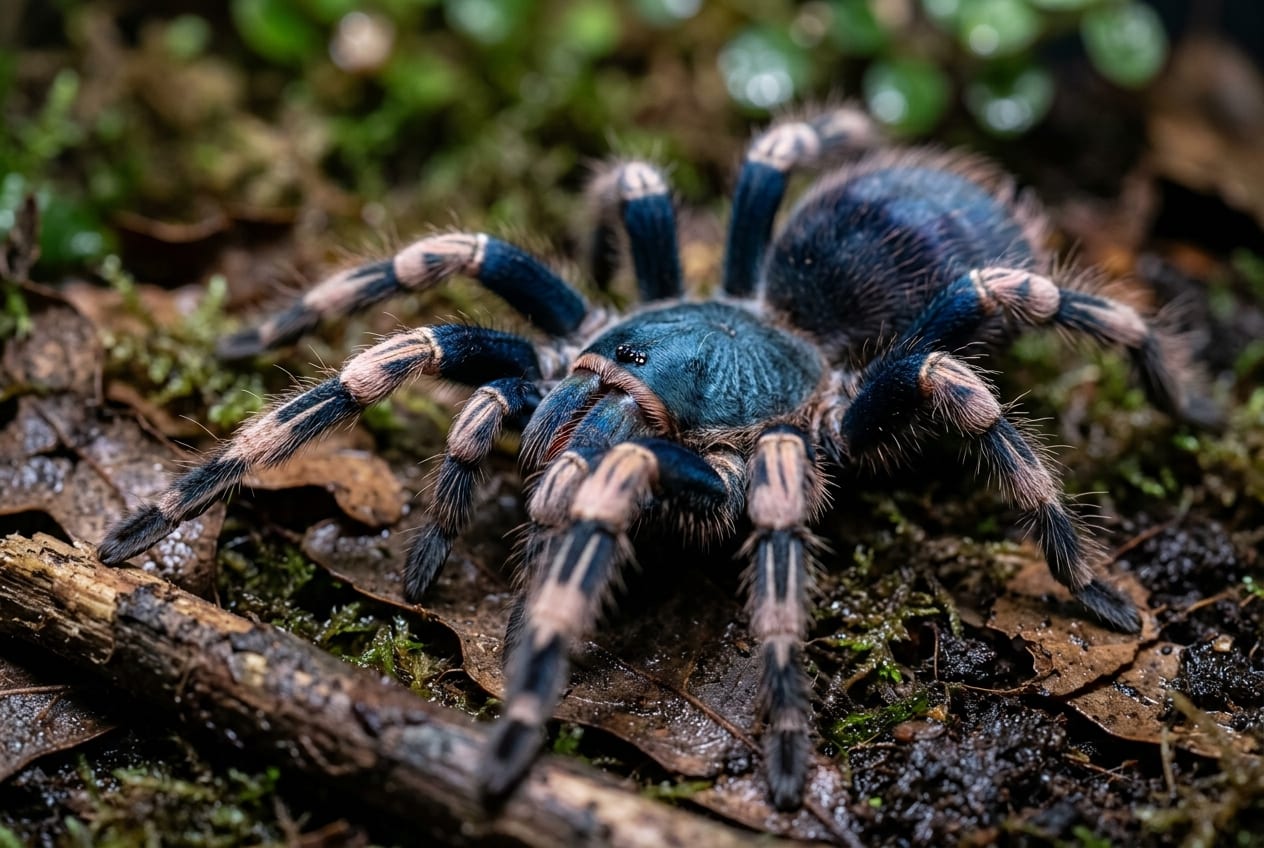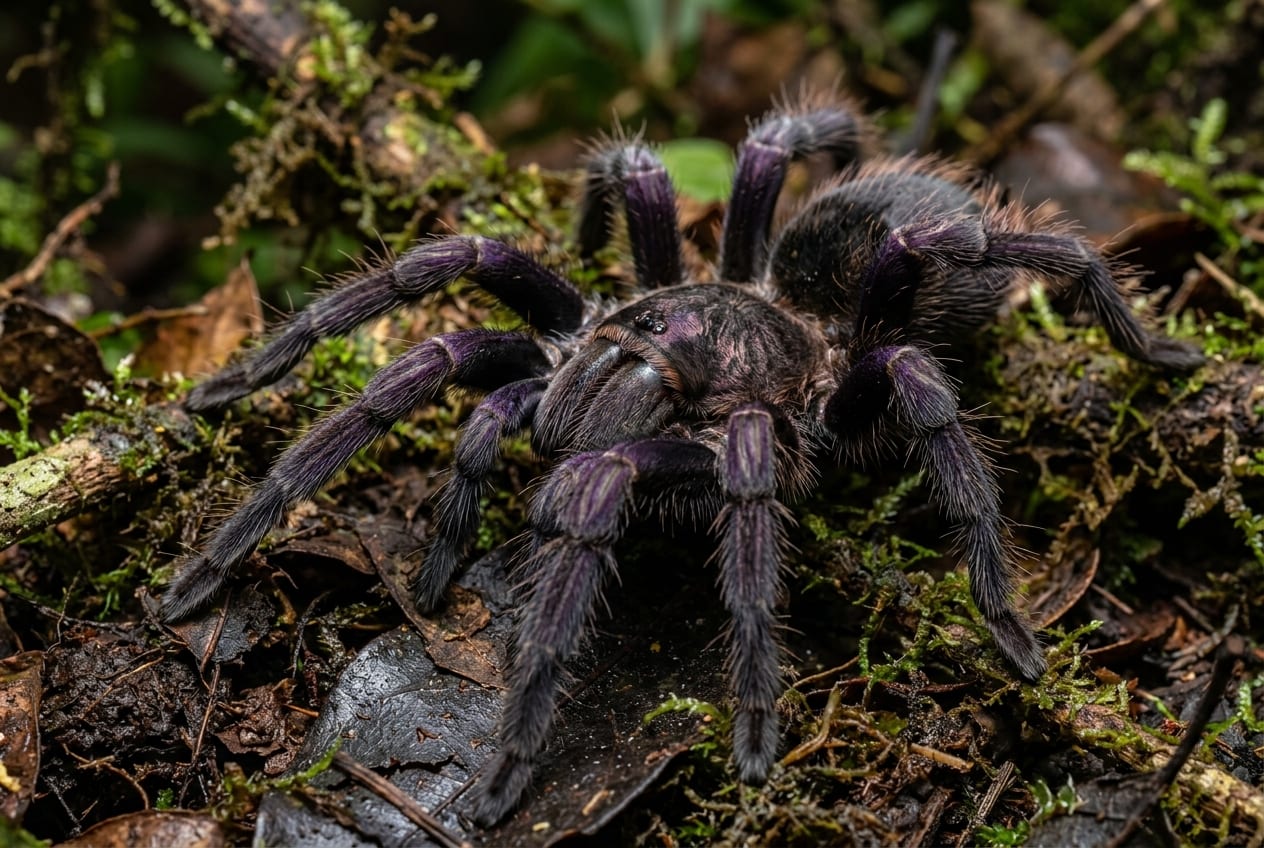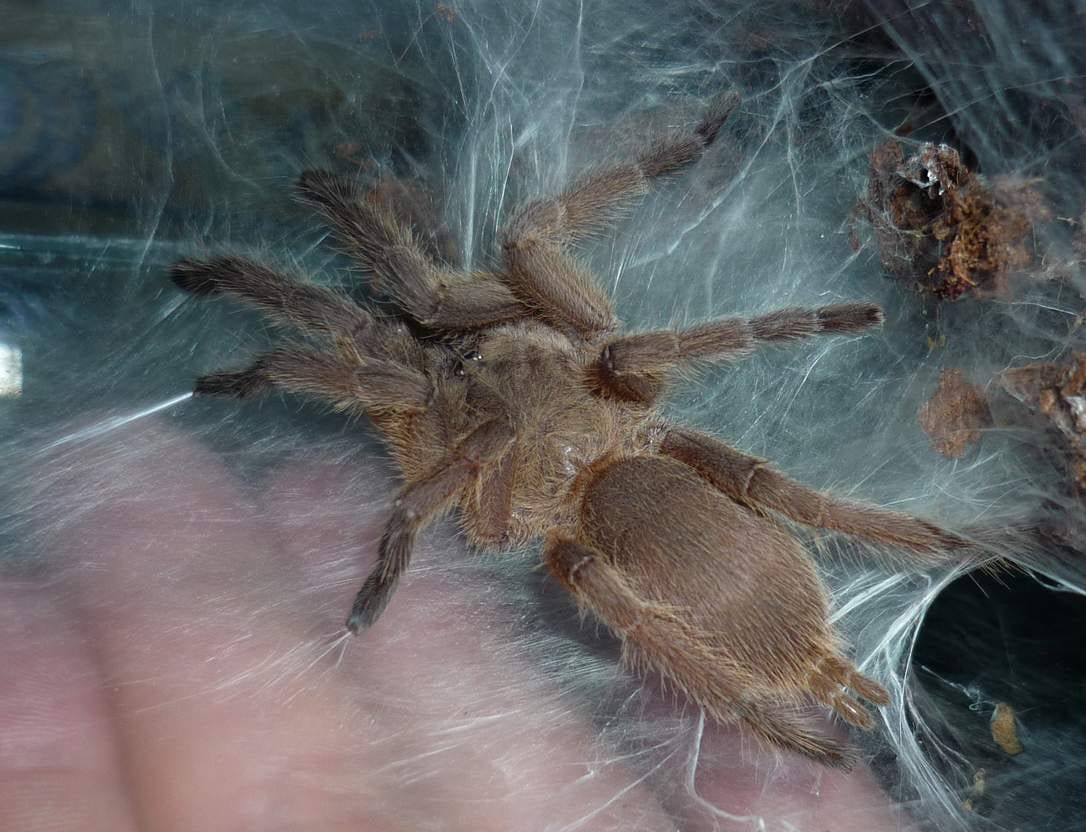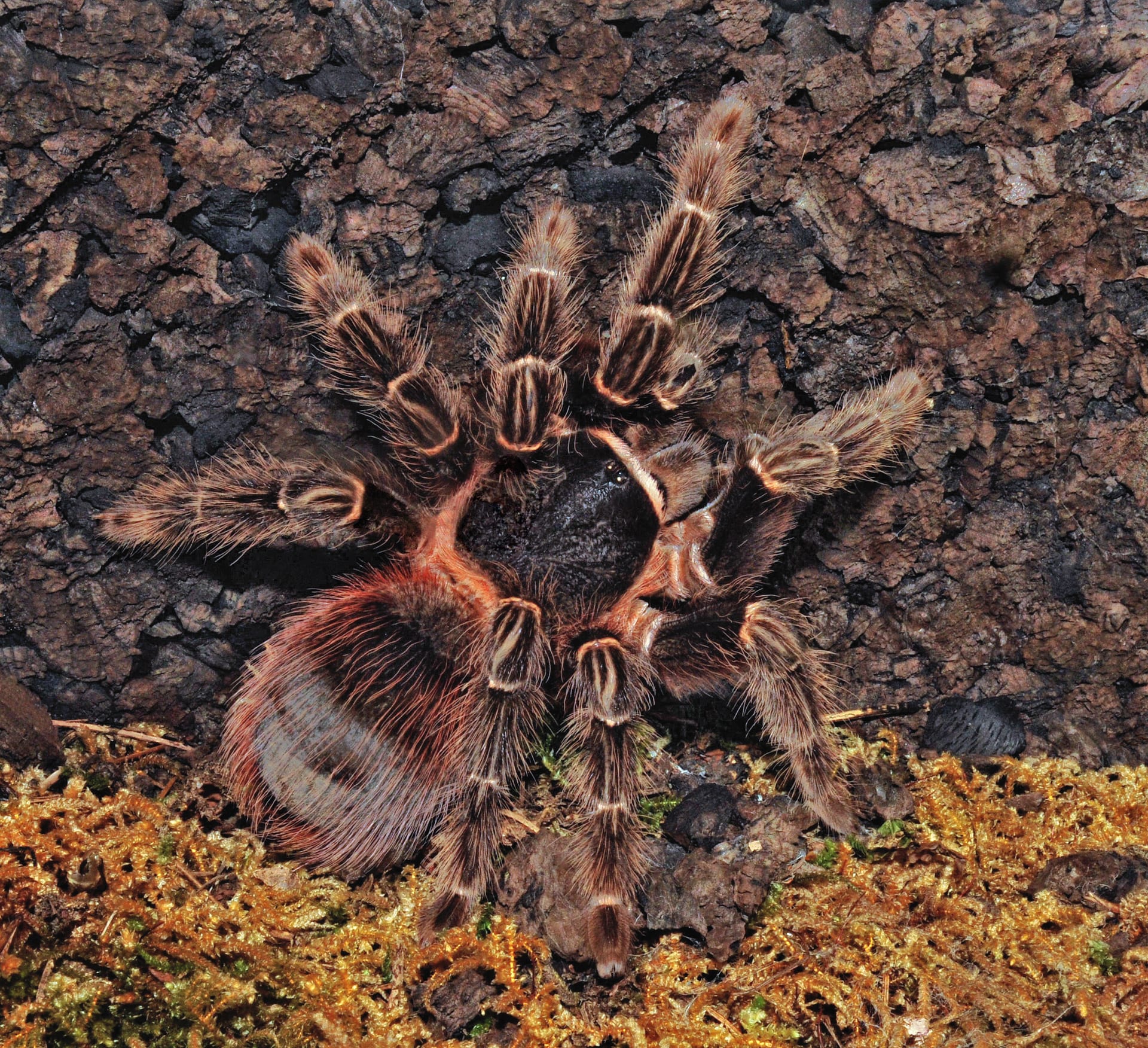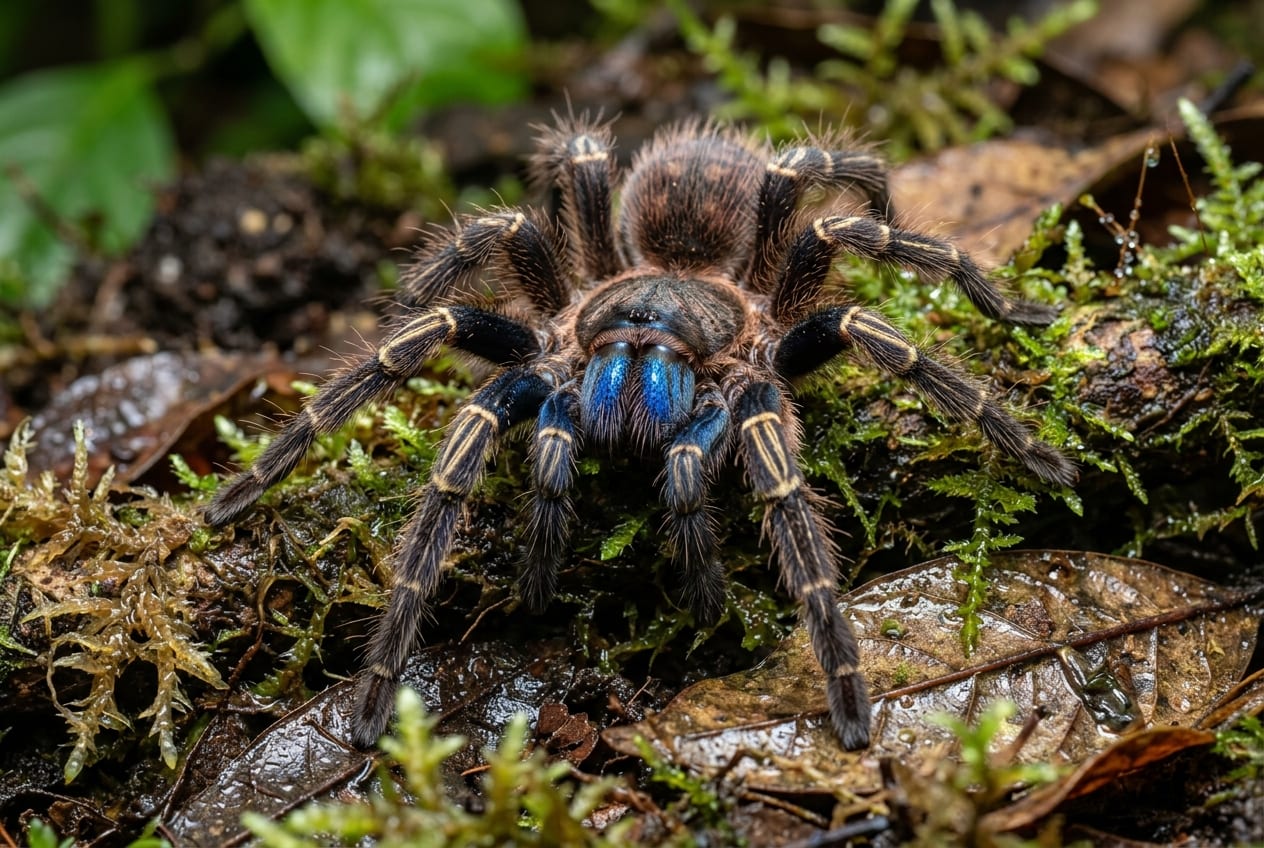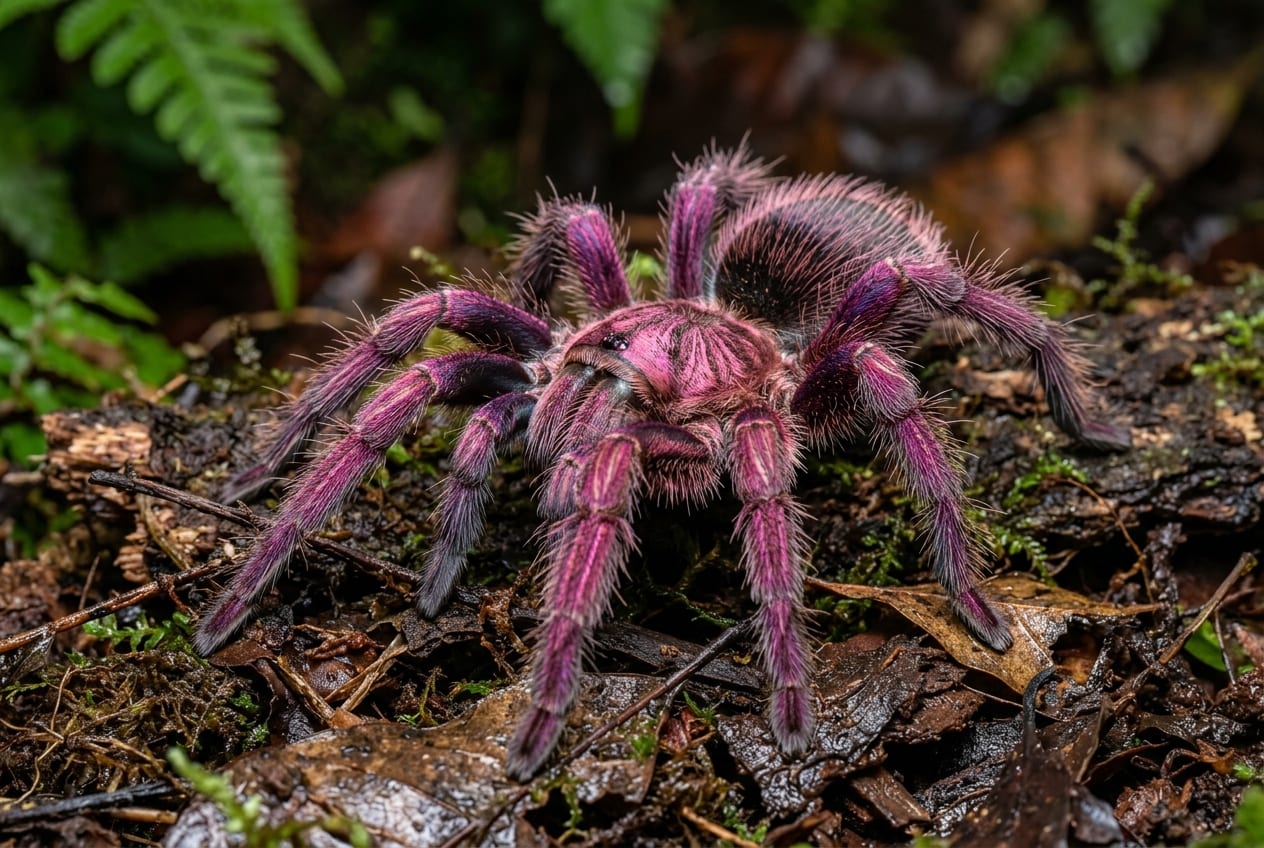
AI-generated image
Brazilian Pink Bloom
IntermediatePamphobeteus platyomma
A large terrestrial tarantula whose mature males turn vivid pink and purple while females stay dark and muted. It grows fast and is an opportunistic burrower that digs into the substrate to hide.
Difficulty
Intermediate
Temperature
23〜27℃
Lifespan
Females up to about 20 years, males 3-4 years
Size
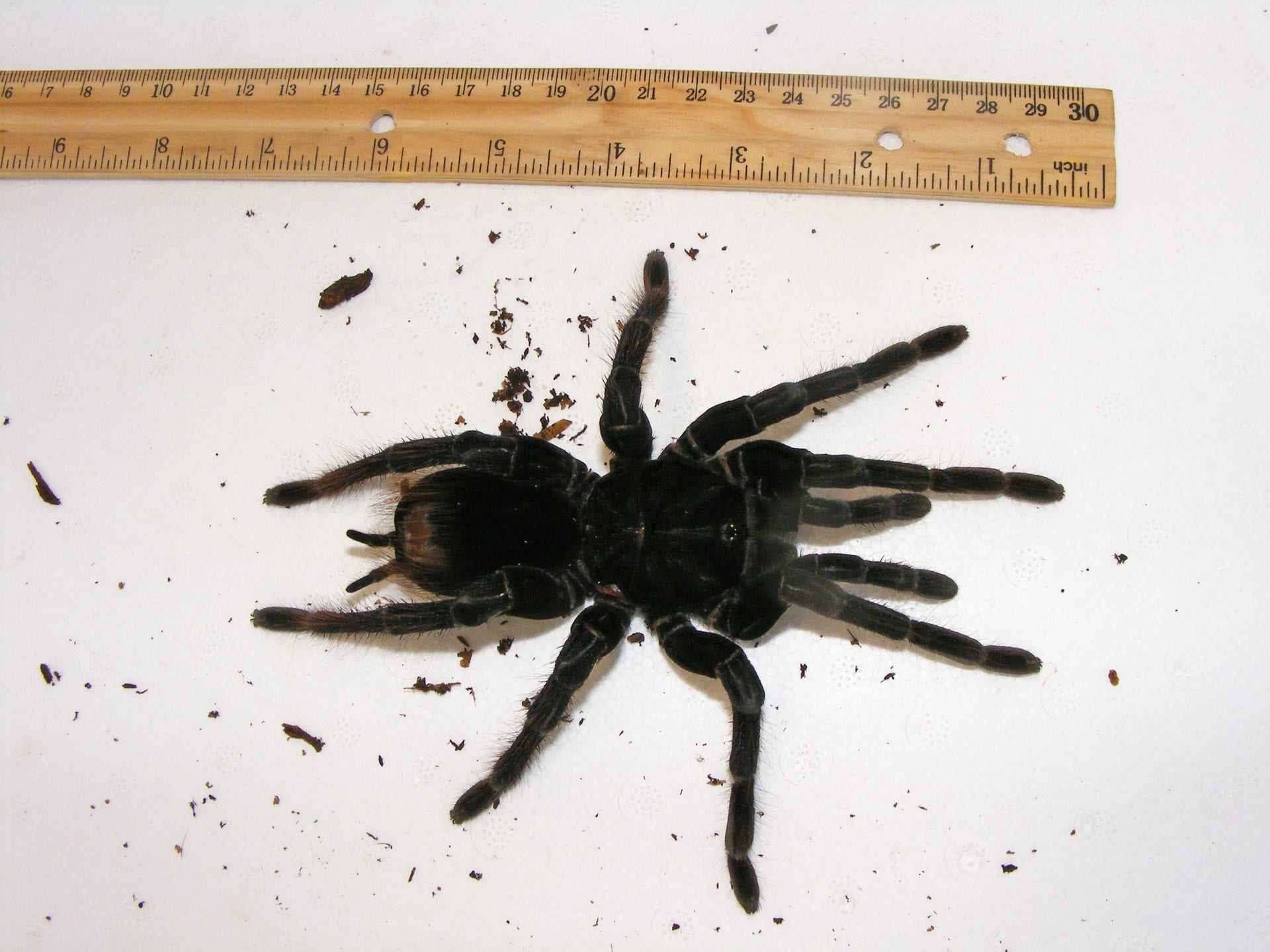
Leg span about 20cm, body about 9cm
Diet
Large live insects such as crickets and roaches
About
The Brazilian Pink Bloom is a large terrestrial tarantula traded in the hobby as Pamphobeteus sp. "Platyomma". It was once identified with Pamphobeteus platyomma Mello-Leitao, 1923, but that name has been transferred to Vitalius and is treated as a nomen dubium, so the animals in trade are best regarded as an undescribed species. It comes from rocky savannah in Ecuador and is adapted to drier, well-drained conditions; the word Brazilian in its common name is a legacy of the trade and does not match its actual origin. Sexual dimorphism is clear: mature males take on vivid pink and purple tones after their final moult while females remain dark and muted. It carries type I and type III urticating hairs. An opportunistic burrower, it retreats into its burrow when startled. Its speed and occasional defensiveness make it a species for intermediate keepers.
Source: Wikipedia (CC BY-SA 4.0)
Lifespan of the Brazilian Pink Bloom
The Brazilian Pink Bloom lives Females up to about 20 years, males 3-4 years.
Size of the Brazilian Pink Bloom
The Brazilian Pink Bloom grows to Leg span about 20cm, body about 9cm.
Body length is about 9cm and leg span about 20cm, and growth is fast.
Temperature & humidity for the Brazilian Pink Bloom
The ideal temperature for the Brazilian Pink Bloom is 23〜27℃.
Basic Info
Origin
Ecuador, in rocky savannah
Care Specifications
Semi-aggressiveSolitary
Sources: The Tarantula Collective: Pamphobeteus sp. Platyomma / Wikipedia: Pamphobeteus (species list and taxonomic status)
References & Sources
Edited & verified by: BreederDirect editorial team
The taxonomic, regulatory, and husbandry data on this page are compiled and verified against the authoritative primary sources below.
Regulations & Conservation Status
Not CITES-listed
Sources: CITES Appendices (species not listed)
Regulations may change. Always verify the latest information with the relevant authorities.
Brazilian Pink Bloom Listings
Loading latest listingsFind listings for this species